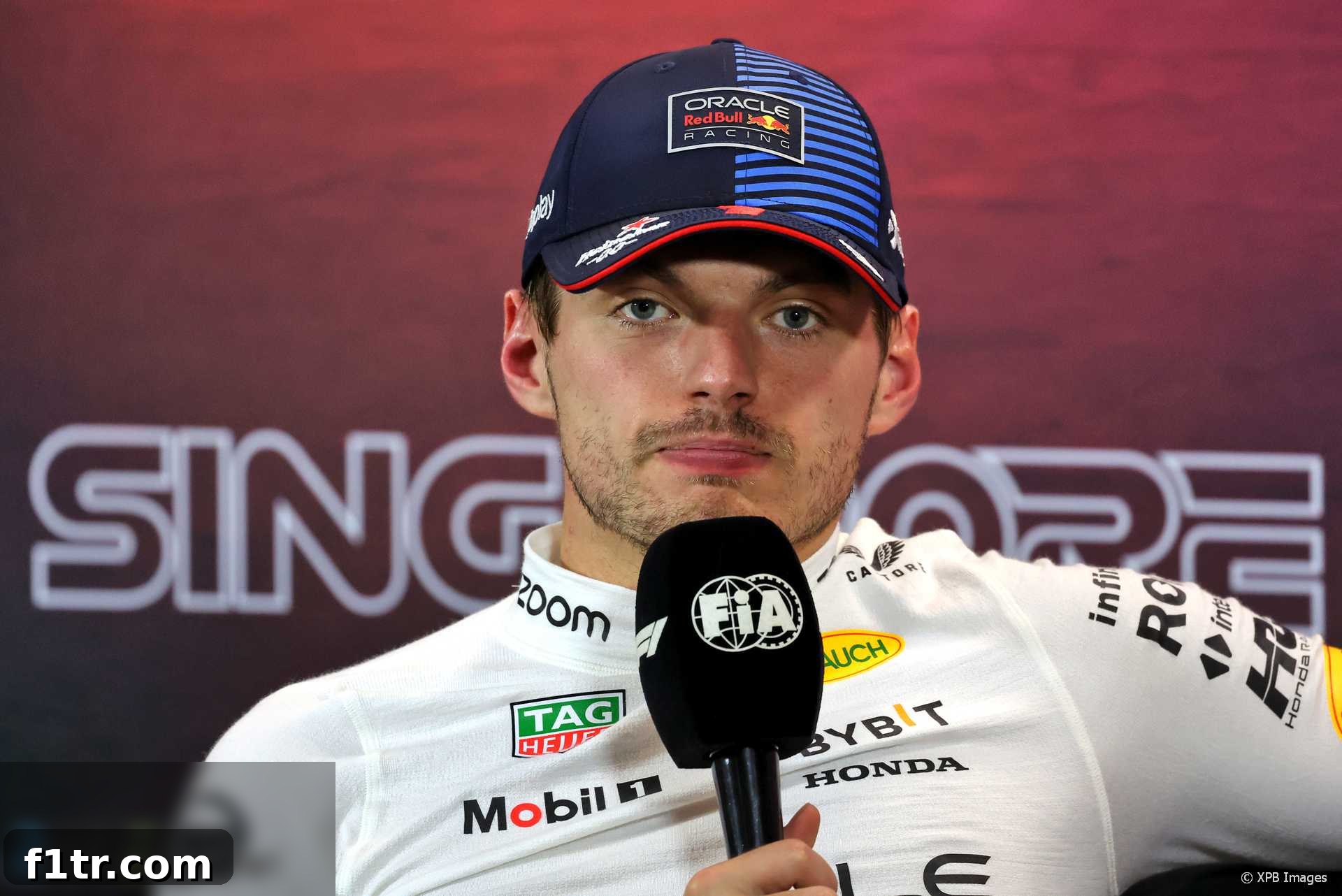
The exhilarating world of Formula 1, often a crucible of high-octane drama and intense competition, recently found itself embroiled in a different kind of controversy. Following a qualifying session at the Singapore Grand Prix, reigning world champion Max Verstappen offered only laconic responses during the official FIA press conference, a direct reaction to a penalty he had received the previous day for using profanity. This incident ignited a debate spanning driver conduct, the application of sporting regulations, and the balance between raw emotion and perceived professionalism in motorsport’s premier category.
The stewards’ decision to penalize Verstappen stemmed from his use of an expletive during Thursday’s official press conference in Singapore. The world champion was ordered to complete “some work of public interest,” a sanction that immediately raised eyebrows and sparked widespread discussion across the F1 paddock and among fans globally. While the rules are in place to uphold a certain standard of conduct, the nature of the infraction and the subsequent punishment led many to question the proportionality and necessity of such a ruling in a sport celebrated for its passion and competitive fire.
Interestingly, among those who swiftly came to Verstappen’s defense was his fierce 2021 championship rival, Lewis Hamilton. Speaking candidly in the same press conference where Verstappen remained largely silent, Hamilton expressed his strong disapproval of the penalty, even going so far as to advise Verstappen not to comply with the mandated public interest work. “I think it’s a bit of a joke, to be honest,” Hamilton stated, reflecting a sentiment shared by many who believe that such strict adherence to language rules can stifle the authentic expression of athletes in highly pressured environments. “This is the pinnacle of the sport. Mistakes are made. I certainly wouldn’t be doing it and I hope Max doesn’t do it.” Hamilton’s unexpected solidarity highlighted a broader professional empathy among drivers, who understand the immense pressure and emotional intensity inherent in their roles, often leading to unscripted moments.
Verstappen, seated between Hamilton and pole-winner Lando Norris, maintained a visibly muted demeanor during the official FIA session. His answers to journalists’ questions were deliberately brief, almost perfunctory, a clear indication of his displeasure with the stewards’ ruling. This calculated silence spoke volumes, conveying a message of protest without violating any further regulations. However, the Red Bull driver later engaged more openly with other members of the media, providing a deeper insight into his perspective on the incident and the penalty.
“It’s just ridiculous to get a penalty for that,” Verstappen told Sky Sports, reiterating his frustration. He elaborated on his view, suggesting that such penalties should be reserved for more direct and malicious transgressions. “These kind of things, for me, I think when you insult someone, that’s pretty clear. I didn’t even aim it at a person. It’s a bit of a slip of the tongue moment.” This distinction between an intentional insult and an accidental expletive uttered in the heat of the moment became a central point of contention for many, including Verstappen himself. He acknowledged that the stewards, in their capacity, were merely applying the existing regulations. “It’s in the rules,” he conceded. “Honestly, this is not even to the stewards because they are just bound to a rule book. I actually had a great chat with them about it. They are very understanding, but it’s in the rules and they have to apply something. But for me, it’s not the right way to go forward in our sport.” This commentary revealed a nuanced understanding of the stewards’ dilemma while simultaneously advocating for a more pragmatic and less rigid interpretation of conduct rules within Formula 1.
Lando Norris, who had secured a commendable second position in qualifying, initially injected a moment of levity into the tense atmosphere of the press conference. He jokingly told the room that Verstappen “deserved it,” eliciting laughter from the assembled journalists. However, Norris quickly followed up with his genuine opinion, aligning himself with the growing chorus of disapproval regarding the penalty. “I think it’s pretty unfair,” he stated definitively. “I don’t agree with any of it.” The collective support from his peers, particularly from a rival like Hamilton, underscored a palpable sense of injustice among the drivers regarding the perceived triviality of the offense compared to the severity of the sanction.
The incident has inevitably sparked a broader discussion about the evolving landscape of driver conduct and media interactions in Formula 1. On one hand, governing bodies like the FIA strive to maintain a professional image for the sport, ensuring that its athletes serve as appropriate role models, particularly for younger fans. This often necessitates strict rules regarding language and behavior in public forums. On the other hand, motorsport is inherently an emotional and high-pressure discipline. Drivers operate at the absolute limit, both physically and mentally, and moments of raw, unfiltered emotion—be they joy, frustration, or anger—are an authentic part of the human experience in elite competition. Many argue that overly sanitizing these interactions risks alienating fans who connect with the genuine passion and personality of the athletes.
The “public interest work” penalty, while seemingly benign, carries a symbolic weight. It suggests that a driver’s language has fallen short of public expectation and requires a form of atonement. However, in an era where authenticity is increasingly valued, particularly by a younger demographic, the line between professional decorum and genuine expression becomes increasingly blurred. Fans often appreciate the candidness of drivers, even when it involves a momentary lapse in conventional politeness, as it humanizes these extraordinary athletes and makes them more relatable. The question then arises: where should the boundary be drawn? Is a single expletive, not directed at an individual, truly detrimental to the sport’s image, or does the overreaction to such an incident risk making the sport appear overly rigid and out of touch with contemporary social norms?
Moreover, the controversy raises questions about the consistency and interpretation of regulations. While the stewards acted within the confines of the rulebook, Verstappen’s argument that the rules themselves might be outdated or too broad resonated with many. The discussion among drivers and the media suggests a desire for a more nuanced approach, one that distinguishes between aggressive or derogatory language and a fleeting expression of frustration. As Formula 1 continues to expand its global reach and attract new audiences, finding this delicate balance between upholding professionalism and allowing for the genuine, sometimes imperfect, human element of its stars will be crucial for its sustained appeal. This Singapore incident, while seemingly minor, serves as a poignant reminder of the ongoing dialogue required to navigate these complexities effectively.
2024 Singapore Grand Prix
- Ricciardo’s brake woe and why Perez thought he had an engine problem: Singapore GP radio
- ‘Perez is only quicker when he has DRS’: How Hulkenberg’s Haas beat a Red Bull – again
- Mercedes explain “clear mistake” strategy call which left Hamilton “so angry”
- “Sometimes I wonder why I do this”: How Hamilton endured a slog to sixth in Singapore
- F1’s rules need surgery as well as sticking plaster after fastest lap controversy
Browse all 2024 Singapore Grand Prix articles