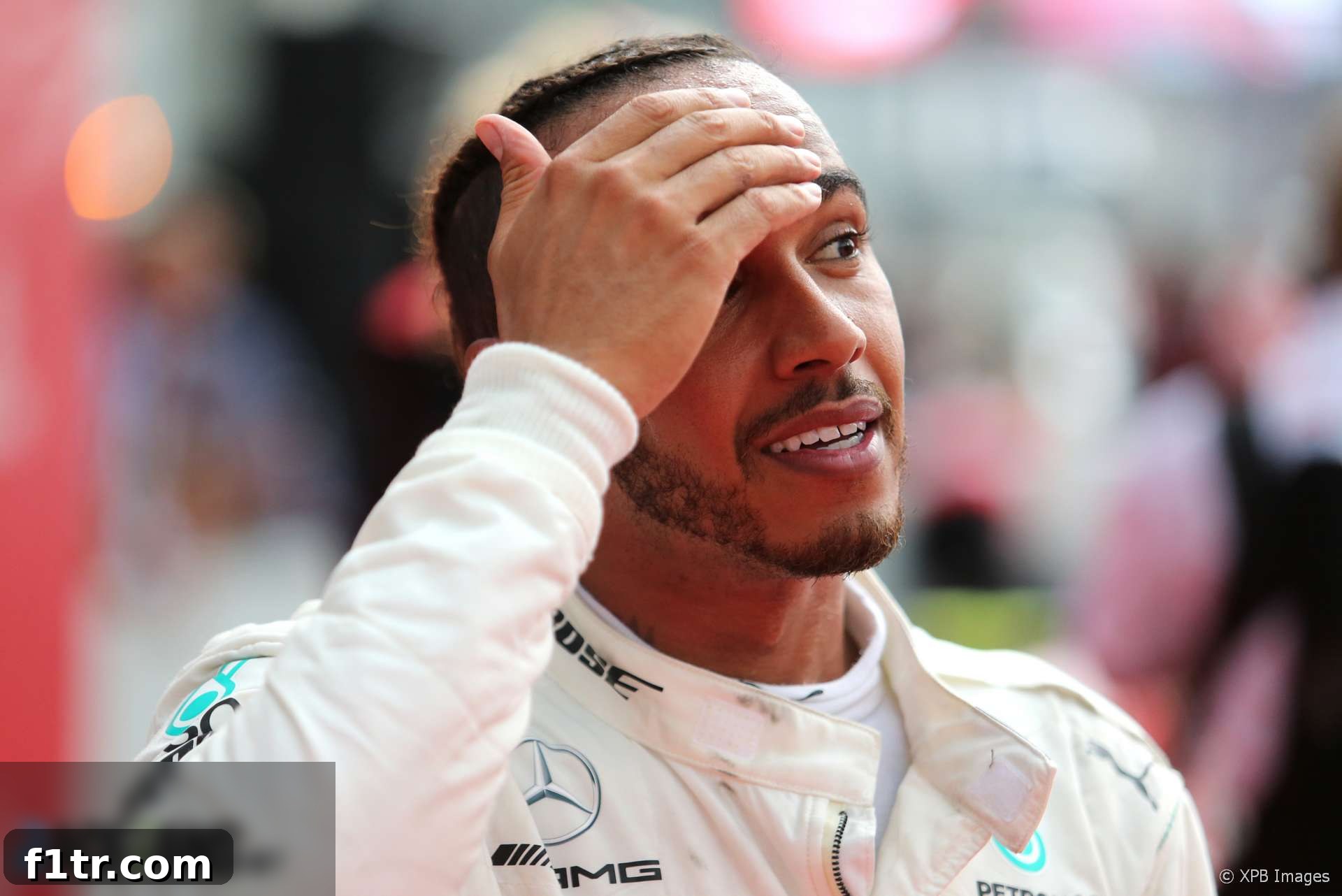
Lewis Hamilton Retains German Grand Prix Victory Amidst Pit Entry Controversy
In a pivotal moment following a thrilling race, Lewis Hamilton successfully maintained his hard-fought victory at the German Grand Prix. The decision came after race stewards concluded their investigation into a pit entry violation committed by the Mercedes-AMG Petronas Formula 1 Team driver. This outcome brought a sigh of relief for Hamilton and his team, cementing a crucial win in his championship campaign.
The incident under scrutiny occurred during a Safety Car period, a critical phase of any Formula 1 race where strategic decisions are made under immense pressure. Hamilton was observed to have crossed the white line separating the pit entry from the main track after a sudden change of mind regarding pitting. This maneuver, while seemingly minor, constitutes a breach of the stringent FIA Formula 1 Sporting Regulations designed to ensure safety and fair play on the track. Despite the clear infringement, the stewards ultimately decided against imposing a time penalty, opting instead for a reprimand – a less severe form of disciplinary action that nonetheless serves as an official warning.
The German Grand Prix: A Race of High Stakes and Drama
The 2018 German Grand Prix at the iconic Hockenheimring was a race packed with unforeseen turns and dramatic moments, setting the stage for Hamilton’s controversial pit entry. Starting from a disadvantaged grid position due to a hydraulic issue in qualifying, Hamilton showcased a masterclass in wet-weather driving and strategic prowess. His incredible recovery drive saw him battle through the field, culminating in a surprising lead as his main rivals, most notably Sebastian Vettel, encountered difficulties and crashed out. The weather played a significant role, with intermittent rain making track conditions treacherous and amplifying the pressure on drivers and strategists alike. It was amidst this high-tension environment that the Safety Car was deployed on lap 52, following Romain Grosjean’s incident, forcing teams to make split-second decisions regarding tire changes and race strategy.
For Hamilton and the Mercedes team, the Safety Car period presented a crucial strategic dilemma. With changing weather conditions and tire degradation concerns, the call to pit for fresh tires or stay out on worn ones was finely balanced. Hamilton’s initial move towards the pit lane entry, followed by a sudden swerve back onto the main track at the very last moment, was a visible manifestation of this internal strategic indecision. This moment, captured by numerous cameras from multiple angles, immediately drew the attention of race control and subsequently, the FIA stewards, who are tasked with upholding the integrity and safety of the sport’s rules.
FIA Stewards’ Official Decision and Rationale
Stewards’ Verdict on Hamilton’s Pit Entry Infringement
The Stewards undertook a comprehensive review of all available evidence pertaining to the incident. This included detailed video footage from multiple on-board and trackside cameras, audio communications between car 44 (Lewis Hamilton) and his team, and direct testimony from both Lewis Hamilton himself and a representative of the Mercedes-AMG Petronas F1 Team. The purpose of this meticulous examination was to ascertain the facts and determine if a breach of the FIA Formula 1 Sporting Regulations had occurred.
It was unequivocally established that an infringement of the aforementioned regulation had indeed occurred. The driver, Lewis Hamilton, clearly and undeniably crossed the white line that demarcates the separation between the pit entry lane and the active racing track. This action, regardless of the underlying strategic confusion or intent, represents a breach of the FIA Formula 1 Sporting Regulations, specifically concerning safe pit lane procedures. These rules are in place to ensure predictable and safe operations around a high-speed and critical area of the circuit.
In determining the appropriate sanction for this infringement, the Stewards meticulously considered a range of mitigating factors. These factors played a crucial role in shaping the final disciplinary outcome and were pivotal in the decision to not impose a more severe penalty, such as a time penalty, which could have altered the race result. The mitigating circumstances identified and taken into account were:
- The driver and the team exhibited commendable candor and immediately admitted their mistake. They openly acknowledged that the infringement arose from genuine confusion and indecision within the team regarding the optimal strategy – whether to remain on track or enter the pits for fresh tires during a highly dynamic Safety Car phase. This transparency and admission are considered significant in the stewarding process.
- The incident transpired during a Safety Car period. During such times, the racing speeds are significantly reduced, and all cars are operating under controlled conditions. This specific context inherently lowers the potential risk associated with minor procedural errors compared to incidents occurring during full-speed racing. The overall speed delta and the controlled environment diminish the immediate danger.
- Crucially, at no point during the execution of the maneuver did Lewis Hamilton’s change in direction pose any discernible danger to any other competitor. The action was performed in a manner deemed safe, without creating an unsafe situation or impeding the progress of other drivers who might have been entering or exiting the pit lane. Safety is paramount, and the lack of danger was a key consideration.
After carefully weighing all the preceding information, and taking into account historical precedents and the consistent application of this particular rule in prior Formula 1 events, the Stewards reached a consensus. Their considered opinion was that a reprimand represented the most appropriate and proportionate penalty for this specific infringement on this occasion. A reprimand serves as a formal warning and an official record of the breach, without directly impacting the race classification, but contributing to a cumulative penalty system.
It is important to remind all competitors of their fundamental right to appeal decisions made by the Stewards. This right is enshrined within Article 15 of the FIA International Sporting Code and Article 9.1.1 of the FIA Judicial and Disciplinary Rules, with specific exceptions detailed in Article 12.2.4 of the FIA International Sporting Code. Such appeals must be lodged within the stipulated time limits, ensuring a robust and fair judicial process within the sport.
Understanding F1 Pit Lane Regulations and Penalties
The pit lane in Formula 1 is a critical area, not just for tire changes, repairs, and strategic stops, but also as a high-risk zone where strict adherence to regulations is paramount for safety. Regulations concerning pit entry and exit lines are among the most fundamental rules governing on-track conduct. The white line marking the pit entry is specifically designed to delineate a clear, unambiguous path for cars intending to pit, preventing unexpected or erratic maneuvers that could endanger mechanics, other drivers, or race officials working in and around the pit lane. Crossing this line when not committed to pitting, or doing so in an unsafe manner, is unequivocally a clear violation of these regulations. These rules are in place not to penalize drivers arbitrarily, but to maintain order, predictability, and mitigate risks in an environment where speeds, even under a Safety Car, are still considerable and human error can have severe, potentially catastrophic consequences.
Types of Penalties in Formula 1: A Spectrum of Disciplinary Action
Formula 1’s disciplinary system offers a nuanced range of penalties, each tailored to the severity, nature, and context of the infringement. The stewards’ choice of penalty is crucial as it directly impacts both the immediate race outcome and future championship prospects:
- Reprimand: As issued to Lewis Hamilton, this is the mildest form of penalty in Formula 1. It serves as a formal warning recorded against the driver’s disciplinary record. While it does not immediately affect race results, accumulating three reprimands (with at least two being for driving infringements) within a season can result in a grid penalty for a subsequent race, highlighting its cumulative significance.
- Time Penalties: These are more common and directly impact a driver’s race performance. They can range from 5-second to 10-second penalties, typically added to a driver’s total race time or served during a pit stop (e.g., stopping for an extra 5 seconds in the pit box). They are often applied for infractions like speeding in the pit lane, minor unsafe releases, or causing a minor collision.
- Drive-Through or Stop-and-Go Penalties: Considered more severe than time penalties, these require a driver to make an unscheduled trip through the pit lane (drive-through) or stop in their pit box for a specified duration (e.g., 10 seconds for a stop-and-go) before rejoining the race. These penalties directly and significantly impact a driver’s race position and strategy due to the lost time.
- Grid Penalties: Applied for technical infringements (e.g., exceeding engine component limits, gearbox changes outside regulations) or very serious driving offenses in previous events, causing a driver to start further down the grid in a future race. This can severely compromise a driver’s chances in that subsequent event.
- Exclusion/Disqualification: The most extreme penalty, resulting in the removal of a driver or team from the race results entirely, or even from the entire event. This is usually reserved for major technical breaches (e.g., illegal car components) or extremely dangerous and unsporting driving conduct.
The stewards’ considered decision to issue only a reprimand for Hamilton’s pit entry infraction underscores their assessment that, despite the clear rule breach, the presence of significant mitigating factors substantially reduced the perceived severity and potential impact of the incident. This judicious application of rules, balancing strict adherence with contextual understanding, is crucial for maintaining the integrity and fairness of competition in the fast-paced and high-stakes world of Formula 1.
Impact of the Decision and Broader Implications
The stewards’ ruling to uphold Lewis Hamilton’s German Grand Prix victory, despite the pit entry violation, had immediate and significant implications for the championship battle. In the tightly contested 2018 Formula 1 season, where every point was vital, a time penalty, even a minor one (such as a 5-second penalty), could have stripped Hamilton of his hard-earned win. Such a outcome would have potentially handed victory to a rival and drastically altered the championship standings, adding immense pressure to subsequent races. By issuing a reprimand, the stewards allowed the sporting outcome of the race to stand, acknowledging the procedural error without overturning Hamilton’s on-track achievement.
Beyond the immediate race result, this decision also reignited discussions among fans, pundits, and teams regarding the consistency of stewarding in Formula 1. While many agreed with the leniency given the clearly articulated mitigating circumstances, others argued that a clear rule breach should always incur a more tangible penalty to deter future similar incidents and maintain absolute clarity in rule enforcement. Such debates are common in Formula 1, highlighting the subjective element that stewards must navigate when applying objective rules to complex, real-time racing scenarios. The stewards’ detailed explanation, citing specific mitigating factors and referencing historical precedents, aimed to provide transparency and justify their considered judgment, reinforcing public trust in the regulatory process.
Ultimately, the incident at Hockenheim served as a stark reminder of the intense pressure under which Formula 1 teams and drivers operate, where strategic calls can change in an instant, and even minor errors can lead to major investigations. It also reaffirmed the stewards’ crucial and often challenging role in ensuring that the sport is governed fairly, balancing strict adherence to regulations with a pragmatic and contextual understanding of racing realities. This incident became a notable footnote in a thrilling season, remembered for both its on-track action and the intricate legal proceedings off it.
Advert | Become a RaceFans supporter andgo ad-free
Stay Connected with RaceFans: Your Ultimate F1 Resource
To ensure you don’t miss any breaking news, in-depth analysis, or exclusive insights from the thrilling world of Formula 1, make sure to follow RaceFans across our various platforms. We strive to bring you the most comprehensive and timely coverage of every race, driver, and championship battle, keeping you at the heart of the action.
- Join RaceFans on Facebook: Engage with our vibrant community, share your opinions, and get the latest updates directly in your feed.
- Follow RaceFans on Twitter: Get real-time news, live race updates, and immediate reactions as events unfold on track.
- Get daily email updates from RaceFans: Subscribe to our newsletter for a daily digest of all the top F1 stories delivered straight to your inbox, ensuring you’re always informed.
Explore More from the 2018 F1 Season Archive
Delve deeper into the thrilling events and narratives of the 2018 Formula 1 season. From championship battles to technical innovations and dramatic off-track stories, our extensive archive offers a wealth of content for every F1 enthusiast. The 2018 season was a memorable year, filled with intense competition and pivotal moments that shaped the careers of many drivers and the trajectories of leading teams. Discover how Honda’s engine development progressed, the challenges faced by McLaren, and the behind-the-scenes stories that truly define the sport.
- F1 feared “death knell” for Drive to Survive after Ferrari and Mercedes snub
- McLaren staff told us we were “totally crazy” to take Honda engines in 2018 – Tost
- ‘It doesn’t matter if we start last’: How Red Bull’s junior team aided Honda’s leap forward
- Honda’s jet division helped F1 engineers solve power unit problem
- McLaren Racing losses rise after Honda split
Browse all 2018 F1 season articles