Mercedes’ Masterclass: How Hamilton and Bottas Redefine Coexistence in F1
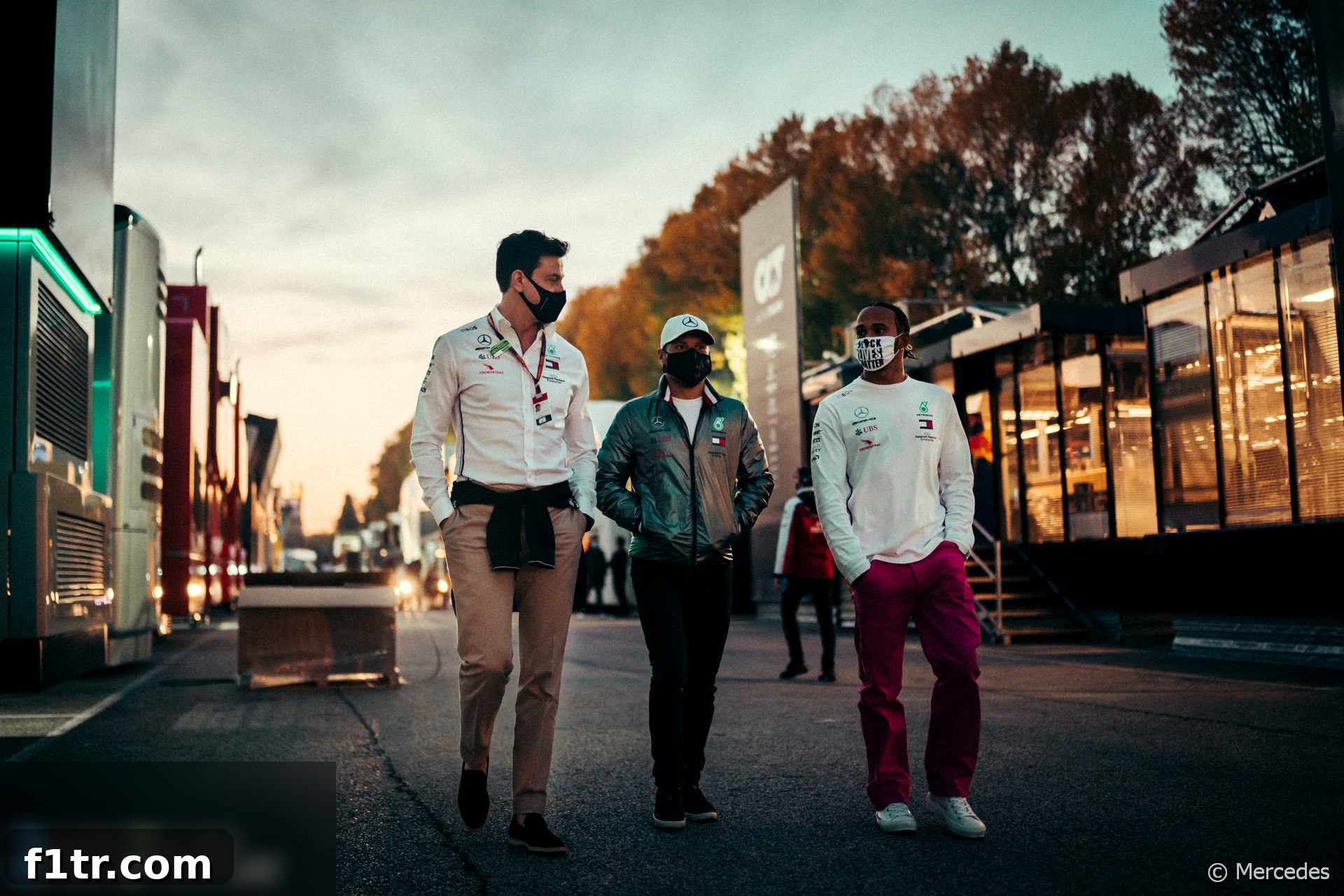
In the high-stakes world of Formula 1, the relationship between teammates can often be a delicate balance between fierce competition and crucial collaboration. Mercedes team principal Toto Wolff has offered insightful commentary on their hugely successful driver pairing of Lewis Hamilton and Valtteri Bottas, highlighting how their dynamic proves it is indeed possible for two top-tier drivers to coexist harmoniously within the same team, delivering consistent results and championship glory.
What Toto Wolff Says About Driver Dynamics
With Valtteri Bottas having already secured his future with Mercedes and Lewis Hamilton widely expected to extend his tenure, the stability of their driver lineup is a cornerstone of the team’s ongoing dominance. Wolff was recently asked to draw comparisons between the current Hamilton-Bottas era and the team’s previous, often tumultuous, pairing of Hamilton and Nico Rosberg. His perspective sheds light on the nuanced approach Mercedes takes to managing two exceptional talents.
“I think if you have a dynamic between two drivers where the talking happens on the track, then I think you can have two alpha males,” Wolff explained, emphasizing the importance of on-track performance dictating the pecking order rather than off-track drama or political maneuvering. This philosophy underpins Mercedes’ ability to harness the individual strengths of both drivers without compromising overall team cohesion.
“Valtteri showed some really good performances this year, but then dropped away towards the end,” Wolff acknowledged, touching upon the ebb and flow of Bottas’s season. However, he quickly underscored the strategic benefit of this pairing. “The combination works well. When Lewis has a bad day, Valtteri pulls it off and the other way around. Valtteri had a really bad day [in Turkey] and Lewis won the race. And I think this combination really works well for the team.”
This complementary dynamic is critical for a team vying for both drivers’ and constructors’ championships. The ability of one driver to step up when the other falters ensures that Mercedes consistently maximizes their points haul, regardless of individual performance fluctuations. This symbiotic relationship contrasts sharply with the often-fraught atmosphere that characterized the Hamilton-Rosberg years, where an intense personal rivalry frequently threatened team stability, even as it pushed both drivers to their absolute limits. The current setup allows Mercedes to maintain a unified front, focusing collective energy on development and race strategy rather than internal conflict resolution.
Quotes: Dieter Rencken
Advert | Become a RaceFans supporter andgo ad-free
The Evolution of Driver Pairings: From Rivalry to Synergy
The F1 paddock has witnessed numerous iconic driver rivalries throughout its history, but few have been as intensely scrutinized as that between Lewis Hamilton and Nico Rosberg during their time at Mercedes. Their competition, fueled by a long-standing personal history and the pursuit of a world championship in dominant machinery, often spilled off the track, creating significant challenges for team management. While undoubtedly thrilling for fans, the internal tension required immense effort from Toto Wolff and the team hierarchy to keep under control.
In stark contrast, the Hamilton-Bottas pairing has been largely characterized by mutual respect and a clear understanding of their roles within the team. While Bottas is an undeniable “alpha male” with the talent to win races, his approach to competition with Hamilton has been one of robust challenge rather than outright antagonism. This doesn’t imply a lack of ambition on Bottas’s part; rather, it reflects a maturity in managing expectations and contributing to the greater team objective.
The success of this strategy is evident in Mercedes’ unbroken constructors’ championship streak. By fostering an environment where drivers can push each other without detrimental internal conflict, Mercedes has created a sustainable model for excellence. This allows for seamless technical feedback, shared development goals, and a unified approach to challenging race weekends, which are all invaluable assets in modern Formula 1. It’s a testament to both drivers’ professionalism and the team’s astute management that they have consistently turned potential friction into competitive advantage.
Social Media Spotlight: F1 Stars Beyond the Grand Prix
Beyond the intense battles on the track, Formula 1 drivers engage with fans and pursue their passions through social media. These platforms offer a glimpse into their lives, projects, and continued dedication to motorsport.
All set and ready for the new Alonso Kart Racing Team . First race this weekend in Adria.
2021…we go for you 👈🏼✊️✊️✊️ #AlonsoKart #karting #newproject
🔵🟡🔴 pic.twitter.com/sZuchzI0sj— Fernando Alonso (@alo_oficial) November 22, 2020
Fernando Alonso’s tweet about his new Kart Racing Team exemplifies the enduring passion many F1 drivers have for motorsport at its grassroots. Even as he geared up for his highly anticipated return to Formula 1, Alonso remained deeply involved in karting, a discipline that serves as the foundation for virtually every racing driver’s career. This commitment to nurturing talent and staying connected to the purity of racing highlights the multifaceted lives of these athletes, constantly seeking new challenges and ways to contribute to the sport they love.
- Find more official F1 accounts to follow in the F1 Twitter Directory
Further Insights: Major Headlines Shaping Formula 1
Beyond the race track, Formula 1 often intersects with broader societal and political discussions, shaping its future and the public perception of its stars. Here are some of the most prominent topics making headlines:
Advert | Become a Supporter & go ad-free
Hamilton to be knighted in New Year’s Honours list after 7th F1 world championship win (The Sun)
“The seven-time world champion, 35, is to be given the gong after his controversial tax affairs were deemed ‘all in order’.”
The news of Lewis Hamilton’s impending knighthood following his seventh Formula 1 world championship win sent ripples of congratulation across the globe. This prestigious honor not only recognizes his unparalleled sporting achievements, placing him in an elite category alongside other sporting legends, but also acknowledges his significant contributions off the track. Hamilton has increasingly used his global platform to advocate for social justice, anti-racism, diversity, and environmental awareness, transcending the boundaries of sport. The confirmation that his financial affairs were “all in order” also helped clear any lingering doubts, solidifying public support for this well-deserved recognition.
‘Fantastic ambassador’ Hamilton deserves knighthood, says Hill (The Guardian)
“It is a very rare thing in our sport to get a knighthood. It is then also a recognition of his stance on equality, anti-racism and environmental issues. He is outspoken, he is playing his part and using his fame for positive purposes.”
Former F1 World Champion Damon Hill’s endorsement further underscores the widespread sentiment that Hamilton’s knighthood is more than just a sporting accolade. Hill’s comments highlight the rarity of such an honor within motorsport and emphasize the broader impact of Hamilton’s activism. In an era where athletes are increasingly expected to use their voice for social change, Hamilton stands out as a powerful advocate, embodying the values of equality and justice. His fearless stance on critical global issues, from Black Lives Matter to environmental protection, positions him as a role model far beyond the racing circuit, making the knighthood a fitting tribute to a truly influential figure.
Formula 1 shake-up to challenge dominance of Hamilton era (FT)
“This move threatens further controversy, with Amnesty International accusing Saudi Arabia of ‘sportswashing’ to distract from its record on human rights. Mr Hamilton, who has been a vocal supporter of the Black Lives Matter campaign, said F1 ‘cannot ignore the human rights issues’ in countries on the circuit.”
The expansion of the Formula 1 calendar to include new venues like Saudi Arabia has ignited considerable debate regarding the sport’s ethical responsibilities. While F1 seeks new markets and revenue streams, organizations like Amnesty International have raised serious concerns, accusing host nations of “sportswashing” – using high-profile sporting events to divert attention from their human rights records. Lewis Hamilton, consistent with his outspoken stance on social justice, has been quick to assert that F1 “cannot ignore the human rights issues” in the countries it visits. This ongoing tension between commercial growth and ethical considerations presents a significant challenge for Formula 1, requiring careful navigation to uphold its values while expanding its global footprint. The sport faces increasing pressure from drivers, fans, and human rights groups to ensure its growth aligns with a commitment to universal human rights.
- As Saudi Arabia joins 2021 calendar, Hamilton urges F1 not to ignore human rights
The Run In: Assessing Lundgaard’s chances (F2)
“The test in the RS18 at Bahrain has given me a boost. If I had not had this test with Renault, then I would never have driven in Bahrain before the round there. As you will remember, I unfortunately missed the pre-season test there earlier this year.”
In the junior categories, the path to Formula 1 is paved with intense competition and crucial development opportunities. Christian Lundgaard’s experience highlights the significance of every testing session and track exposure in Formula 2, a vital stepping stone for aspiring F1 drivers. Missing pre-season testing can be a significant setback, making any additional track time, such as his test in the Renault RS18, incredibly valuable. These opportunities not only provide critical data and experience but also allow drivers to impress their respective academies and potential future F1 teams. The F2 championship remains a fiercely contested battleground where young talents fight for recognition, hoping to catch the eye of F1 recruiters and secure a coveted seat in the pinnacle of motorsport.
We always endeavour to credit original sources. If you have a tip for a link to feature in the next RaceFans round-up please send it in via the contact form.
Advert | Become a RaceFans supporter andgo ad-free
Fan Voices: Shaping the Future F1 Calendar
The expansion and structure of the Formula 1 calendar are frequent topics of discussion among fans, particularly in light of global events and the desire for more diverse racing venues. Our “Comment of the Day” often captures these passionate debates.
Christopher would like to see more than one extra race added to the 2021 F1 calendar:
“I know it would be taking it up to 24 grands prix, but how about Sepang on the 18th and Algarve on the 2nd of May? They would both be double headers with China/Malaysia and Portugal/Spain but they are quite reasonable.”
“Mugello is very unlikely because of access for crowds and the following two in the above survey would get the places. Also, it is quite likely that at least one of the other races may not occur due to Covid or the Azerbaijani contract with Armenia or one still subject to contract.”
Christopher Windle
Christopher’s suggestion reflects the dynamic nature of calendar planning in Formula 1, especially in challenging times. The idea of incorporating circuits like Sepang and Algarve through double-headers demonstrates creative thinking to maximize racing opportunities while managing logistics. The debate around the optimal number of races (24 Grands Prix being a significant increase) highlights the tension between fan demand for more action and concerns about the strain on teams and personnel. Factors like spectator access, global health crises such as Covid-19, and geopolitical considerations (like the Azerbaijani contract mentioned) all play crucial roles in shaping the final schedule. This constant negotiation underscores the complexity of delivering a robust and exciting F1 season each year, balancing tradition with new opportunities and global realities.
Happy Birthday!
Wishing a very Happy Birthday to Nina Wood and Karthikeyan! We hope you have a fantastic day filled with celebration.
If you want a birthday shout-out in a future round-up, let us know when yours is via the contact form or by adding to the list here.
On This Day in F1 History
- Born today in 1954: Ross Brawn, a towering figure in Formula 1, celebrated for his multiple championship-winning technical director roles and his pivotal influence as Formula 1’s motorsport chief. His strategic genius and engineering prowess have left an indelible mark on the sport, from his time with Benetton and Ferrari to his leadership in defining the new technical regulations for F1’s future.
As Formula 1 continues to evolve, from the intricate dynamics within top teams like Mercedes to its broader engagement with social issues and its ever-changing global calendar, the sport remains a captivating blend of technological innovation, human endeavor, and profound cultural impact. The insights from figures like Toto Wolff and the voices of dedicated fans collectively paint a vibrant picture of a sport perpetually in motion, always looking to its next challenge.