Australian Grand Prix: A Glimmer of Hope or a Deceptive Illusion for Formula 1’s New Era?
The recent Australian Grand Prix seemed to provide the much-needed revitalization Formula 1 yearned for after a somewhat uncertain and unconvincing start to its latest era of technical regulations. Following a Saturday qualifying session that left many spectators feeling underwhelmed, Sunday’s race delivered a compelling narrative, offering tantalizing glimpses of what this new generation of F1 cars could truly achieve on track. Yet, beneath the surface of apparent drama, significant questions linger about the true nature and authenticity of the racing spectacle.
Advert | Become a Supporter & go ad-free
From Qualifying Quandary to Race Day Drama: A Stark Contrast
The Unsettling Spectacle of Qualifying
Saturday’s qualifying session at Albert Park had been, by many accounts, an unedifying spectacle. The new technical regulations, designed to push Formula 1 into a more sustainable and technologically advanced future, presented a unique challenge to drivers and teams. With highly sophisticated, energy-starved power units, competitors were forced to nurse their machinery through flying laps, often backing off by more than 50kph as they approached some of the fastest corners. This compromised approach, necessitated by the need for careful energy management and conservation, resulted in a less-than-thrilling display of raw speed and commitment that fans have come to expect from Formula 1 qualifying. The sight of cars seemingly holding back, rather than pushing to the absolute limit, fostered a sense of doubt regarding the exciting potential of the sport’s new technical blueprint.
The Thrilling Opening Laps: F1’s Much-Needed Adrenaline Boost
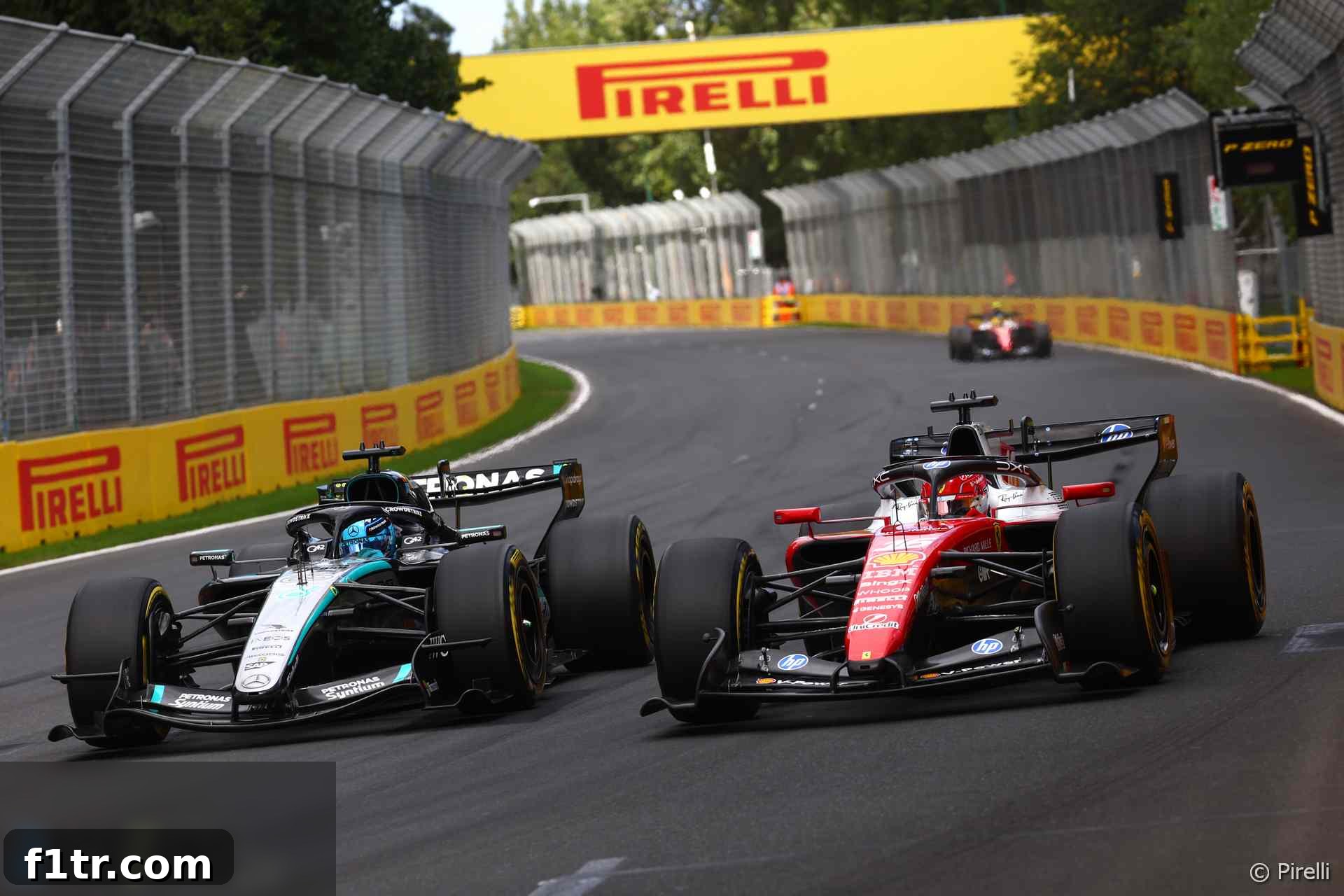
In stark contrast to the subdued qualifying, the opening laps of the Australian Grand Prix appeared to serve up precisely the drama and excitement Formula 1 desperately needed. From the moment the lights went out, the Ferraris launched off the line with blistering pace, immediately creating trouble for the Mercedes duo. The initial skirmishes saw George Russell and Charles Leclerc engaged in a captivating wheel-to-wheel battle, swapping the lead not just lap after lap, but often multiple times within the very same lap. This intense, direct confrontation, filled with strategic positioning and bold overtaking attempts, instantly dispelled some of the gloom cast by qualifying, reigniting hopes that competitive and close racing was indeed possible under the new rules.
Technical Nuances: Power Units, Aerodynamics, and Overtaking Potential
Harnessing Hybrid Power: The Role of Electrical Systems
Despite the heightened excitement, drivers were still visibly engaging in significant ‘lift and coast’ techniques from corner to corner, much as they had in qualifying. This indicates that energy management remains a critical component of race strategy under the new regulations. However, a crucial difference emerged during the race: the increased power and flexibility offered by their sophisticated electrical systems granted them a newfound scope to attack. This enhanced electrical capability allowed drivers to deploy bursts of energy more strategically, enabling them to push harder in critical moments for overtaking or defending, thereby adding a layer of tactical depth to the racing. It demonstrated that while conservation is key, the power units are designed to deliver performance when it matters most, creating dynamic shifts in pace.
Conquering Melbourne: A Test of Aerodynamic Design and Racecraft
Melbourne’s Albert Park circuit has historically been one of the trickier tracks on the Formula 1 calendar for overtaking, with its tight sections and flowing corners demanding precise car placement and daring maneuvers. Yet, during the Australian Grand Prix, observers witnessed a multitude of overtakes into critical sections such as turns one, three, nine, and eleven. This was particularly encouraging given pre-season concerns. After initial testing, some drivers had expressed apprehension that the significant changes to the cars’ aerodynamics this year had made it harder to follow other cars closely, a perennial challenge in modern F1. However, the race suggested that the cars’ extra power, available when drivers could strategically deploy it, played a vital role in overcoming the dreaded slipstream effect. This effect, which often makes it difficult for a chasing car to get close enough to pass, seemed less pronounced or was counteracted by the new power unit characteristics, leading to more direct on-track battles.
The Shadow of Uncertainty: Why Hasty Conclusions Are Dangerous
Advert | Become a RaceFans supporter andgo ad-free
The “New Regulations Effect”: A History of Initial Optimism
Just as caution was urged after the qualifying session, it is equally important not to draw definitive conclusions too hastily from the outcome of the Australian Grand Prix. The picture witnessed at one specific circuit, such as Melbourne, may not necessarily be replicated uniformly across the diverse range of tracks on the Formula 1 calendar. Historically, the introduction of a new set of regulations often produces an initial burst of drama and excitement, simply because drivers and teams are still in the early stages of getting accustomed to unfamiliar cars and their nuanced characteristics. This “new regulations effect” can sometimes create an artificial period of thrilling unpredictability before teams optimize their designs. A prime example is the last major regulatory overhaul in 2022. Drivers initially commented that the attempts to reduce the slipstream effect and promote closer racing had been successful. However, as teams rapidly improved their aerodynamic development and understood the new ground effect cars better, many of the old problems related to following and overtaking soon began to re-emerge, dampening the initial optimism. This historical pattern serves as a potent reminder that sustained, authentic racing cannot be judged on a single event.
Melbourne’s Unique Character: Not Every Track is the Same
Beyond the general “new regulations effect,” Melbourne itself possesses unique characteristics that might have contributed to the perceived success of the race. Albert Park is a semi-street circuit with a mix of high-speed sections and tighter corners, often leading to varied grip levels and a propensity for safety cars or red flags, which can naturally spice up a race. Furthermore, the track surface and ambient conditions can heavily influence tire degradation and strategic opportunities. These circuit-specific dynamics can sometimes mask underlying issues or amplify positive aspects that may not be present at purpose-built tracks with different layouts, surface characteristics, or aerodynamic demands. Therefore, while the Australian Grand Prix was undoubtedly exciting, it is crucial to observe how the new regulations and car designs perform on a variety of circuits before making sweeping judgments about the future of Formula 1 racing.
Overtake Mode: F1’s Invisible Hand in the Racing Drama
From DRS to Overtake Mode: A Paradigm Shift in Overtaking Aids
Aside from the general excitement and technical observations, one significant question mark hangs over the authenticity of the racing F1 provided on Sunday: the debut of the new Overtake Mode. This was the first race since Formula 1 replaced its controversial Drag Reduction System (DRS) with this innovative new aid. DRS, introduced in 2011, allowed a chasing car, when within one second of the car ahead at designated detection points, to flatten its rear wing, reducing drag and providing a temporary speed advantage. While it undeniably increased overtaking opportunities, it was often criticized for making passes too easy and artificial, detracting from genuine driver skill. The new Overtake Mode operates on similar core principles: when a chasing car gets within a second of another, they can deploy a speed boost. However, instead of simply lowering the rear wing, the new system leverages the cars’ adjustable aerodynamics at both the front and rear, delivering a burst of extra power from the hybrid unit. The intention is to create a more integrated and dynamic overtaking tool that feels less like a simple ‘pass button’ and more like a strategic deployment of advanced technology.
The Transparency Conundrum: What Fans Couldn’t See
The critical question remains: how much of a difference did this Overtake Mode truly make to the on-track action? Based on Sunday’s race, it is impossible for the average viewer to tell. When a driver deployed DRS, fans could visually observe the rear wing dropping, providing an immediate and clear indication of the system’s activation and its impact on the overtake. This transparency allowed viewers to understand the dynamics of a pass. With the new Overtake Mode, however, aside from an early, fleeting message from race control stating “Overtake Mode active,” viewers received no continuous or clear information about the system’s deployment. The crucial knowledge of precisely when drivers were using Overtake Mode – or indeed, when they weren’t – was entirely absent from the broadcast. This lack of visibility is a significant concern for fan engagement and understanding of the sport.
The impact of this invisibility became clear in the cool-down room after the race, when George Russell mentioned to Charles Leclerc that he had neglected to deploy the system at one critical point. “I screwed up here,” Russell remarked, “I didn’t press my overtake – I thought it was done and I didn’t press the overtake.” This candid admission highlights that Overtake Mode is not a passive system but an active, strategic tool that significantly influences driver decision-making and, consequently, race outcomes. The fact that a driver could inadvertently forget to use it underscores its importance, yet viewers were left completely in the dark about these pivotal moments. This opacity undermines the viewer’s ability to truly appreciate the skill of an overtake versus the technical assistance provided.
The Authenticity Debate: Real Racing or Manufactured Spectacle?
Advert | Become a RaceFans supporter andgo ad-free
This transparency issue leads directly to the core of the authenticity debate. Were any of the overtakes witnessed in today’s thrilling Grand Prix solely attributable to the skill, bravery, and strategic genius of the driver? Or how many of them came about primarily because the driver was able to deploy Formula 1’s new replacement for DRS? Without clear and consistent information about the activation of Overtake Mode, it remains fundamentally unclear whether the apparently thrilling wheel-to-wheel action was genuinely a product of pure racing prowess or significantly influenced by technological assistance. This ambiguity creates a philosophical dilemma for fans and purists of the sport.
For those who had either always appreciated DRS or had grown to accept it as a necessary evil for enhancing the spectacle, the lack of visibility might not be a major concern. Their primary desire is action and overtakes, regardless of the mechanism. However, for a significant segment of the Formula 1 fanbase, particularly those who cherish the ideal of “real racing” – where driver skill, car setup, and strategic acumen are the sole determinants of success – the current implementation of Overtake Mode presents a worrying problem. The criticism is potent: the one thing worse than a visible, artificial overtaking aid like DRS is an invisible, equally artificial aid. If fans cannot discern when a pass is made through sheer skill versus technological assistance, it diminishes the perceived value of every overtake and compromises the integrity of the racing narrative. This invisible intervention creates a disconnect between the excitement witnessed on screen and the true understanding of how it was achieved.
Looking Ahead: The True Test of F1’s New Era
The Australian Grand Prix offered a compelling, albeit complex, start to Formula 1’s new technical era. The initial impressions suggest that the new regulations possess the potential to deliver exciting, close-quarters racing, a stark improvement from the subdued qualifying. The enhanced power units and revised aerodynamics appear to be contributing to more dynamic on-track battles, even on traditionally challenging circuits. However, the introduction of the new Overtake Mode, while designed to foster more action, has inadvertently introduced a significant layer of opacity that threatens to undermine the perceived authenticity of the sport. Moving forward, Formula 1 faces a critical challenge: how to leverage its advanced technology to create exciting racing while maintaining transparency for its passionate global fanbase. The true test of this new era will not just be the number of overtakes, but the clarity with which fans can understand and appreciate the drivers’ efforts behind every thrilling moment. Future races will be crucial in determining whether Melbourne was a true harbinger of a new golden age or merely a tantalizing illusion.
Miss nothing from RaceFans
Get a daily email with all our latest stories – and nothing else. No marketing, no ads. Sign up here:
2026 Australian Grand Prix Articles
- Briatore “not happy at all” with Alpine’s “very weak” performance
- Drivers want rules changes to cut “dangerous” risk of crash at start
- Russell becomes the 68th different Formula 1 driver to lead the world championship
- Hadjar told Red Bull his car’s performance was “embarrassing” and “just c***”
- “How did you not call the pit?” Ups and downs in Hamilton’s first race with new engineer
Browse all 2026 Australian Grand Prix articles