Welcome to our comprehensive Formula 1 round-up, delivering a concise yet in-depth look at the most compelling narratives and insights from the paddock. In this edition, we unpack the candid observations of key drivers regarding their teams’ performance, ongoing debates that shape the sport’s regulations, and the ever-intense battles unfolding across the grid. From Ferrari’s puzzling pace variations to the persistent discussion surrounding track limits, and the strategic challenges faced by midfield contenders, we delve into the heart of Formula 1. Join us as we explore the critical details from recent Grand Prix events, alongside valuable perspectives from drivers and teams, all contributing to the captivating and ever-evolving story of the championship season.
Ferrari’s Enigmatic Pace: A Track-Specific Challenge for Carlos Sainz Jnr
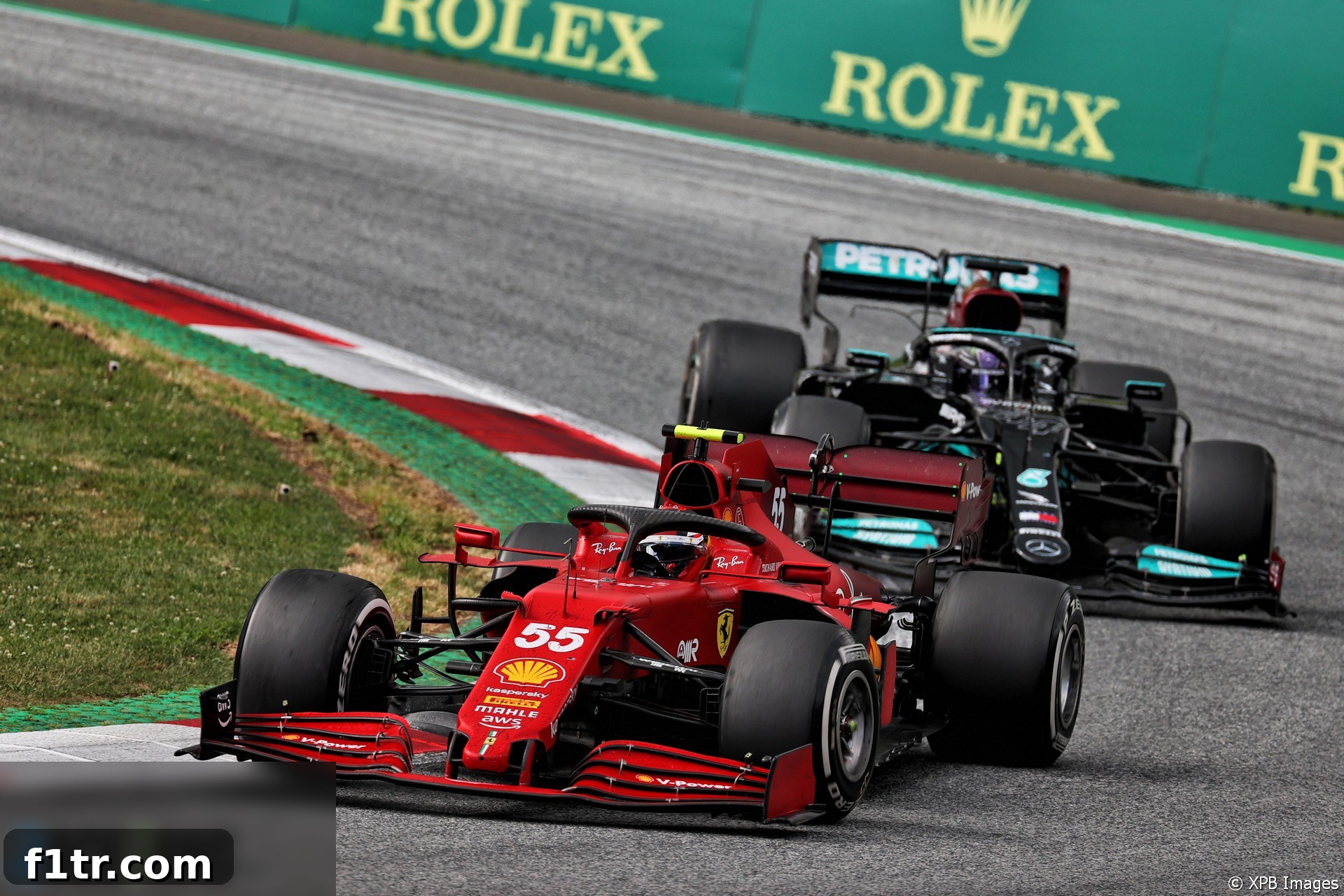
Carlos Sainz Jnr, Scuderia Ferrari’s Spanish driver, has offered a revealing assessment of his team’s performance, expecting their race pace to remain significantly influenced by the distinct characteristics of each circuit. This candid observation comes amidst Ferrari’s ongoing efforts to fully understand and mitigate the specific issues that have plagued their car, particularly tyre degradation, at certain venues.
Sainz openly acknowledged the perplexing contrast between Ferrari’s struggles at the French Grand Prix and their relatively more competitive pace on similar tyre compounds at the Red Bull Ring in Spielberg. He emphasized that the team has yet to pinpoint a definitive solution or the precise reasons behind their difficulties at Paul Ricard, where tyre wear was a significant concern. “It is unfortunately, at the moment, track specific. The car is very similar to [at] Paul Ricard, and we haven’t really found a solution or reason for our Paul Ricard struggles,” Sainz stated, highlighting the persistent analytical challenge facing the Maranello squad.
This lack of a universal understanding means Ferrari’s performance remains somewhat unpredictable. Sainz anticipates that their race pace will continue to “swing up and down, depending on the circuit.” This variability poses a considerable challenge for Ferrari as they aim to establish themselves as consistent front-runners and contenders for the Constructors’ Championship. For Ferrari, unlocking consistent performance across diverse track layouts is paramount to their championship aspirations. The team’s immediate priority will be to conduct rigorous data analysis and simulation work to unearth the root causes of their track-specific vulnerabilities, especially concerning tyre management, to ensure they can bring a more consistently competitive package to every Grand Prix circuit on the calendar.
Lance Stroll Advocates for Tangible Track Limits with Gravel Traps
The debate over track limits, a recurring point of contention in modern Formula 1, has once again been brought to the forefront by Aston Martin driver Lance Stroll. Following instances where his lap times were deleted for exceeding track boundaries during qualifying at recent races, Stroll has become a vocal proponent for more definitive, physical deterrents, specifically advocating for the widespread reintroduction of gravel traps.
Stroll’s argument stems from the frustration experienced by drivers when subtle infringements, often indiscernible from the cockpit, lead to penalties. He believes that traditional gravel provides a clear, unmistakable consequence for running wide, eliminating the ambiguity associated with electronic sensors and white line interpretations. “Even if they just put a strip of gravel behind the (kerb)… I’m not saying every circuit has to redo the whole gravel trap, but if [there’s] a three-metre strip of gravel behind each kerb instead of a double kerb, I think that could make tracks more interesting,” Stroll suggested, outlining a pragmatic approach that doesn’t necessarily require extensive redevelopments.
His core sentiment is that physical barriers foster greater discipline and enhance the integrity of racing. By replacing expansive tarmac run-offs or multiple layers of kerbs with a strip of gravel, drivers would be forced to respect the track’s edges or face an immediate and self-imposed penalty, whether it be a significant loss of time or potential damage to their car. Stroll criticized the current system’s reliance on microscopic precision: “Instead of messing around with these track limits by one millimetre, you’re off and you can’t really see it from the cockpit and all that stuff, which is silly.” This perspective highlights a desire for solutions that are intuitive for drivers and clear for spectators, ultimately making the sport more engaging and less prone to post-race controversies.
Alpine’s Midfield Ambitions: Esteban Ocon on the Battle for Constructor Points
Esteban Ocon, representing the Alpine F1 Team, has delivered a realistic assessment of his team’s position within the fiercely competitive Constructors’ Championship. He candidly admits that Alpine is currently not in contention for third place, a target that the former Renault works team had eyed in previous seasons, showcasing a pragmatic understanding of their current performance relative to top teams like Ferrari and McLaren.
Ocon’s observations from recent race weekends underscore this reality. “I was fighting with Charles [Leclerc] in some part of the race and he was much too fast compared to us, for sure,” he remarked, acknowledging the significant pace advantage held by Ferrari and other leading constructors. This clear performance gap means that Alpine’s primary focus must shift from challenging the absolute front-runners to excelling within the incredibly tight midfield battle, where every point gained or lost can dramatically alter their championship standing.
The real fight for Alpine, as Ocon sees it, is a season-long tussle with direct rivals such as AlphaTauri and Aston Martin. “We are going to be fighting with AlphaTauri and Aston Martin all the way through the season. They seem to have a little bit more pace than us overall,” he conceded. This intense competition necessitates a consistent and strategic approach to scoring points. Ocon emphasized the importance of relentless effort: “So little by little we need to be scoring points and do the best we can.” In such a finely balanced midfield, strong reliability, optimized race strategies, and flawless execution from both drivers are crucial for Alpine to maximize their potential and secure the highest possible position in the Constructors’ Championship standings by the end of the season.
Antonio Giovinazzi Reflects on a Compromised Styrian Grand Prix
Alfa Romeo driver Antonio Giovinazzi experienced a frustrating Styrian Grand Prix, as his race prospects were effectively shattered before the completion of the very first lap. An unfortunate incident at Turn Four, involving contact with Pierre Gasly, resulted in Giovinazzi’s car spinning, a setback that ultimately dictated the challenging trajectory of his entire race. While acknowledging that the collision was an unavoidable racing incident and neither driver was solely at fault, the immediate impact on his performance and strategy was profound.
“It was bad luck because I think after that, my race was quite compromised,” Giovinazzi lamented, reflecting on the significant early disadvantage. Despite this disheartening start, the Italian driver displayed commendable resilience and a determined fighting spirit. He pushed hard in the initial phases of the race, making concerted efforts to catch the main group and successfully overtaking both Haas cars, demonstrating his commitment to salvage whatever was possible. His team then opted for an aggressive “undercut” strategy, bringing him into the pits earlier than rivals to switch to hard tyres, hoping to gain track position as others stayed out longer.
However, even with this strategic gamble and his persistent efforts, the damage from the opening-lap incident proved too great to overcome. “Maybe we pitted a little bit too early but we tried to undercut,” Giovinazzi reflected on the strategy, which ultimately did not yield the desired outcome. Despite his tyres being in good condition towards the closing stages of the Grand Prix, the early loss of track position and the compromised car performance meant he lacked the pace to make a meaningful charge up the field. “But then in the end of the race, my tyres were in a good shape, and yeah we were too slow in the end. But I think my race, to be honest, was compromised from lap one,” he concluded, underscoring the lasting and often irreversible consequences that an early race incident can have on a driver’s Sunday performance.
Voices from the Paddock: Social Media Reactions
Beyond the official press conferences and media interviews, social media platforms provide a direct and often unfiltered glimpse into the emotions and immediate reactions of Formula 1 drivers following intense race weekends. Here’s a look at some notable posts that capture the mood in the paddock:
This one hurt. Every single member of the team should hold their head high today. We were up there on merit. Racing can be brutal but we keep fighting.
— George Russell (@GeorgeRussell63) June 27, 2021
George Russell’s poignant tweet encapsulates the bitter disappointment of a promising race that didn’t deliver the expected result. His message, however, also reflects a deep sense of pride in his team’s performance and the clear potential of their package, emphasizing that their strong showing was “on merit” despite the “brutal” nature of motorsport.
So bittersweet. One of my best performances with heaps of overtakes but should have been higher without the contact with Pierre. A shame about what happened but we’ve spoken and everything is ok. Our speed looks good for next weekend and thanks for your Driver of the Day votes 👊 pic.twitter.com/OZ2kJTw3c3
— Charles Leclerc (@Charles_Leclerc) June 27, 2021
Charles Leclerc’s “bittersweet” reflection perfectly captures the mixed emotions of a driver who delivered an exceptional performance filled with overtakes, yet felt robbed of an even better result due to an on-track incident. His quick clarification about resolving the matter with Pierre Gasly highlights the sportsmanship, while his forward-looking optimism and gratitude to fans underscore his resilience.
😑😑😑
Short race today, let’s think about next weekend now. pic.twitter.com/PLbDTMUeY6— PIERRE GASLY 🇫🇷 (@PierreGASLY) June 27, 2021
Pierre Gasly’s concise yet evocative tweet, accompanied by an emoji, clearly communicates his disappointment with a race that ended prematurely for him. His immediate pivot to “next weekend” demonstrates the relentless pace of the F1 calendar and a driver’s necessity to swiftly move past setbacks and refocus on future opportunities.
- For more direct access to your favorite F1 personalities and teams across various platforms, we invite you to explore our comprehensive F1 Social Media Directory.
Beyond the Track: Key Motorsport Insights and Updates
Stay informed with a curated selection of compelling articles and media from across the broader motorsport world, offering diverse perspectives and crucial updates that complement the immediate Formula 1 headlines:
Sports fans warned: you will be guinea pigs at UK summer events (The Guardian)
This thought-provoking piece from The Guardian delves into the ethical considerations and public awareness surrounding large-scale sporting events in the UK, particularly concerning spectator safety amidst evolving health protocols. It questions whether attendees are adequately informed about the potential risks and the experimental nature of certain measures.
Martins guest column: racing at home was mega (Formula 3)
In this personal and insightful guest column for Formula 3, the driver reflects on the unique pressures and unparalleled joy of competing on his home circuit. He shares valuable lessons learned about strategic race craft, emphasizing the critical importance of seizing overtaking opportunities swiftly and managing tyre performance without hesitation or unnecessary delay.
Simmons seals race three success at Silverstone (British F3)
This detailed race report from British F3 chronicles Simmons’ impressive and well-deserved victory at Silverstone. Starting from fourth on the grid, he masterfully navigated the challenges to lead for the majority of the race, skillfully holding off relentless pressure from his closest competitors. The report also highlights the strong performances of other rising talents, including Reema Juffali’s commendable best series finish.
Bearman makes it five wins in a row in restarted Italian F4 race (Formula Scout)
This Formula Scout report celebrates Ollie Bearman’s dominant and rapidly extending streak in Italian Formula 4, as he secured his fifth consecutive victory in a dramatic, restarted race at Vallelunga. The article meticulously details the critical opening moments where Bearman adeptly resisted pressure from rivals and recounts the spectacular incident that necessitated a red flag.
2021 W Series race one Red Bull Ring highlights (W Series)
Immerse yourself in the thrilling action of the 2021 W Series season opener at the Red Bull Ring with these official highlights. This captivating video captures all the pivotal moments, daring overtakes, and intense battles from the inaugural race, providing an excellent overview of the exciting start to the championship for women in motorsport.
We are committed to providing you with the most relevant and engaging motorsport content from around the globe. If you have a tip for a link relating to single-seater motorsport that you believe deserves to be featured in our next round-up, please do not hesitate to contact us via our submission form. Your contributions help us keep our community informed and connected.
The Day’s Definitive Insight: Mercedes’ Struggle and Red Bull’s Ascendance
Following Max Verstappen’s commanding victory, which marked Red Bull’s third consecutive win and underscored a growing dominance, a significant shift in the Formula 1 power dynamics has become undeniably clear. As astutely observed by commenter Gechi Chan, the unexpected helplessness displayed by Mercedes appears to signal a genuine turning of the tables in the fiercely contested championship battle.
The past few years, most of the races Red Bull won were super tight or steals (down to some bad luck for Mercedes or strategy errors).
But this race was proper dominance, like Mercedes used to do so often.
I don’t recall ever hearing Lewis ask “what should we do” and getting no real answer from Bono in regards to having a chance to win a straight-fought grand prix.
@gechichan
This powerful sentiment perfectly encapsulates the evolving reality of the Formula 1 season. For many years, Mercedes’ dominance was a predictable staple, with Red Bull often relying on exceptional circumstances, strategic gambles, or a stroke of misfortune for their rivals to secure victories. However, Verstappen’s recent performances have showcased an unparalleled level of outright superiority reminiscent of Mercedes’ own peak years. The striking image of Lewis Hamilton querying his race engineer, Bono, for solutions without receiving a clear, viable answer underscores the profound depth of the challenge Mercedes now faces, highlighting a period where Red Bull truly holds a decisive upper hand based on pure pace and performance.
Milestones and Memories: Happy Birthdays and F1 History
Happy Birthday!
Wishing a very happy birthday to our esteemed fellow motorsport enthusiasts celebrating this special day: Danny D, Hezla, Stefano, Wanon, Tino852, and Buj! We hope your day is filled with joy, celebration, and everything you wish for.
If you’d like a birthday shout-out in our future round-ups, please don’t hesitate to share your special day with us via our contact form or by adding your name to our growing community list here. We love celebrating with our readers!
On This Day in F1 History
- Exactly 40 years ago today, motorsport legend Rick Mears achieved a remarkable and memorable feat, clinching victory in a pair of challenging 83-lap CART IndyCar races held consecutively at the iconic Atlanta Motor Speedway. In race one, Johnny Rutherford secured a strong second place, finishing ahead of F1 icon Mario Andretti. The two seasoned competitors then famously swapped positions in the fiercely contested second race, adding another thrilling chapter to IndyCar history and Mears’ illustrious career.