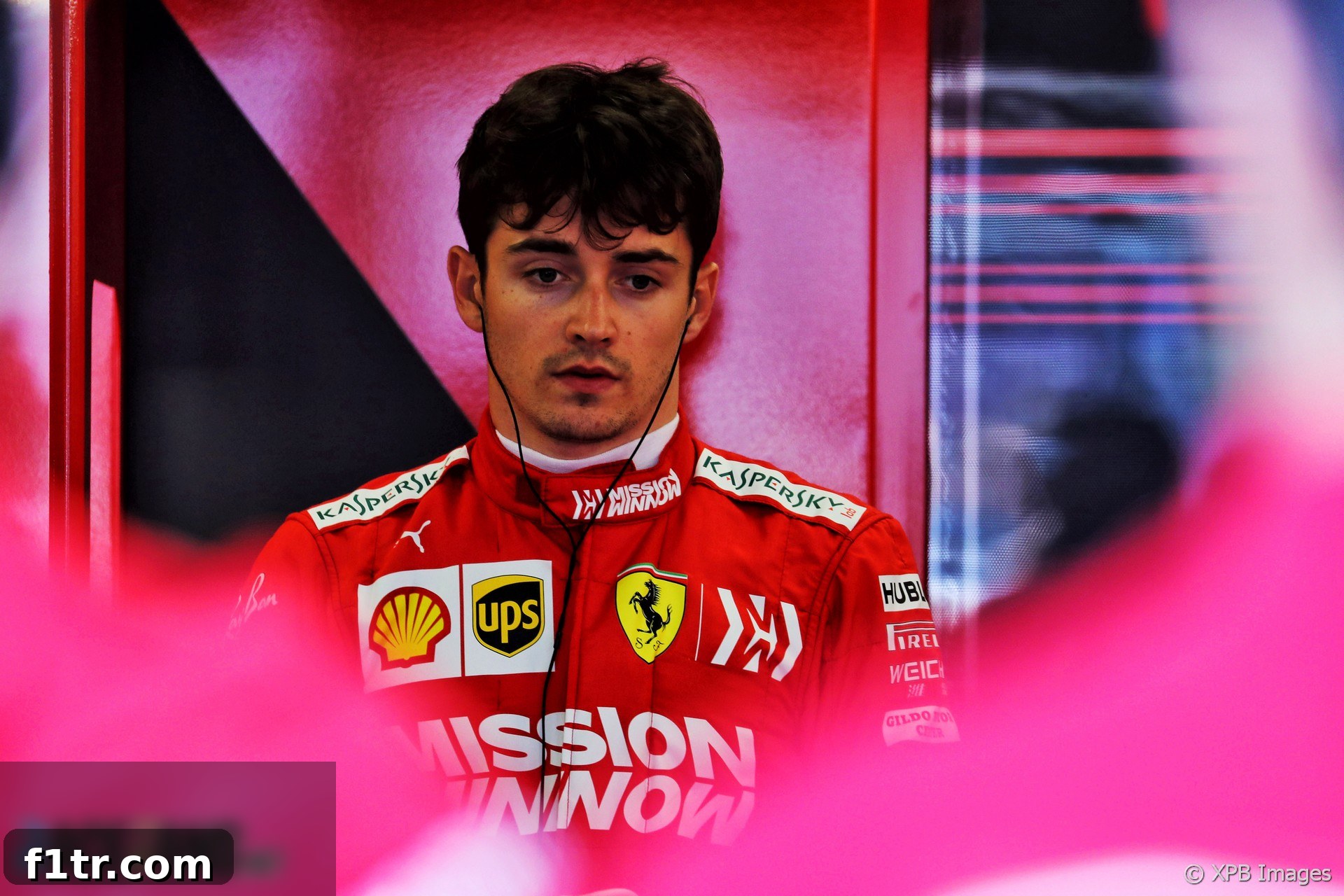
Charles Leclerc’s Azerbaijan GP Qualifying Nightmare: A Self-Inflicted Wound with Lessons to Learn
The glitz and glamour of Baku often come hand-in-hand with high drama, and the 2019 Formula 1 Azerbaijan Grand Prix qualifying session was no exception. For Scuderia Ferrari’s rising star, Charles Leclerc, what began as a dominant display across practice sessions quickly devolved into a moment of crushing disappointment. Having established himself as the benchmark throughout Friday and Saturday morning, Leclerc’s hopes of clinching a maiden pole position in F1 were shattered by a critical error during Q2, leaving the young Monegasque driver visibly and audibly distraught. The incident at Turn 8 became an instant replay loop of regret, as Leclerc himself conceded, he “deserved what happened today.”
Leading up to the ill-fated qualifying segment, Leclerc had painted a picture of absolute control. He consistently topped the timesheets in all three free practice sessions, demonstrating remarkable pace and confidence around the challenging Baku street circuit. This strong showing continued into the first part of qualifying (Q1), where he again showcased Ferrari’s potential and his own prowess, setting the second-fastest lap. The stage was perfectly set for what many anticipated would be a fierce battle for pole position against the likes of Mercedes’ Lewis Hamilton and Valtteri Bottas, and his own experienced teammate, Sebastian Vettel. The sheer speed displayed by Leclerc had ignited optimism among Tifosi, suggesting that the SF90 had the raw pace to challenge Mercedes, particularly on a track where driver skill and precision are paramount.
However, the unforgiving nature of a street circuit demands absolute perfection, and the smallest lapse in concentration can have significant consequences. It was precisely this lesson that Leclerc learned the hard way in Q2. As drivers geared up for their crucial second runs, a strategic decision was made to switch from the grippier soft compound tyres to the more durable medium compound. This choice, often employed to allow drivers a more resilient tyre for the start of the race, presented a new variable. Approaching Turn 8, a tight, ninety-degree left-hander often dubbed “the castle section” due to its proximity to Baku’s ancient walls, Leclerc carried too much speed for the new tyre compound.
The result was immediate and brutal. A lock-up of the front wheels sent his Ferrari SF90 veering uncontrollably into the barrier. The impact, though not devastating, was enough to end his session prematurely. The immediate aftermath was captured raw and unfiltered over team radio: “I am stupid! I am stupid!” Leclerc exclaimed, his voice laced with anguish and self-reproach. This unfiltered admission of error resonated deeply, highlighting the intense pressure and personal accountability drivers bear in Formula 1.
In the hours following the incident, Leclerc’s candid self-assessment continued, reflecting a maturity beyond his years despite the raw emotion. “I am very, very sad for what happened but I deserve it. I’ve been stupid as I said on the radio. I calmed down but I still think I’ve been stupid, this doesn’t change,” he conveyed to reporters. This unwavering acceptance of blame, without seeking external factors or excuses, speaks volumes about his character and his commitment to self-improvement. He recognized the magnitude of the missed opportunity, stating, “I don’t want to say anything stupid but after looking at FP1, FP2, FP3 also quali one, pole was possible today and I’ve thrown all the potential in the bin.”
The technical explanation for the crash was equally straightforward and self-critical. Leclerc elaborated on the fundamental misjudgment: “I don’t think I put more brakes, I just braked as much as I did on the softs but obviously I was on the mediums and I locked up.” This crucial detail underscores the intricate dance between driver input, tyre compounds, and track conditions. The medium tyres, while offering greater longevity, provide less initial grip than the softs. Maintaining an identical braking point and pressure with a different tyre compound is a recipe for disaster on the edge of performance. Leclerc quickly clarified that the fault lay entirely with him, not the Pirelli tyres or Ferrari’s strategy. “I don’t want it to be misunderstood, there’s no problems with the tyres, it’s just myself,” he emphasized, taking full responsibility for the miscalculation.
Despite the dramatic end to his qualifying, the regulations offered a slight reprieve. Having set a fast enough lap time in Q1 to advance to Q2, and then crashing in Q2, Leclerc’s Q1 time was ultimately sufficient to place him within the top 10 positions for the start of the race, albeit in a compromised starting slot compared to his potential. This meant he would still be a factor in the Grand Prix, though his path to victory or even a podium finish would be significantly more challenging. Baku, with its long straights and multiple overtaking opportunities, is a track where recovery drives are certainly possible, a fact Leclerc was quick to acknowledge. “You can definitely overtake and I will push for that tomorrow,” he affirmed, already shifting his focus to redemption.
Leclerc’s immediate emotional response, however, highlighted the personal toll such errors take on elite athletes. The candid admission of planning to “beat myself up” for the next few hours offered a raw glimpse into the mental fortitude required in Formula 1. It’s a testament to the high standards these drivers set for themselves and the relentless pursuit of perfection. Every fraction of a second, every strategic decision, and every braking point is scrutinized, and a single mistake can unravel an entire weekend’s worth of preparation and potential.
This incident, while painful, served as a crucial learning experience in Leclerc’s debut season with Ferrari. The 2019 season was a pivotal year for him, as he aimed to establish himself as a front-runner and challenge his four-time world champion teammate. Mistakes like this are an inevitable part of a young driver’s development at the pinnacle of motorsport, especially when operating on the knife-edge of performance. The true measure of a champion, however, lies not in avoiding mistakes, but in how they respond to them. Leclerc’s immediate self-accountability and unwavering determination to learn and “come back stronger” indicated a steely resolve that boded well for his future.
The challenge ahead for the Grand Prix itself was clear: navigate the traffic, manage the tyres, and maximize every opportunity for overtaking on a circuit notorious for safety cars and unpredictable races. While the immediate disappointment was palpable, Leclerc’s talent and fighting spirit suggested that his Baku story was far from over. The qualifying crash was a stark reminder of Formula 1’s unforgiving nature, but it also laid the groundwork for a potential recovery drive that would further define his burgeoning career. As the sun set over Baku, Leclerc was undoubtedly already dissecting every detail, transforming a moment of error into a catalyst for future success.
2019 F1 Season: Related Reading
- Crying in the Melbourne car park at 2019 grand prix was my career low – Ocon
- McLaren Racing reports reduced £71 million loss in 2019
- Kvyat: Hockenheim podium last year was “my biggest achievement” so far
- How the FIA’s new encrypted fuel flow meter targets Ferrari’s suspected ‘aliasing’ trick
- “He smashed my office door”: 23 must-see moments from ‘Drive to Survive’ season two
Browse all 2019 F1 season articles