Ferrari’s Halo Mirror Evolution: An F1 Aerodynamics Controversy in 2018
The 2018 Formula 1 season witnessed an intriguing aerodynamic debate sparked by Ferrari’s innovative Halo-mounted wing mirrors. This article delves into how a seemingly minor design detail became a flashpoint for F1’s technical regulations, highlighting the constant push-and-pull between engineering creativity and the sport’s governing body, the FIA.
In the relentless pursuit of performance, Formula 1 teams frequently explore every conceivable avenue for aerodynamic advantage. The 2018 season, in particular, saw a significant development with the mandatory introduction of the Halo cockpit protection device. While primarily a safety innovation, the Halo quickly became a new structural element around which teams could integrate aerodynamic solutions. Ferrari, known for its bold design philosophies, was at the forefront of this exploration, specifically with its distinctive Halo-mounted wing mirrors that became a talking point leading up to the prestigious Monaco Grand Prix.
The Genesis of Innovation: Ferrari’s Spanish Grand Prix Design
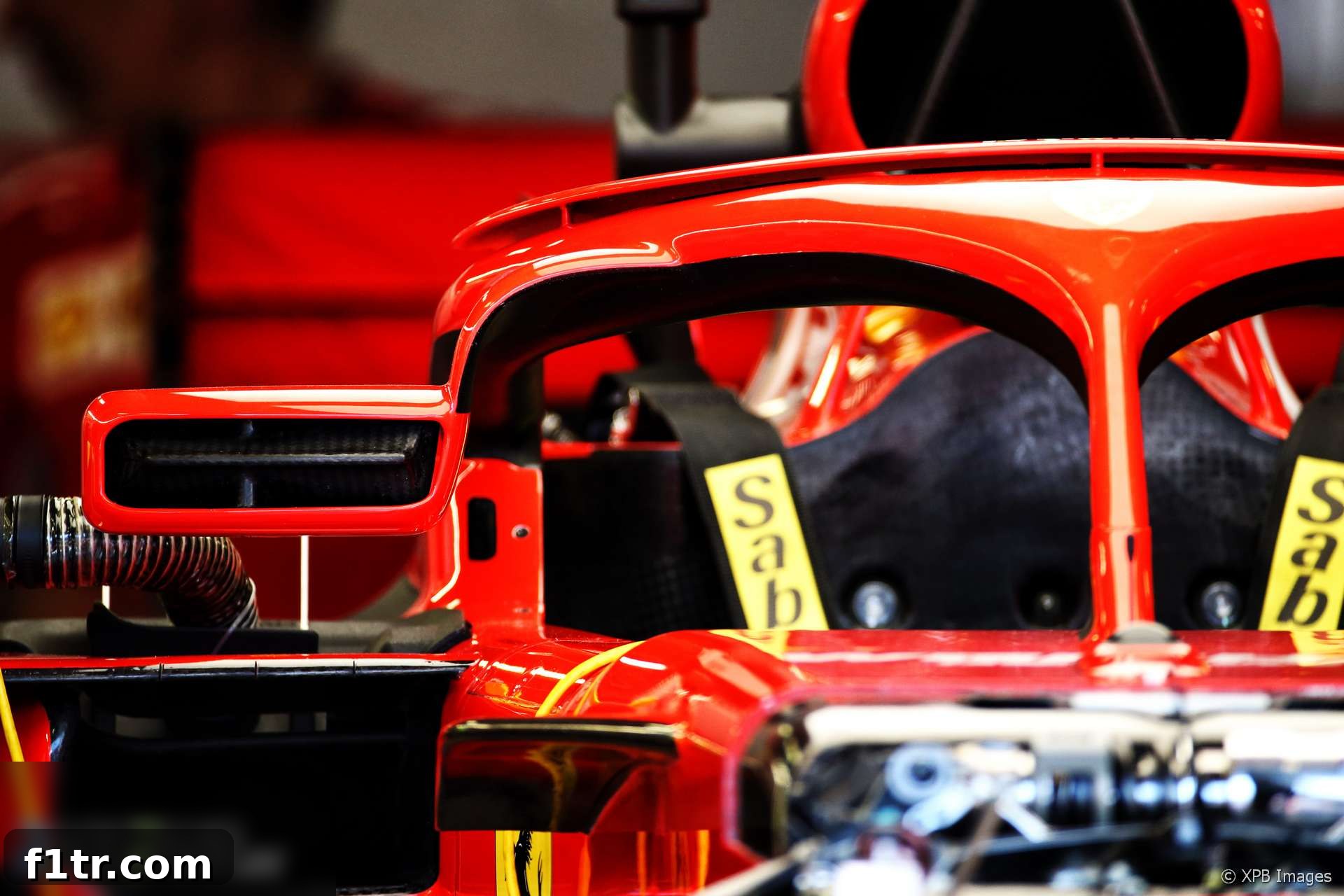
The initial iteration of Ferrari’s Halo-mounted wing mirrors made its debut on the SF71H at the Spanish Grand Prix earlier in the 2018 season. This design immediately drew attention for its elaborate mounting system. Unlike conventional mirror setups, which typically feature a single, straightforward strut connecting the mirror housing to the car, Ferrari’s concept utilized a pair of mountings for each mirror. These additional elements, particularly an upper fin-like structure, were widely interpreted by rivals and observers as serving a clear aerodynamic function beyond mere structural support. The design appeared to be aimed at manipulating airflow over the Halo, potentially directing it towards critical aerodynamic surfaces further downstream, such as the sidepods and the engine cover.
In a sport where even microscopic gains can translate into significant lap time advantages, such an innovative interpretation of the regulations quickly sparked discussions. The Halo, a relatively bulky addition to the F1 car, presented a unique challenge for aerodynamicists. Ferrari’s approach suggested that by integrating additional elements around the Halo, they could mitigate its aerodynamic drag or even harness it to produce beneficial airflow patterns. This initial design was a testament to Ferrari’s engineers pushing the boundaries, attempting to extract performance from every available surface on the car.
FIA’s Swift Intervention and Rules Clarification
The perceived aerodynamic intent behind Ferrari’s innovative mirror design did not go unnoticed by the FIA. Recognizing the potential for a new arms race in mirror aerodynamics, and to ensure the regulations were interpreted consistently across all teams, the governing body issued a crucial technical directive ahead of the Monaco Grand Prix. This clarification aimed to re-emphasize the primary purpose of wing mirrors and to curb attempts to exploit them for aerodynamic gain.
The FIA’s directive was explicit: any mountings on Halo-mounted mirrors must “provide a meaningful structural contribution to the mounting system.” This statement directly addressed designs that incorporated elements whose primary function appeared to be aerodynamic rather than structural integrity. Furthermore, the FIA made it clear that “if you use more than one mounting you may be asked to satisfy us, by way of a physical test, to demonstrate this.” This put the onus firmly on teams to prove the genuine structural necessity of any multi-element mirror mounting system, preventing the addition of extraneous components purely for aero benefit.
Specific guidelines were also provided regarding the placement of these mountings, stipulating that they must connect “to the lower and/or inboard surface(s) of the mirror housing.” This aimed to prevent teams from attaching elements to other parts of the mirror housing simply to influence external airflow. The FIA further elaborated on its overarching philosophy: “Whilst the FIA accepts that teams will legitimately design the mirrors, housings and mountings to minimise any negative aerodynamic effects they may cause, we believe that any aerodynamic benefits should be incidental, or at least minimal.” This crucial distinction underscored the FIA’s stance that mirrors are fundamentally for visibility, and while teams can optimize them to reduce drag, actively generating downforce or manipulating airflow through their design was contrary to the spirit of the rules.
This swift intervention by the FIA served as a vital check on aerodynamic development, preventing what could have become an expensive and intricate new area of design competition, ensuring that the focus remained on the car’s primary aerodynamic surfaces for performance generation.
Ferrari’s Compliance: The Revised Monaco Grand Prix Design
Following the FIA’s clear and unambiguous technical directive, Ferrari promptly responded by introducing a revised Halo-mounted mirror design for the Monaco Grand Prix. This adaptation demonstrated the team’s commitment to compliance and their ability to rapidly adjust their engineering solutions to meet regulatory interpretations. The key modification involved the removal of the contentious upper aerodynamic element that had characterized the original twin-strut setup seen in Spain.
The updated mirrors for Monaco were visibly simpler and more streamlined. Each mirror was now connected to the Halo via a single, robust mounting, directly adhering to the FIA’s requirement for a “meaningful structural contribution.” This design change effectively stripped away the components that were perceived to offer an aerodynamic benefit, leaving a structure that was clearly focused on providing a secure mounting for the mirror itself. The quick turnaround from the Spanish Grand Prix to Monaco highlighted the engineering prowess of Formula 1 teams, capable of implementing significant design modifications within a tight timeframe.
While the initial design was a clever interpretation of the rules, Ferrari’s prompt adjustment showcased their understanding of the regulatory landscape. The incident reaffirmed that even in an environment driven by innovation, there are boundaries, and the FIA retains the authority to define and enforce them. The revised mirrors ensured that the team remained within the spirit and letter of the law, avoiding any potential penalties or further controversies.
The Broader Context: Aerodynamic Innovation and Regulation in F1
The Ferrari Halo mirror controversy of 2018 was not an isolated incident but rather a perfect illustration of the ongoing dynamic between innovation and regulation that defines Formula 1. Throughout its history, F1 has been replete with examples of teams pushing the envelope, exploring “grey areas” in the technical rulebook to gain a competitive edge. Iconic instances include the double diffuser saga of 2009, the blown diffusers of 2011, and debates over flexible bodywork, all of which led to intense scrutiny, technical directives, and often, subsequent rule changes.
The introduction of the Halo, a safety device designed to save lives, inadvertently created a new canvas for aerodynamicists. Teams, by their very nature, are compelled to analyze every new surface and structure for potential performance gains. Ferrari’s initial mirror design was a creative attempt to turn a safety mandate into an aerodynamic opportunity. The FIA’s role in these situations is critical: to foster engineering ingenuity while simultaneously ensuring fair competition, preventing unmanageable cost escalation, and upholding the fundamental principles of the sport. Unchecked aerodynamic development around safety-critical components could lead to unintended consequences or compromise the primary function of such devices.
This particular technical directive demonstrated the FIA’s proactive and vigilant approach. By acting swiftly, the governing body prevented a potential “mirror arms race,” where other teams might have invested heavily in developing similar complex, aero-focused mirror designs. This intervention effectively clarified that the primary purpose of mirrors is visibility, and any aerodynamic benefits must be strictly incidental, thereby maintaining a level playing field and guiding future design interpretations.
Implications and Legacy
The Ferrari Halo mirror saga of 2018 serves as a memorable case study in Formula 1’s relentless pursuit of marginal gains and the critical role of regulatory oversight. It underscored the highly technical and competitive nature of the sport, where engineers meticulously scrutinize every component, no matter how small, for aerodynamic potential. For Ferrari, it highlighted their capacity for innovative design and their agility in adapting to regulatory clarifications. For the FIA, it was a reaffirmation of their commitment to clear, enforceable technical regulations that uphold sporting fairness.
Ultimately, this incident reinforced a fundamental understanding within Formula 1: while innovation is celebrated and encouraged, it must always operate within the clearly defined parameters set by the FIA. The technical regulations are not merely guidelines; they are the strict framework that ensures competition remains fair, safe, and true to the spirit of Grand Prix racing. As Formula 1 continues to evolve with new technologies and regulatory cycles, the delicate balance between unfettered engineering creativity and robust governance will undoubtedly remain a central and fascinating aspect of the sport, with teams perpetually seeking the next legal, yet boundary-pushing, design advantage.
Related Content: The 2018 F1 Season
- F1 feared “death knell” for Drive to Survive after Ferrari and Mercedes snub
- McLaren staff told us we were “totally crazy” to take Honda engines in 2018 – Tost
- ‘It doesn’t matter if we start last’: How Red Bull’s junior team aided Honda’s leap forward
- Honda’s jet division helped F1 engineers solve power unit problem
- McLaren Racing losses rise after Honda split
Browse all 2018 F1 season articles