The Complex Puzzle of the 2020 Formula 1 Calendar: Delays, Demands, and the Road Ahead
The highly anticipated release of the 2020 Formula 1 calendar has encountered unprecedented delays, marking it as one of the latest announcements in recent history. Traditionally, a provisional F1 fixture list would emerge much earlier in the year, often around the Hungarian Grand Prix weekend. For instance, the initial draft for the 2017 season was unveiled as early as April 2016. This year’s protracted wait has left fans, teams, and associated industries in a state of suspense, eager to understand the reasons behind the hold-up and when the definitive schedule for next year’s thrilling races will finally be revealed.
For millions of Formula 1 enthusiasts globally, the calendar is more than just a list of dates; it’s a blueprint for their personal plans. Vacations, major events, and even weddings are meticulously planned around the sport’s gruelling race weekends. The absence of a firm schedule creates significant logistical challenges, forcing fans to delay their arrangements or risk costly last-minute changes. Beyond the individual fan, the wider ecosystem of travel and hospitality industries – from airlines and hotels to car rental services – also feels the impact. The uncertainty breeds speculation, leading to inflated prices based on rumoured dates. While these prices can be adjusted downwards if dates change, they cannot be hiked retrospectively, creating an unfair advantage for speculative entities and disadvantaging both fans and legitimate businesses.
The sooner a draft calendar is released, the better it is for everyone involved. Transparency and early communication help stabilize prices, allow fans to plan effectively, and provide clarity for the myriad businesses that rely on the F1 circus. Without it, opportunistic “leeches” – those with no direct stake in the sport but who capitalize on uncertainty – reap benefits at the expense of loyal fans and a fair market.
Navigating Unprecedented Complexity: Liberty Media’s Herculean Task
This year’s calendar construction is arguably the most complex and multifaceted challenge faced by Formula 1’s commercial rights holder, Liberty Media, since their acquisition of the sport. Several significant factors are converging to make the 2020 schedule a true logistical and political Gordian knot.
New Horizons and Miraculous Returns
One primary driver of this complexity is the addition of two brand new events planned for the 2020 season. Vietnam, a highly anticipated debut, and the return of the Dutch Grand Prix at Zandvoort, promise exciting new venues and markets for F1. These additions alone mean Liberty Media must find space for two extra races, pushing the schedule beyond the traditional 21 rounds initially envisioned. Each new event introduces its own set of logistical challenges, from circuit homologation to local infrastructure and customs clearance for vast quantities of equipment.
Adding another layer to the puzzle is the miraculous return of the Spanish Grand Prix. Despite publicly pleading poverty just months prior, the Circuit de Catalunya seemingly found an estimated €20 million to secure its place on the calendar. This unexpected reprieve means a third unplanned slot needs to be accommodated, further compressing an already tight schedule. The reasons behind this sudden financial flexibility remain a point of discussion, but for Liberty Media, it adds another fixed point into an already fluid equation.
Brexit: A Shadow Over European Logistics
Beyond the excitement of new venues, a very real and significant threat looms over the European leg of the F1 calendar: Britain’s departure from the European Union, commonly known as Brexit. With the majority of Formula 1 teams based in the UK, Brexit poses an unprecedented challenge to the free movement of people and, crucially, goods across the English Channel.
During the European season, the logistics involved are staggering. Each F1 team operates with a minimum of 15 trucks, and larger outfits deploying up to 30 vehicles to transport their elaborate hospitality units, garages, and support equipment. This means hundreds of trucks need to clear British customs in both directions for every single race weekend. This figure doesn’t even account for the vast quantities of tyres, engines, fuels, oils, and other essential support services that travel separately.
Concerns over potential customs delays and increased bureaucracy post-Brexit are well-founded. According to sources close to the discussions, the British Grand Prix promoters requested some form of priority service for F1 freight. However, they were reportedly informed that “foodstuffs and medicines will receive priority, but not F1.” This stark reality has significant implications. It makes it unfeasible for the British Grand Prix to run back-to-back with another European round. The risk of even a few trucks being delayed at customs could jeopardize not just the immediate race, but potentially disrupt multiple subsequent events, creating a domino effect across the championship. This logistical nightmare alone adds immense pressure to the calendar planners, forcing them to incorporate buffer weeks around the Silverstone race.
The Challenges of New Territories: Vietnam’s Debut
As a completely new addition to the F1 calendar, Vietnam presents its own unique set of challenges. The complexities of clearing Formula 1’s colossal airfreight in and out of a country that is “virgin territory” for the championship are considerable. On average, each team transports around 20 tons of equipment, meaning the total airfreight for the entire paddock exceeds 200 tons. Navigating local customs, airport logistics, and transport infrastructure in a new host nation requires extensive planning and can be prone to unforeseen delays.
For this reason, back-to-back races are strongly advised against for new venues in their inaugural year. While Vietnam’s geographical location might lend itself perfectly to twinning with a race like China for logistical efficiency in subsequent years, it would be strategically unwise to attempt such a pairing in its debut season. The priority is to ensure a smooth and successful first event, allowing teams and organizers to adapt to the local conditions and processes without the added pressure of an immediate follow-up race.
Contractual Constraints and Promoter Demands
Compounding these logistical and political hurdles are the increasingly stringent contractual obligations with existing race promoters. As circuits sign new agreements or extend existing contracts, they frequently stipulate specific date windows that align with their local conditions, commercial interests, or national holidays. These fixed points become immovable anchors in the calendar planning process:
- Monaco: The principality traditionally favours the Ascension Day weekend, a public holiday that minimizes business disruption and maximizes tourism.
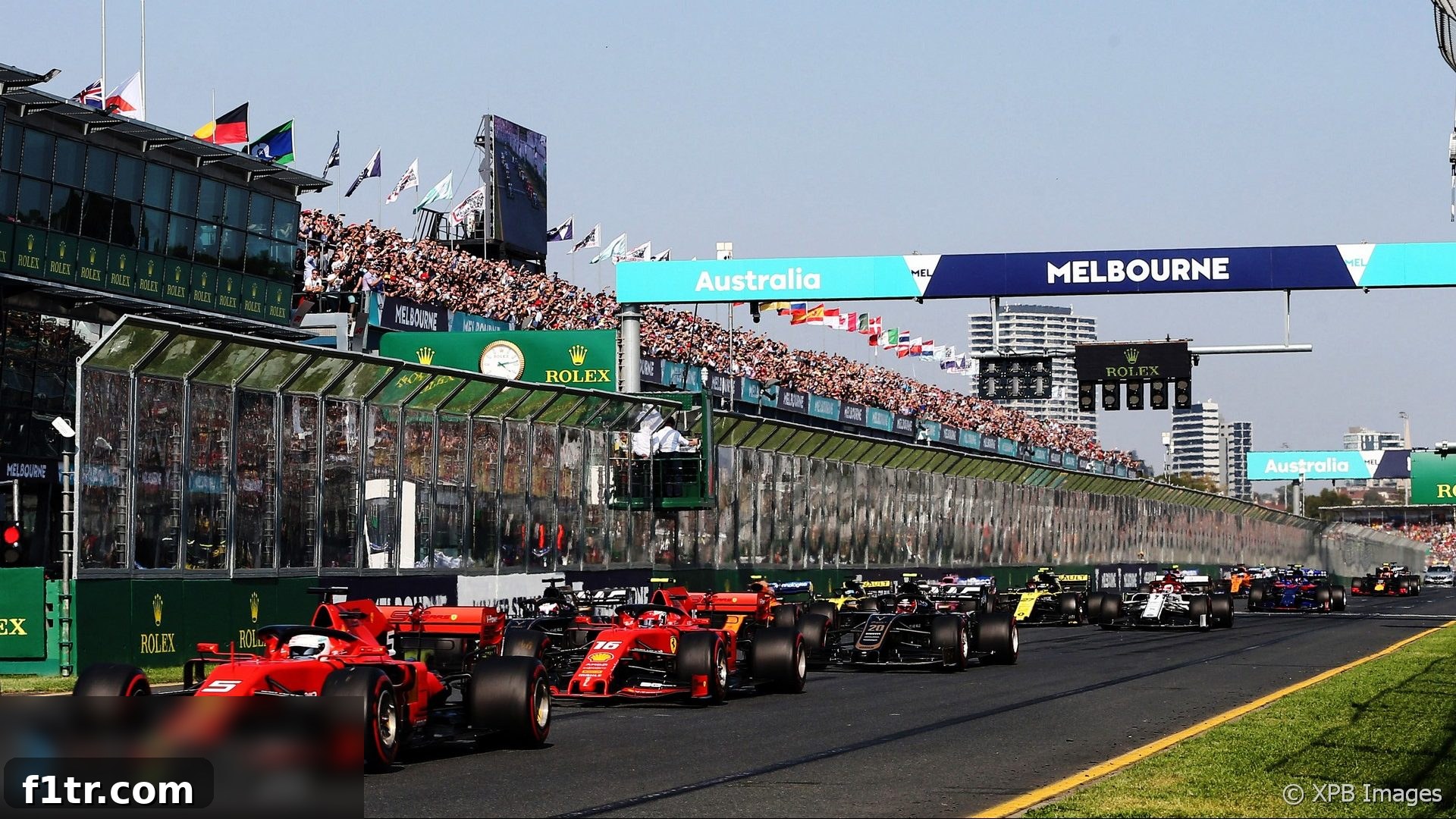
- Australia: Melbourne reliably secures the coveted opening round of the season, a tradition deeply ingrained in the F1 calendar.
- Abu Dhabi: The Yas Marina Circuit consistently hosts the season finale, providing a spectacular conclusion to the championship.
- Zandvoort: The returning Dutch Grand Prix is understood to have specified an early European date, likely aiming to capitalize on good weather and national enthusiasm.
- Montreal: The Canadian Grand Prix insists on its traditional June weekend, which locally marks the unofficial start of summer, making it a popular date for fans.
- Sochi: The Russian Grand Prix typically aims for the last weekend in September, coinciding with a significant Russian festive period.
- Red Bull Ring: Austria’s home of motorsport prefers the first weekend in July, a prime slot in the European summer.
Each of these demands acts as a fixed piece in a constantly shifting puzzle, leaving fewer flexible slots for the remaining races.
The Art of Calendar Construction: More Than Just Dates
To truly appreciate the monumental task of crafting the F1 calendar, one might imagine it as attempting to solve a Rubik’s Cube whilst blindfolded. Take a hypothetical 2020 year planner and begin blocking off all the dates mandated by the promoter contracts mentioned above. Now, factor in the necessary buffer periods, such as at least a fortnight ahead and after the British Grand Prix due to Brexit concerns. With these constraints, the challenge then becomes accommodating the remaining 15-16 races, while simultaneously respecting a multitude of other critical factors:
- Car Build Windows: Teams require specific periods for car development, manufacturing, and assembly.
- Testing Regulations: Sporting regulations dictate precise windows for pre-season and in-season testing.
- Regional Weather Patterns: Races must be scheduled to avoid extreme weather conditions, such as monsoon seasons in Asia or scorching summer heat in the Middle East.
- Local Religious and National Holidays: Avoiding clashes with significant local observances is crucial for attendance and logistical ease.
- Major Sporting Events: The F1 calendar must carefully navigate around other global sporting spectacles, both motorized (e.g., Le Mans 24 Hours) and non-motorized (e.g., Tour de France, major football tournaments) to avoid competition for viewership, public attention, and even local resources.
Sporting Regulations and Pre-Season Logistics
The sporting regulations themselves impose strict limitations. For example, Clause 10.5 of the 2020 F1 Sporting Regulations states that testing of current cars (TCC) is limited to: “Two tests, open to all competitors, of no more than four consecutive days’ duration, carried out between 1 February and ten days before the start of the first event of the championship.” This narrow window for vital pre-season preparation directly dictates how early the season can commence.
Following these tests, cars and all associated equipment must be returned to their respective bases, prepared, and then airfreighted to Australia for the opening Grand Prix in Melbourne. This entire process, including customs clearance and delivery to the Albert Park circuit, typically consumes a full week, and potentially even more for British-based teams in a post-Brexit scenario. This intricate dance of logistics, regulations, and geography means every single date choice has a cascading effect across the entire year.
Avoiding High-Profile Clashes: The French Grand Prix Dilemma
A prime example of the delicate balancing act required is the situation surrounding the French Grand Prix. The 2020 Tour de France cycling race is scheduled to begin in Nice during the last weekend of June, a date that has recently been occupied by the French Grand Prix at Circuit Paul Ricard. Both the cycling event and the F1 race are significant for the city and region, receiving substantial local support. There’s a strong desire to shift the Grand Prix date to minimize traffic congestion and maximize tourism benefits for both events.
The seemingly simple solution might be to swap the French Grand Prix date with that of Austria, which typically runs a week later. However, this too presents a conflict: the Red Bull Ring hosts a major music festival during that specific July weekend, a promotional activity vital to Red Bull’s marketing strategy. Such intricate local details, often unknown to the casual observer, further highlight the profound difficulty in satisfying all stakeholders and finding an optimal slot for each race.
Our Hypothetical 2020 F1 Calendar
Against this backdrop of immense complexity, where solving a Rubik’s Cube whilst blindfolded might seem less time-consuming, the challenge of cramming 22 F1 races into 2020 while keeping everyone happy is truly formidable. Nonetheless, leveraging extensive discussions with various race promoters – who are themselves in constant contact with other stakeholders – and taking into account all known factors, we have ventured to construct a hypothetical draft calendar, utilizing established dates as a foundational base:
| Pre-season testing | ||
|---|---|---|
| Test one | Circuit de Catalunya, Spain | 19-21 February |
| Test two | Circuit de Catalunya, Spain | 26-28 February |
| Races | ||
| 1 | Melbourne, Australia | 15 March |
| 2 | Bahrain International Circuit, Bahrain | 22 March* |
| 3 | Hanoi, Vietnam | 5 April** |
| 4 | Shanghai International Circuit, China | 19 April** |
| 5 | Zandvoort, Netherlands | 3 May |
| 6 | Circuit de Catalunya, Spain | 10 May |
| 7 | Monaco, Monte Carlo | 24 May |
| 8 | Circuit Gilles Villeneuve, Canada | 7 June |
| 9 | Baku, Azerbaijan | 14 June |
| 10 | Paul Ricard, France | 28 June |
| 11 | Red Bull Ring, Austria | 5 July |
| 12 | Silverstone, Britain | 19 July |
| 13 | Budapest, Hungary | 2 August |
| 14 | Spa-Francorchamps, Belgium | 30 August |
| 15 | Monza, Italy | 6 September |
| 16 | Singapore | 20 September |
| 17 | Sochi Autodrom, Russia | 27 September |
| 18 | Suzuka, Japan | 11 October |
| 19 | Circuit of the Americas, USA | 25 Oct* |
| 20 | Autodromo Hermanos Rodriguez, Mexico | 1 Nov* |
| 21 | Interlagos, Brazil | 15 November |
| 22 | Yas Marina Circuit, Abu Dhabi, UAE | 29 November |
Note: This is a hypothetical calendar based on the best information available at the time of writing.
* Most likely date
** Tentative date
Beyond the Calendar: Looking Ahead to the 2020 F1 Season
The anticipation for the 2020 Formula 1 season remains high, despite the ongoing wait for its official schedule. Fans are eager to see how new regulations, driver lineups, and the returning and new circuits will shape the championship. While the calendar itself is a colossal undertaking, it sets the stage for what promises to be another thrilling year of motorsport.
For more insights and updates on the upcoming season, explore our related articles:
- Grosjean to make F1 test return tomorrow for first time since Bahrain horror crash
- Pictures: Wrecked chassis from Grosjean’s Bahrain fireball crash to go on display
- Bottas vs Rosberg: Hamilton’s Mercedes team mates compared after 78 races each
- F1 revenues fell by $877 million in Covid-struck 2020 season
- Hamilton and Mercedes finally announce new deal for 2021 season
Browse all 2020 F1 season articles