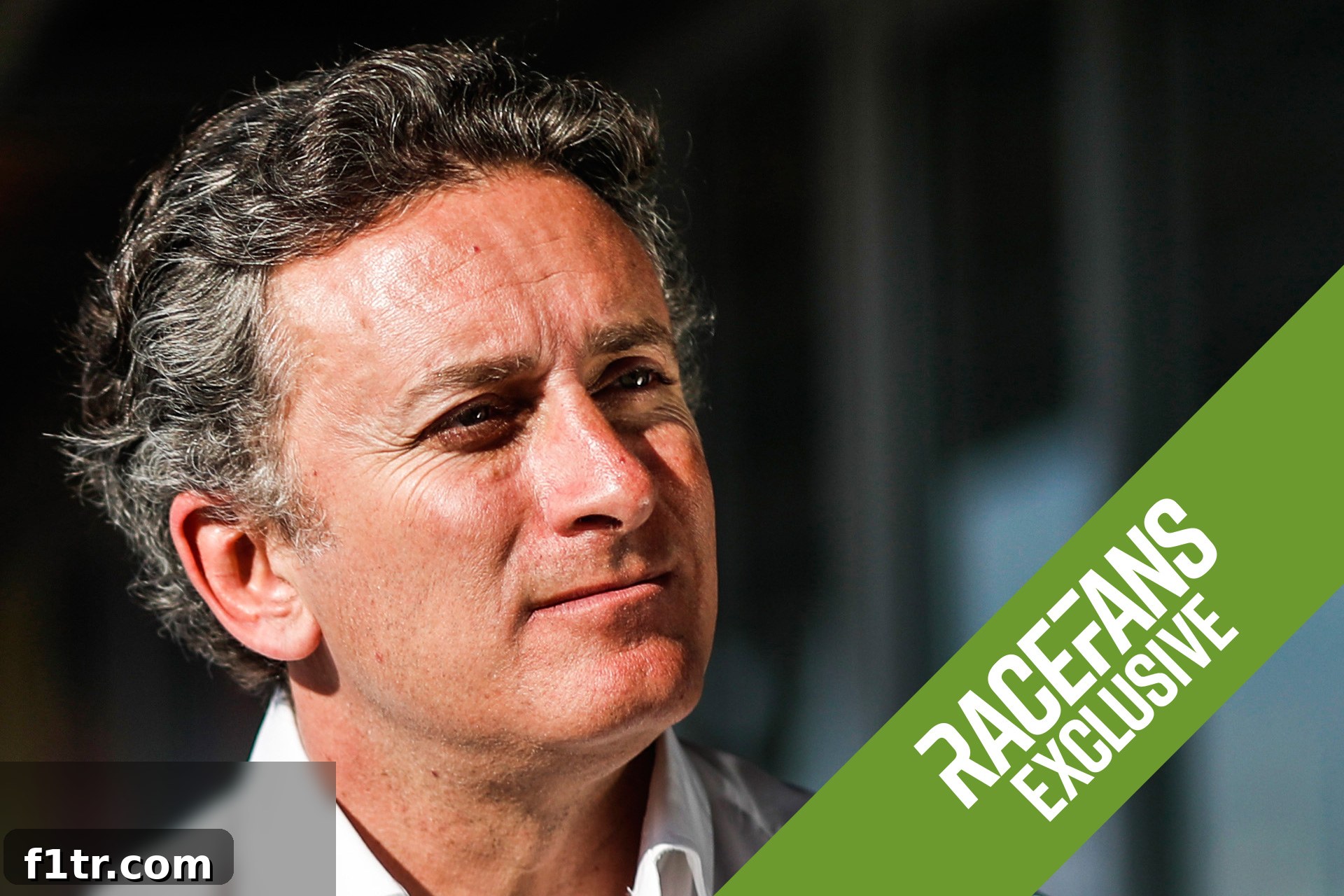
Alejandro Agag, the charismatic founding CEO and now Chairman of Formula E, embodies the dynamic spirit of modern motorsport. With a distinguished background as a former Member of the European Parliament, where he focused on European economic policy, Agag possesses a unique blend of political acumen and entrepreneurial drive. His cosmopolitan demeanor, reflecting his Algerian-Belgian-Spanish heritage and international upbringing, allows him to navigate effortlessly through diverse topics and engage with people from all walks of life. This natural ability to connect and persuade has been instrumental in shaping the electric racing championship into a global phenomenon.
The Genesis of a Revolution: Formula E’s Humble Beginnings
Advert | Become a Supporter & go ad-free
Our journey with Agag began in 2012, shortly after an article I penned explored the looming challenges for motorsport in an increasingly environmentally conscious world, dubbed the ‘Future Kid’ age. Intrigued by the prospect of an electric single-seater championship, a concept he was then developing after securing commercial rights from the FIA, I proposed an interview. This pivotal conversation took place over deluxe burgers in Sao Paulo during the Brazilian Grand Prix weekend. Agag spoke with remarkable candor about his ambitious plans. While many within traditional motorsport circles remained skeptical of electric racing’s viability, I was profoundly convinced by his vision, and my subsequent report reflected this optimism, highlighting Formula E’s promising future.
Our paths converged again in September 2013 at the Frankfurt Motor Show, where Agag unveiled the first-generation Formula E car. The meticulous thought and immense effort invested in the championship’s foundational concept were undeniable, signaling that this revolutionary series was rapidly approaching reality. However, I harbored skepticism regarding one particular aspect: the mid-race car swaps. I vocalized my concerns, pointing out the inherent awkwardness of drivers switching cars mid-event. Agag, ever the pragmatist, acknowledged this as a temporary necessity, assuring me it would be resolved as battery technology advanced. His confidence was compelling, persuading me that this was a short-term compromise for a long-term gain.
From Compromise to Credibility: The Gen2 Era
This brings us to last weekend’s Marrakesh E-Prix, my first Formula E race attendance since the advent of the second-generation (Gen2) car. As a media guest of the championship, I was eager to witness firsthand the impact of new regulations, specifically the mandate for cars to complete the entire 45-minute-plus-one-lap race on a single battery charge. In the intervening years, I had attended several other Formula E events and frequently reconnected with Alejandro at various functions. Yet, the persistent issue of mid-race car swaps remained a sticking point for me – a stark contrast to traditional motorsport where mid-race engine changes were unthinkable. Morocco, however, promised a different experience. And it delivered. For those who tuned in, whether live or via broadcast, it was unequivocally clear: with the Gen2 car, Formula E had truly arrived, shedding its last significant competitive anomaly and solidifying its position as a serious contender in the global motorsport landscape.
Agag’s Vision: Leveling the Playing Field in Electric Motorsport
On Friday morning, before the serious track action commenced, I reconnected with Agag, affectionately known as “AA” in the paddock. As always, he exuded a relaxed confidence and an eagerness to discuss the remarkable progress made since our initial burger bar meeting. We shared a smile, recalling those early days, as we delved into the core reasons behind Formula E’s undeniable success, especially where other ambitious motorsport series—like A1 Grand Prix or Superleague Formula, which often struggled to gain traction—had faltered. Agag succinctly articulated his guiding principle, stating, “For me, the key of the whole architecture of the championship is the rule of supplier and client.” This refers to Formula E’s unique regulations that compel manufacturer teams to supply their cutting-edge powertrain technology to independent teams at a predetermined, accessible price point.
He continued to elaborate on this vital mechanism: “That is the key that will guarantee the survival of the independents. The key is that that system works, but not only works to allow a team to survive, it has to work to allow a team to win. That’s what’s necessary. I don’t believe that [there must be teams] to fill the last places of the grid [in order for manufacturers to look good].” This philosophy stands in stark contrast to many other major motorsport categories, where independent teams often struggle to compete against factory-backed giants with vastly superior budgets and proprietary technology. The implied comparison to Formula 1, where smaller teams often serve as mere grid fillers for the benefit of major manufacturers, is palpable.
Agag affirmed this sentiment: “Exactly. Those teams that are there because Mercedes cannot come last. [If] you only have Mercedes and Red Bull, one of them comes last, so you need other people to come last. I don’t believe in that. I believe that every team should have a chance to win without having to spend a multi-million budget or being with a big car manufacturer.” He cited the success of Techeetah in the previous season as a perfect illustration of his vision. Operating on a significantly lower budget than many of its rivals, Techeetah clinched the drivers’ championship with Jean-Eric Vergne, while Audi secured the team championship. “And [Techeetah] were a client; Renault, their supplier, was two positions behind them. As long as we keep that, I think the championship has a very strong chance to control the budget in a kind of natural way.”
Navigating the Financial Landscape: Budgets and Sustainability
Budgetary control in motorsport is notoriously complex, with teams often reluctant to disclose their true spending figures. Agag acknowledged this, noting that teams are now allocating substantial amounts to marketing, driver salaries, and other operational costs. However, he emphasized the accessibility of the championship for independent entries: “Budgets are always difficult and teams never tell what they do, and they’re spending now significant amounts of money on marketing and other things, and they pay more to the drivers. But you can run a team for between €10-12 million in the championship, if you’re a client.” We concurred that independent teams generally operate in the region of €12 million (approximately £10.7 million), a noteworthy detail given Formula E’s preference for Euro-denominated figures, unlike F1’s dollar-based discussions. Manufacturer teams, conversely, typically spend double this amount, reflecting their extensive R&D and promotional activities.
During the race weekend, a report surfaced alleging that Jaguar Racing’s parent company “fueled” the team with a staggering $40 million, amidst significant company layoffs. This figure was met with widespread derision in the pit lane, even among independent teams who might otherwise benefit from exaggerating such numbers if they were credible. Beyond ridiculing the term “fueled” when applied to a battery-powered championship, one manufacturer team boss astutely pointed out that “one needs to understand what budgets include, whether it’s expenditure or loans made for tax reasons…” This highlights the opaque nature of motorsport finance. Nevertheless, Formula E’s contracts with its teams grant the series the right to audit team budgets. So far, the championship has not felt the need to exercise this right, a testament to its confidence in the current financial framework.
Advert | Become a RaceFans supporter andgo ad-free
Agag expressed relative unconcern about individual team spending, focusing instead on the systemic controls. “I’m not too bothered about that,” he stated. “What I’m really trying [to do] is set a framework of rules that automatically introduce common sense into the equation. If you’re going to spend a lot of money, 100 million, 200 million on a powertrain, then you have to sell for €400,000 to another team, you think twice…” This mechanism effectively discourages exorbitant spending on powertrain development, as the return on investment is limited by the mandatory sales to client teams. Indeed, in an off-record conversation during Sunday’s rookie test, a manufacturer team boss confided that it was “virtually impossible to spend more than 3-4 million on development. What are you going to spend it on? Add the cost of running a team, say 15 million, and you’re still under 20 [Euros]…” While €20 million might seem modest by F1 standards, it still typically requires significant board approval. The crucial question remains: how long before chief financial officers at these major manufacturers begin to scrutinize such budgets with red pens, particularly if their teams consistently finish in the lower half of the grid, especially considering that seven manufacturers are now closely linked to Formula E, even if not all are direct entrants?
The Manufacturer Conundrum and Revenue Sharing
Given the turbulent landscape of the automotive industry, exemplified by Jaguar’s recent announcement of 4,500 layoffs, a pressing concern is the long-term commitment of manufacturers to Formula E. Can Agag realistically envision all current manufacturers remaining invested in the series? “I hope they all remain; I think they are very important for the championship,” Agag affirmed. He acknowledged the cyclical nature of corporate priorities: “Manufacturers have different agendas, different moments in their companies in which they focus on certain products, and this is a good marketing platform for them. Then they focus on a different product and this is not anymore a good marketing platform for them.” This candid assessment underscores the inherent instability of relying solely on manufacturer involvement. Consequently, Agag recognizes the paramount importance of cultivating a robust independent team base, ready to step into the breach should one or more manufacturers decide to withdraw. This leads us to a central point of our discussion: when will Formula E begin sharing revenues with its teams?
Agag paused, carefully considering his answer. “I know the system, and so on and so forth,” he began, drawing on his experience as a former team owner (his Addax team won the 2011 GP2 championship) and a potential F1 entrant at one stage. “So I can see it from both sides of the fence. Here, what you have to do is apply common sense. We’ve invested a big amount of effort, but cash funds this venture.” His approach is pragmatic: “What makes sense is that first we recover our investment, then we make some profit from our investment, and then we start the conversation with the teams on how we’re going to do [any] distribution.”
It’s a well-known fact that the championship faced severe financial difficulties after its inaugural season. Ironically, it was an injection of cash from Liberty Global, an associate of Liberty Media (now owners of F1’s commercial rights), that ultimately saved it. Today, Agag proudly states that Formula E is in a much healthier financial position. “If everything goes like it looks like going, this year we are going to be very close if not over €200m in revenues. What we want here is that everybody is profitable. The teams have to be profitable and we have to be profitable.”
Balancing Growth: Manufacturers vs. Independents
A clear strength of Formula E has been its remarkable success in attracting major automotive manufacturers. The current roster boasts formidable names such as BMW, Audi, Nissan, Jaguar, and Citroen (through its DS brand). Furthermore, the upcoming season will see the highly anticipated entries of Mercedes and Porsche, further solidifying the championship’s prestige. However, Agag remains acutely aware of the delicate balance required between securing manufacturer support and fostering a strong base of independent teams. “I would like to have more independent teams,” he admits. “I mean, I cannot stop manufacturers from coming, and I’m super happy for them coming. They are a lot of value, they do big marketing campaigns, I was just in the airport – Nissan, everywhere. But I like the concept of independent teams.” He reflected on his own experience as an independent team owner, underscoring their essential role in the fabric of racing. Currently, the championship relies on just two truly independent teams: Dragon and Virgin (the latter notably secured second and third positions in Saturday’s race), highlighting the urgency of bolstering this crucial segment.
The Future of Mobility: Electric, Hydrogen, and Beyond
The conversation inevitably turned to the long-term future of mobility. What if the industry’s current focus on electric solutions is disrupted by the emergence of an even cleaner technology, such as hydrogen? What would that mean for Formula E? Agag’s conviction on this matter is absolute. “If electric is not the future of mobility, then the planet has a problem. Unless there’s a new technology which is cleaner that really comes and overtakes this. I think that will be a happy day, because we need the cleanest possible technology. I also think it’s impossible it’s not electric.”
Impossible? “Impossible. It’s impossible. Because even if it’s hydrogen, hydrogen doesn’t make the wheels spin. The hydrogen produces electricity that goes to the electric motor that turns the wheels,” he clarified, referencing the widely understood principle of fuel cell membrane technology, where hydrogen is converted into electricity. “Everything will be powered. Imagine solar, the solar at the end will convert in electricity and power an electric motor. Everything will power an electric motor.” While I interjected to mention BMW’s development of emission-free internal combustion engines powered by hydrogen for its 7 Series-based Hydrogen 7, we swiftly agreed that this nuanced discussion was best reserved for another day. Agag remained confident in Formula E’s adaptability: “I haven’t heard of a hydrogen combustion engine, [but] maybe it exists. But I think Formula E would adapt. Our license includes every single technology that’s powered by an electric motor, and that includes hydrogen.” This flexibility underscores Formula E’s commitment to staying at the forefront of sustainable automotive technology.
A Long-Term Vision and New Horizons: Extreme E
Agag’s exclusive deal with the FIA to operate an electric single-seater series grants Formula E a unique position, preventing Formula 1 from launching a similar championship without its express permission. He revealed that this agreement extends until “2039,” a remarkable duration. I couldn’t help but remark that it ranks as the second-longest agreement in motorsport, trailing only F1’s legendary 100-year deal. He responded with a wry smile: “The second, yes. I would like it to be the first but it’s not the first. I tried!” This lengthy mandate provides a stable foundation for Formula E’s continued growth and influence.
Go ad-free for just £1 per month>> Find out more and sign up
Towards the end of last year, Agag transitioned into the role of Chairman of FE Holdings. This strategic move signals an evolution in the company’s structure and leadership. “I spend more or less 50% of my time with Formula E. We’re looking for a CEO. Once we find a CEO I will step down as CEO. I’ll stay as Chairman.” This shift will allow him to dedicate more energy to his next ambitious project: “Then I want to launch this new Extreme E, which is a new racing championship for SUVs, electric SUVs.”
A crucial differentiator between Extreme E and Formula E, as Agag explained, lies in the visual identity of the racing vehicles: they will distinctly resemble production models. “It uses very similar technology to Formula E – we give the chassis, we give the battery, the common battery [to manufacturers]. They provide the powertrain and the silhouette [body]. So the car looks like the [Jaguar] i-Pace or whatever.” This approach offers manufacturers a more direct link to their road-going electric SUV models. The championship’s environmental focus is also central to its appeal. “We’re going to race in the most extreme locations on the planet. So we’re going to the North Pole, to the Himalayas, to the jungles of the Amazon, to the desert and to a remote island.” This ambitious logistical undertaking requires unique solutions. As a pioneering step, Formula E Holdings acquired the former RMS St Helena mail ship, which will serve as a floating paddock, providing both transportation and accommodation for cars and crews. “Because you don’t have hotels in the North Pole, you don’t have hotels in the Amazon. Everyone sleeps on the boat.” Naturally, the ship itself presents a compelling sponsorship opportunity. “The championship is, of course, open to our sponsors who may want naming rights to the vessel,” Agag noted with a smile, adding, “You know me, we can call it anything!”
An official launch event for Extreme E is meticulously planned for the end of the month. “There’s a big announcement on the ship in London. It’s coming up the river, going under the Tower of London, on January 31st.” In another innovative twist, Extreme E will eschew live broadcasting. “There will be no live broadcasting at all [for Extreme E]. It’s a new concept, it’s called ‘docusport’. And we film everything, we edit the races, ten episodes, and it’s a Netflix-style.” This promises a fresh, engaging media experience, no doubt poised for broadcast by platforms such as Liberty Global’s Discovery channel, leveraging existing partnerships to reach a wide, global audience.
Advert | Become a RaceFans supporter andgo ad-free
Formula E kindly hosted Dieter for his visit to last weekend’s race.
RacingLines
- The year of sprints, ‘the show’ – and rising stock: A political review of the 2021 F1 season
- The problems of perception the FIA must address after the Abu Dhabi row
- Why the budget cap could be F1’s next battleground between Mercedes and Red Bull
- Todt defied expectations as president – now he plans to “disappear” from FIA
- Sir Frank Williams: A personal appreciation of a true racer
Browse all RacingLines columns