In the high-stakes, fast-paced world of Formula 1, few names evoke as much history and passion as Williams. For decades, Williams Racing stood as a beacon of privateer spirit, challenging corporate giants and clinching numerous championships. However, the modern era has presented unprecedented challenges, leading to difficult decisions and, for many, heartbreaking outcomes. Claire Williams, the former deputy team principal who valiantly fought to preserve her father’s legacy, recently shared her profound regrets regarding the sale of the iconic team, highlighting missed opportunities and the relentless financial pressures that ultimately proved insurmountable.
Her reflections center particularly on the departure of the Stroll family’s financial backing, a crucial support system that slipped through Williams’ grasp before the team’s eventual sale to Dorilton Capital in 2020. This period marked a turning point, not just for Williams but for the trajectory of several key figures in the sport.
The Stroll Connection: A Missed Opportunity
Lance Stroll, now a fixture on the Formula 1 grid with Aston Martin, began his journey in the pinnacle of motorsport with Williams in 2017. His entry was facilitated by the significant financial support of his billionaire father, Lawrence Stroll. At the time, such backing was a lifeline for many independent teams struggling to compete with the vast budgets of manufacturer-backed outfits. The infusion of capital from the Stroll family was undoubtedly beneficial, providing resources that a team like Williams desperately needed to stay competitive.
However, the 2018 season proved challenging for Williams. Performance declined, and the team found itself further down the pecking order. This downturn, combined with Lawrence Stroll’s burgeoning ambition within Formula 1, created an opportunity for a seismic shift. Seizing the moment, Lawrence Stroll orchestrated a consortium to acquire Force India, a rival team that had also entered administration. This strategic move meant Lance Stroll would transfer to his father’s newly acquired team, Racing Point (which was rebranded from Force India), for the 2019 season, taking his substantial financial backing with him. Claire Williams openly admits that this departure continues to haunt her. “It drives me nuts because Lawrence was with us,” she lamented, underscoring the deep regret over not being able to retain such a vital partnership.
Lawrence Stroll’s Vision for Aston Martin
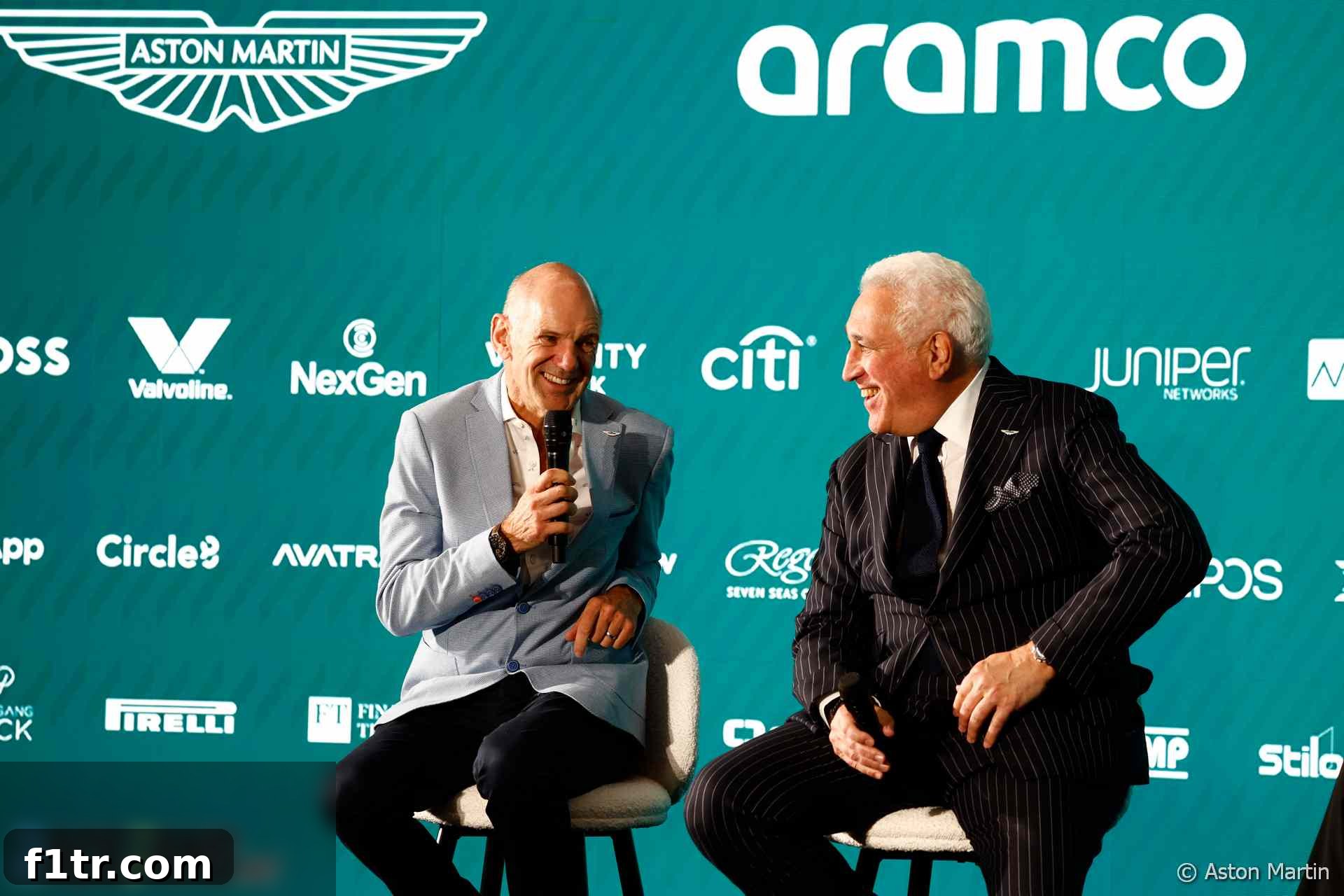
The acquisition of Force India marked the beginning of an ambitious project for Lawrence Stroll, one that would culminate in the rebranding of the team as Aston Martin F1 in 2021. Stroll’s investment went far beyond simply acquiring a team; he poured immense resources into its transformation. This included funding a massive upgrade of facilities, building a state-of-the-art factory, and aggressively recruiting top talent from rival teams. Among the most high-profile hires was the legendary designer Adrian Newey, signaling Stroll’s serious intent to elevate Aston Martin into a championship-contending outfit.
The contrast with Williams’ trajectory at the time was stark. While Lawrence Stroll was building a formidable new contender, replete with cutting-edge infrastructure and a burgeoning technical team, Williams was spiraling deeper into financial distress. This divergence highlights the immense challenge faced by privateer teams in securing and maintaining the investment necessary to thrive in modern Formula 1.
The Financial Downfall: Rokit and the Pandemic
The financial struggles that eventually forced the sale of Williams were a perfect storm of pre-existing vulnerabilities and unforeseen global crises. Claire Williams openly attributed the team’s demise to the combined effects of the Covid-19 pandemic and the catastrophic loss of income from their former title sponsor, Rokit. “We just ran out of money, not to put too fine a point on it,” she stated with blunt honesty.
The issues with Rokit began in late 2019, when discussions for their contracted 2020 payments failed to materialize. “For the 2019 season, we had a title sponsor, and then going into the latter part of ’19 talking about payments for 2020, which were contracted, never materialised,” Williams explained. The team took Rokit to court and won, securing a judgment for approximately £30 million – half of the total owed. However, a court judgment does not guarantee payment, and the money never arrived, leaving a gaping hole in Williams’ budget as they headed into the 2020 season. Fortunately, an interim sponsor stepped in to “plug that gap,” allowing the team to prepare for the season opener.
But just as the 2020 season was about to commence in Melbourne, the world was plunged into the unprecedented crisis of the Covid-19 pandemic. Races were cancelled, the season was delayed until July, and the financial ramifications for Formula 1 teams, especially those reliant on prize money and sponsorship, were devastating. “When you don’t go racing, you don’t get money,” Williams pointed out, articulating the brutal reality. “So that was the final nail in our coffin. So it was a thing [that’s] completely out of our hands, unfortunately, as events transpired.” The combination of a defaulting title sponsor and a global pandemic that halted their revenue streams proved too much for the storied privateer team to bear.
The Pain of Letting Go and Preserving a Legacy
Claire Williams assumed the role of deputy team principal in 2013, effectively taking over the day-to-day running of the team from her legendary father, Sir Frank Williams, who sadly passed away in 2021, the year after the team’s sale. For Claire, the decision to sell Williams was not born out of a desire to exit Formula 1 or to cash out; it was a desperate measure to save the team from complete collapse. The emotional toll of this decision is something she lives with every single day.
“There is not one day when I ever, ever have the emotion that I’m pleased that we sold Williams,” she admitted. “No, never. I never, ever think that.” She anticipates some might view her as “dramatic,” but the pain is real and profound. “I will live with the heartbreak of losing it every single day. Because it wasn’t a decision that we made as a family to sell because we’d had enough of Formula 1 or wanted to cash out. We all wanted to stay in it. It was our life for ever, that was the plan. I wanted to run the team for my son or my nephews.” This statement underscores the deep, familial connection to Williams Racing, a team that was not just a business but a fundamental part of the family’s identity and future aspirations.
Despite the immense emotional cost, Williams expressed gratitude for finding Dorilton Capital, the investment firm that ultimately acquired the team. While acknowledging that the team was sold for considerably less than its likely valuation today, given the soaring interest in Formula 1, she dismisses the financial aspect as secondary. “But that’s by the by,” she stated, “it’s more money than most people have in a lifetime. And I don’t care about that.”
What truly mattered to Claire Williams was finding the right kind of buyer – individuals who would respect the team’s heritage and care for its people. “What I care about is that we were able to find… what we were very fortunate for was that we found people that wanted to buy Williams that were the kind of people we wanted to sell it to,” she explained, her voice tinged with emotion. “Good people. People that – I’ll get upset now – but people that would look after the team, look after its legacy and look after the people that we loved and that were our family.” She highlighted the extraordinary difficulty of finding such buyers during the economic uncertainty of 2020: “We were very lucky because 2020 was a horrible time for everybody. People were not buying businesses and they certainly weren’t buying flailing Formula 1 teams.” The arrival of Dorilton Capital, who demonstrated a commitment to these values, was seen as “the greatest outcome that we could have had” under the circumstances.
Lingering Regrets and the Future
Even with the relief of securing the team’s future, Claire Williams carries one final regret: not insisting on retaining a minority stake. “I’m quite gutted that as part of the deal I didn’t just say, well, we want to retain 5%, but never mind,” she confessed. This lingering thought speaks to her enduring connection to the team and perhaps a wish to maintain a formal link, however small, to the legacy that bears her family’s name.
The story of Williams Racing under Claire Williams’ leadership is a testament to the passion and resilience required to compete at the highest levels of motorsport, even against insurmountable odds. Her candor provides a poignant insight into the immense financial pressures, the difficult decisions, and the personal heartbreak that can accompany the stewardship of an iconic Formula 1 team. As Williams Racing continues its journey under new ownership, striving to return to its former glory, Claire Williams’ reflections serve as a powerful reminder of the human element behind the glamour and speed of Formula 1, and the enduring legacy of a name that will forever be synonymous with racing greatness.
Formula 1 Insights
- Controversies, Norris, Newey and more: Five new motorsport books reviewed
- One of F1’s greatest races happened 15 years ago today. Or did it?
- “Overtaking is overtaking”: Domenicali denies F1’s yo-yo racing is “artificial”
- The crashes F1 is trying to prevent may be rare – but the danger is obvious
- F1 returning to India soon after 2027 sounds like wishful thinking
Browse all Formula 1 articles