Monaco Grand Prix Controversy: Unpacking Esteban Ocon’s Strategic Decision for Lewis Hamilton
The glitz and glamour of the Monaco Grand Prix often masks intense strategic battles and underlying team dynamics that dictate the outcome of races. One such moment, shrouded in debate and sparking accusations of unfair play, occurred during the 2018 Monaco Grand Prix, involving then-Force India driver Esteban Ocon and Mercedes superstar Lewis Hamilton. An incident where Ocon appeared to yield track position to Hamilton quickly became a focal point for discussion across the Formula 1 paddock and among fans.
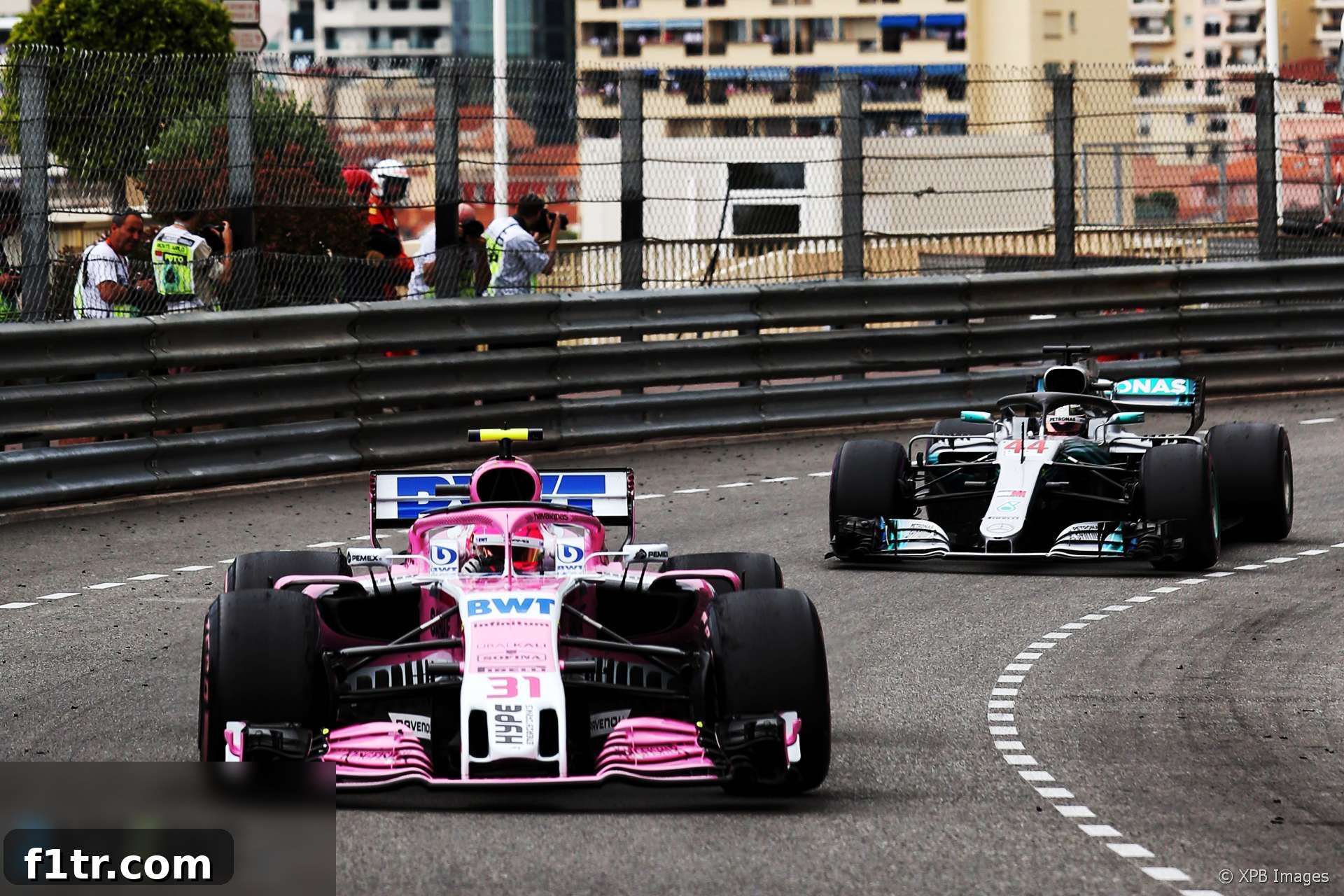
The pivotal moment unfolded early in the race. Lewis Hamilton, having made an earlier pit stop, found himself closing rapidly on Ocon’s Force India. Hamilton was on significantly fresher and faster tyres, making his Mercedes a formidable force. However, spending too much time behind Ocon risked jeopardizing his race, especially with the looming threat of Ferrari’s Kimi Raikkonen, who was poised to capitalize on any delay Hamilton faced. Just one lap after Hamilton appeared in his mirrors, Ocon smoothly moved aside, allowing the Mercedes driver to pass unhindered as they approached the chicane.
The Collusion Accusation: Unpacking F1 Team Dynamics
The promptness and apparent ease with which Ocon surrendered the position immediately raised eyebrows. Force India, at the time, was a customer team of Mercedes, meaning they purchased their engines and various technical components from the German manufacturer. This close relationship inevitably fueled accusations of collusion, suggesting that Force India had acted to benefit its engine supplier and, by extension, Lewis Hamilton’s championship campaign. Such scenarios, while not explicitly illegal, often tread a fine line between strategic cooperation and compromising sporting integrity, leading to heated debates.
Robert Fernley, the deputy team principal for Force India, was quick to address the swirling rumors and staunchly denied any wrongdoing or special favors extended to Mercedes. In a public statement, he asserted that the team would have handled a similar situation with any other rival car in the same manner. Fernley’s defense emphasized that their decision was purely based on their own race strategy and not on external pressures or alliances. However, the unique circumstances of Monaco, where track position is paramount and overtaking notoriously difficult, made the incident particularly contentious.
Esteban Ocon’s Rationale: A Driver’s Perspective
When questioned about the change of positions in Montreal following the Monaco Grand Prix, Esteban Ocon provided a pragmatic explanation, highlighting the strategic considerations from his perspective. Ocon clarified, “Basically my answer is Lewis had pitted before, it’s like on track [he had a] 20 seconds advantage. We were not doing the same race at that time. It was useless for us to lose time against him. The important thing for me was to not lose time against Gasly, against Alonso, all those drivers I was fighting with. That’s it.”
Ocon’s statement underscores a fundamental principle of Formula 1 racing: drivers are often fighting different battles on the track, even if they appear to be in close proximity. Hamilton, with his earlier pit stop and fresh tires, was effectively in a different strategic window, focused on maximizing his pace to jump ahead of rivals. For Ocon, engaging in a protracted defense against a significantly faster car would have been detrimental to his own race, wasting precious tire life and compromising his gaps to direct competitors. At the time Hamilton caught Ocon, Fernando Alonso was approximately 5.4 seconds behind the Force India, with Pierre Gasly another seven seconds back, and two other cars separating him from the McLaren. Ocon’s priority was maintaining his position relative to these drivers, not Hamilton.
Deciphering the Lap Time Data: A Strategic Masterclass or Compromise?
A detailed examination of the lap times from the 2018 Monaco Grand Prix offers compelling insights into Ocon’s race management and the strategic implications of Hamilton’s pass. Initially, Ocon demonstrated strong control, steadily building a lead over Alonso in the opening laps. His pace then subtly shifted around lap nine, indicating a phase of active tire management, a crucial aspect of Monaco strategy. Intriguingly, when Hamilton appeared behind him on lap 13, it made no discernible difference to the Force India’s pace. Ocon recorded a lap time of 1 minute 19.2 seconds on lap 12, the lap Hamilton pitted, and maintained precisely the same time on the subsequent lap with the Mercedes glued to his tail.
This consistency strongly suggests that Ocon was not pushing to defend against Hamilton, or at least not at the expense of his own race strategy. Had he chosen to defend aggressively, his lap times would likely have shown a significant spike due to increased tire wear and potential errors. Instead, the data reveals that Ocon lost almost exactly one second on lap 14, the lap during which he allowed Hamilton to pass at the chicane. This minimal time loss indicates a controlled and intentional yielding of position rather than a struggle. After Hamilton moved past, Ocon quickly increased his pace, returning to the level he had maintained before he began actively saving his tyres. This strategic move allowed him to re-establish a comfortable enough lead that when Alonso finally pitted on lap 18, Ocon was in no danger of being ‘undercut’ and was able to extend his own stint for several more laps, demonstrating a well-executed plan to secure his own position.
From Esteban Ocon’s immediate race perspective, the decision to let Hamilton by likely made very little difference to his own finishing position. He avoided a futile battle, preserved his tires, and successfully managed his gap to his direct competitors. However, the impact on Lewis Hamilton’s chances of finishing on the podium, and indeed for Mercedes’ championship aspirations, was enormous. By not being held up, Hamilton could utilize his fresh tires to optimal effect, carving through the field and securing critical points. Considering this disparity in impact, it is not difficult to comprehend why Force India, as a Mercedes customer team, might prefer not to impede its engine supplier’s race, especially given the high stakes of Formula 1.
Beyond Monaco: The Unwritten Rules of F1 Alliances
The Ocon-Hamilton incident in Monaco was far from an isolated event in the intricate world of Formula 1. Such strategic maneuvering, often involving customer teams and their engine suppliers or ‘brand-mates’, is an unwritten, yet commonly observed, aspect of the sport. Another notable example from the very same Monaco Grand Prix further illustrates this dynamic: Toro Rosso’s Brendon Hartley easily allowed ‘brand-mate’ Max Verstappen of Red Bull Racing to pass him on lap seven. This occurred just a few corners after the faster Red Bull caught the Toro Rosso, highlighting a clear pattern within the Red Bull family of teams.
These instances underscore the complex web of relationships in F1, where engine supply deals often extend beyond mere commercial transactions to include technical cooperation and, at times, strategic deference on track. While not always explicitly dictated, there’s an implicit understanding that facilitating a senior team’s progress can yield long-term benefits for a customer team, whether through continued technical support, financial incentives, or even future opportunities for drivers. Such incidents, while fueling debate about the sporting fairness, remain an integral part of Formula 1’s strategic landscape, showcasing that races are often won and lost not just through pure speed, but also through calculated decisions influenced by intricate team alliances.
Quotes: Dieter Rencken
2018 F1 season
- F1 feared “death knell” for Drive to Survive after Ferrari and Mercedes snub
- McLaren staff told us we were “totally crazy” to take Honda engines in 2018 – Tost
- ‘It doesn’t matter if we start last’: How Red Bull’s junior team aided Honda’s leap forward
- Honda’s jet division helped F1 engineers solve power unit problem
- McLaren Racing losses rise after Honda split
Browse all 2018 F1 season articles