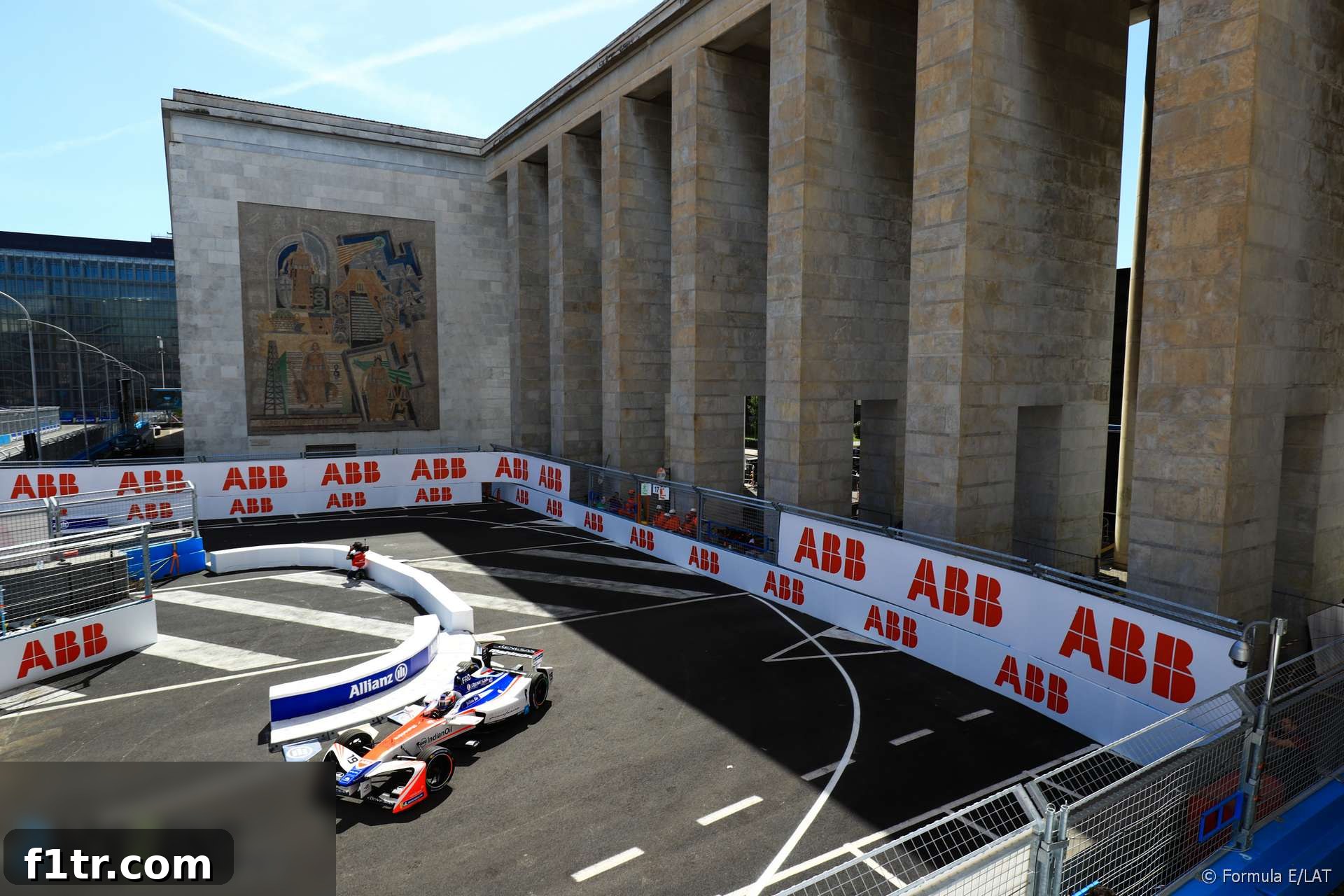
The streets of Rome bore witness to an electrifying spectacle as Formula E descended upon the Eternal City for its inaugural ePrix. From the outset, the qualifying session was poised to be a crucible of unpredictability, a true test of nerve and precision on a circuit never before raced. A unique blend of historic tarmac and modern challenges, including mixed surfaces and dramatic elevation changes that even snaked into and out of the unconventional pit lane, created the perfect storm for the kind of high-octane drama Formula E is renowned for.
Formula E’s distinctive group qualifying format adds an additional layer of complexity, demanding strategic acumen even on the most familiar tracks. Drivers are grouped, often leading to a scramble for optimal track position, with the first group frequently facing the most challenging conditions as the circuit evolves. A six-minute window for each group means that even a minor incident involving another competitor can severely compromise a driver’s precious lap time, leaving little room for error when only one hot lap truly counts. This season, the intensity has ratcheted up further, with rookies and seasoned veterans alike pushing the first-generation cars to their absolute limits, resulting in faster lap times but also an increase in qualifying crashes. Heading into group qualifying in Rome, only eight drivers had managed to post a decent 200kW time during Free Practice 2, signaling the immense potential for lap times to tumble further as drivers found their rhythm.
As Group One took to the track, the air temperature had climbed to a comfortable 22 degrees Celsius, a noticeable jump from the 13 degrees recorded during Free Practice 1. In a peculiar quirk of random allocation, the bottom five drivers in the championship standings found themselves in the first group. This included home hero Luca Filippi, Tom Blomqvist, Jerome D’Ambrosio, Nico Prost, and Maro Engel. A common strategy emerged amongst them: a delicate dance of timing their run to cross the start-finish line just before the chequered flag, aiming to maximize their chances with a perfectly timed flying lap. For Blomqvist, Prost, and Engel, this gamble paid off, yielding respectable laps that put them in contention. However, for Filippi and D’Ambrosio, the strategy backfired spectacularly. Much like Jaguar’s misfortune in Hong Kong, they misjudged the timing on a circuit where the start and finish lines are not conjoined. Both drivers were subsequently excluded from setting a time, consigning them to the back row of the grid and an uphill battle for the race.
Advert | Become a Supporter & go ad-free
Group Two presented a stark contrast, featuring the leading contenders in the championship standings: Jean-Eric Vergne, Felix Rosenqvist, Sam Bird, Sebastien Buemi, and Nelson Piquet Jnr. This was a formidable lineup of extremely strong qualifiers, each vying for supremacy. As anticipated, four of these elite drivers managed to comfortably eclipse Blomqvist’s initial P1 time. However, the session delivered a shock as championship leader Jean-Eric Vergne, typically known for his unerring consistency, suffered a slide that instantly jeopardized his Super Pole aspirations. His misstep meant he was almost immediately out of contention for the top-six shootout, a significant blow to his championship campaign given his strong form coming into the Rome ePrix.
The midfield battle intensified in Group Three, bringing out Mitch Evans, Daniel Abt, Oliver Turvey, Edoardo Mortara, and Lucas di Grassi. This group proved pivotal in reshaping the top five, with three of its drivers successfully knocking Vergne firmly out of Super Pole contention. The session, however, was marred by a dramatic incident involving Edoardo Mortara. Pushing hard, Mortara clipped a wall with considerable force, severely compromising his steering. Despite his valiant efforts to wrestle his 880kg machine around the track, it had taken on the wayward characteristics of a supermarket trolley, its lateral movement making control incredibly difficult. He limped back to the pits, managing a lap slower than even Jerome D’Ambrosio’s outlap, a clear indication of the extent of the damage. Meanwhile, Daniel Abt, despite a strong showing, just couldn’t quite stitch together the perfect lap to beat Vergne’s earlier time, albeit by a razor-thin margin of less than a tenth of a second, highlighting the fine margins that define Formula E qualifying.
Group Four featured the back of the midfield, but it delivered arguably the most dramatic moment of the entire qualifying session. Nick Heidfeld, Andre Lotterer, Alex Lynn, Antonio Felix Da Costa, and Jose-Maria Lopez were the contenders. Lopez, in particular, had shown impressive pace in free practice, hinting at a strong qualifying performance, if not a Super Pole position. However, his hopes were shattered just five meters from exiting the garage. In a disastrous error, Antonio Felix Da Costa was released from his pit box directly into the side of the Argentinian’s Dragon car. The collision was instant and severe, effectively ending both drivers’ qualifying sessions. Da Costa immediately recognized his mistake, leaping out of his car to try and push it back, an act of immediate apology. However, the damage was irreversible for both vehicles. In Formula E, drivers must use the car scrutineered for qualifying, so switching to the spare car was not an option. Lopez was visibly furious, his Super Pole dreams extinguished before they even began, a frustrating and unfortunate end to what had promised to be a strong showing.
Despite the chaos, Heidfeld and Lynn managed to navigate the session effectively, securing spots within the top ten. Yet, it was Andre Lotterer who truly shone. Known for his resilience on new circuits, having demonstrated similar prowess in Santiago earlier in the season, Lotterer found an astonishing four-tenths of a second in the technically demanding third sector of the Rome track. This remarkable effort propelled him to the fastest time of the group, an impressive feat that dramatically removed former Audi teammate and reigning Formula E champion Lucas di Grassi from Super Pole contention. Lotterer’s performance underscored the unique challenge of the Rome circuit and his exceptional ability to extract performance even under pressure, setting him up as a dark horse for the Super Pole showdown.
Advert | Become a RaceFans supporter andgo ad-free
The Super Pole session itself typically presents a different set of challenges, often yielding slightly slower times compared to group qualifying. With less opportunity to warm up the tires and the track conditions subtly shifting as the day progressed towards 1 pm, drivers are pushed to their absolute limits from the very first meter. Sebastien Buemi, the qualifying king of the previous two seasons, continued to grapple with the demands of the Rome circuit, sliding his way to a disappointing fifth position. Mitch Evans, who had shown promising pace in his group, also found himself unable to replicate that performance, dropping back from his earlier benchmark.
Sam Bird initially seized a convincing provisional pole, demonstrating excellent control and speed. However, his time at the top was short-lived. Felix Rosenqvist then unleashed a truly monstrous lap, defying expectations and the conventional wisdom of Super Pole sessions. He powered his Mahindra car to a time that was a staggering 0.7 seconds faster than Bird’s DS Virgin, one of the largest margins ever recorded for pole position in Formula E history. This incredible performance not only secured him pole but also established a new lap record for the inaugural Rome ePrix, a feat rarely achieved during the Super Pole session due to the ever-evolving track conditions.
Andre Lotterer, despite his earlier heroics, was unable to respond to Rosenqvist’s blistering pace. He managed to put together a decent lap, a testament to his skill, but it simply wasn’t enough to dethrone the Swede. Rosenqvist’s dominant performance marked a significant turning point for Mahindra. After a string of challenging races in South America, the team, supported by local partners Pininfarina at this semi-home ePrix, now appears revitalized and poised to re-mount their title challenge. The stage was set for a thrilling race, with Rosenqvist at the forefront, showcasing the raw speed and unpredictable nature that defines Formula E racing.
Super Pole results:
- Felix Rosenqvist – Mahindra – 1:36.311
- Sam Bird – DS Virgin – 1:36.987
- Mitch Evans – Panasonic Jaguar Racing – 1:37.199
- Andre Lotterer – Techeetah – 1:37.235
- Sebastien Buemi – Renault e.Dams – 1:37.817
Super pole eligible group qualifying times:
- Andre Lotterer – Techeetah – 1:36.593
- Felix Rosenqvist – Mahindra – 1:36.683
- Sebastien Buemi – Renault e.Dams – 1:36.732
- Sam Bird – DS Virgin – 1:36.901
- Mitch Evans – Panasonic Jaguar Racing – 1:36.911
Group qualifying classification:
- Lucas Di Grass – Audi Abt Schaeffler – 1:36.973
- Oliver Turvey – NIO Formula E – 1:37.045
- Jean-Eric Vergne – Techeetah – 1:37.055
- Daniel Abt – Audi Abt Schaeffler – 1:37.117
- Nick Heidfeld – Mahindra – 1:37.365
- Alex Lynn – DS Virgin – 1:37.546
- Tom Blomqvist – MS&AD Andretti – 1:37.561
- Nelson Piquet Jr – Panasonic Jaguar Racing – 1:38:066
- Maro Engel – Venturi – 1:38.212
- Nico Prost – Renault e.Dams – 1:38.410
- Jerome D’Ambrosio – Dragon – 1:42.003
- Edoardo Mortara – Venturi – 1:47.802
- Luca Filippi – NIO Formula E – 2:09.820
- Jose Maria Lopez – Dragon – No time
- Antonio Felix da Costa – MS & AD Andretti – No time
Formula E
- McLaren to quit Formula E at end of season
- Wehrlein beats Jaguar pair to title in dramatic Formula E finale
- Wehrlein’s London win sets up thrilling three-way title showdown in finale
- Da Costa takes hat-trick of wins in chaotic second Portland race
- Da Costa inherits Portland win from Evans after Cassidy spins lead away
Browse all Formula E articles