Lewis Hamilton’s Gritty Victory: Overcoming Excruciating Cramp at the Portuguese Grand Prix
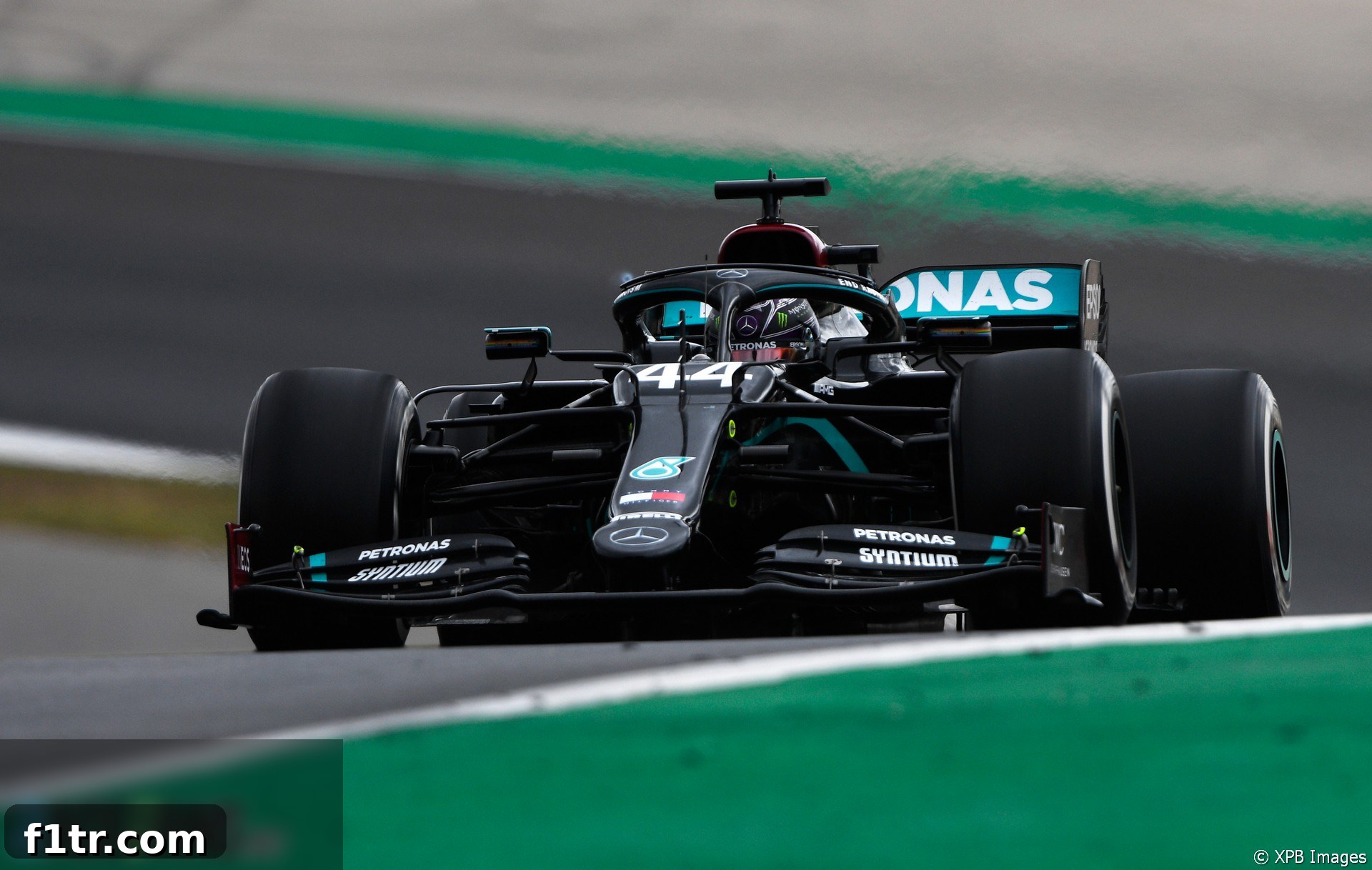
In a display of remarkable resilience and sheer mental fortitude, Lewis Hamilton secured a dominant victory at the 2020 Portuguese Grand Prix, a race that tested the limits of his physical endurance. The Mercedes-AMG Petronas F1 Team driver later revealed that he battled through an “excruciating” cramp in his right calf during the closing stages, a challenge severe enough to significantly impact his driving and throttle control. This incident offered a rare glimpse into the unseen struggles and intense physical demands faced by Formula 1 drivers, even at the peak of their performance.
Advert | Become a Supporter & Go Ad-Free
Advertisement Content Here
The Unforeseen Challenge: Cramp Strikes During Peak Performance
Hamilton’s account painted a vivid picture of the agony he endured in the final laps. He explained that the cramp in his right calf became so painful that he was forced to “lift quite often down the straight.” For a sport where every millisecond counts, any involuntary reduction in throttle application is a significant handicap, yet Hamilton found a way to push through. “I had to somehow get through it because it is what it is, you can’t lift for the whole lap,” he stated, highlighting the non-negotiable imperative to maintain pace.
The British driver candidly admitted his uncertainty regarding the cramp’s precise cause, though he offered a strong hypothesis. “I generally didn’t drink a lot today and I remember getting into the car thinking I’m probably going to be dehydrated,” he recalled. His long-standing habit of “never drink[ing] in the race, never” might have finally caught up with him on such a physically taxing circuit. Dehydration is a common culprit for muscle cramps, even in elite athletes, underscoring the delicate balance of physiological needs in high-performance environments.
Portimao’s Relentless Demands: A Circuit Like No Other
The Autodromo do Algarve, hosting the Portuguese Grand Prix for the first time in nearly a quarter-century, proved to be an exceptionally demanding track. Its unique characteristics offered Lewis Hamilton few opportunities to ease the relentless strain on his leg. “It’s a very physical circuit,” Hamilton commented, describing its “lots of bumps, undulations.” The constant need for aggressive throttle application, lap after lap, meant drivers “never really get to rest.” The rollercoaster nature of Portimao, with its rapid elevation changes and flowing corners, amplified the G-forces and muscular exertion, making it particularly unforgiving.
The onset of the cramp was sudden and dramatic. Hamilton described the sensation as he exited Turn 15, the final corner, onto the main straight: “I got the feeling that it was about to pull, like you’re pulling a muscle, and it popped and it hurt so much.” This sharp, intense pain forced an immediate reaction, compelling him to lift off the accelerator. “I didn’t really know what to do, because every time I applied it the pain was there,” he revealed, conveying the helplessness and urgency of the situation. Yet, in true champion fashion, he knew inaction was not an option: “Of course I can’t stay off the gas, I’ve got to keep going, so it’s just mind over matter, so I just had to keep pushing.”
Mind Over Muscle: The Champion’s Unyielding Resolve
The ability to compartmentalize pain and maintain focus under extreme pressure is a hallmark of elite athletes, and Hamilton’s experience at Portimao was a testament to his extraordinary mental resilience. For several laps, the pain was “pretty excruciating.” However, a fascinating physiological response eventually kicked in. “I don’t know whether blood starts rushing to it and the adrenalin takes over but I’ve definitely got a bit of a knot in my knee, my calf,” he explained. This natural pain mitigation, fueled by adrenaline and the body’s protective mechanisms, allowed him to continue his charge towards the finish line.
Hamilton’s victory at the 2020 Portuguese Grand Prix was not just another win; it was a demonstration of his profound strength of character and his unwavering commitment to excellence. To perform at the absolute limit, lap after lap, while battling a debilitating physical ailment speaks volumes about the mental and physical conditioning required for Formula 1. It underscored why Hamilton stands among the greatest, showcasing his capacity to push past conventional boundaries of discomfort and maintain a laser-like focus on the ultimate objective.
The Unsung Hero: Angela Cullen’s Indispensable Role
Post-race, Lewis Hamilton was quick to acknowledge the vital role of his long-time trainer and physiotherapist, Angela Cullen. He confirmed that Cullen would be addressing his calf cramp immediately, highlighting her expertise and essential contribution to his performance and recovery. Hamilton’s praise for Cullen went beyond a mere acknowledgment; it was a clear endorsement of her professional skill, implicitly drawing a distinction between her and others in the paddock. “Angela is a real physio,” he stated emphatically. “A lot of trainers here claim they are real physios but they are not – most of them aren’t physios.”
This statement sheds light on the critical importance of qualified sports physiotherapy in Formula 1. Drivers endure immense G-forces, high cockpit temperatures, and prolonged periods of intense concentration, placing enormous stress on their bodies. A true physiotherapist like Angela Cullen possesses the in-depth anatomical and biomechanical knowledge necessary not only to treat injuries but also to optimize physical performance, prevent issues, and ensure rapid recovery. Her work is not just about massage; it involves comprehensive physical preparation, injury management, and understanding the specific demands of motorsport. Cullen’s proven ability to treat other top drivers, including fierce competitor Max Verstappen, further solidifies her reputation as a highly respected and crucial member of the F1 support ecosystem.
Advert | Become a RaceFans Supporter andGo Ad-Free
Another Ad Content Here
The Legacy of a Champion: Pushing Limits Beyond the Track
The 2020 Portuguese Grand Prix, and Lewis Hamilton’s personal battle during it, encapsulates much of what makes Formula 1 so captivating and Hamilton himself such a legendary figure. It’s not merely about the speed of the car or the precision of the driving; it’s about the human element, the raw determination to overcome adversity, and the profound physical and mental sacrifices required to compete at the pinnacle of motorsport. This particular race will be remembered not only for Hamilton setting a new record for Grand Prix wins but also for the unseen struggle he conquered within the cockpit.
His candor about the cramp and its potential cause also serves as an important reminder about basic athletic principles, even at the elite level. The incident subtly highlighted the consequences of dehydration, reinforcing the foundational importance of hydration for peak physical performance in any sport. Hamilton’s triumph in Portugal was a complete victory – a strategic masterclass, a driving clinic, and a profound testament to the power of the human spirit to endure and excel, even when the body is screaming for relief. It solidified his image as a driver who truly leaves nothing on the table, pushing his limits in every aspect of the race.
Related Coverage: 2020 Portuguese Grand Prix
Explore more articles and insights from the thrilling 2020 Portuguese Grand Prix:
- Full Race Report: Hamilton Dominates Portimao
- Qualifying Analysis: The Grid at Portimao
- Driver Ratings: Performances Under Pressure
- Team Radio: Best Moments from the Race
Browse all 2020 Portuguese Grand Prix articles