Advert | Become a Supporter & go ad-free
Renault Withdraws Racing Point Appeal Following FIA’s Pledge to Uphold Constructor Integrity in F1
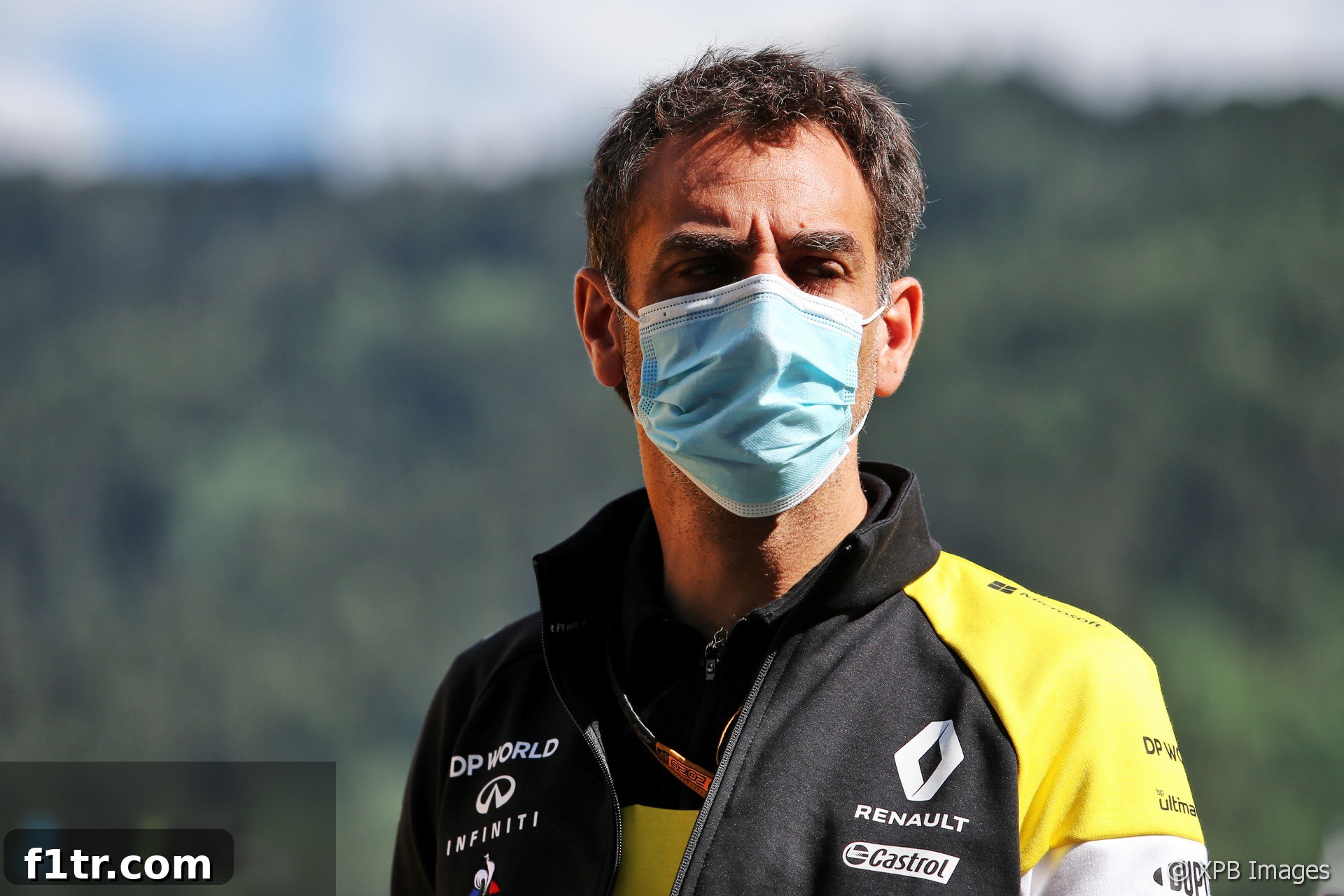
In a significant and carefully calculated move, Renault F1 Team managing director Cyril Abiteboul has provided a detailed explanation for the team’s decision to withdraw its appeal against the FIA’s stewards’ ruling concerning Racing Point’s controversial brake ducts. This strategic pivot, coming after weeks of high-profile contention, underscores a pivotal agreement between Renault and Formula 1’s governing body on the fundamental principles of intellectual property and design autonomy within the sport.
The controversy ignited when Renault lodged a formal protest against Racing Point’s RP20 car, alleging that its brake duct design was an unlawful replication of the 2019 championship-winning Mercedes W10. After an exhaustive investigation, the FIA stewards sided with Renault, concluding that Racing Point had indeed contravened sporting regulations by utilizing brake ducts conceptually designed by Mercedes. Despite this victory, Renault initially found the handed-down penalty – a fine and a points deduction – to be insufficient, prompting the team to lodge an appeal in pursuit of a more stringent outcome and a clearer precedent for the future of design ethics in F1.
A Strategic Shift: Reinforcing the Constructors’ Ethos
Abiteboul clarified that Renault’s decision to retract its appeal was not an admission of defeat but a proactive step driven by vital assurances from the FIA regarding the sport’s future regulatory framework. “Basically what we’ve been doing since the start is to get a guarantee and make sure that we share the vision with the FIA and Formula 1 that the championship is a championship for constructors,” Abiteboul stated in an interview. He expanded on this definition, emphasizing that a true constructor transcends the mere label of an OEM (Original Equipment Manufacturer). It encompasses teams that are actively “building, designing their car, owning the IP of the car with 10 original designs and original aerodynamic concepts. We don’t want a championship of copying or tracing.”
This statement encapsulates the heart of Renault’s protest: a staunch defense of intellectual property (IP) and the innovative spirit that traditionally defines Formula 1. While Racing Point maintained that they had legally acquired the brake duct designs during 2019, when they were not classified as “prescribed parts” requiring proprietary design, their continued use in 2020, after brake ducts became listed components, created a regulatory grey area. For Renault and several other teams, this situation blurred the lines between legitimate technical partnerships and the outright copying of a rival’s performance-critical designs, threatening the integrity of the constructor principle.
FIA’s Pledge: Evolving Regulations for Clarity
The decisive factor behind Renault’s withdrawal was the explicit commitment from the FIA to introduce revised regulations. Abiteboul confirmed, “We have received guarantees that it’s the vision, but also that the regulation will evolve in that direction in order to avoid any ambiguity. So that’s what’s happening.” This promise from the governing body to implement clearer and more stringent rules, specifically designed to prevent the replication of rival teams’ designs, marks a significant turning point. It signals the FIA’s acknowledgment of the loopholes that Racing Point potentially exploited and a determined effort to safeguard the sport’s identity as a cutting-edge engineering competition.
The precise details of these forthcoming regulatory amendments are currently being finalized. Their formal implementation is intrinsically linked to the ongoing negotiations and eventual signing of the new Concorde Agreement. This crucial, confidential commercial contract between the FIA, Formula 1, and all ten competing teams governs everything from revenue distribution to how new technical and sporting regulations are ratified. Abiteboul highlighted this timeline, explaining, “The regulations cannot be voted now because we are between two Concorde Agreements. But as soon as the future of the new Concorde Agreement will be in place, those regulations will evolve in that direction.” This indicates that while the intent for stricter anti-copying rules is clear, their official integration into the sport’s rulebook awaits the finalization of this foundational governance document, which is expected to usher in a new era of stability and potentially, fairer design competition.
The Pragmatism of Avoiding a Protracted Appeal
Beyond the strategic assurances from the FIA, Renault’s decision was also rooted in a pragmatic assessment of the appeal process itself. Abiteboul openly acknowledged the inherent complexities and uncertainties involved in pursuing a formal appeal through motorsport’s judicial channels. “The appeal process is very complex and a process full of doubt and uncertainty,” he stated. “We don’t know what could have happened at the extent, at the outcome of that process. So we have no certainty that we would have ended up in a better sporting situation.”
The pathway for appealing an FIA decision typically involves presenting the case to the International Court of Appeal (ICA), an independent judicial body. This process is often resource-intensive, demanding significant legal expertise, substantial financial investment, and considerable time from a team’s already stretched personnel. Crucially, there is no guarantee that an appeal will yield the desired outcome; the ICA’s rulings are based on its interpretation of complex regulations and the evidence presented, which can be unpredictable. For Renault, weighing the considerable costs and the inherent uncertainty of achieving a more favourable sporting penalty or a clearer regulatory precedent through a lengthy appeal, a direct understanding and commitment from the FIA on future rule changes offered a far more tangible, efficient, and impactful path towards achieving their overarching goal for the sport’s integrity.
Navigating the Intricate Web of F1 Corporate Relationships
The controversy surrounding Racing Point’s brake ducts inevitably drew attention to the intricate web of corporate and technical relationships that exist within the Formula 1 paddock. Racing Point had openly acquired technical components, including brake ducts, from Mercedes, their engine supplier. This interchange led to the car being colloquially dubbed the “Pink Mercedes” due to its striking visual and conceptual resemblance to the 2019 Mercedes W10. Such technical collaborations frequently spark debate, particularly given the broader collaborations that exist between the road car divisions of various F1 stakeholders, such as Renault and Mercedes, who have previously partnered on vehicle platforms and drivetrain technologies.
When directly questioned about whether these wider corporate ties influenced Renault’s decision to drop the appeal, Abiteboul drew a clear distinction between business partnerships and fierce on-track competition. “Mercedes is a great brand, is a partner of Renault. But to a certain degree everyone is a partner of everyone in that paddock,” he explained, underscoring the complex, interwoven nature of the modern automotive and motorsport industries. He further pointed out the strong existing ties between Aston Martin, Racing Point’s future brand, and Mercedes/Daimler, acknowledging that such extensive collaborations are a common feature of the F1 ecosystem.
However, Abiteboul firmly asserted Renault’s competitive stance on the circuit. “I think we are competitors. We’ve tried in the past to engage and to develop some synergy with Mercedes. Now that again we’ve got a more long-term [period] of time in Formula 1, maybe that’s the sort of thing we can do in the future. But what matters, what we were after is clarification of the regulation and that’s what will happen.” This statement emphatically reinforces that for Renault, the driving force behind both the original protest and the subsequent strategic withdrawal was not to target a specific rival or undermine corporate partnerships, but rather to ensure absolute clarity and uphold the integrity of Formula 1’s sporting regulations for all teams involved.
The Evolving Landscape of Renault’s Engine Customer Program
Another strategic consideration for Renault, woven into the fabric of its long-term Formula 1 commitment, is the evolving state of its engine customer program. With McLaren set to transition from Renault power units to Mercedes engines starting next year, Renault is poised to become the only engine manufacturer on the grid without any customer teams. This scenario presents both inherent challenges and potential opportunities, and Abiteboul addressed its implications for the team’s future strategy.
“With the renewal of the Concorde Agreement, but also with the confirmation of our commitment to Formula 1 on the future, clearly we need to look at our set-up and see what’s good, what’s positive and also what’s missing,” Abiteboul reflected. While he acknowledged that Renault is not in a “desperate” situation regarding customer teams, he strongly emphasized the tangible advantages of having partner teams within the paddock. Customer teams offer an invaluable array of benefits to engine suppliers, including wider and more diverse data collection for ongoing development, the opportunity to share substantial development costs, and enhanced political leverage within the sport’s complex governing landscape. Furthermore, deploying more engines across the grid provides a broader understanding of performance dynamics under various chassis configurations and diverse operating conditions, which is crucial for optimizing engine packages.
The prevailing structure in modern Formula 1, where major manufacturers frequently supply multiple teams, clearly highlights the strategic benefits of such alliances. For Renault, re-establishing a customer engine program could prove vital not only for accelerating technical development and reliability but also for maximizing its influence and optimizing its resource allocation under the incoming regulatory framework and the new Concorde Agreement. The industry will be watching closely to see which teams might consider partnering with Renault in the years to come, particularly as Formula 1 moves towards a more cost-effective and potentially more fiercely competitive future.
Advert | Become a RaceFans supporter andgo ad-free
Broader Implications for Formula 1’s Core Identity
Renault’s strategic decision to withdraw its appeal, underpinned by robust assurances from the FIA, carries profound implications for the future identity and fundamental principles of Formula 1. It unequivocally reaffirms the sport’s foundational tenet: that it is a competition for true constructors – teams that possess the expertise, resources, and mandate to design, develop, and build their own intellectual property from the ground up. The “Pink Mercedes” controversy served as a stark reminder, bringing into sharp focus the ethical and regulatory boundaries that govern technical partnerships and the permissible transfer of design information between competing entities.
The impending regulatory changes, once formally ratified under the new Concorde Agreement, are anticipated to provide much-needed clarity and eliminate ambiguities, effectively preventing similar situations and potential breaches of the fundamental constructor principle. This move is paramount for maintaining a level playing field, fostering genuine innovation, and preserving the unique engineering challenge that has always defined Formula 1 as the pinnacle of motorsport. It sends a resounding message throughout the paddock: while judicious resource sharing and strategic alliances are an inherent part of modern F1, outright copying or an excessive reliance on another team’s intellectual property for performance gains will be actively and rigorously curtailed.
Ultimately, this protracted saga underscores the ongoing and delicate tension between financial prudence and the unwavering purity of sporting competition. As Formula 1 endeavors to achieve greater sustainability, reduce costs, and promote closer, more thrilling racing, striking the right balance between necessary cost-saving measures and the imperative to foster independent design and innovation will remain a critical, defining challenge. Renault’s strategic withdrawal, therefore, represents far more than just the resolution of a specific dispute; it signifies a crucial step towards shaping the fundamental ethos and competitive landscape of Formula 1 for many years to come, ensuring its cherished status as the ultimate test of engineering prowess and competitive spirit.
Advert | Become a RaceFans supporter andgo ad-free
Related Articles: 2020 Belgian Grand Prix
- 2020 Belgian Grand Prix Star Performers
- Ricciardo believes Renault’s Spa set-up breakthrough will work on other tracks
- ‘He should have let me pass’: How Raikkonen saw Giovinazzi’s crash
- Sub-54 second laps will produce a “big mess” in qualifying on Bahrain Outer circuit
- McLaren expect Ferrari will “strike back” after Monza
Browse all 2020 Belgian Grand Prix articles