Unpredictable Challenges Await at the Singapore Grand Prix
The Singapore Grand Prix, a crown jewel in the Formula 1 calendar, is renowned for pushing drivers and teams to their absolute limits. As the race weekend approaches at the iconic Marina Bay Street Circuit, anticipations are high, not just for the thrilling on-track action, but also for the unique and demanding conditions that typically accompany this spectacular night race. This year, meteorologists and race strategists are keenly observing a confluence of environmental factors – from intense tropical downpours and oppressive heat to potential air quality concerns – all of which are poised to introduce a diverse range of challenges for everyone involved.
Set against the stunning backdrop of Singapore’s urban landscape, the street circuit itself is an unforgiving arena, where precision and driver skill are paramount. However, when these inherent track demands are compounded by variable and often extreme weather, the event transforms into a true test of endurance, adaptability, and strategic brilliance. Understanding these environmental elements is key to appreciating the monumental task facing the competitors and the tactical decisions that could define the outcome of the Singapore Grand Prix.
Tropical Downpours: The Threat of a Wet and Wild Race Weekend
Singapore’s location near the equator makes it prone to severe afternoon thunderstorms, a characteristic feature of its tropical climate. These periodic cloudbursts are not merely light drizzles; they are often intense, short-duration downpours that can rapidly drench the circuit. Forecasts suggest that these vigorous thunderstorms are particularly likely to impact the upcoming race weekend, potentially casting a shadow over crucial on-track sessions, which primarily occur in the late afternoon and early evening hours.
The earliest session, first practice (FP1), commencing at 4:30 PM local time, stands a significant chance of being affected by rain. While the more critical qualifying (9:00 PM) and the race itself (8:10 PM) have a slightly better probability of taking place on a dry track, this largely hinges on the exact timing and intensity of any rainfall. The prospect of a wet Marina Bay Street Circuit introduces an entirely different dimension of challenge. The tight, concrete-lined nature of a street circuit leaves little room for error at the best of times, but in wet conditions, the risks escalate dramatically. Reduced grip, poor visibility due to spray, and the omnipresent threat of aquaplaning turn every corner into a potential hazard. The lack of extensive run-off areas means that even minor mistakes can lead to significant incidents, often necessitating Safety Car deployments or even red flags, which profoundly impact race strategy.
Fans need only recall the dramatic 2017 Singapore Grand Prix to understand the potential for chaos that rain can bring. That race saw a multi-car collision on the opening lap in damp conditions, instantly altering the championship picture. Teams will be meticulously monitoring weather radars, preparing their wet and intermediate tire strategies, and mentally preparing their drivers for what could be a thrilling, albeit treacherous, battle for supremacy in challenging conditions.
Enduring the Heat: A Grueling Test of Driver and Machine
Beyond the threat of rain, another constant challenge at the Singapore Grand Prix is the relentless heat and punishing humidity. Temperatures are expected to consistently hover above 30 degrees Celsius throughout the weekend, often accompanied by stifling humidity levels that can make it feel even hotter. This extreme environment places immense physical demands on the drivers, who navigate the physically arduous Marina Bay Circuit for nearly two hours, often losing several kilograms in body fluid despite rigorous hydration efforts.
The cockpit temperatures, exacerbated by the lack of airflow in stop-start sections and the engine’s heat output, can reach well over 50 degrees Celsius. This grueling environment can impair driver concentration, response times, and overall physical performance, pushing them to the absolute limits of human endurance. Preparation for this aspect of the race is meticulous, involving specialized fitness regimes and hydration plans. Furthermore, the heat significantly impacts the performance and reliability of the Formula 1 cars themselves. Engine cooling becomes a critical concern, with teams often forced to open up bodywork or run less aggressive engine maps to prevent overheating, which can compromise overall performance.
Tire degradation is another major factor, as the high track temperatures and abrasive surface combine to increase wear. Brake cooling is equally vital, especially on a circuit known for its heavy braking zones. Mercedes, for instance, has historically faced challenges in high-temperature races, as evidenced by their struggles at the Red Bull Ring earlier in the year. While every team prepares extensively for these conditions, some car designs and power unit cooling solutions may prove more resilient than others, potentially creating performance differentials across the grid. The heat, therefore, adds another layer of strategic complexity, influencing everything from tire management to pit stop timings and even the optimal setup of the cars.
Air Quality Concerns: The Lingering Specter of Regional Haze
Adding a lesser-known yet potentially impactful environmental factor to the Singapore Grand Prix weekend is the periodic concern over air quality. Singapore sometimes experiences hazy conditions, primarily due to winds carrying smoke and dust from forest fires occurring in nearby Indonesia. While not an annual occurrence, this phenomenon has coincided with the race weekend on previous occasions. Thankfully, in the past, these hazy conditions have not caused any significant disruption to the on-track action or the event schedule.
However, the presence of haze introduces several potential complications. For drivers, reduced visibility could become an issue, particularly given the already challenging nature of racing at night under artificial lights. While modern F1 cars are equipped with sophisticated lighting systems, a significant reduction in air clarity could affect depth perception and reaction times, especially during high-speed sections. From a health perspective, prolonged exposure to poor air quality can pose risks, both for the drivers and for the thousands of spectators, team personnel, and officials present at the circuit.
Race organizers and local authorities closely monitor the Pollutant Standards Index (PSI) levels throughout the weekend. Should the air quality deteriorate significantly, contingency plans would undoubtedly be put into action, prioritizing the safety and well-being of all participants. While it remains a less common concern compared to rain or heat, the potential for haze underscores the unique environmental variables that make the Singapore Grand Prix a truly exceptional and unpredictable event on the Formula 1 calendar.
The Marina Bay Street Circuit: A Test Like No Other
While the weather conditions grab headlines, it is important to remember that these challenges are layered upon the inherently demanding nature of the Marina Bay Street Circuit itself. Widely regarded as one of the most physically demanding tracks on the calendar, Marina Bay is a true street circuit, meaning it features public roads transformed into a race track with unforgiving concrete barriers just inches away from the racing line. The circuit boasts a high number of corners and few long straights, requiring immense concentration and precision from the drivers for the entire race distance.
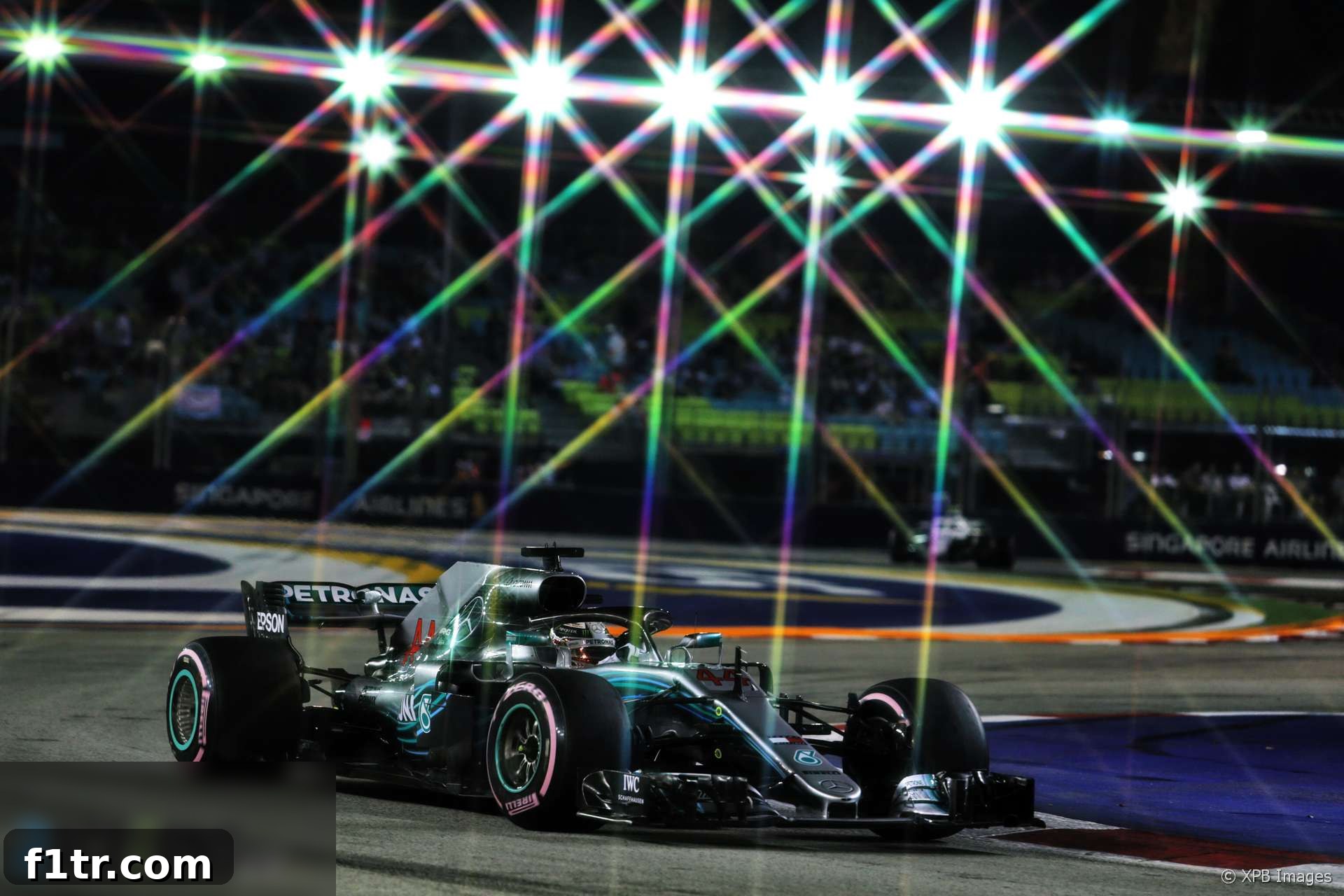
As a night race, the circuit presents a unique visual spectacle, illuminated by powerful floodlights. However, this artificial lighting can also create its own challenges, including reflections on damp surfaces or varying levels of illumination that can play tricks on a driver’s eyes. The circuit’s bumpy surface, a characteristic of street tracks, further adds to the physical strain on drivers and the mechanical stress on the cars, making setup crucial for both performance and reliability. The combination of high ambient temperatures, relentless humidity, potential rain, and the circuit’s own brutal nature means that the Singapore Grand Prix is an unparalleled test of man and machine, demanding peak performance in every aspect.
Strategic Prowess and Preparation: Navigating Uncertainty
Given the array of potential challenges, strategic prowess and meticulous preparation become paramount for every team vying for victory at the Singapore Grand Prix. Team meteorologists work around the clock, providing real-time weather updates and probabilistic forecasts that feed directly into strategic decisions. Engineers meticulously prepare the cars with cooling solutions optimized for the heat, while also readying contingency plans for sudden downpours. Drivers undergo intense physical conditioning to cope with the heat and humidity, ensuring they can maintain peak concentration throughout the race.
Race strategists will be faced with complex decisions regarding tire choices, pit stop windows, and fuel management, all of which could be drastically altered by unexpected rain, Safety Car periods, or even a deterioration in air quality. The ability of a team to adapt swiftly and make correct calls under pressure in these variable conditions often differentiates the winners from the rest of the field. The Singapore Grand Prix is not just a test of raw speed; it’s a chess match played at 300 km/h, where every decision, every setup tweak, and every driving input must account for the unpredictable hand of nature.
Conclusion: A Spectacle of Challenge and Skill
The Singapore Grand Prix consistently delivers some of the most thrilling and unpredictable racing of the Formula 1 season. This year, the anticipated weather conditions – from torrential rain to searing heat and the potential for atmospheric haze – promise to amplify the already formidable challenges of the Marina Bay Street Circuit. These environmental factors combine to create an event that is as much a battle against nature as it is against rival competitors. It demands not only the peak physical and mental performance from the drivers but also exceptional strategic foresight and adaptability from their teams.
As the engines roar to life under the floodlights, fans can expect a captivating spectacle where every session could bring a new twist, and the outcome remains finely balanced until the very last lap. The Singapore Grand Prix stands as a testament to the ultimate test of man and machine in one of the most unique and demanding environments in motorsport. Stay tuned to RaceFans Live and the RaceFans Twitter account for real-time updates on track conditions and all the unfolding drama throughout what promises to be an unforgettable race weekend.
2019 Singapore Grand Prix Highlights
- Top ten pictures from the 2019 Singapore Grand Prix
- 2019 Singapore Grand Prix Star Performers
- Vettel lights up Singapore again as Ferrari keep Leclerc in the dark
- Ferrari score first hat-trick of wins for more than a decade
- Mercedes slowed Bottas to protect Hamilton from Albon
Browse all 2019 Singapore Grand Prix articles