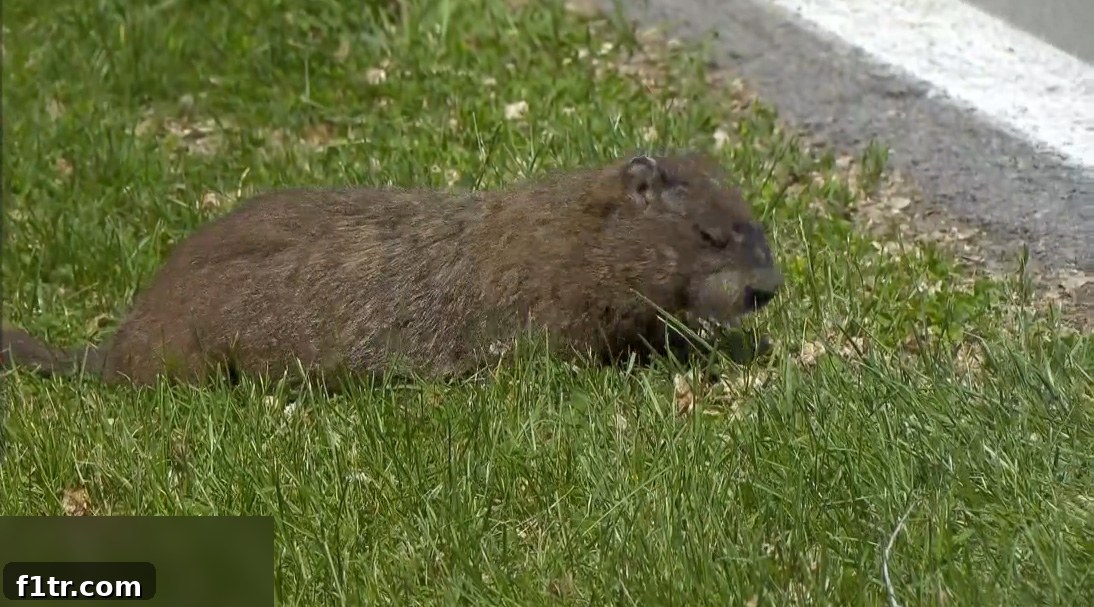
In the high-speed world of Formula 1, every element of track safety is meticulously scrutinized, yet some hazards remain inherently unpredictable. One such unexpected incident occurred during a practice session, involving Haas F1 driver Romain Grosjean and an unassuming groundhog. This peculiar collision not only highlighted the persistent challenge of wildlife management at racetracks but also shed light on the complex decision-making process undertaken by race control, particularly as explained by the late FIA Race Director, Charlie Whiting.
The incident unfolded on a Friday during practice, a crucial time for teams to fine-tune their cars and gather data. Grosjean, pushing his Haas machine to its limits, unexpectedly collided with a groundhog that darted onto the track. The impact was significant, causing immediate damage to his car and bringing a premature end to a valuable run. The driver himself expressed his disappointment, particularly regarding the animal’s presence despite it reportedly being spotted by television cameras prior to the unfortunate contact. This sentiment naturally led to questions about why marshals or race officials hadn’t intervened to clear the animal from the circuit.
Advert | Become a Supporter & go ad-free
Advertisement
Charlie Whiting, a revered figure in Formula 1 for his extensive experience and calm demeanor, addressed the drivers and the media, offering a clear explanation for the inaction. He confirmed that the groundhog had indeed been sighted. “We saw the groundhog. I did ask if it was feasible to try and catch him,” Whiting stated. However, the subsequent advice he received proved crucial. “I was told by those who know much more about groundhogs it was a very unwise thing to try and do.” This consultation with wildlife experts underscores the multifaceted nature of race control decisions, where safety extends beyond just human participants to include animal welfare and practical logistics.
Whiting elaborated on the rationale behind the difficult choice: “We felt that on balance it was better to leave it there and hope he didn’t make a dash for it but he did, unfortunately.” The decision was a calculated risk, weighing the potential dangers of attempting to capture a wild animal on an active circuit against the slim hope that it would remain clear of the racing line. The concern was that any attempt to catch the groundhog might startle it further, causing it to bolt directly into the path of an oncoming car, or even endanger the marshals involved in the capture attempt. Groundhogs, also known as marmots, are not small, docile creatures; they can weigh up to six kilograms, making them a substantial and unpredictable obstacle on a fast-moving racetrack.
The Real Cost of an Unexpected Collision
The consequences of the collision were more severe than a simple delay. Romain Grosjean’s Haas suffered significant damage, most notably breaking one of the team’s new front wings. In Formula 1, front wings are incredibly complex and expensive pieces of aerodynamic technology, crucial for a car’s performance. The loss of a new, advanced component like this, especially during a practice session, can have several ripple effects. It impacts the team’s testing program, potentially forcing them to use an older specification wing or limited spare parts, which can compromise data collection and overall performance for the rest of the race weekend. For a team like Haas, operating on a comparatively smaller budget than some of its rivals, such unexpected damage represents a considerable financial setback.
Beyond the immediate material damage, incidents involving wildlife highlight an ongoing battle for circuit management. Whiting pointed out the inherent challenges: “They are indigenous to this island, they’re protected, and they do their best to get places they’re not supposed to go.” This statement encapsulates the dilemma. Groundhogs are a protected species in many regions, meaning their removal or harm is restricted. Their natural behavior involves extensive burrowing, and despite efforts to secure the perimeter and fill existing holes, these persistent creatures often find new ways to access areas close to or even on the track. “We do our best to try and fill up all the holes but they just dig new ones and quite often get onto the track,” Whiting explained, adding with a touch of resignation, “It’s not nice but I think there’s very little we can actually do to eradicate it.”
The Broader Spectrum of Track Hazards and F1 Safety
This incident, while unusual, is not entirely isolated in the annals of motorsport. Race tracks, by their very nature, are often constructed in expansive, sometimes rural, areas where wildlife coexists. From birds and deer to smaller creatures like groundhogs, unexpected incursions are a perennial concern for safety officials. Formula 1 has a robust safety record and constantly strives to mitigate risks, but the natural world introduces an unpredictable variable that is incredibly difficult to control comprehensively.
Romain Grosjean, in particular, has had an unfortunate history with unexpected track hazards. During practice in Malaysia the previous year, he suffered a similar dramatic mishap when his Haas struck a loose drain cover, causing extensive damage and a frightening crash. While a groundhog is a living creature and a drain cover is an inanimate object, both incidents underscore the critical importance of track integrity and the swift, decisive action (or sometimes, deliberate inaction) required from race control when unforeseen elements threaten driver safety and event continuity. The drain cover incident led to significant revisions in how such track elements are secured, illustrating F1’s commitment to continuous improvement in safety protocols.
The responsibility of an FIA Race Director like Charlie Whiting is immense, encompassing everything from sporting regulations to safety protocols and the minute-by-minute management of a Grand Prix weekend. Decisions often need to be made under immense pressure and with incomplete information. The groundhog incident serves as a poignant reminder that even with the most advanced technology and meticulous planning, motor racing remains a sport operating at the mercy of countless variables, including the occasional intrusion from the natural world. The balance between human safety, animal welfare, and maintaining the integrity of the competition is a delicate one, requiring careful judgment and expert consultation.
Advert | Become a RaceFans supporter andgo ad-free
Advertisement
F1’s Ongoing Commitment to Safety and Unforeseen Events
Ultimately, the groundhog incident, though quirky, reinforced Formula 1’s unwavering commitment to safety while acknowledging the inherent unpredictability of live sporting events. The transparency of Charlie Whiting’s explanation provided valuable insight into the complex decision-making processes that govern the sport. It highlighted that even seemingly simple problems, such as a wild animal on track, can present multifaceted dilemmas with no easy answers. Circuits worldwide continue to invest in better fencing and deterrents, but the ingenuity of nature often finds a way to challenge even the most stringent security measures.
This episode serves as a unique footnote in Formula 1 history, a blend of high-octane engineering and an unexpected encounter with wildlife. It reminds us that while technological advancements push the boundaries of speed and performance, the sport remains tethered to the natural environments in which it operates. The legacy of figures like Charlie Whiting includes not just enforcing rules but making tough, informed decisions to protect all participants – human and, sometimes, animal – demonstrating the deep ethical considerations embedded within the pursuit of motorsport excellence. It’s a testament to the continuous evolution of safety in F1, where lessons from every incident, no matter how unusual, contribute to making the sport safer for future generations.
2018 F1 season
- F1 feared “death knell” for Drive to Survive after Ferrari and Mercedes snub
- McLaren staff told us we were “totally crazy” to take Honda engines in 2018 – Tost
- ‘It doesn’t matter if we start last’: How Red Bull’s junior team aided Honda’s leap forward
- Honda’s jet division helped F1 engineers solve power unit problem
- McLaren Racing losses rise after Honda split
Browse all 2018 F1 season articles