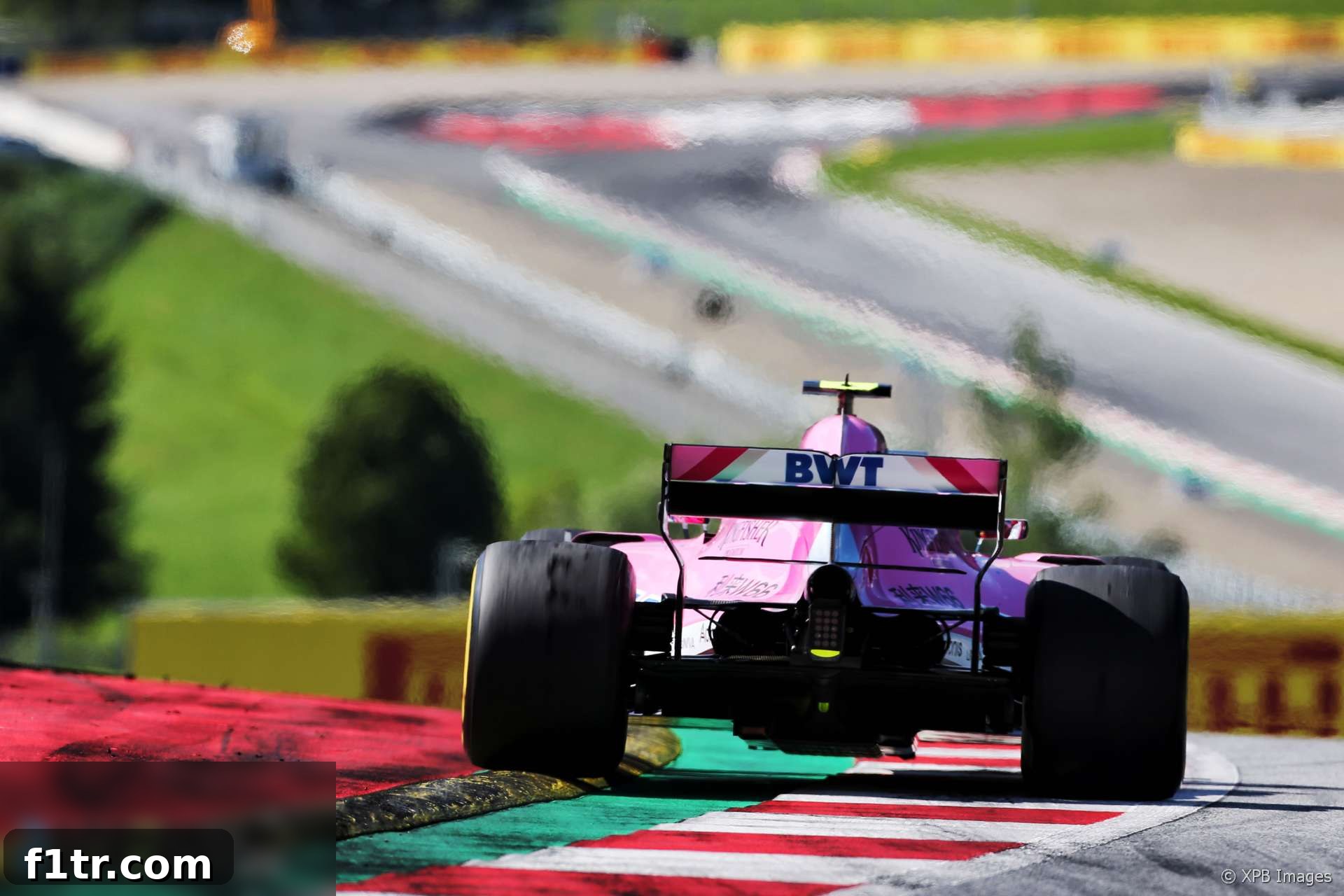
The thrilling world of Formula 1 consistently generates debates and insights, and a recent discussion around the Drag Reduction System (DRS) at Silverstone has once again put driver safety and skill under the spotlight. Leading the conversation, Esteban Ocon, a seasoned F1 competitor, has expressed strong opinions, suggesting that the experience of utilising DRS through the new zone at Silverstone highlighted crucial reasons why Formula 1 should not relax the rules governing its use.
Ocon on DRS: A Call for Caution Amidst the Quest for Speed
The Drag Reduction System (DRS) has been a fixture in Formula 1 since its introduction in 2011, designed to enhance overtaking opportunities by reducing aerodynamic drag on straights. However, its increasing power and the strategic placement of DRS zones have prompted questions about safety and the balance between aiding overtakes and preserving the challenge for drivers. During a recent media session, Esteban Ocon was directly asked whether he would prefer the FIA to grant drivers the autonomy to decide when to deploy DRS over a complete lap, reminiscent of its initial implementation. His response was unequivocal and underscored the significant evolution of the system:
No. Because before it was a smaller DRS, really. Now it’s a big one.
I think you’ve seen in Silverstone what’s the effect of it. Even the quick cars didn’t manage to go with it open in turn one. It feels quite weird when you have no downforce in the rear and the car is very mobile. You can lose everything suddenly.
The way now is good. Of course it makes it a bit braver for the drivers nowadays if they make a corner with it.
Ocon’s perspective is rooted in the stark reality of modern F1 cars and the sheer force of the current DRS. He points out that the initial version of DRS in 2011 was considerably less potent. Today, the system provides a far more significant aerodynamic advantage, resulting in a dramatic reduction in rear downforce when activated. This substantial change in aerodynamic balance makes the car inherently unstable, especially at high speeds and through corners.
His reference to the Silverstone experience is particularly telling. The renowned British circuit, with its high-speed corners and demanding layout, served as a potent test of the current DRS configuration. Ocon noted that even the fastest cars on the grid struggled to maintain control with DRS open through a challenging sector like Turn 1 – Abbey. The sensation of a “very mobile” car with “no downforce in the rear” highlights the knife-edge on which drivers operate. The risk of sudden and unpredictable loss of control, leading to potentially severe accidents, is a genuine concern that Ocon clearly articulates. This delicate balance demands immense precision and courage from the drivers.
While acknowledging the inherent bravery required from drivers who push the limits by attempting to navigate corners with DRS activated, Ocon ultimately endorses the current, regulated system. His stance suggests that the FIA’s measured approach, which restricts DRS usage to specific zones on straights, is a necessary safeguard. Relaxing these rules and allowing free DRS deployment across an entire lap could introduce an unacceptable level of risk, transforming an overtaking aid into a hazardous gamble. The debate surrounding DRS continues to evolve, balancing the desire for exhilarating racing with the paramount need for driver safety, a balance Ocon believes is currently struck in a precarious but effective manner.
Quotes: Dieter Rencken
Advert | Become a RaceFans supporter andgo ad-free
Social Media: Connecting F1 Stars with Fans Worldwide
In the fast-paced world of Formula 1, social media has become an indispensable tool for drivers, teams, and fans alike. It offers an unparalleled window into the lives of these racing heroes, allowing them to share moments from their training, behind-the-scenes glimpses of team operations, personal milestones, and even philanthropic endeavors. This direct line of communication fosters a deeper connection with the global fanbase, bringing the sport closer to its admirers. Here’s a look at some notable posts that recently captured attention across various platforms:
work work work 💪🏼#VB77 @MercedesAMGF1 pic.twitter.com/lGhU7LzFM8
— Valtteri Bottas (@ValtteriBottas) August 2, 2018
Valtteri Bottas, known for his rigorous dedication to physical and mental preparation, often shares glimpses of his intense training regimes. This particular post, featuring the straightforward caption “work work work 💪🏼” alongside the #VB77 hashtag and a tag to @MercedesAMGF1, encapsulates the relentless effort required to compete at the pinnacle of motorsport. It serves as a reminder to fans that success on the track is built on countless hours of discipline and hard work off it, showcasing the commitment that defines an F1 athlete.
Estoy muy contento de anunciar que el día de ayer @FundChecoPerez entrego 34 casas a familias de San Dionisio del Mar, Oaxaca que perdieron sus viviendas en el terremoto del 19 de septiembre. pic.twitter.com/T3YLc36KU4
— Sergio Pérez (@SChecoPerez) August 2, 2018
Beyond the helmet, many F1 drivers are deeply involved in charitable work. Sergio Pérez, a proud Mexican driver, exemplifies this commitment through his foundation. In this heartwarming post, written in Spanish, Pérez expresses his joy in announcing that his foundation, @FundChecoPerez, delivered 34 homes to families in San Dionisio del Mar, Oaxaca, who had tragically lost their residences in the devastating earthquake of September 19th. This post highlights the profound impact that athletes can have beyond their sport, using their platform to bring vital aid and hope to communities in need, reminding us of the human side of these racing legends.
A kid who followed his heart. Always believe in yourself 🙏🏾 📷 x @latimages #youcantoo pic.twitter.com/XrnfHaYVyA
— Lewis Hamilton (@LewisHamilton) August 2, 2018
Lewis Hamilton, one of the sport’s most iconic figures, often uses his social media to share messages of inspiration and empowerment. This post, accompanied by a powerful image credited to @latimages, features Hamilton reflecting on his journey with the words, “A kid who followed his heart. Always believe in yourself 🙏🏾.” The hashtag #youcantoo reinforces his message that determination and self-belief are key to achieving one’s dreams, regardless of background. Such posts resonate deeply with fans, offering encouragement and demonstrating that even the most successful athletes have faced challenges and relied on unwavering self-belief to reach the pinnacle of their respective fields.
- Find more official F1 accounts to follow in the F1 Twitter Directory
These posts collectively showcase the diverse ways F1 drivers engage with their audience, from sharing their physical commitment and philanthropic efforts to offering profound motivational insights. Social media acts as a vital bridge, keeping fans connected and informed about the multifaceted lives of their racing heroes, extending the F1 experience far beyond the track and race weekends.
Links: A Comprehensive Round-up of Motorsport News
Staying informed about the latest developments across the vast landscape of motorsport is crucial for any enthusiast. Our curated selection of links brings together a range of compelling stories, offering insights into driver careers, team strategies, and the broader challenges facing racing series worldwide. From inspiring comebacks to the dilemmas of rising stars and the strategic moves of leading teams, this round-up ensures you’re up-to-date with the most important headlines.
Advert | Become a Supporter & go ad-free
Kubica happy with progress since 2017 comeback (ESPN)
Robert Kubica’s journey back to Formula 1 has been one of the most inspiring stories in recent motorsport history. Having sustained life-threatening injuries in a rally crash in 2011, his return to an F1 cockpit for testing in 2017 and subsequently a full-time role was nothing short of miraculous. In this interview with ESPN, Kubica expresses his contentment with the progress made since his initial comeback. He notes that “Twelve months ago I was here for the first time with Renault, and after 12 months I can say everything is easier.” This sentiment reflects the immense personal and professional hurdles he has overcome, demonstrating his unwavering resolve and dedication to the sport. His continued adaptation and ability to perform at such a high level serve as a powerful testament to his talent and resilience, making his journey a source of inspiration for many within and outside F1.
Norris: Year away from McLaren is an option (Autosport)
Lando Norris, a prodigious talent on the cusp of a full-time Formula 1 career, faces the classic dilemma of young drivers in the highly competitive environment of F1. In an Autosport report, Norris acknowledges that “a year away from McLaren is an option,” indicating the strategic considerations involved in his career progression. While his ambition is clearly set on an F1 race seat, the reality of limited opportunities at a top team like McLaren often means exploring alternative pathways. He adds, “At the same time, staying with McLaren, maybe it’s better to say I want to be doing FP1s and more opportunities to drive in F1.” This statement highlights the intricate balance between gaining valuable F1 experience through practice sessions and test roles versus securing a full-time drive, even if it means a temporary step sideways or waiting for the right moment. The careful cultivation of young talent is a critical aspect for teams like McLaren, and Norris’s situation exemplifies the pressures and choices faced by the next generation of F1 stars.
Ferrari, parla Camilleri: ora trattiamo con Liberty Media (Autosprint – Italian)
Following the significant leadership change at Ferrari, with Louis Camilleri stepping in as the new CEO after the passing of Sergio Marchionne, the future strategic direction of the iconic Italian marque is under close scrutiny. In an interview with Autosprint, Camilleri addresses key aspects of his new role, particularly concerning the relationship with Formula 1’s commercial rights holder, Liberty Media. He affirms, “Sergio and I have the same ambition for the company, but just a different style,” signalling continuity in Ferrari’s unwavering pursuit of excellence and influence within F1. Crucially, Camilleri states, “ora trattiamo con Liberty Media” (now we negotiate with Liberty Media), emphasizing the ongoing critical discussions regarding the sport’s future regulations, revenue distribution, and the Concorde Agreement. Ferrari’s stance and its negotiations are always pivotal for F1, given its historical significance and immense brand power. Camilleri’s leadership style and his approach to these negotiations will undoubtedly shape not only Ferrari’s future but also the wider landscape of Formula 1.
F2 performances ‘putting pressure’ on Wolff – Russell (Racer)
The feeder series to Formula 1, particularly Formula 2, serves as a crucial proving ground for aspiring F1 drivers. George Russell, a promising talent within the Mercedes junior program, believes his strong performances in F2 are effectively “putting pressure” on Toto Wolff, the head of Mercedes-AMG F1, and other teams on the grid. As reported by Racer, Russell states, “I think I am really being able to show everybody what I’m capable of and I think it’s definitely putting pressure on Toto and other teams on the grid to look at me, hopefully, and see they can have a good relationship with this driver.” This highlights the immense competition for F1 seats and the strategic importance of excelling in junior categories. Young drivers like Russell are not just racing for wins; they are constantly showcasing their potential to the top decision-makers in F1, hoping to secure a coveted spot. The junior series provide a clear demonstration of a driver’s raw speed, consistency, and ability to handle pressure, all essential qualities for a successful F1 career.
NASCAR’s Great Divide (Jeff Gluck)
Beyond Formula 1, other major motorsport series also navigate significant challenges and debates concerning their future. Jeff Gluck’s insightful piece on NASCAR discusses the “Great Divide” within the sport, characterising two distinct camps of opinion regarding its health and trajectory. “In one camp are the people who are extremely concerned about the future,” Gluck writes, explaining that “These people, who view themselves as realists, believe NASCAR is headed in the wrong direction and something must be done.” This group points to factors like declining viewership, attendance, and sponsorship challenges as evidence of a need for radical change. Conversely, “In the other camp are people who believe that while NASCAR has challenges, they aren’t that different than any other sport right now and believe public hand-wringing over its health only does harm.” This perspective often argues that all major sports face periods of ebb and flow, and that internal criticism can be detrimental. This philosophical split reflects the broader complexities of managing a legacy sport in a rapidly changing entertainment landscape, where evolving fan preferences and media consumption habits demand constant adaptation and careful strategy.
We always endeavour to credit original sources. If you have a tip for a link to feature in the next RaceFans round-up please send it in here:
- Contact RaceFans
This comprehensive collection of links offers a multifaceted view of the motorsport world, from the personal journeys of drivers to the strategic decisions of teams and the overarching health of major racing series. Each story contributes to the rich tapestry of news and insights that keeps fans engaged and informed.
Advert | Become a RaceFans supporter andgo ad-free
Comment of the Day: The Financial Realities of F1 and Driver-Team Dynamics
The financial aspects of Formula 1 often lurk beneath the surface of the glamorous racing, but they profoundly influence team decisions, driver careers, and the overall competitiveness of the sport. Our “Comment of the Day” frequently brings these underlying realities to the forefront, offering a fan’s perspective on the complex interplay between money and performance. Today’s featured comment delves into the intriguing, yet often challenging, relationship between the Williams team and its drivers, Lance Stroll and Sergey Sirotkin, highlighting the stark financial pressures at play.
Williams is doing their hardest to keep Stroll and Sirotkin. They need the money. It must be a bizarre situation at Williams. In reality Williams probably wants different drivers and their drivers want to drive in a different team with much better cars.
But just because of the money they all need to toe the party line. “Things are progressing, we are not happy but working hard and fully committed and we feel our decisions have been correct.” But after the press event is over they all check their F1 Tinders to see if something better is available.
@Socksolid
The insightful comment from @Socksolid articulates a widely understood, though rarely openly discussed, aspect of modern Formula 1: the critical role of financial backing, especially for independent teams like Williams. For teams struggling with budget constraints, the support brought by “pay drivers” – those who secure a seat largely due to significant sponsorship or family wealth – can be a lifeline. This often places teams in a precarious position where commercial necessity may override purely meritocratic driver selections.
@Socksolid aptly describes the “bizarre situation at Williams,” suggesting an underlying tension where the team might ideally prefer drivers with different profiles, and the current drivers themselves might aspire to race for more competitive outfits. Yet, the financial interdependency binds them. This dynamic forces both parties to maintain a façade of unity and optimism in public, adhering to a “party line” that emphasizes progress, hard work, and commitment, even when the reality on track might be less than ideal.
The humorous analogy of checking “F1 Tinders” after press events brilliantly captures the constant, discreet search for better opportunities that permeates the paddock. Drivers are always evaluating their options for more competitive cars, and teams are perpetually scouting for talent that aligns with both their sporting and financial objectives. This comment serves as a poignant reminder of the intricate blend of high-performance sport and hard-nosed business that defines Formula 1, where financial stability can be as crucial as raw pace. It resonates with fans who understand the sacrifices and compromises made by all parties in their pursuit of success in this demanding sport.
Happy Birthday! Celebrating Our Community
The RaceFans community is a vibrant and passionate group of Formula 1 enthusiasts, and we love to celebrate milestones together, big or small. Today, we extend our warmest wishes and a special “Happy Birthday!” to Soren Kaae. We hope you have a fantastic day filled with joy, and perhaps a little F1 excitement!
Birthdays are wonderful opportunities to connect and share a moment of celebration. If you’d like to receive a birthday shout-out in our future round-ups and be part of this fun tradition, we encourage you to let us know when yours is. You can easily get in touch with us via the contact form on our website, or you can contribute by adding your date to our dedicated list here. We look forward to celebrating with even more of our fantastic readers!
On This Day in F1: A Look Back at History
- 10 years ago today Heikki Kovalainen scored his only grand prix win, in Hungary
Every day holds a unique place in the rich annals of Formula 1 history, marked by memorable races, pivotal moments, and significant achievements. Looking back exactly 10 years ago on this day, August 3rd, 2008, the Hungarian Grand Prix delivered a truly unexpected and memorable result for Finnish driver Heikki Kovalainen. It was at the challenging Hungaroring circuit that Kovalainen, driving for McLaren, secured his maiden and ultimately only career victory in Formula 1.
The 2008 Hungarian Grand Prix was particularly dramatic. The race had been dominated for much of its duration by Felipe Massa of Ferrari, who appeared to be cruising to a comfortable victory. However, with just three laps remaining, Massa’s engine famously failed, forcing him to retire and heartbreakingly costing him what seemed like a certain win. This dramatic turn of events opened the door for Kovalainen, who had been running in second place, to inherit the lead and cross the finish line first. This unexpected win marked a significant moment in Kovalainen’s career, cementing his place in the exclusive club of Grand Prix winners. It underscored the unpredictable nature of Formula 1, where fortunes can change in an instant, and every lap counts until the very end. For McLaren, it was also a valuable victory in what was a fiercely contested championship battle that year. Kovalainen’s sole F1 win remains a cherished memory for many fans and a testament to the fact that in Formula 1, anything can happen.