Sebastian Vettel and Lewis Hamilton: Driving Change Beyond the Racetrack
“It’s only a matter of time, time that we don’t have.” These poignant words from four-time Formula 1 World Champion Sebastian Vettel echoed through the paddock as he announced his retirement at the Hungarian Grand Prix. His decision, rooted in deep environmental concerns directly linked to the sport and a desire to witness his family grow, sent ripples throughout the global motorsport community. Vettel’s departure marked not just the end of an illustrious racing career, but also highlighted a pivotal shift in the role of elite athletes in public discourse.
The Unifying Voice for a Better World: Vettel and Hamilton’s Enduring Legacy
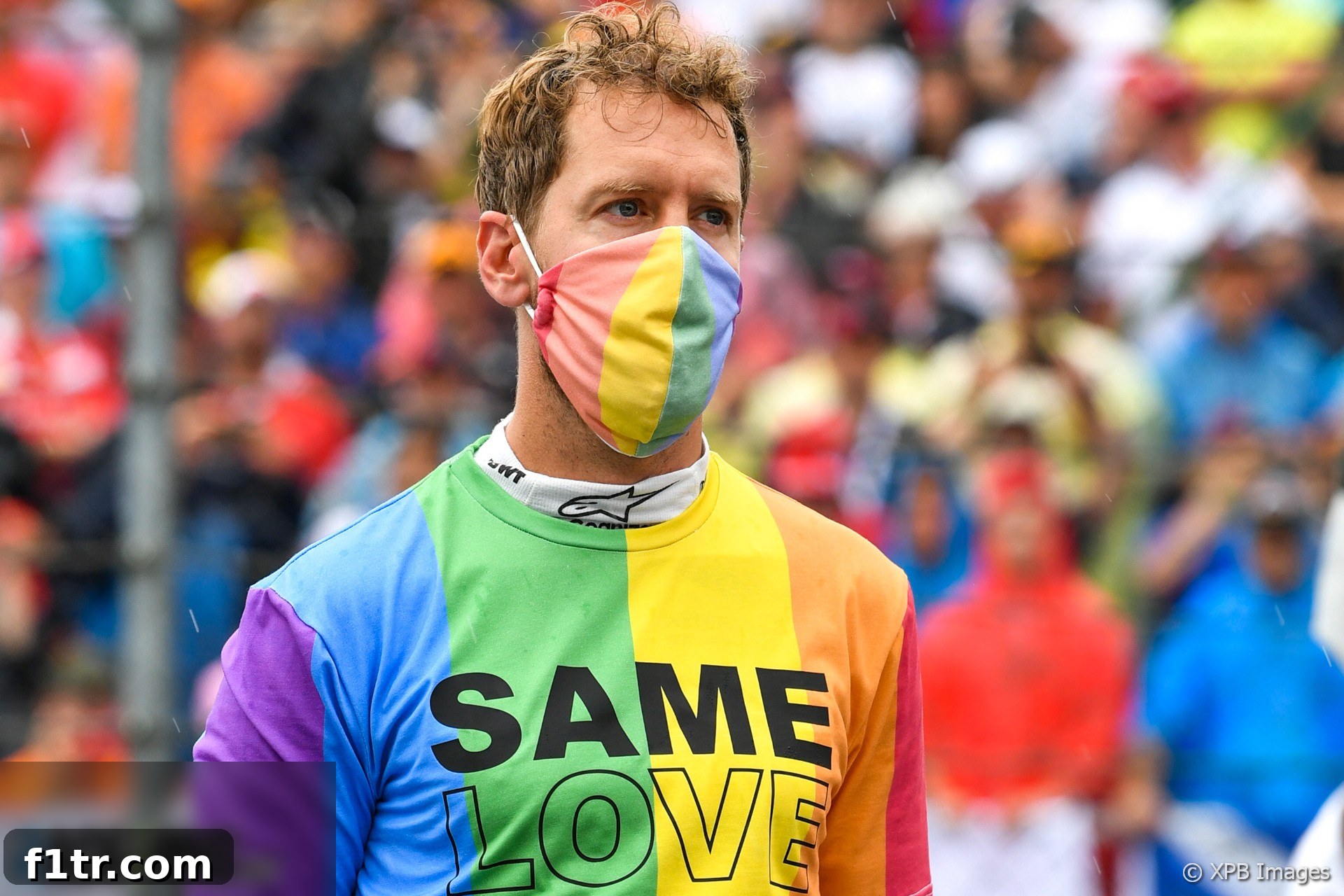
Alongside seven-time world champion Lewis Hamilton, Sebastian Vettel has been instrumental in reshaping the narrative surrounding motorsport. Their influence extends far beyond their unparalleled successes on track, transcending lap times and championship points. Both drivers have passionately leveraged their platforms to advocate for urgent action on climate change, champion diversity and inclusivity within the sport, and push for LGBTQ+ rights. Their outspoken stance has transformed the perception of Formula 1 drivers from mere athletes to influential global citizens, setting a new standard for engagement and responsibility.
This commitment to social and environmental causes has not been without its challenges. Vettel, in particular, faced criticism and was branded a ‘hypocrite’ by those who questioned how a Formula 1 driver, inherently part of a high-emissions sport, could credibly critique others on environmental grounds. Unfazed, Vettel used his retirement announcement to push back: “When it comes to the climate crisis there is no way that Formula 1, or any sport or business can avoid it because it impacts on all of us.” He demonstrated his dedication by famously driving Nigel Mansell’s 1992 championship-winning F1 car at Silverstone using carbon-neutral fuel, a powerful statement illustrating the feasibility and ease of transitioning to sustainable energy sources within motorsport.
F1 itself has begun to align with these calls for change. In 2019, the sport committed to achieving a net-zero carbon footprint by 2030, a cornerstone of its wider sustainability strategy. This ambitious goal encompasses reducing emissions from race logistics, car design, and event operations, showcasing the tangible progress that drivers like Hamilton and Vettel have vocally championed. Their advocacy has spurred not only internal reflection within the sport but also a broader industry movement towards environmental stewardship.
Who Will Carry the Torch? The Future of Driver Advocacy
With Vettel’s impending departure, and the understanding that Hamilton, two years his senior, also has a finite number of years left in the sport, critical questions arise: Who will continue to raise awareness for these crucial causes within Formula 1? Who possesses the gravitas and commitment to fill the immense shoes left by these two champions? Lewis Hamilton has already established a significant legacy through initiatives like the Hamilton Commission, dedicated to improving diversity and inclusion within motorsport and STEM industries. Similarly, Vettel has been proactive, notably taking a group of women go-karting at the inaugural Saudi Arabian Grand Prix, an act that shone a spotlight on women’s rights, which were only recently and belatedly granted to the female population in the country. These actions exemplify a dedication to making tangible change and exerting pressure on decision-makers at the highest levels.
A Shifting Landscape: From Silence to Open Dialogue
Both Sebastian Vettel and Lewis Hamilton began their careers during the era overseen by former F1 CEO Bernie Ecclestone. The prevailing atmosphere under his watch often discouraged drivers from speaking out on political or social issues. Ecclestone himself made controversial remarks on race and politics, some of which he later retracted, underscoring a less progressive mindset within the sport’s former leadership. It is plausible that under such an environment, many drivers felt a reluctance to voice their opinions, fearing potential repercussions.
However, the landscape has significantly transformed since Liberty Media acquired Formula 1. The new ownership has actively encouraged drivers to express themselves, fostering an environment where authenticity and individual expression are valued. As things stand, once Vettel retires, the majority of drivers on the grid will have made their debuts under Liberty Media’s stewardship, empowering today’s generation to speak out more freely and champion causes they believe in.
The Evolution of a Driver’s Priorities: Lessons for the Younger Generation
Vettel himself acknowledged that his priorities shifted as he matured, suggesting that a similar evolution might occur among the current batch of younger drivers. “I think there’s just a normal sort of progression,” Vettel reflected. “We have the immense privilege of travelling the world, seeing so many things, and if you don’t ignore everything, then it does something to you.” He drew parallels with his own social circle, noting how friends’ perspectives had diverged significantly from their early twenties. This natural progression, he believes, will inevitably shape the consciences of younger drivers as they gain more life experience and a broader understanding of global challenges.
Vettel expressed a particular concern that the emerging generation of drivers—including prominent figures like George Russell, Lando Norris, Charles Leclerc, and Max Verstappen—will experience the effects of climate change more acutely than their predecessors. “What hurts me is that people like George, Lando, Charles, Max, they don’t have the same freedoms as maybe Lewis and I had,” he stated. “And whoever is coming after them will have even less freedoms because it will be more and more central and dictating more and more the way we are living and have to adapt our lives.” This stark warning underscores his personal commitment to fighting for a just and fair future, ensuring that the kids go-karting today can aspire to the same racing careers and quality of life he enjoyed.
The Challenge of Influence for New Talents
However, there’s a practical reality: a driver in the early stages of their career simply does not command the same gravitas or platform as a multi-world champion. Lando Norris, a young driver who has already used his F1 presence to raise awareness for mental health, alongside his teammate Daniel Ricciardo, acknowledged this distinction. He believes it is unrealistic to expect an emerging talent to possess the same outspoken courage as seasoned champions like Vettel and Hamilton.
“I don’t think anyone in their first five years of Formula 1 is going to fill boots of a guy in his final year,” Norris commented. He astutely pointed out that “The Seb of now is a very different Seb from five or 10 years ago. The ruthless Seb doesn’t look so ruthless anymore.” Norris emphasized that it is unfair to pressure young drivers to emulate Vettel’s current level of advocacy, given that “young Seb wasn’t doing what Seb’s doing now.” He concluded that while some drivers may wish to remain disengaged, others are keen to contribute, highlighting the diversity of individual approaches.
Despite these complexities, Norris stressed his deep sympathy for Vettel’s position. “There’s no reason why I wouldn’t want to speak up and say things,” he continued. “It’s just in the world we’re living in now, it’s not easy to just say what I feel and give my opinion because there’s so many people who would criticise that opinion.” He expressed admiration for Vettel’s courage, stating, “But I would love to because I believe he’s saying everything and he’s doing everything he can for the best reason. He’s creating chit chat and he’s creating headlines, which is his whole thing he’s trying to do.” Norris’s words capture the delicate balance between a desire for advocacy and the apprehension of public backlash, especially for younger public figures.
The Power of the Platform: F1 Drivers as Superstars
While some drivers on the grid may indeed prefer to focus solely on their racing careers, viewing themselves as athletes rather than politicians, Formula 1 has undeniably evolved. The immense popularity of Netflix’s “Drive to Survive” series has transformed these individuals into global superstars, household names, and heroes to a legion of new, young fans discovering the sport for the first time. The phenomenon of “Beatlemania” and countless examples throughout history have proven that public figures wield significant influence, often transcending that of many traditional politicians. This amplified platform presents both a challenge and an unparalleled opportunity for current and future drivers.
Lewis Hamilton articulates this hope, believing that Vettel’s powerful voice has paved the way for a new kind of athlete-advocate. “We often stand on the shoulders of greats from the past – whether it’s in this sport or other sports,” Hamilton remarked. “I really hope that he inspires the next generation – whether it’s this one or the younger generation that will be coming through – to be more confident and utilising their platform and realising it’s not just about them and their car, it’s about something far, far bigger than being here.” Hamilton’s vision is clear: he hopes to see more individuals like Vettel, though he admits, “But I can’t guarantee that.”
Vettel’s Enduring Legacy: The Battle Beyond the Track
Sebastian Vettel’s legacy in Formula 1 extends far beyond his four world championships, his numerous race victories, or his iconic rivalries. He, along with Lewis Hamilton, has profoundly helped to shape the sport for the better, injecting a vital sense of social and environmental conscience into its very fabric. While their places on the grid will eventually be filled by new talents vying for their own championships, the deeper lesson they impart is that the most significant battles are not always fought on the racetrack. The fight for a sustainable future, for diversity, and for justice is ongoing.
As Vettel himself famously declared, summarizing his journey and his future intentions: “My best race? Still to come.” This powerful statement serves as a reminder that retirement from Formula 1 does not mean an end to his advocacy. Rather, it signifies a new chapter where his passion for change can be pursued with even greater focus and freedom. The challenge now falls to the next generation: to not only learn from the on-track brilliance of these greats but also to embrace their off-track commitment, using their unique platforms to drive meaningful global change.
Further Insights & Related Topics
- The Future of F1: Pushing Towards a Sustainable Motorsport
- Athlete Activism: How Sports Stars Are Driving Social Change
- F1’s Push for Diversity and Inclusion: Progress and Challenges
- The Impact of Social Media on Young F1 Drivers and Advocacy
- Beyond the Podium: The Enduring Legacy of Sporting Champions
Browse all News and Analysis articles