Singapore Grand Prix: Marina Bay Circuit Undergoes Major Resurfacing to Tackle F1’s Porpoising Challenge
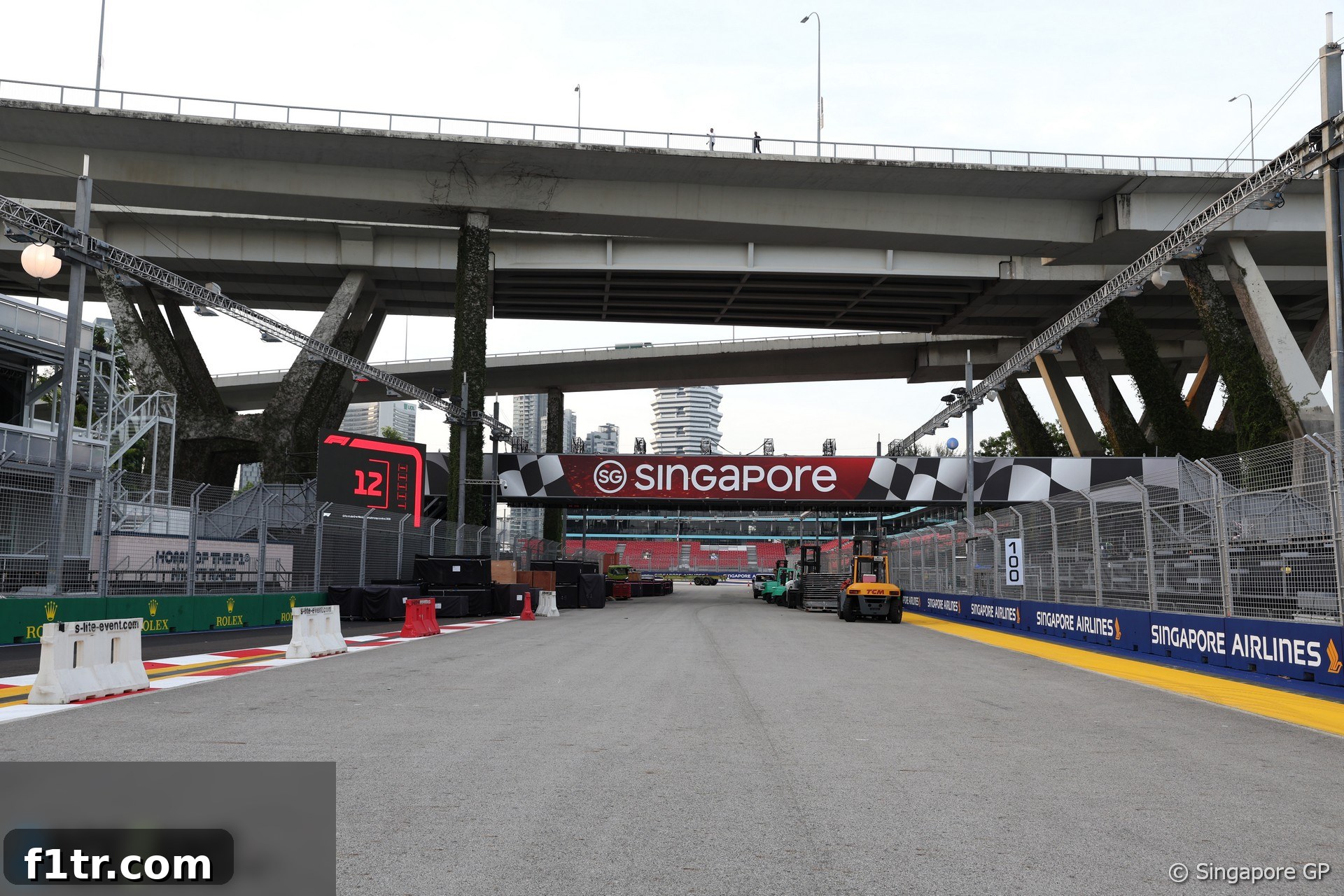
The highly anticipated return of Formula 1 to the dazzling Marina Bay Street Circuit in Singapore after a three-year hiatus is set to be marked by significant track enhancements. In a comprehensive effort to optimize racing conditions and address the unique technical challenges of the 2022 F1 season, three critical sections of the iconic Singapore track have undergone extensive resurfacing. These crucial upgrades are meticulously designed to mitigate the ‘porpoising’ and bouncing issues that have plagued the new generation of F1 cars, promising a smoother, safer, and even more exhilarating spectacle under the famous Singapore night lights.
F1’s Ground Effect Era and the Porpoising Phenomenon
The 2022 Formula 1 season ushered in a revolutionary era with revised technical regulations, bringing back ground effect aerodynamics to the forefront of car design. This technological shift allows teams to generate substantial downforce by running their cars incredibly low to the ground, effectively sucking them onto the tarmac. While this design philosophy yields impressive cornering speeds and grip, it has also introduced an unintended side effect: ‘porpoising’. This phenomenon occurs when the car experiences rapid, violent oscillations in its ride height, causing it to bounce and rise on its suspension at high speeds. Essentially, the car’s aerodynamics momentarily stall as it gets too close to the ground, losing downforce, then regains it as it rises, only to repeat the cycle in a rapid, unsettling motion.
For drivers, porpoising is more than just an inconvenience; it can be a significant safety concern and a major contributor to discomfort. The constant head movement and blurred vision caused by violent bouncing make precise control challenging, especially on circuits with fast sections and uneven surfaces. Furthermore, the relentless impact on the car’s chassis and suspension components can lead to reliability issues. Bumpy circuits exacerbate this problem, and the Marina Bay Street Circuit, known for its challenging urban terrain and high-speed sections, was identified as a prime candidate where porpoising could significantly impact performance and driver well-being. The track’s operators, therefore, understood the imperative to act proactively to ensure the circuit was perfectly suited for the demands of these sophisticated new machines.
Marina Bay’s Unique Challenges and Extensive Maintenance
The Marina Bay Street Circuit stands out on the F1 calendar as a true test of engineering and driving skill. Unlike purpose-built racetracks, the majority of the circuit utilizes public streets, which are temporarily closed and converted for the event. This inherent characteristic means the track surface is subject to the wear and tear of everyday traffic, weather conditions, and general urban maintenance. Following F1’s last race in Singapore in 2019, the circuit experienced a three-year hiatus due to global circumstances, during which parts of these public roads naturally deteriorated. This extended break necessitated extensive maintenance work to bring the surface back to the pinnacle standard required for hosting a Formula 1 Grand Prix.
Recognizing the intricate nature of these upgrades, the track operators enlisted the expertise of Dromo, renowned circuit architects and engineering consultants, to oversee the resurfacing project. Dromo’s role was pivotal in ensuring that every aspect of the racing surface not only met but exceeded the stringent requirements of the FIA and Formula 1. Their consultation aimed to deliver an optimal track surface, smooth enough to minimize the notorious porpoising effect, while also preserving the circuit’s challenging character that makes the Singapore Grand Prix so captivating. This commitment reflects Singapore’s dedication to providing a world-class racing experience, marrying the city’s urban landscape with the high-octane demands of elite motorsport.
Dromo’s Precision Engineering: Laser Analysis and Asphalt Perfection
The collaboration with Dromo was instrumental in executing the resurfacing work with unparalleled precision. Jarno Zaffelli, the esteemed founder of Dromo, elaborated on their methodical approach: “The local race promoters wanted to ensure that the track was back to racing condition. This includes monitoring the laying of the asphalt to improve the track surface to ensure that racing conditions are optimal for the current F1 cars.” This statement underscores the targeted nature of the improvements – not just general maintenance, but specific optimization for the unique dynamics of the 2022 F1 machinery.
A cornerstone of Dromo’s strategy was the deployment of advanced laser analysis systems. Zaffelli further explained, “This was done through the use of our laser analysis systems, where you can see any uneven surface and also where puddles may eventually form due to track geometry.” These state-of-the-art systems provide an incredibly detailed topographical map of the track surface, identifying even the slightest undulations that might contribute to car instability or porpoising. By pinpointing these imperfections, engineers could guide the asphalt laying process with surgical accuracy, creating an exceptionally smooth and consistent surface across the targeted sections. This precision engineering not only addresses the porpoising issue but also significantly improves drainage, a critical factor for a night race held in Singapore’s tropical climate, where sudden downpours are not uncommon. Enhanced drainage will ensure safer racing in potentially wet conditions and minimize the risk of aquaplaning.
Key Resurfaced Sections: Targeting Critical Areas of the Marina Bay Circuit
The resurfacing efforts were strategically concentrated on three distinct, yet highly critical, segments of the Marina Bay Street Circuit. Each of these sections presents unique challenges to drivers and cars, making their refurbishment particularly impactful for the upcoming race weekend:
- Turns Five to Six: This segment follows a medium-speed sequence and leads into a potential overtaking zone. Historically, slight bumps or surface inconsistencies here could unsettle cars under braking or during quick changes of direction, directly impacting a driver’s ability to maintain optimal racing lines and set up passes. A smoother surface here will allow drivers to attack these corners with greater confidence, potentially leading to closer racing.
- Between Andersen Bridge (after Turn 12) to Turn 13: This is a high-speed section of the track, where cars carry significant momentum. Porpoising is most pronounced at high speeds, and any surface irregularities in this area would amplify the bouncing effect, making the transition over the bridge and into the braking zone for Turn 13 extremely challenging and taxing on the drivers. The resurfacing here is paramount for mitigating high-speed instability and improving braking performance.
- Turns 14 to 20 (the ‘Singapore Sling’ complex): This series of corners is arguably one of the most technical and demanding sequences on the entire F1 calendar. It requires immense precision, quick direction changes, and careful throttle application. In the past, this section, particularly the famously bumpy ‘Singapore Sling’ chicane (though modified over the years), could be very disruptive to car stability. The comprehensive resurfacing across these critical turns will provide a more stable platform for cars, allowing drivers to push harder through the esses and maintain better aerodynamic consistency, which is vital for ground effect cars.
These targeted improvements demonstrate a deep understanding of the circuit’s characteristics and the specific demands of modern F1 cars. By addressing these key areas, the Singapore Grand Prix organizers and Dromo aim to deliver a racing surface that promotes peak performance, enhances driver safety, and creates an even more thrilling spectacle for fans.
Gallery: 2022 Singapore Grand Prix Preparations – A Glimpse of the Transformed Track
Implications for the 2022 Singapore Grand Prix
The extensive resurfacing work on the Marina Bay Street Circuit is poised to have a significant impact on the 2022 Singapore Grand Prix. By mitigating porpoising and improving overall ride quality, F1 teams will likely be able to run their cars at optimal setup heights, maximizing the ground effect downforce without the severe compromises often seen on bumpier tracks. This could translate into quicker lap times, as drivers will be able to push the limits of their machinery with greater confidence and stability through the resurfaced sections.
Furthermore, the improved surface will likely lead to more consistent tire wear and potentially open up new strategic options for teams. Drivers will benefit from reduced physical strain, allowing them to maintain peak performance throughout the demanding night race. The combination of precision engineering and the challenging nature of the street circuit ensures that the Singapore Grand Prix will remain one of the most enthralling and unpredictable events on the Formula 1 calendar, now with an added layer of technical excellence beneath the wheels.
In conclusion, the meticulous resurfacing of the Marina Bay Street Circuit stands as a testament to the continuous evolution of Formula 1 and the dedication of event organizers to adapt to its ever-changing technical landscape. By proactively addressing the porpoising phenomenon and enhancing critical sections of the track, Singapore is not just preparing for a race; it’s laying the groundwork for a more competitive, safer, and ultimately more spectacular F1 comeback, promising an unforgettable experience for teams, drivers, and millions of fans worldwide.
More on the 2022 Singapore Grand Prix
- How many victory chances did Hamilton have in his first winless F1 season?
- Alfa Romeo expect another step from Zhou after confirming 2023 deal
- Closest three-team pole fight for almost 20 years in Singapore
- F1 teams back race control’s decisions on delayed start and DRS activation
- It’s “game over” if F1 fails first “vital test” of budget cap rules – Ferrari
Browse all 2022 Singapore Grand Prix articles