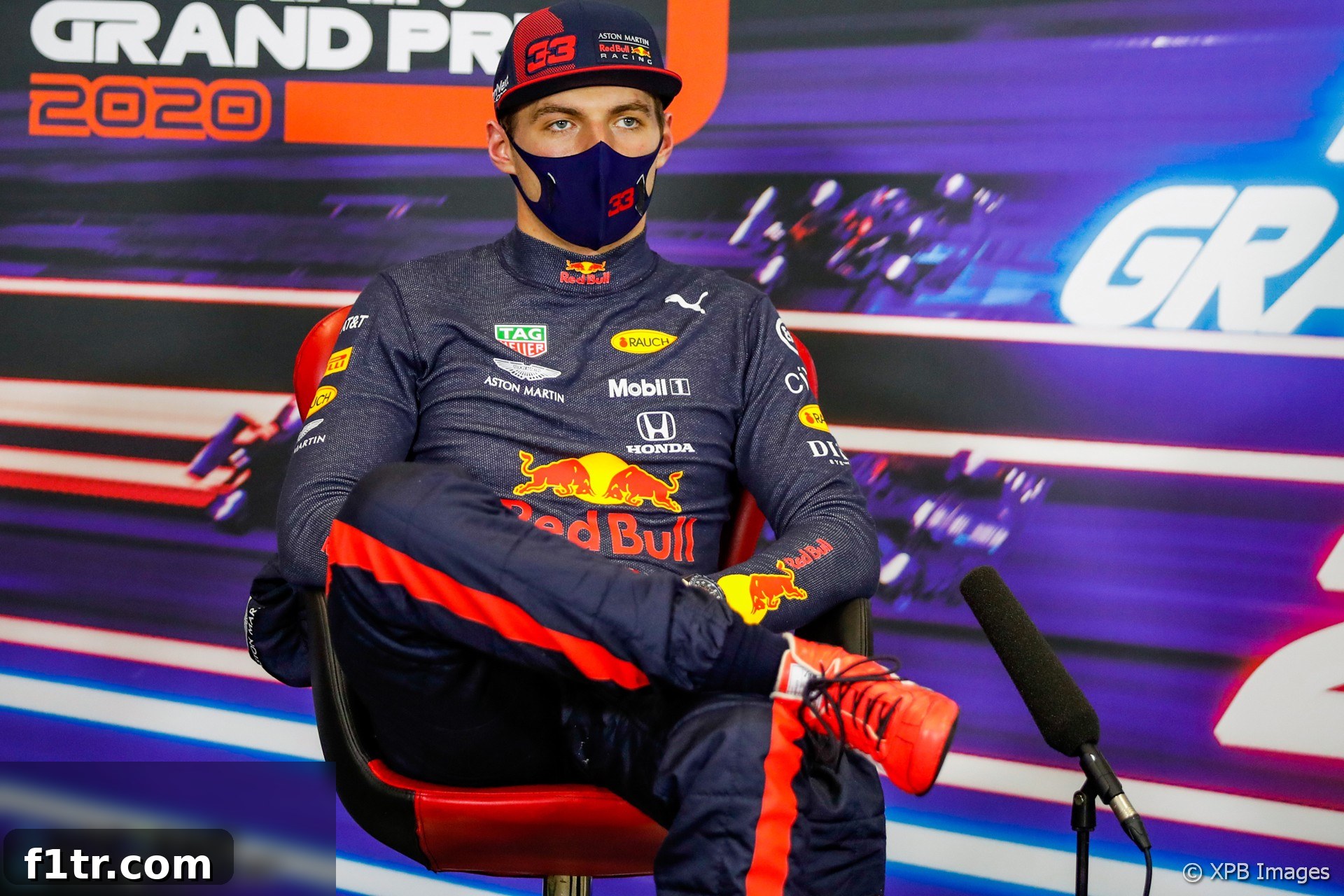
Max Verstappen Firmly Rejects Driver Withdrawal Option After Serious F1 Crashes
In the aftermath of a harrowing crash at the Bahrain Grand Prix, a contentious debate ignited within the Formula 1 paddock concerning driver welfare and competitive resilience. The incident, involving Romain Grosjean’s fiery impact at Turn 3, prompted a red flag suspension lasting nearly an hour and a half. While the racing world collectively exhaled a sigh of relief as Grosjean miraculously emerged largely unscathed, the discussion quickly shifted from the physical dangers to the psychological toll on drivers.
Amidst calls for greater consideration for drivers’ mental state following such traumatic events, Max Verstappen offered an unyielding and uncompromising perspective. The Red Bull Racing star unequivocally rejected the notion that drivers should be given the option to withdraw from a race after witnessing or experiencing a serious incident, likening any such decision to a lack of competitive spirit.
Verstappen’s Unwavering Stance: The Warrior Ethos of F1
Verstappen’s comments, delivered with characteristic bluntness, left little room for misinterpretation. “I don’t get why you wouldn’t race,” he stated, highlighting a deeply ingrained ‘warrior mentality’ prevalent in top-tier motorsport. He further elaborated on his hardline view, suggesting that any driver opting out would face severe consequences from a team principal’s perspective. “If I would be the team boss I would kick him out of the seat,” Verstappen asserted, doubling down with, “If the guy wouldn’t race, if I would be the team boss, I would tell him ‘then you never sit in the seat again’.”
This forceful declaration underscores a philosophy where mental fortitude and an unwavering commitment to competition are paramount. For Verstappen, the inherent risks of Formula 1 are understood and accepted, and the expectation is that drivers, once deemed medically fit, should resume their duties without hesitation. His perspective reflects a bygone era of motorsport where physical and mental toughness were often seen as the ultimate measures of a driver’s character, potentially downplaying the complex psychological impact a near-fatal incident can have on individuals.
The Psychological Aftermath: Replays and Driver Concerns
Verstappen’s comments stand in stark contrast to the concerns raised by other prominent figures in the sport. During the extensive red flag period in Bahrain, drivers including Sebastian Vettel and Daniel Ricciardo publicly voiced their displeasure over the incessant replays of Grosjean’s horrific crash broadcast by Formula 1. These veteran drivers articulated the distress caused by repeatedly witnessing such a violent and potentially fatal incident, particularly while preparing to return to the track themselves.
Vettel tried not to look at the replays, indicating a conscious effort to shield himself from the disturbing images. Ricciardo, meanwhile, was more outspoken, calling the broadcasts “disgusting” and “disrespectful” to Grosjean’s family and fellow competitors. Their reactions highlight a critical dimension of the debate: the psychological burden placed on drivers, not just by participating in a dangerous sport, but by being forced to confront the graphic reality of its perils through media coverage. Such images can trigger feelings of fear, anxiety, and trauma, potentially impacting a driver’s focus and performance, regardless of their physical well-being.
Hamilton’s Perspective: Trust in the FIA and Safety Regulators
Responding to the same question regarding a driver’s option to withdraw, seven-time world champion Lewis Hamilton offered a more pragmatic, regulation-focused viewpoint. Hamilton steered clear of the emotional aspect, instead emphasizing the role of the sport’s governing body, the FIA (Fédération Internationale de l’Automobile), in ensuring safety. “We’re not the safety regulators,” said Hamilton. “We’re here to do a job and we rely on the FIA who are aware of safety and we trust them implicitly. So no, I don’t think so.”
Hamilton’s response underscores a fundamental aspect of modern Formula 1: the profound trust drivers place in the FIA’s rigorous safety protocols and continuous advancements. From crash structures to the introduction of the Halo cockpit protection device, the FIA has consistently pushed the boundaries of safety, dramatically reducing the risk of fatal incidents. For Hamilton, once the FIA has deemed the circuit safe and the driver medically cleared, the competitive imperative takes over. His stance highlights a professional detachment that allows drivers to operate at the absolute limit, knowing that external experts are managing the overarching safety framework.
Jack Aitken’s Empathy: Lessons from Tragedy at Spa-Francorchamps
Perhaps the most poignant counter-argument to Verstappen’s view came from Jack Aitken, a driver who has firsthand experience with the tragic consequences of motorsport incidents. Aitken was involved in the Formula 2 race at Spa-Francorchamps in 2019, which saw the life of fellow competitor Anthoine Hubert claimed in a devastating multi-car crash. That race, along with the following day’s event, was cancelled – a decision that profoundly impacted Aitken’s perspective on driver welfare after major incidents.
Responding on social media to Verstappen’s assertive comments, Aitken expressed deep empathy, stating, “I don’t wish upon anyone the experiences that would make him realise how wrong he could be.” This powerful retort speaks to the raw, human element of motorsport that Verstappen’s ‘kick him out’ mentality seemingly overlooked. Aitken elaborated on the psychological toll, clarifying, “It’s not anything more than saying we’re all human, and that scene was traumatic, especially not knowing Romain’s condition immediately.”
Aitken’s experience with the Hubert tragedy lends significant weight to his argument. He understands that while drivers are indeed here to race, there are circumstances under which the human psyche, and indeed human decency, must take precedence over pure competitive drive. “We’re here to race, yes, but not under any circumstances,” he added. His final reflection on Grosjean’s crash perfectly encapsulates this sentiment: “Knowing he was okay certainly made it a lot easier for them, I’m sure.” This acknowledges that the immediate relief of a driver’s survival can mitigate some of the trauma, but the initial uncertainty is undeniably a heavy burden.
The Broader Debate: Safety, Psychology, and the Thrill of F1
The divergent opinions sparked by Grosjean’s crash and Verstappen’s comments highlight a complex, ongoing debate within Formula 1. It pits the sport’s inherent danger and relentless competitive spirit against an increasing awareness of mental well-being and the very human reactions to trauma. While F1 has made incredible strides in physical safety – Grosjean’s escape being a testament to modern car design and track infrastructure – the psychological demands on drivers remain immense.
The discussion extends beyond individual drivers to the sport’s broader responsibilities. Should broadcast protocols be re-evaluated to minimize the psychological impact of replays on both drivers and viewers? How can the sport balance its need for dramatic storytelling with ethical considerations for those directly involved in traumatic incidents? And fundamentally, does the ‘show must go on’ mentality, embodied by Verstappen, truly reflect the evolving values of a modern, athlete-centric sport?
Ultimately, there is no simple answer. Formula 1 demands extraordinary resilience, courage, and focus. Yet, acknowledging the humanity of its participants, the potential for trauma, and the complex interplay of emotions, fears, and competitive drive, is crucial. The debate sparked by the Bahrain Grand Prix serves as a vital reminder that while these drivers perform superhuman feats, they are, as Aitken rightly points out, “all human.” The sport continues to grapple with how to best support its gladiators, balancing the pursuit of victory with an understanding of the profound psychological challenges they face.
Browse all 2020 Bahrain Grand Prix articles