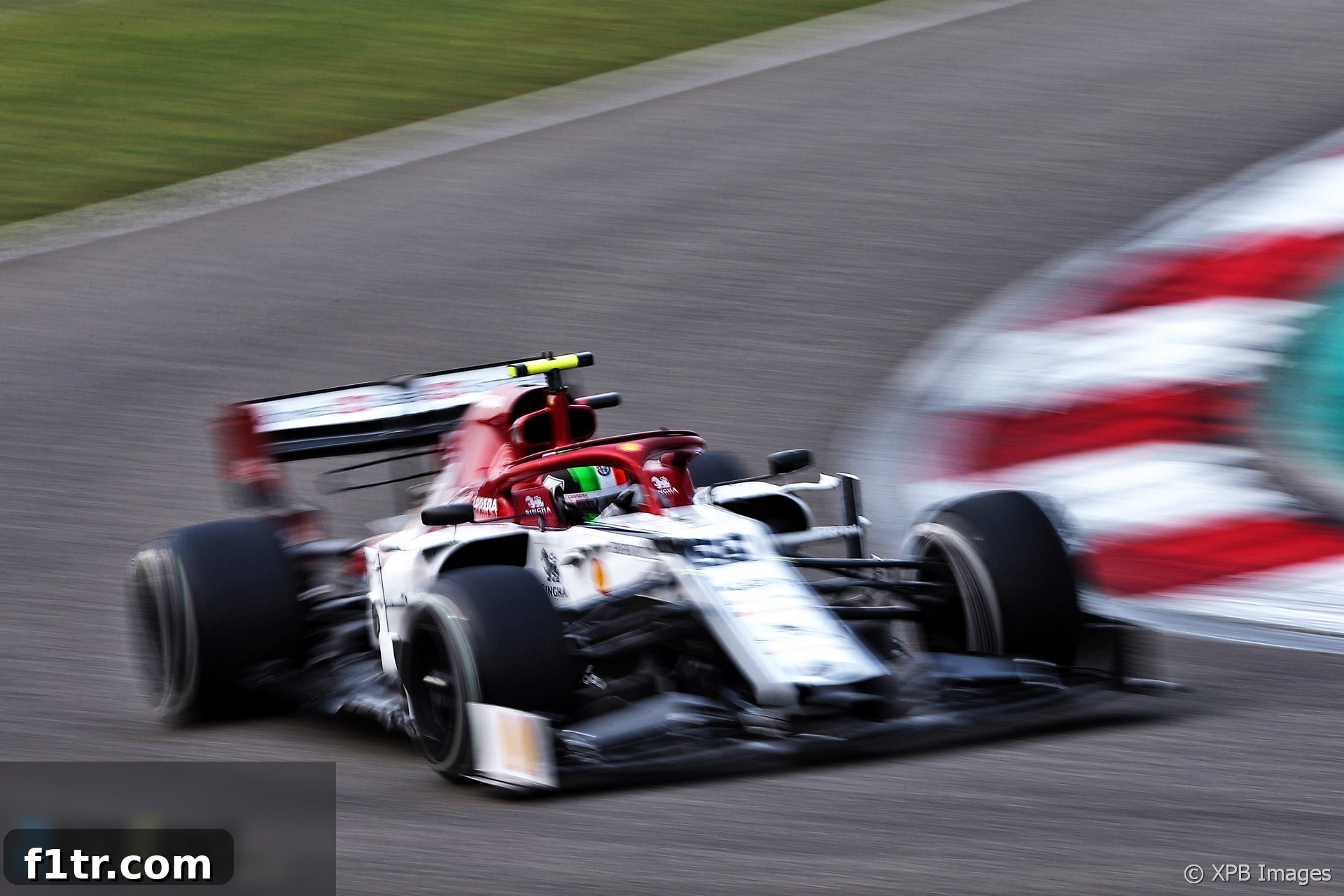
Patience, Potential, and Performance: Why Alfa Romeo Believes in Antonio Giovinazzi’s Formula 1 Future
In the high-stakes world of Formula 1, rookie drivers often face immense pressure to perform immediately. For Antonio Giovinazzi, his inaugural full season with Alfa Romeo has been a challenging proving ground, marked by moments of raw speed yet an absence of championship points. However, despite the visible gap in the standings between him and his veteran teammate, Alfa Romeo team principal Frederic Vasseur emphatically states that Giovinazzi needs ample time to fully demonstrate his significant potential in the pinnacle of motorsport.
The 25-year-old Italian, making his long-awaited full-time debut in 2019, has found himself under a spotlight that intensifies with each passing Grand Prix where points remain elusive. While the scoreboard might suggest a struggle, Vasseur is quick to defend his young protégé, attributing a significant portion of Giovinazzi’s unrewarded efforts to technical problems originating from the team’s side rather than a lack of driver capability. This perspective highlights the complex interplay between driver skill, car reliability, and team support crucial for success in F1.
Advert | Become a Supporter & go ad-free
Unlocking Latent Potential: Vasseur’s Defence of Giovinazzi
Frederic Vasseur’s assessment of Giovinazzi’s season is one rooted in understanding and strategic foresight. “Antonio so far couldn’t show his real potential, but that’s completely down to the team,” Vasseur remarked, shouldering the responsibility squarely on Alfa Romeo’s shoulders. This candid admission is vital for a rookie driver, as it alleviates some of the immense psychological burden and fosters a supportive environment essential for development.
The core of Vasseur’s argument revolves around the technical setbacks that have plagued Giovinazzi’s car. “Some technical issues and therefore missed track time meant that he could never get comfortable and get the best out of the car,” he explained. In Formula 1, every session, every lap, is an invaluable opportunity for a driver – especially a rookie – to learn the car’s nuances, push its limits, and adapt to varying track conditions. When this crucial track time is compromised by mechanical failures, it directly hinders a driver’s ability to build confidence, fine-tune their setup, and ultimately extract maximum performance. For a driver still acclimatizing to the demands of F1, these disruptions can be particularly detrimental to their learning curve and race weekend preparation.
Despite these challenges, Vasseur has witnessed flashes of brilliance that reinforce his belief in Giovinazzi. “But especially in Australia in Q1 he showed how fast he is. Everyone just needs to be a bit patient and I’m sure he’ll come around,” Vasseur stated with conviction. This reference to the Australian Grand Prix qualifying session serves as a crucial piece of evidence for the team, demonstrating Giovinazzi’s raw speed and potential when the car is performing as expected. Such moments, even if isolated, are powerful indicators for team principals who understand the intricate factors influencing a driver’s performance throughout a season. They hint at an underlying talent waiting to be consistently unleashed once reliability issues are resolved and the driver gains more experience.
The Impact of Technical Glitches: A Rookie’s Unfair Handicap
The issue of technical problems is not merely an inconvenience; it represents a tangible handicap, particularly for a rookie driver like Giovinazzi. One significant instance occurred during the qualifying for the last race, where he was unable to set a competitive time due to a power unit problem. This specific fault was traced back to the team’s decision not to fit Ferrari’s new-specification Control Electronics. This strategic choice was made following a similar power unit issue that affected Charles Leclerc in Bahrain, leading Alfa Romeo to err on the side of caution with an older, seemingly more reliable component. Ironically, this decision backfired for Giovinazzi, illustrating the razor-thin margins and difficult choices teams face in F1 development.
Such incidents not only cost track time but also disrupt a driver’s mental rhythm. A young driver needs a consistent platform to learn and grow. When that platform is unstable due to recurring technical failures, it creates an environment of uncertainty that can impede development. Giovinazzi is not just competing against other drivers; he is also fighting to overcome car issues that have prevented him from showcasing his true abilities. This constant battle can be mentally taxing and make the already steep learning curve of Formula 1 even more arduous.
Kimi Raikkonen: The Benchmark and Mentor at Alfa Romeo
In stark contrast to Giovinazzi’s point-less start, his teammate Kimi Raikkonen has been a picture of consistency and experience. The veteran Finn has scored all 12 of Alfa Romeo’s championship points, underscoring his unparalleled ability to extract performance from the car and deliver results. Raikkonen’s immediate impact since rejoining the Sauber-backed team has been invaluable, not just for the points he brings but also for the direction he provides.
“Kimi is doing a great job,” affirmed Vasseur, highlighting the precision and effectiveness of the 2007 World Champion. “His feedback to engineers is as precise as it can be and as soon as he sits in the car he gets the job done.” This commendation speaks volumes about Raikkonen’s enduring skill and experience. In modern F1, driver feedback is paramount for car development, especially for a midfield team aiming to climb the grid. Kimi’s ability to articulate specific issues and guide engineers towards solutions is a significant asset, helping Alfa Romeo refine their C38 chassis.
Raikkonen’s consistent performance also serves as a critical benchmark for Giovinazzi. While it highlights the rookie’s current deficit in terms of results, it also provides him with a direct comparison point and an opportunity to learn from one of F1’s most experienced and respected drivers. Observing Kimi’s approach to setup, race strategy, and managing the car can be an invaluable part of Giovinazzi’s development, even if the on-track results aren’t yet mirroring his teammate’s.
Alfa Romeo’s 2019 Season: Highs, Lows, and Future Aspirations
Overall, Alfa Romeo’s 2019 Formula 1 season has been a mixed bag of promising potential and frustrating challenges. “We’ve scored points, which is great, the car showed great potential,” Vasseur noted, acknowledging the positive aspects. The C38 chassis has demonstrated flashes of speed and competitiveness, suggesting that the underlying package is solid enough to contend for points in the highly competitive midfield. The team’s ambition is evident in its pursuit of performance, and the car’s inherent pace is a source of optimism.
However, the journey has not been without its stumbling blocks. “But at the same time we faced some technical issues and tricky situations,” Vasseur added. These “tricky situations” refer not only to the specific power unit issues impacting Giovinazzi but also to the broader challenges of maintaining consistent performance, managing reliability, and navigating the intense strategic battles in the midfield. For a team like Alfa Romeo, every point is hard-won, and every technical glitch represents a missed opportunity to consolidate their position or advance further up the constructors’ standings.
The competitive nature of the Formula 1 midfield means that small margins can make a huge difference. A single point can mean the difference between several positions in the championship, bringing with it significant financial and prestige benefits. Therefore, while Vasseur is patient with Giovinazzi, the team is acutely aware of the need to convert potential into tangible results consistently. The balance between nurturing a young talent and maximizing championship points is a delicate one that Alfa Romeo is actively navigating.
Advert | Become a RaceFans supporter andgo ad-free
The Road Ahead: Building Consistency and Confidence
For Antonio Giovinazzi, the path forward involves a concerted effort to build consistency and confidence. With Kimi Raikkonen as a seasoned benchmark, Giovinazzi has an unparalleled opportunity to refine his race craft, improve his feedback to engineers, and adapt more fully to the rigorous demands of Formula 1. The team’s role will be equally crucial: minimizing technical issues, providing a stable platform, and continuing their unwavering support for the young Italian.
The faith shown by Alfa Romeo team principal Frederic Vasseur is a powerful statement. It underscores a belief in Giovinazzi’s inherent talent and potential, rather than focusing solely on immediate results which have been skewed by external factors. As the 2019 Formula 1 season progresses, all eyes will be on Giovinazzi to see if he can translate that potential into the points finishes that both he and the team are so eagerly pursuing. His journey is a testament to the fact that success in F1 is often a marathon, not a sprint, especially for those embarking on their debut season amidst fierce competition and complex machinery.
2019 F1 season
- Crying in the Melbourne car park at 2019 grand prix was my career low – Ocon
- McLaren Racing reports reduced £71 million loss in 2019
- Kvyat: Hockenheim podium last year was “my biggest achievement” so far
- How the FIA’s new encrypted fuel flow meter targets Ferrari’s suspected ‘aliasing’ trick
- “He smashed my office door”: 23 must-see moments from ‘Drive to Survive’ season two
Browse all 2019 F1 season articles