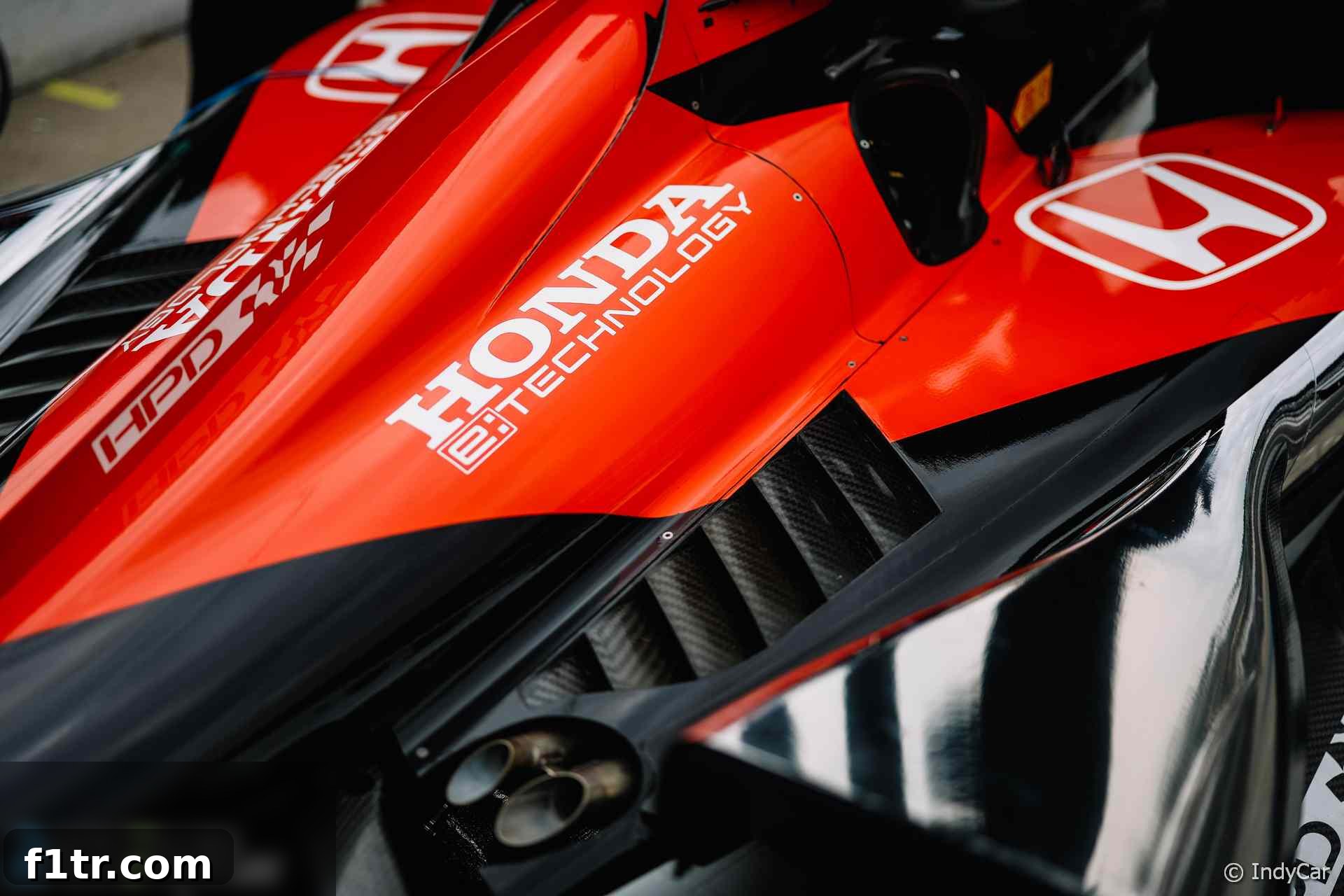
Honda’s IndyCar Future in Question Amid Rising Costs, Ganassi Weighs In on Hybrid Delay
The dynamic world of open-wheel racing has been abuzz recently, particularly regarding the financial viability of participation in the NTT IndyCar Series. At the heart of this discussion are the significant concerns raised by Honda, a crucial engine supplier to the championship, over the escalating costs of its involvement. These comments have not gone unnoticed, drawing sharp attention from prominent figures within the sport, including legendary team owner Chip Ganassi.
Honda, a long-standing and integral partner in IndyCar, recently voiced “great concerns” regarding its financial commitment to the series beyond the expiration of its current contract in 2026. A primary catalyst for these anxieties appears to be the impending introduction of hybrid power units, scheduled to debut next year. This technological leap, while promising innovation and relevance, carries substantial development and implementation costs that manufacturers like Honda must bear.
The Japanese automotive giant is slated to power a significant portion of the grid, providing engines for 13 full-time entries in the upcoming season. This impressive roster includes not only Ganassi’s formidable five-car operation but also other championship-contending teams such as Andretti Global, Meyer Shank Racing, and Rahal Letterman Lanigan Racing. The potential withdrawal or reduced commitment from such a vital supplier would undoubtedly send shockwaves through the paddock, impacting multiple teams and potentially altering the competitive landscape of the series.
Chip Ganassi, a titan in American motorsport with numerous championships across various disciplines, acknowledged the gravity of Honda’s statements. “I’d heard those same comments that we all read,” Ganassi remarked, indicating that the concerns are widespread within the IndyCar community. He admitted, however, that direct conversations with Honda regarding the specifics of their anxieties and future plans had not yet occurred. “I really haven’t caught up with Honda lately, or haven’t caught up with them yet to discuss what exactly they mean and where they’re headed,” he elaborated.
Despite the lack of detailed discussions, Ganassi underscored the importance of the situation. “But I think it’s certainly got our attention and it’s something we have to keep a close eye on,” he added. His words highlight the delicate balance between pushing technological boundaries and ensuring the financial sustainability that keeps manufacturers invested and the series thriving. The implications of Honda’s concerns extend beyond mere engine supply; they touch upon the very economic model of IndyCar, a series that relies heavily on manufacturer support for its high-performance machinery.
The Hybrid System Delay: A Necessary Setback?
Adding another layer of complexity to the 2024 season’s narrative is IndyCar’s recent announcement regarding the delayed introduction of its much-anticipated hybrid power units. Following three months of extensive testing by various teams, which saw the new hybrid components integrated with the existing 2.2-litre turbocharged V6 engines, the series confirmed that the new systems would not be race-ready until after the iconic Indianapolis 500. This decision, while perhaps pragmatic, signifies a significant shift in the championship’s technical roadmap.
Such a mid-season change implies that teams will have to operate under two distinct sets of technical regulations within a single racing year. For the initial races, cars will run in their current non-hybrid configuration, only to switch to the new hybrid units later in the season. The series has yet to release comprehensive details on how this mid-season transition will be managed, including precise timelines and any logistical or technical challenges teams might face during the switch. This lack of clarity naturally raises questions about competitive parity and the fairness of applying different specifications within the same championship campaign.
Ganassi’s team, Chip Ganassi Racing, has been at the forefront of the hybrid testing program, accumulating significant mileage and invaluable data on the new power units. Given his team’s extensive involvement and the insights gained from direct experience, Ganassi’s perspective on the delay is particularly insightful. He candidly described the decision as “unfortunate,” acknowledging the frustration and inconvenience it presents. However, he quickly tempered this sentiment with a strong endorsement of the series’ choice, stating that he fully supported it.
“It’s interesting,” he told RaceFans, reflecting on the complexity of the situation. “It takes a lot of things to come together to make an announcement that you’re going to go hybrid. And I think it takes an equal number, it’s equally difficult to announce that it’s going to be delayed.” This statement highlights the intricate planning and coordination required for such a significant technical overhaul, and the equally challenging process of admitting when targets cannot be met. For a series like IndyCar, which strives for consistent innovation, a delay can be perceived as a setback, yet Ganassi argues it is a prudent one.
“It’s unfortunate, no question. But, it’s probably the right decision, knowing all I know. And from what I understand, it was probably the right decision to make,” Ganassi emphasized. His confidence stems from an intimate understanding of the hybrid system’s current state and the remaining development hurdles. While conceding, “Sure, it’s not our first choice, I wouldn’t say it’s the optimum thing to do to delay,” he unequivocally concluded, “but it is the right thing to do with everything I know.” This implies that proceeding with an unready system could have led to greater issues, potentially impacting reliability, performance, or even the safety of the racing.
Navigating the Mid-Season Switch: A Team Owner’s Confidence
One of the primary concerns surrounding the hybrid delay is the logistical and technical headache of implementing a new engine formula mid-way through IndyCar’s famously compact and intense racing calendar. Many observers might anticipate significant complications for teams tasked with adapting their entire operations. However, Chip Ganassi, drawing on his team’s extensive testing experience, downplayed these fears, suggesting the transition might be smoother than widely perceived.
“If they bring it in halfway through the season, I don’t think it’s as big a deal as people would think,” Ganassi confidently stated. His optimism is rooted in the practical experience garnered during the test phase. He explained, “In the testing that we’ve done with the hybrid, the teams are going to find it very easy to transmit over to that programme when the time comes. I don’t see that as a big thing.” This insight from a leading team owner provides reassurance that the integration process, though disruptive, is manageable for the highly skilled engineers and mechanics in the paddock. The modular nature of modern racing components and the thorough testing conducted likely contribute to this perceived ease of transition, mitigating potential performance disparities or reliability issues.
Ganassi’s comments suggest that the core architecture of the cars is robust enough to accommodate the hybrid units with relative straightforwardness. Unlike fundamental chassis or aerodynamic overhauls, the hybrid system, once fully developed and validated, could be a more contained component upgrade, allowing teams to integrate it without needing to redesign vast sections of their vehicles. This perspective is vital for maintaining confidence in the series’ ability to navigate a technically challenging season without compromising the quality of the on-track product.
Prioritizing Race Quality: The IndyCar Experience
Beyond the technical and financial discussions, Chip Ganassi’s ultimate concern remains the integrity and excitement of IndyCar racing itself. He articulated a strong desire to ensure that the series’ evolution, particularly the adoption of hybrid technology, does not inadvertently detract from the thrilling spectacle that fans have come to expect. For Ganassi, innovation must serve the racing, not impede it.
“We want to make sure it’s right when it’s ready for primetime and then bring it along,” he asserted, emphasizing the importance of a fully sorted and reliable hybrid system. The fear is that rushing an underdeveloped technology could introduce unforeseen issues, leading to unreliable cars, processional races, or reduced competitive action. Such outcomes would be detrimental to a series that prides itself on its close, wheel-to-wheel racing. “But not too soon to discourage the type of great racing we have right now. I don’t think we want to do anything to impede that.”
Ganassi passionately defended IndyCar’s current on-track product, highlighting its unique appeal. “Our on-track product is very, very good right now: More on-track passes than any open-wheel series in the world, I think, right now. So I think that speaks for itself in terms of IndyCar,” he proudly stated. This assertion underscores a core tenet of IndyCar’s identity: fierce competition, frequent overtakes, and unpredictable outcomes. It’s a formula that resonates deeply with fans and has consistently delivered some of the most exciting motorsport events globally.
He further stressed the importance of protecting the series’ crown jewel event. “We don’t want to mess that, or we don’t want to mess up the greatest spectacle in racing, which is the Indianapolis 500.” The Indianapolis 500 is not just a race; it’s a cultural phenomenon and the pinnacle of IndyCar’s season. Introducing an untested or problematic hybrid system just before or during such a critical event could tarnish its legacy and disappoint millions of spectators worldwide. By delaying the hybrid debut until after the Indy 500, the series ensures that its most revered event can unfold without the added layer of technical uncertainty, preserving its traditional glory.
“So I think if the hybrid comes along some time after that, it’ll be fine, and it won’t be such a big challenge,” Ganassi concluded, reiterating his pragmatic optimism. His comments reflect a strategic patience, prioritizing the long-term health and appeal of the series over an immediate, potentially problematic, technological rollout. The ongoing dialogue between team owners, manufacturers, and the series organizers will be crucial in navigating these complex waters, ensuring that IndyCar continues to offer thrilling, sustainable, and technologically advanced motorsport for years to come.
Further Reading on IndyCar
- IndyCar driver McLaughlin cleared of injury after crashing through barrier at Barber
- Schumacher says his IndyCar feels like ‘an F2 car, just with better tyres’
- IndyCar “way faster than Formula 1” in some corners, says Grosjean
- FIA to award more F1 superlicence points to IndyCar drivers from 2026
- Schumacher to race full-time in IndyCar with RLL in 2026
Browse all IndyCar articles