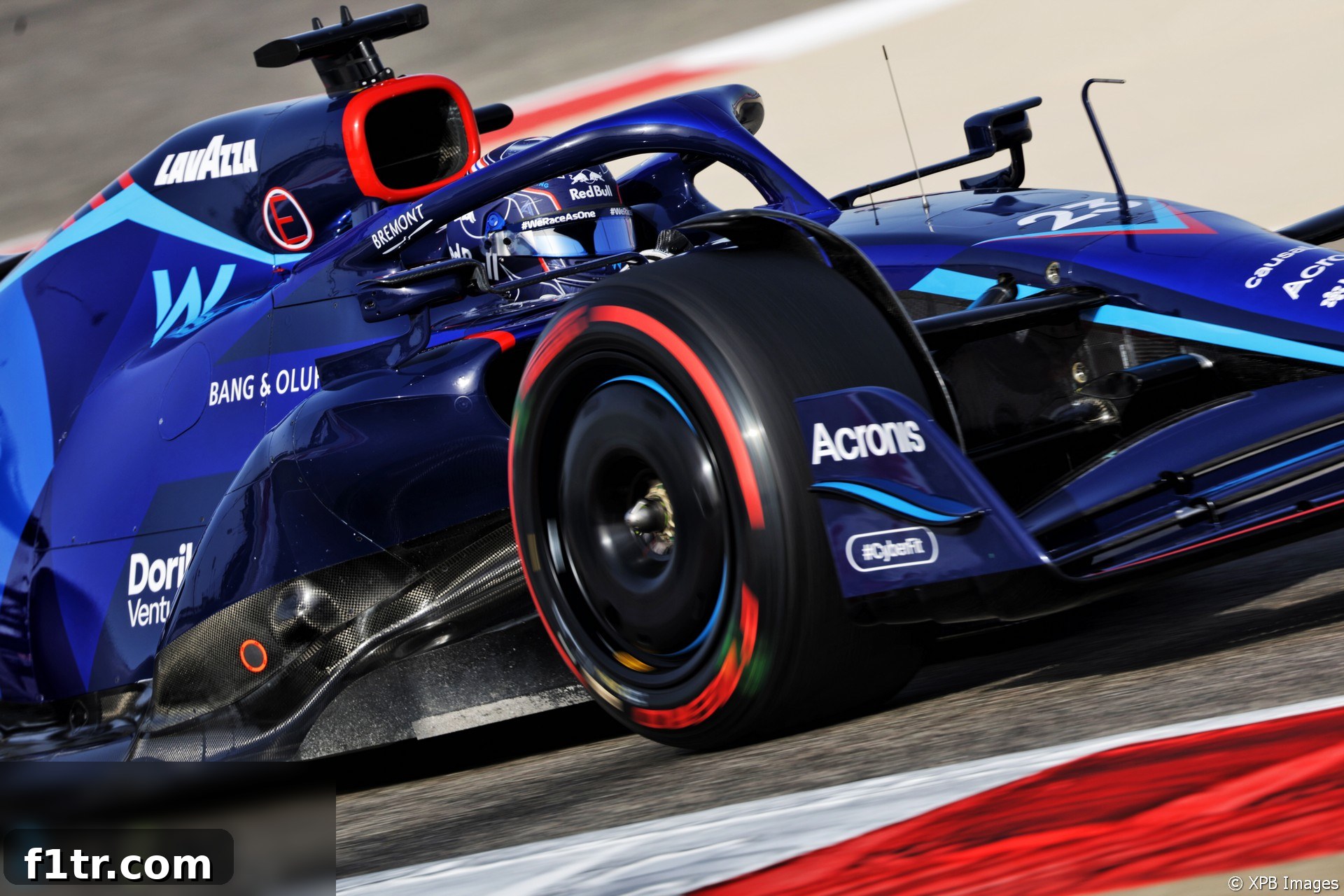
Williams F1 Faces Steep Learning Curve at Season-Opening Bahrain Grand Prix
Williams Racing encountered a challenging start to the 2022 Formula 1 season, with both drivers finishing at the bottom of the timesheets during the opening practice sessions of the Bahrain Grand Prix. Despite the sobering lap times, the team’s drivers, Alexander Albon and Nicholas Latifi, expressed cautious optimism, suggesting that the unique characteristics of the Bahrain International Circuit might be amplifying their current car limitations rather than representing the full picture of the FW44’s potential.
The Demanding Nature of the Bahrain International Circuit
The Bahrain International Circuit is renowned for its harsh conditions and technical layout, which often expose the inherent weaknesses of a car. Its desert location means that wind can be a significant factor, carrying sand onto the track and constantly altering grip levels. The abrasive track surface, coupled with the high ambient temperatures, puts immense stress on tyres and car components. Furthermore, the circuit features a mix of high-speed straights and numerous challenging low-speed corners, demanding excellent braking stability and traction – areas where the new 2022 generation of cars, with their increased weight and ground effect aerodynamics, are still finding their footing. For Williams, these specific track traits proved to be particularly unforgiving during the initial run-outs.
The fluctuating conditions throughout the day, transitioning from hot afternoon sessions to cooler evening running, added another layer of complexity. Teams had to adapt their car setups rapidly, gathering crucial data on tyre degradation and aerodynamic performance across a wide operating window. For a team like Williams, still grappling with the fundamental balance of their new FW44, these variables presented an even steeper challenge, making consistent performance difficult to achieve.
Alexander Albon’s Perspective: Glimmers of Progress Amidst Struggles
Despite logging the slowest time of the day, Alexander Albon, returning to a full-time F1 race seat, offered a hopeful assessment of the team’s progress. “Positively, the car is in a better place than it was last week,” Albon stated, referring to the pre-season testing held at the same venue. “So we’re making the right steps forward.” This observation indicates that the team has already managed to extract more performance from the FW44 in the short period between testing and the race weekend, an encouraging sign for their development trajectory.
Albon acknowledged the historical context of their performance at the track. “We know historically this track doesn’t really suit our car that well. It felt better in Barcelona, but we’re getting it there.” This highlights that some circuits inherently play to a car’s strengths or expose its weaknesses. While Barcelona’s smooth, high-speed layout might have masked some issues, Bahrain’s stop-start nature and critical low-speed corner performance are clearly a bigger hurdle for the FW44. The Thai-British driver emphasized that the team is on “a bit of a learning curve” to improve the car’s handling, particularly in Bahrain’s many low-speed sections.
Delving deeper into the specific challenges, Albon pinpointed a critical area: “When it is tricky it definitely has a certain driving style. There is one driving style in the car and it’s just about kind of learning that, avoiding the front locking more than anything else.” This suggests the FW44 has a narrow operating window for optimal performance, requiring a very specific technique to extract speed without encountering issues like front wheel lock-up, a common problem under heavy braking. Identifying and mastering this unique driving style is paramount for the drivers to gain confidence and push the car harder.
Further illustrating the specific pain points, Albon added, “If you look at the comparisons, nine and 10 is our worst corner, we’re just struggling to brake as late as other cars.” Turns 9 and 10 form a crucial slow-speed chicane section that demands precise braking and strong front-end grip, directly aligning with Albon’s observations about front locking and the car’s unique driving requirements. “We have a direction that we obviously are pushing for and I feel like we’re halfway there now just from last weekend to now. So it’s positive, obviously it might take a bit longer to find the extra bit but we’re making progress,” he concluded, maintaining a forward-looking perspective despite the immediate performance deficit.
Nicholas Latifi’s Insights: Bahrain as an Amplifier of Limitations
Nicholas Latifi, who finished three-tenths of a second behind the next slowest car, echoed Albon’s sentiments regarding the circuit’s impact. He described Bahrain as “probably one of the more extreme tracks in that regard to highlight the limitations we have.” Latifi’s perspective underscores the idea that the Bahrain circuit acts as a magnifying glass, making any underlying car deficiencies more pronounced and difficult to manage.
Latifi elaborated on the confluence of factors that make Bahrain such a demanding venue for their car. “Obviously it’s a very exposed track from the wind, a very rough track,” he noted. The rough surface, combined with the new regulations which inherently make the cars stiffer, can lead to a less compliant ride, impacting mechanical grip and driver comfort. The wind, as previously mentioned, can destabilize the car, especially in critical braking zones and corner entries.
He also highlighted the high temperatures and the nature of the cornering, “We’re driving a lot in the hotter conditions at points. Very technical, slow-speed corners as well where we know these cars in general with the extra weight and kind of worse ride it’s clear it’s losing a lot more performance in those corners.” This statement brings into focus the broad challenges faced by all teams with the new generation of cars – the increased minimum weight and stiffer suspension for ground effect aerodynamics make them inherently less nimble in slow-speed corners. For Williams, these general characteristics appear to be exacerbated, leading to a significant performance deficit where precision and mechanical grip are paramount.
The Road Ahead: Development and Adaptation for Williams
The 2022 season marks a significant reset for Formula 1 with sweeping new regulations, and every team is on a steep learning curve. For Williams, a storied team aiming to regain its competitive edge, the initial struggles in Bahrain are a harsh reality but also a valuable learning experience. The insights gathered from Albon and Latifi, particularly regarding the car’s unique driving style and its performance in low-speed sections, will be crucial for the engineering team back at Grove.
The challenge for Williams now lies in rapidly developing the FW44. F1 is an evolutionary sport, and the car that starts the season is rarely the one that finishes it. The team must work tirelessly to understand why the car struggles in specific areas, especially braking and slow-speed grip, and then translate that understanding into effective aerodynamic and mechanical upgrades. Addressing the front locking issues and improving overall balance in technical sections will be high on their priority list. While the early season might present an uphill battle, the commitment to progress and the incremental improvements noted by Albon offer a beacon of hope.
The goal is not just to close the gap but also to unlock the car’s full potential, allowing both drivers to extract maximum performance consistently. This will involve a deep dive into data analysis, simulator work, and a continuous feedback loop between drivers and engineers. As the season progresses and more diverse tracks are visited, Williams will have further opportunities to test their developments and assess the FW44’s true capabilities across a wider range of conditions. The journey to climb the competitive ladder is long and arduous, but the team’s initial assessments from Bahrain provide a clear direction for their immediate efforts.
Related Articles: 2022 Bahrain Grand Prix Insights and Beyond
- How “class act” Hulkenberg’s reserve outings showed his readiness for an F1 return
- Alfa Romeo working on fix for Bottas and Zhou’s “very poor” starts
- China is first country to score points on its debut since the championship began
- “I don’t hold back”: Verstappen’s full radio transcript from his luckless Bahrain GP
- Mercedes’ straight-line speed deficit due to drag levels, not power unit – Wolff
Browse all 2022 Bahrain Grand Prix articles