Navigating the High-Pressure World of F1: Lance Stroll, Mike Krack, and Aston Martin’s Quest for Consistency
The intense world of Formula 1 is often a crucible of emotion, where the thin line between triumph and frustration can be crossed in mere moments. Recently, Aston Martin found itself in the spotlight following a highly publicized incident involving driver Lance Stroll and a team member. The event, which saw Stroll display visible frustration after yet another early qualifying exit, has prompted Aston Martin team principal Mike Krack to advocate for a more measured approach to dealing with such emotional outbursts. Krack confirmed that while the matter will be addressed internally, the critical discussions will take place away from the immediate “heat of the moment,” underscoring a thoughtful and empathetic leadership philosophy in a sport renowned for its raw intensity.
Advert | Become a Supporter & go ad-free
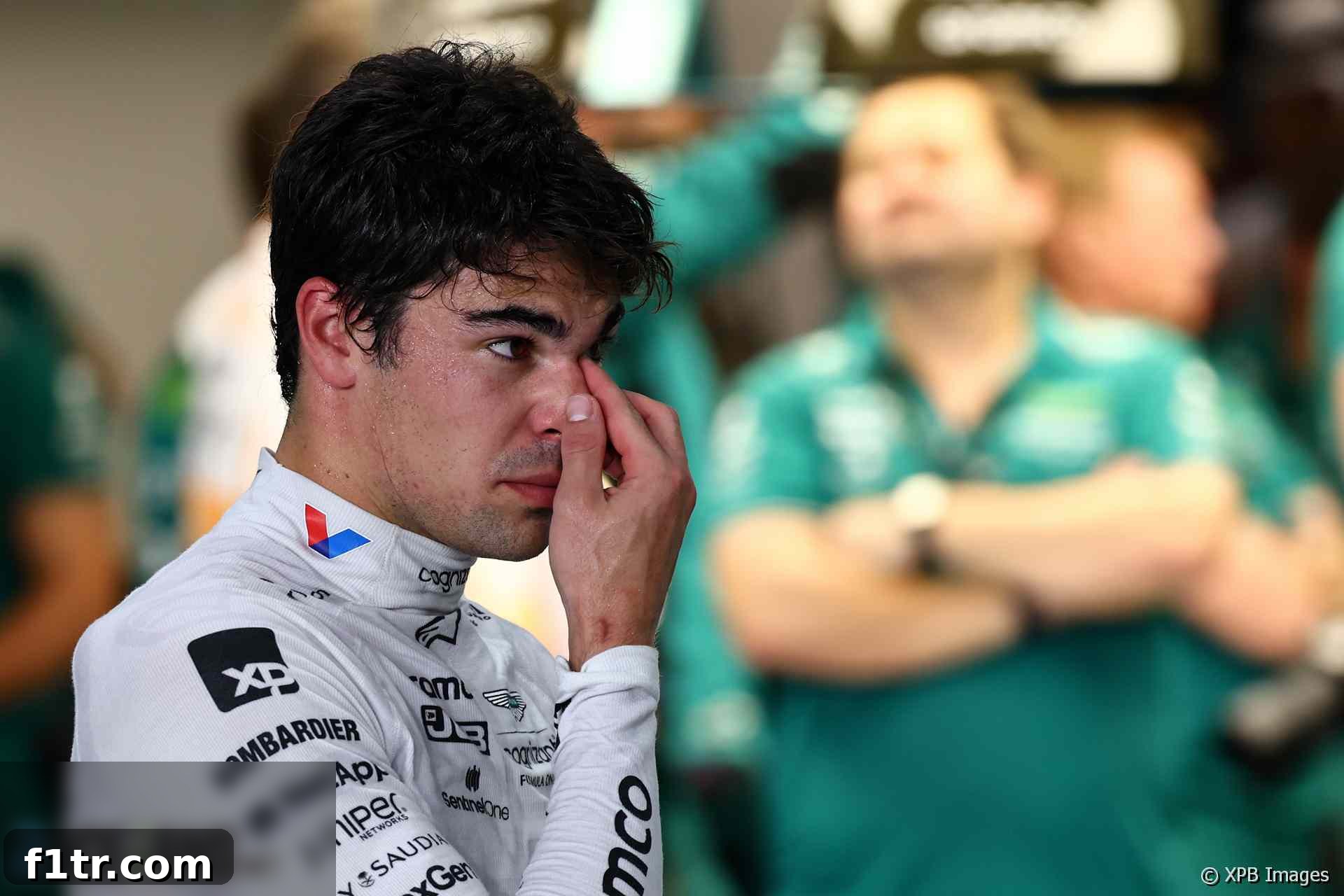
The incident unfolded dramatically last weekend following Stroll’s fourth successive Q1 elimination. Upon returning to the Aston Martin garage, a visibly agitated Stroll tossed his steering wheel aside with considerable force. What followed drew even more attention: the Canadian driver appeared to push his trainer and fellow team member, Henry Howe, in a moment of acute exasperation. The event quickly circulated across social media and garnered widespread media attention, sparking considerable debate among fans and pundits alike regarding the appropriate display of emotion in a professional sporting environment. Stroll himself later downplayed the altercation, suggesting that it was merely a fleeting moment of shared frustration, stating, “he’s a bro” and “we go through the frustrations together.” This attempt to minimize the event, however, did little to quell the immediate public discourse.
Addressing the controversy, Mike Krack articulated a nuanced perspective on Sunday in Qatar. He emphasized the necessity of discussing such incidents but stressed the importance of timing. “I think you have to speak about these things, but you have to put them in relation,” Krack explained. “And I think you cannot speak in the heat of the moment. You need to wait, and maybe everybody sleeps one night, and then we have a look and we discuss and then the world is a different one.” This measured stance reflects a pragmatic understanding of human psychology, acknowledging that intense adrenaline and raw disappointment can cloud judgment and prevent constructive dialogue. Krack’s approach suggests a preference for a calm, reflective environment where both parties can process emotions before engaging in critical conversations, fostering a healthier team dynamic in the long run.
When Stroll’s frustrations boiled over that Friday, many were quick to criticize his actions as an excessive response to an early qualifying exit. However, Krack offered a broader context, suggesting that this was not the most intense display of frustration he had witnessed from a driver. He posited that the incident was likely the culmination of a series of setbacks and accumulating pressures rather than an isolated reaction. “You accumulate delivering below what you were or below your own expectations. And then that frustration comes over at one point,” Krack elaborated, drawing parallels to other high-stakes sports. “You take a football player that is taken off the pitch, he doesn’t do a high-five to the co-manager or he throws the jersey away, throws the water bottles. We have seen that quite a lot.” This comparison seeks to normalize such emotional displays within the context of elite athletic competition, highlighting the universal pressure faced by top-tier sportsmen and women. Krack also shared his practice of delaying post-session meetings as much as possible, specifically “to just try and get rid of the adrenaline” that drivers experience on track, further underlining his belief in allowing emotions to subside before evaluation.
Advert | Become a RaceFans supporter andgo ad-free
Krack further articulated a broader philosophical point regarding the public’s perception of athlete emotions. “I’m sure we run maybe 10 to 20 times less adrenaline on the pit wall than the drivers do. But you put the microphone straight away in front of them, or you gauge every reaction that they do… I think emotion is what we want from sportsmen, and then if they react, we judge them quickly. You know, ‘is this right?’, ‘is this wrong?’. And I think we need to be careful with that.” He argued that while the public craves emotional displays from athletes – as it provides “something to talk about” – there’s often a disconnect when judging these reactions from a comfortable distance. “I think it goes one step too far. That then people sit down on the sofa or in an air conditioning room and say ‘this is too much’ or ‘you cannot do that’. I think we need to have a bit more respect for the drivers. And elite sportsman, I would say.” This statement serves as a powerful reminder of the immense pressure, physical strain, and emotional toll that elite sports, particularly Formula 1, place on individuals, urging for greater empathy and understanding from observers.
Beyond the garage incident, Stroll’s performance struggles have been a significant talking point throughout the season. He again failed to reach the second round of qualifying on Saturday at the Qatar Grand Prix, continuing a concerning trend. In the sprint race, he finished 15th, and in the grand prix, despite a valiant effort, he finished 11th, agonizingly missing out on his first point since July’s Belgian Grand Prix due to a track limits penalty. The consistent gap between Stroll and his highly experienced teammate, Fernando Alonso, has become increasingly pronounced, raising questions about the car’s development direction and Stroll’s adapting to it.
Advert | Become a RaceFans supporter andgo ad-free
However, despite the qualifying struggles and the overall challenging weekend, Krack drew some encouragement from Stroll’s performance on Sunday. The Qatar Grand Prix was characterized by punishing conditions, with extreme heat and humidity pushing drivers to their physical limits. Stroll himself admitted to experiencing significant physical discomfort, at one point feeling close to passing out in the cockpit. Yet, Krack noted a discernible improvement in his competitiveness. “It was interesting that he was much more competitive,” said Krack. “He was actually quite happy with the car. I mean, from what I could hear now, happy being always relative, that is clear.” This observation highlights a glimmer of hope amidst the difficulties, suggesting that Stroll still possesses the underlying pace when conditions or car setup align more favorably.
The team is now diligently working to get to the bottom of why Stroll is currently lagging so far behind Fernando Alonso. Krack acknowledged the disparity, stating, “We have to wait to understand why he was much, much closer in the beginning of the season and he is a little bit further away now – if it is related to how the car has changed over the season, and how it will develop for the next races.” This strategic analysis is crucial for Aston Martin, as optimizing both drivers’ performance is vital for their constructors’ championship aspirations. Krack described the Qatar weekend as “a great learning exercise” for deciphering the factors that dictate Stroll’s competitiveness compared to his seasoned teammate. This internal investigation underscores the team’s commitment to understanding and addressing the root causes of the performance gap.
Advert | Become a RaceFans supporter andgo ad-free
After 17 rounds of the championship, the statistics paint a stark picture: a gulf of six places and 136 points separates Alonso and Stroll. Stroll himself has hinted that the development direction of the Aston Martin AMR23 has played a role in his recent loss of confidence in the car. This theory, if proven, would be a critical insight for the team’s future development path. Krack, while acknowledging Stroll’s assessment, stated, “The fact is that he has lost a bit of competitivity, and this is something that we need to understand. We have suspicions, or indications, and this is I think what Lance is referring to. But then we need to make the according changes and see that if this is confirmed that if you improve that, he improves as well.” This pragmatic approach emphasizes the need for concrete evidence and targeted adjustments, highlighting Aston Martin’s systematic method of tackling complex performance issues within a highly competitive environment. The team’s ability to unlock Stroll’s full potential will be instrumental in their ongoing fight in the constructors’ championship and their long-term ambitions in Formula 1.
Bringing the F1 news from the source
RaceFans strives to bring its readers news directly from the key players in Formula 1. We are able to do this thanks in part to the generous backing of our RaceFans Supporters.
By contributing £1 per month or £12 per year (or the equivalent in other currencies) you can help cover the costs involved in producing original journalism: Travelling, writing, creating, hosting, contacting and developing.
We have been proudly supported by our readers for over 10 years. If you enjoy our independent coverage, please consider becoming a RaceFans Supporter today. As a bonus, all our Supporters can also browse the site ad-free. Sign up or find out more via the links below:
- Become a RaceFans Supporter
- RaceFans Supporter FAQ
2023 Qatar Grand Prix
- Albon fears Qatar GP conditions risked creating dangerous “wet bulb effect”
- Alonso: New-spec fireproofs and pre-race anthem timing made Qatar heat worse
- Magnussen admits he took “too long to learn” Losail circuit
- Analysis: Sargeant’s Qatar radio reveals his painful struggle to end point-less run
- Alfa Romeo ‘finally understand their upgrade’ Bottas believes as team target Williams
Browse all 2023 Qatar Grand Prix articles