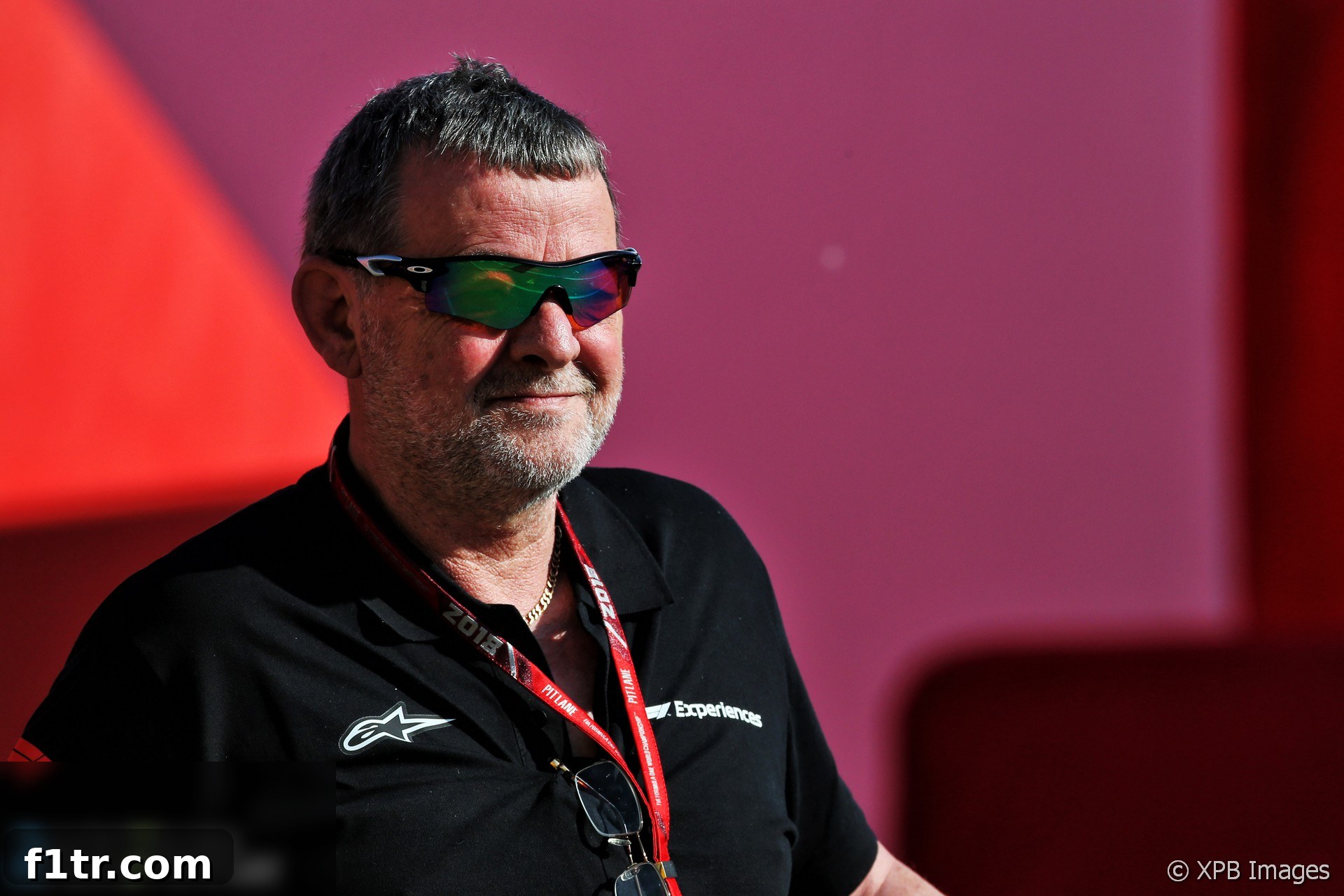
Formula 1, often dubbed the pinnacle of motorsport, is at a pivotal moment. With sweeping new regulations and a tightly enforced budget cap, the sport is actively reshaping its financial landscape, prompting speculation about a resurgence of privateer teams. Former Minardi team principal Paul Stoddart, a veteran figure known for his passionate advocacy for independent outfits, believes these changes are creating an environment ripe for new blood, or indeed, the return of familiar faces.
Speaking exclusively to RaceFans, Stoddart, who spearheaded Minardi’s operations until its sale to Red Bull at the close of the 2005 season and more recently managed F1’s celebrated two-seater car program, openly admitted to contemplating a personal return to the sport.
“It’s certainly interesting at the moment because the budgets are being pulled back,” remarked the European Aviation boss. He added, “Where the budgets, to a degree, got out of control, I do feel that it is getting a bit more sensible.” This sentiment underscores a broad optimism that F1 is steering towards a more sustainable and equitable future, a stark contrast to the unrestrained spending eras of the past which often left smaller teams struggling to compete.
Stoddart foresees “a chance [that] there will be private teams coming” in the near future. While cautious about immediate timelines, he suggests, “I’m not sure it will be ’22, but I think there’s a chance that F1 might become a bit more sensible. But a lot depends on what they do with the engine regs in ’25 or ’26.” The emphasis on future engine regulations highlights their critical role in determining the long-term viability and attractiveness of Formula 1 for new and existing entrants. A more cost-effective and accessible power unit formula could be the final piece of the puzzle to truly open the grid to a wider array of constructors and privateer ventures.
Beyond the financial recalibration, Stoddart also commended Formula 1’s recent strategic leadership decisions. He particularly lauded the appointment of former Ferrari team principal Stefano Domenicali to succeed Chase Carey as CEO, describing it as an “excellent choice.” Domenicali’s deep understanding of the sport, coupled with his diplomatic approach, is widely seen as beneficial for navigating the complex relationships between the FIA, the commercial rights holder, and the ten competing teams.
However, the path for any aspiring new team to join the Formula 1 grid is not without significant hurdles. Currently, any new entrant wishing to expand the grid beyond the existing ten teams must make a substantial $200 million “anti-dilution” payment. This fee, designed to compensate existing competitors for a share of F1’s revenue pool, effectively acts as a deterrent for completely new, ground-up entries. Stoddart shrewdly points out that this makes acquiring an existing team a far more appealing and financially logical option for those keen to step into the F1 arena. He believes there are at least two prime targets currently on the grid that could potentially change hands.
“Gene Haas has got to make his decision what he’s going to do and Alfa Romeo are going to make their decisions,” Stoddart stated, alluding to the ongoing speculation surrounding the future of both teams. He further expressed skepticism regarding Renault’s long-term commitment, adding, “And that’s assuming that Renault is going to keep going because I’m not completely convinced they are. Time will tell.” These comments highlight the constant flux within the F1 paddock, where financial pressures and strategic objectives can often lead to ownership changes or even exits. For an astute operator like Stoddart, these situations represent opportunities.
“So I think there will be teams come up from time to time that can be bought for less than that 200 million entry fee,” he surmised. This perspective strongly favors strategic acquisitions over the monumental task of establishing a completely new entity from scratch. “If I was somebody looking to get back in, I’d be looking at buying a team, not starting a new one, even though we have all the facilities to do it.” Stoddart’s insight is practical and reflects the realities of F1’s economic framework. Purchasing an existing team not only bypasses the anti-dilution fee but also provides immediate access to infrastructure, existing personnel, F1 entry rights, and a wealth of operational experience that would take years to build independently.
Recent seasons have already witnessed significant shifts in team ownership, providing tangible examples of this acquisition strategy. Racing Point, for instance, emerged from the ashes of the former Force India team. Stoddart recalled, “You saw them virtually run out of money and go into administration but then obviously along comes Lance Stroll’s father and bails them out with a consortium that now means they’re set up for life.” This dramatic turnaround, orchestrated by Lawrence Stroll, not only rescued a team but transformed it into the Aston Martin F1 Team, demonstrating the potential for substantial investment to revitalize and elevate an existing entity. This model serves as a compelling blueprint for other potential investors looking to enter the sport through acquisition.
Another poignant example is the recent change of hands at Williams. “You’ve just seen Williams change hands – which is quite sad from a personal point of view, I feel for Frank – but you’ve seen Williams changed hands for not a lot of money, really. And there’s still one or two out there still.” The sale of the iconic Williams team to Dorilton Capital marked the end of an era for the founding family, underscoring the severe financial challenges even legendary teams can face. The relatively modest acquisition price further supports Stoddart’s argument that existing grid slots can be secured at a more palatable cost than the anti-dilution fee for a new entry, thereby presenting a viable alternative for ambitious newcomers.
Stoddart himself admitted that the new regulations, particularly the budget cap, had prompted him to seriously consider a return to F1. “When we were there as the 11th team with the F1x2 [two-seater] I had a bit of information that things were going to go kind of the way they have gone in terms of the new deal.” His prior involvement and insider knowledge positioned him to anticipate these shifts, allowing him to evaluate the feasibility of a comeback.
A “Haas-style” operation, which relies heavily on contracting out components and expertise, would be a realistic and efficient option for Stoddart, he explained. “I’ve got about 90% of what I need. I’ve got all the facilities: I’ve got the trucks, the motorhomes. And, to a certain degree, a lot of the people, we’ve still got our car build capacity. So for us to set up like a Haas where you contract a lot of stuff out and have a team of 100, 150 people, that wouldn’t be too difficult.” The Haas model, which leverages partnerships with established entities like Ferrari (for power units and non-listed parts) and Dallara (for chassis manufacturing), significantly reduces the overheads and developmental costs typically associated with a traditional F1 constructor. Stoddart’s existing aviation infrastructure and personnel, combined with his experience, make this an incredibly compelling proposition.
However, despite the evident passion and the practical readiness, Stoddart conceded that a return to Formula 1 would present a significant distraction from his primary aviation business. “I was thinking about it quite seriously in 2018, not quite so much in 2019 because we were going in a different direction with the company and ploughing squillions of dollars into aviation.” This highlights the colossal commitment required to run an F1 team, even under a more streamlined model. The sport demands unwavering focus and substantial financial input, which can inevitably draw resources and attention away from other successful ventures.
He articulated the challenge with heartfelt honesty: “If I went back into F1 it’d be a bit of a distraction because, to be honest, I absolutely love it. I would give it 110 percent because you have to with F1, it’s all consuming and so it would be much harder to run my other businesses.” This personal dilemma perfectly encapsulates the intoxicating allure and the demanding nature of Formula 1. For Stoddart, it’s not just a business; it’s a deep-seated passion that, once ignited, would consume his full energy and dedication, making the balance with his other successful enterprises a formidable task.
The sentiment from Paul Stoddart resonates deeply within the Formula 1 community. The sport’s ambitious overhaul, particularly the budget cap and revised technical regulations, genuinely appears to be leveling the playing field. This strategic shift is not merely about curbing extravagant spending but about fostering a more competitive and financially sustainable ecosystem. By creating conditions where operational efficiency and clever strategic acquisitions are rewarded, F1 is opening its doors to a new generation of privateers and offering a second chance to seasoned campaigners like Stoddart. While the $200 million anti-dilution fee remains a barrier for entirely new entries, the increasing availability and comparative affordability of existing teams offer a compelling workaround. As the sport continues to evolve, the prospect of new teams joining the grid, whether through fresh investment or the revival of classic names, adds an exciting layer of intrigue to the future of Formula 1, promising a potentially richer and more diverse competitive landscape.
2020 F1 season
- Grosjean to make F1 test return tomorrow for first time since Bahrain horror crash
- Pictures: Wrecked chassis from Grosjean’s Bahrain fireball crash to go on display
- Bottas vs Rosberg: Hamilton’s Mercedes team mates compared after 78 races each
- F1 revenues fell by $877 million in Covid-struck 2020 season
- Hamilton and Mercedes finally announce new deal for 2021 season
Browse all 2020 F1 season articles