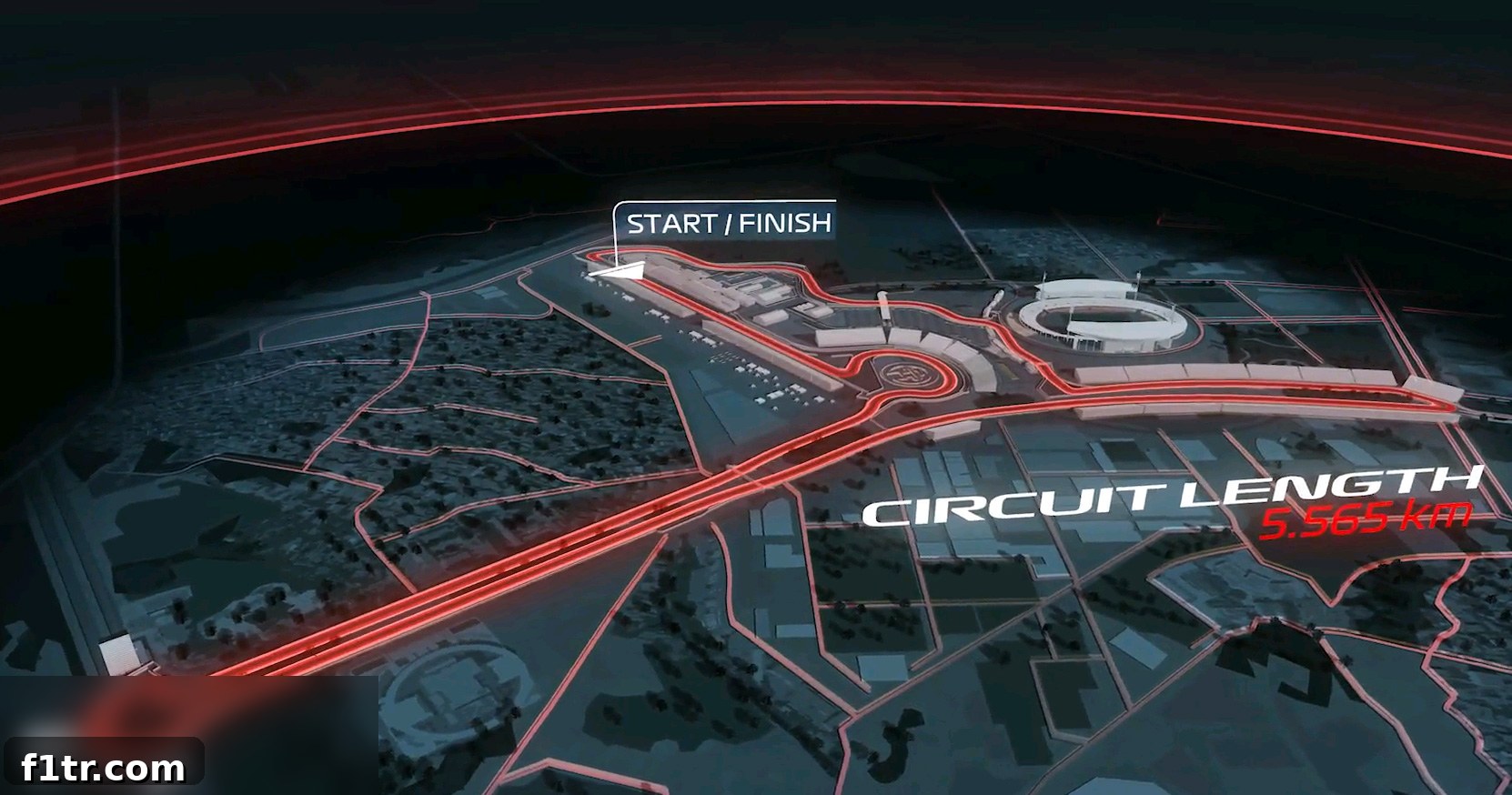
Formula One Management (FOM) has expressed immense confidence in the newly unveiled track layout for the inaugural 2020 Vietnamese Grand Prix in Hanoi. The organizers are optimistic that the meticulously designed circuit will deliver thrilling, wheel-to-wheel racing action, captivating fans worldwide and ensuring a memorable debut for the sport in Vietnam.
Advert | Become a Supporter & go ad-free
Hanoi’s Dynamic New Circuit: A Promise of Thrilling Races
The 5.6-kilometre Hanoi Street Circuit, a creation from the renowned track designer Hermann Tilke, was officially revealed today, marking a significant milestone for the 2020 Formula 1 calendar. Tilke, known for his ability to blend challenging technical sections with high-speed straights, has crafted a layout specifically engineered to promote exciting on-track battles. This new addition aims to redefine the perception of street circuits, moving beyond mere parades to become arenas of genuine motorsport spectacle. The design integrates unique elements that are characteristic of urban environments while incorporating features commonly found in traditional permanent circuits, promising a hybrid challenge for drivers and strategists alike. The integration of modern track design principles, coupled with the natural streetscape of Hanoi, is expected to create a formidable test of skill and car performance.
Revolutionizing Race Design: The Quest for Overtaking Opportunities
Sean Bratches, F1’s commercial managing director at the time, articulated Formula 1’s renewed commitment to delivering compelling races. He emphasized that recent advancements in circuit design are pivotal to the success of new events, stating, “One of the things that has been critical to our efforts in recent times is the creation of great racing circuits. We don’t want another processional race.” This statement underscores a strategic shift within Formula 1 under Liberty Media, prioritizing fan engagement through more dynamic racing. The aim is to foster true competition – “wheel-to-wheel, livery-to-livery” – particularly on street circuits where the potential for overtaking can sometimes be challenging. The Hanoi circuit has been designed with specific sections intended to facilitate aggressive braking, multiple racing lines, and strategic overtakes, ensuring that spectators witness constant action rather than predictable processions. This focus on raceability is a direct response to fan feedback and a core tenet of F1’s vision for its future, aiming to create memorable moments at every Grand Prix.
F1’s Dedicated Motorsport and Technology Division Drives Innovation
To realize its ambition of creating world-class circuits, Formula 1 established a dedicated motorsport and technology division. This specialized team plays a crucial role in the design and development of new tracks, working in close collaboration with host cities and local authorities. Bratches confirmed their instrumental involvement in the Hanoi project: “That team has been working hand in glove with the Hanoi government to ensure that the circuit is not only in a world class city, which Hanoi is, but that it is a world class circuit fans will enjoy.” This division leverages advanced simulation tools and expertise in aerodynamics, vehicle dynamics, and track safety to optimize layouts for both competitive racing and driver safety. Their collaboration with local architects and engineers ensures that the circuit seamlessly integrates with Hanoi’s urban landscape while adhering to stringent FIA standards. This meticulous approach, combining local insights with global motorsport expertise, is expected to result in a circuit that is both challenging for the drivers and thrilling for the fans, truly embodying the spirit of modern Formula 1.
Hanoi: A Strategic Choice for Formula 1’s Global Expansion
The selection of Hanoi as a host city for Formula 1 is a testament to its burgeoning status as a “world-class city” and its strategic importance within Southeast Asia. Beyond its historical charm and vibrant culture, Hanoi represents a significant growth market for Formula 1, allowing the sport to expand its global footprint and reach new fan bases. Hosting such a prestigious international event like the Vietnamese Grand Prix is also a major boost for Hanoi and Vietnam, elevating its international profile, attracting tourism, and stimulating local economic development. The synergy between a global sport and a rapidly developing urban center exemplifies Formula 1’s modern ethos of connecting with diverse audiences in dynamic locations. The decision to bring F1 to Vietnam reflects a deliberate strategy to introduce the sport to regions where motorsport enthusiasm is on the rise, creating new avenues for engagement and commercial opportunities. This partnership promises to be mutually beneficial, offering Formula 1 a vibrant new home and providing Hanoi with an unprecedented platform on the global stage.
Liberty Media’s Vision: A Geographically Aligned Calendar
The placement of the Vietnamese Grand Prix in April was a deliberate strategic decision, aligning with Liberty Media’s overarching plan to optimize the Formula 1 calendar by grouping races geographically. Bratches elaborated on this vision, stating, “One of the things we are currently trying to do is align our races by geography.” This strategy aims to enhance logistical efficiency, reduce travel burdens for teams, lower the sport’s carbon footprint, and ultimately create a more cohesive and sustainable calendar for all stakeholders. While acknowledging the constraints of “some agreements we have inherited,” Bratches articulated the ideal scenario: to group races within the Asian and Australasian markets, distinct from those in the American and European markets. The April date for Vietnam perfectly supports this long-term vision, positioning it strategically within a potential cluster of early-season Asian races. This methodical approach to calendar restructuring signifies Formula 1’s commitment to modernization and sustainability, ensuring that the sport can grow and thrive efficiently on a global scale while respecting its complex international commitments.
The Future of Formula 1: Innovation and Accessibility
The upcoming Vietnamese Grand Prix represents more than just a new race on the calendar; it symbolizes Formula 1’s forward-thinking approach to innovation, fan engagement, and global expansion. By meticulously designing a track layout for exciting competition, investing in specialized technical expertise, and strategically positioning new venues within a geographically optimized calendar, F1 is actively shaping its future. The Hanoi Street Circuit, with its promise of dynamic racing in a captivating new city, embodies this new era. It showcases the sport’s ability to blend the rich heritage of Formula 1 with contemporary demands for exhilarating action and environmental consciousness. As Formula 1 continues to evolve, new circuits like Hanoi will be instrumental in defining its appeal, attracting new generations of fans, and solidifying its position as the pinnacle of global motorsport. The anticipation builds for an unforgettable debut in 2020, promising a spectacular addition to the illustrious history of Formula 1 Grand Prix racing.
Advert | Become a RaceFans supporter andgo ad-free
More from the 2020 F1 Season
Delve deeper into the events and stories that shaped the 2020 Formula 1 season and beyond:
- Grosjean to make F1 test return tomorrow for first time since Bahrain horror crash
- Pictures: Wrecked chassis from Grosjean’s Bahrain fireball crash to go on display
- Bottas vs Rosberg: Hamilton’s Mercedes team mates compared after 78 races each
- F1 revenues fell by $877 million in Covid-struck 2020 season
- Hamilton and Mercedes finally announce new deal for 2021 season
Browse all 2020 F1 season articles