Jenson Button’s Gritty NASCAR Debut at COTA: An F1 Champion’s Test of Endurance
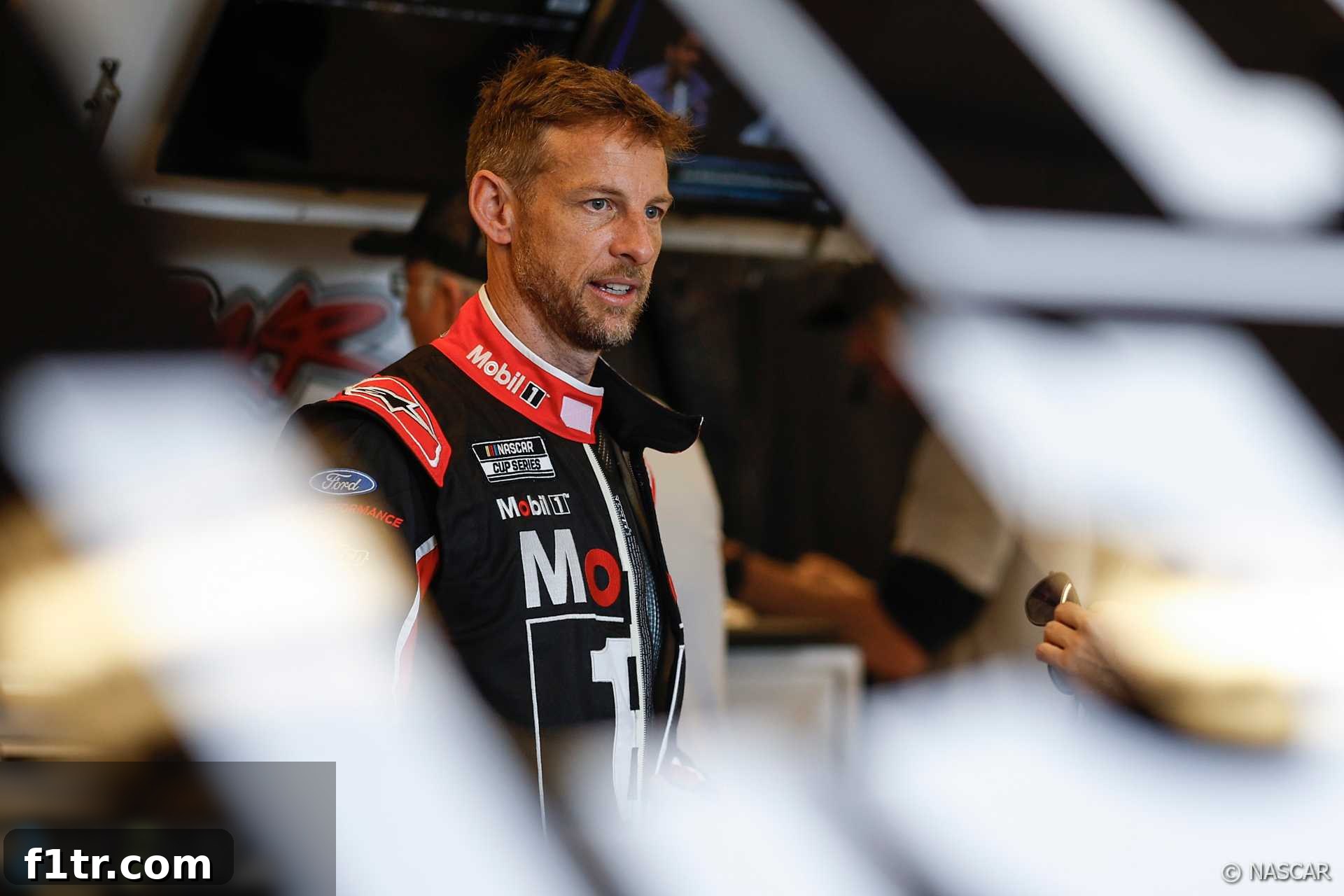
Former Formula 1 World Champion Jenson Button recently embarked on a compelling new chapter in his illustrious motorsport career, making his much-anticipated NASCAR Cup Series debut at the challenging Circuit of the Americas (COTA). Despite a baptism of fire that included a tumultuous start, an intense battle with severe heat exhaustion, and an unavoidable on-track encounter with fellow F1 legend Kimi Raikkonen, Button showcased remarkable adaptability and enduring competitive spirit to secure a commendable 18th-place finish. This impressive performance not only highlighted the Briton’s versatility but also set a compelling tone for his multi-race NASCAR schedule and upcoming participation in the experimental ‘Garage 56’ project at the iconic Le Mans 24 Hours.
The F1 Champion Enters the World of Stock Car Racing
Jenson Button, etched into motorsport history as the 2009 Formula 1 World Champion, arrived at COTA with a glittering pedigree of success across various forms of racing. Renowned for his fluid driving style, exceptional tire management, and strategic acumen, Button’s decision to dive into the aggressive, close-quarters world of NASCAR was met with immense anticipation from fans globally. His participation at COTA marked the first of three scheduled NASCAR Cup Series appearances for the season, a commitment that underscores his genuine interest in experiencing diverse racing challenges. Beyond NASCAR, Button is also taking on a high-profile role, driving a specially modified NASCAR stock car in the innovative ‘Garage 56’ category at the prestigious Le Mans 24 Hours. For his COTA debut, Button qualified a respectable 24th on the grid, positioning him firmly within the competitive 39-car field for what promised to be a grueling road course race.
A Baptism of Fire: Button’s “Embarrassing” Opening Stint
The initial phase of the EchoPark Automotive Grand Prix proved to be a stark introduction to the unforgiving nature of NASCAR racing for Button in his Stewart-Haas-entered Ford Mustang. Reflecting candidly on the opening laps, he admitted, “At first, it was terrible. I mean, I must’ve been last by the end of it, and I was just like, ‘Everyone, go. I just need to drive and find a rhythm.’” The profound contrast between the highly precise, aero-dependent racing of Formula 1 and the heavy, powerful, and often chaotic environment of NASCAR immediately became apparent. Button found himself grappling with the unique dynamics of the stock car while navigating a dense pack of seasoned NASCAR veterans who possess an intimate understanding of their machinery and the art of aggressive pack racing. “The first stint was really bad,” he continued, adding with characteristic honesty, “It was embarrassing for me.” This initial struggle served as a powerful reminder of the steep learning curve faced by even the most accomplished international drivers when transitioning to NASCAR’s distinct demands, encompassing everything from tire characteristics and car setup to racing etiquette and bumper-to-bumper combat.
Strategic Adjustments and Finding a Rhythm
Demonstrating the strategic acumen honed over decades of elite-level motorsport, Button quickly recognized the necessity for a tactical intervention. He made an early pit stop for a fresh set of tires and, crucially, a moment to reset and gain some “fresh air” within the stifling cockpit. This decisive call proved to be a pivotal turning point, allowing him to momentarily escape the chaotic traffic and focus on finding a more consistent and competitive rhythm. “I was like, ‘Alright guys, we need to pit, freshen the tyres and I need some air. I need some fresh air.’ I got that. The pace was good, consistency was good. I was really happy, and passed a few cars, which was nice,” Button recounted. This phase of the race underscored Button’s exceptional ability to swiftly analyze a challenging situation and implement effective adjustments, leveraging his vast experience to transform a difficult start into a period of tangible progress.
Mid-Race Challenges: Safety Cars and Handling Woes
Just as Button began to find his comfort zone and make headway through the field, the unpredictable nature of NASCAR racing intervened with a poorly timed Safety Car period. “We got a little bit unlucky with the Safety Car because it was just two laps before our window,” Button explained, highlighting how such unforeseen events can disrupt even the most meticulously planned strategies in stock car racing. Following the restart, the race rapidly descended into what Button described as “mayhem,” a common characteristic of NASCAR’s intense, multi-car pack racing. Adding to the complexities, the team implemented further car setup changes that, regrettably, did not yield the desired improvements. “We also made a couple of changes that just didn’t work. Big oversteer – went from the car feeling great to really difficult to drive,” he elaborated. This period underscored the delicate balance required for car setup and the constant need for adaptation in a long, dynamic race where track conditions and tire wear evolve rapidly.
Button openly admitted that adapting to the frantic and intensely physical nature of NASCAR racing, particularly its unique approach to cornering and overtaking, presented a significant hurdle. “I’ve never gone through a corner two wide, so often. And trying to place my car in the right place – I just got it wrong every time.” He further elaborated on the aggressive passing philosophy prevalent in stock car racing, offering a stark contrast to his F1 experience: “Normally, if you’re a little bit slow through a corner, nobody tries to overtake you from the outside – because they’re not going to make it all the way on the next one. But here they do, because they get a wheel inside for the next one, and if you turn in, you turn around.” This valuable insight offers a clear differentiation from Formula 1, where drivers typically adhere to more predictable racing lines and overtakes are often executed with a greater emphasis on precision and aerodynamic advantage rather than sheer brute force and close contact.
Clash of Champions: Contact with Kimi Raikkonen
Adding another layer of high-profile drama to his debut, Button found himself in a direct on-track skirmish with another revered Formula 1 World Champion, Kimi Raikkonen. The ever-popular “Iceman,” also making a guest appearance in the race, finished 29th after starting just two places ahead of Button. The contact between the two former F1 rivals left an indelible mark on Button’s car, significantly affecting its handling for a considerable portion of the remaining race. “I also had a massive whack from Kimi and it fell off after that,” Button revealed, detailing the impact. “The car wasn’t quite right. Every time I turned in, the rear tyres would chatter, then immediately to oversteer.” Such incidents are commonplace and even expected in NASCAR, where bumper-to-bumper action and minor contacts are an integral part of the spectacle. However, for a driver accustomed to F1’s extreme aerodynamic sensitivity and the severe penalties for even slight contact, this presented yet another unique challenge to overcome and adapt to.
The Ultimate Test: Battling Severe Heat Exhaustion
Perhaps the most formidable and unexpected opponent Jenson Button faced during his NASCAR debut was the searing, oppressive heat inside the closed cockpit of his Ford Mustang. The 75-lap race, a relentless three-and-a-half-hour endurance test, pushed Button to his absolute physical limits. The absence of a personal cooling fan in his seat, a standard comfort and necessity in Formula 1, severely exacerbated the already extreme conditions. “It was so hot,” Button recounted, vividly describing a moment of profound physical distress. “I don’t have a fan in my seat, which really didn’t help me too much. It was so hot, I thought I was going to faint in the car.”
This critical moment of crisis forced Button to make an unprecedented decision for a top-tier driver: two unscheduled stops to actively combat severe heat exhaustion. During these crucial stops, his dedicated crew sprang into action, applying ice to his body and providing copious amounts of water, allowing him to momentarily recover and push through the immense discomfort. “So, I stopped twice for a minute. They put ice on me, gave me loads of water, and I went back out.” Button confessed the severity of his condition, stating, “I was so close to getting out of the car because I thought I was going to faint. I must’ve drank eight, nine bottles of water during the race.” This harrowing experience dramatically underscored the extreme physiological demands placed on NASCAR drivers, particularly in scorching conditions, and the absolutely critical role of a supportive and quick-thinking pit crew in ensuring driver safety and sustained performance. Button’s raw honesty about his near-fainting spell vividly highlights the true test of endurance this challenging race presented, transcending mere driving skill to become a battle of sheer will and physical resilience.
A Resilient Finish: From Despair to a Strong 18th Place
Despite the immense physical toll and the numerous setbacks encountered throughout the race, Button’s inherent racing spirit and championship pedigree shone brightly in the latter stages. As the checkered flag loomed, he felt a renewed connection with his car and the challenging COTA circuit. “It was really difficult, but toward the end we made some good calls stopping and putting on fresh tyres,” he explained, emphasizing the importance of strategic foresight even under duress. This final strategic push allowed him to gain valuable positions and fully immerse himself in the thrilling spectacle of NASCAR’s signature restarts, where aggressive positioning and bold moves are paramount. “I enjoyed the last three restarts – got good placement and good overtaking moves from the outside.”
Crossing the finish line in a respectable 18th position, especially after facing the very real prospect of having to retire due to debilitating heat exhaustion, stood as a profound testament to Button’s incredible resolve and the unwavering support of his Stewart-Haas team. “Finished 18th after almost stopping because I had heat exhaustion,” he stated with a palpable mix of relief and satisfaction. “The team kept me calm, and it’s the reason why we got a good result in the end. So, I was happy.” His NASCAR Cup Series debut was undoubtedly far from straightforward, yet Button managed to navigate the chaos, extreme physical discomfort, and fierce competitive intensity to secure a highly creditable result. This performance not only exceeded initial expectations given the multitude of challenges but also powerfully demonstrated his immense potential to be a formidable and exciting competitor in future NASCAR outings, bridging the gap between two very different, yet equally demanding, disciplines of motorsport.
Looking Ahead: Button’s Continuing NASCAR Journey
Jenson Button’s NASCAR Cup Series debut at COTA was an unforgettable and character-defining experience, packed with steep learning curves, gruelling physical endurance tests, and moments of high-octane drama. His thrilling journey into the captivating world of American stock car racing is set to continue with two more races scheduled for the current season, offering him further valuable opportunities to refine his skills, deepen his understanding of the machinery, and push for even stronger results. Beyond his Cup Series commitments, his pivotal involvement in the innovative Garage 56 project at the legendary Le Mans 24 Hours further illustrates his insatiable passion for diverse motorsport challenges and his unwavering desire to compete at the highest levels across a spectrum of different disciplines. Button’s impressive COTA performance serves as a powerful and inspiring reminder that while champions may indeed cross boundaries and adapt to new arenas, the fundamental essence of racing – encompassing raw skill, astute strategy, unparalleled resilience, and sheer force of will – remains universally indispensable.
Other Motorsport News
- Formula 2 to debut in Miami and Montreal after Iran war cancellations
- IndyCar driver McLaughlin cleared of injury after crashing through barrier at Barber
- Verstappen to tackle Nurburgring 24 Hours in a Mercedes-AMG GT3
- Ex-McLaren junior Dunne’s move to Alpine finally confirmed
- WEC cancels its Qatar season-opener due to US-Iran war
Browse all other motorsport articles