Ferrari Accepts FIA Decision on Sainz Penalty Review, Advocates for F1 Stewarding Reforms
Following a period of intense debate and a formal request, Scuderia Ferrari has officially accepted the FIA stewards’ decision to deny a review of Carlos Sainz Jnr’s contentious five-second time penalty from the Australian Grand Prix. While acknowledging the verdict, the legendary Italian team has made it clear that their primary objective now shifts towards initiating wider discussions with the FIA, Formula 1 management, and rival teams. The core aim of these proposed talks is to meticulously evaluate and enhance the standards of race policing and decision-making across the championship, striving for unparalleled levels of fairness and consistency.
Sainz himself has not minced words regarding his deep dissatisfaction, reiterating that the penalty “should have been reviewed” and unequivocally labeling it “disproportionate.” This sentiment underscores a broader frustration within the F1 paddock concerning the application of sporting regulations and the perceived inconsistencies in judicial processes.
The Controversial Incident: A Chaotic Australian Grand Prix Restart
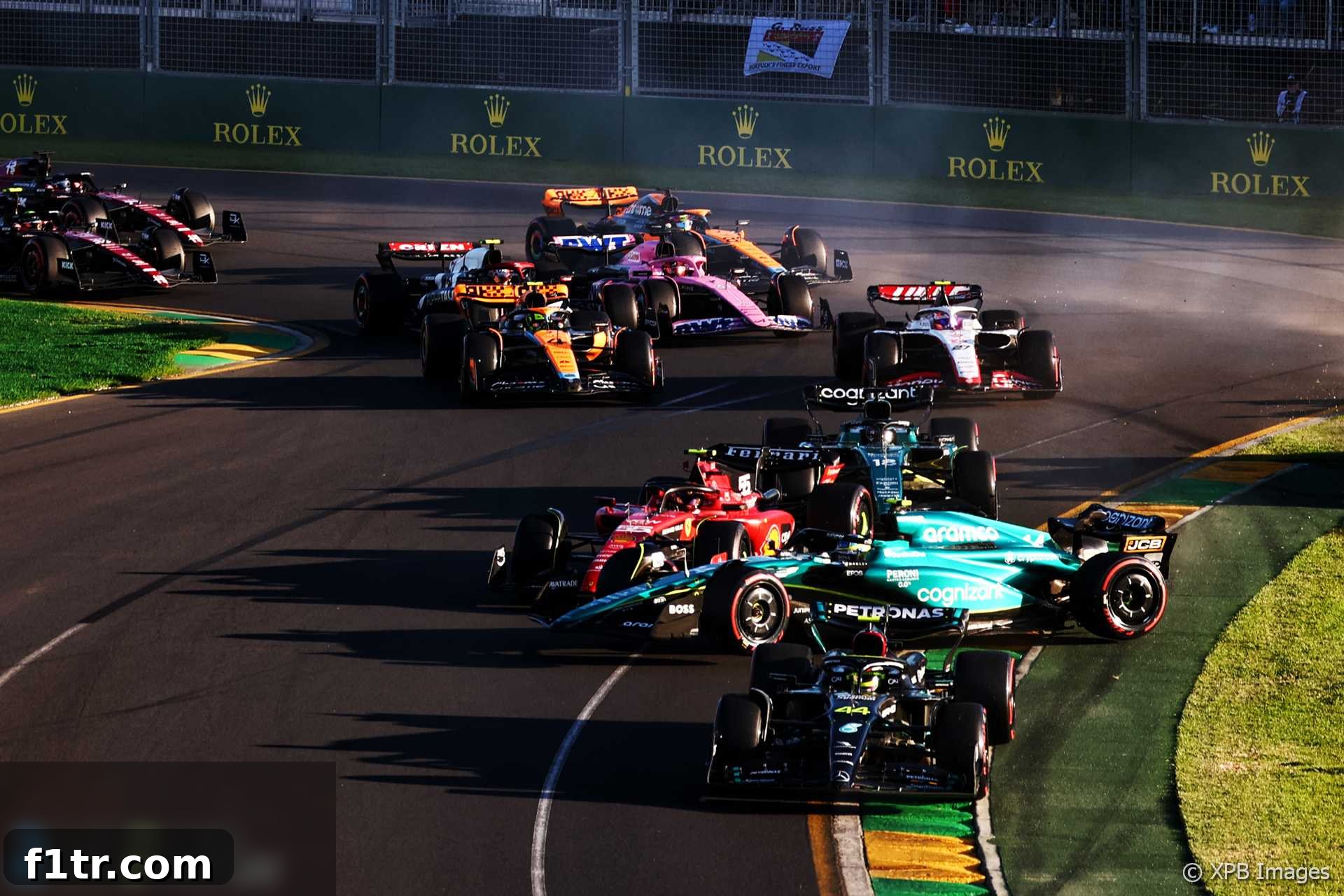
The incident at the heart of this controversy unfolded during the dramatic final standing restart of the Australian Grand Prix in Melbourne. With just a handful of laps remaining, the race was halted and then restarted in a highly condensed and tension-filled scenario. It was during this critical moment that Carlos Sainz, driving for Ferrari, made contact with Fernando Alonso of Alpine. The grid was tightly packed, and drivers were pushing hard to gain positions, leading to a scramble for track space. The stewards swiftly assessed the collision, subsequently issuing Sainz a five-second time penalty for causing the collision. This penalty, applied after the race, saw him drop from an initial fourth-place finish entirely out of the points, a devastating outcome for the Spanish driver and the Ferrari team, significantly impacting their championship points tally.
The immediate imposition of the penalty without direct consultation with Sainz himself became a significant point of contention. Teams and drivers alike often advocate for the opportunity to present their perspective on an incident before a definitive ruling is made, arguing that crucial context, such as steering input, car behavior, and driver intent in a high-pressure environment, can be lost in a rapid-fire review. This procedural aspect formed a cornerstone of Ferrari’s subsequent appeal, highlighting a perceived oversight in the due process and a potential deviation from principles of natural justice.
Ferrari’s Bid for Review and the FIA’s Strict Criteria
Ferrari, firmly believing that their driver had been unfairly treated and that the penalty was unduly harsh given the circumstances, promptly launched a formal bid to compel a review of the stewards’ decision. As part of their submission, they compiled detailed views from Sainz, incorporating his personal account and interpretation of the events, emphasizing the chaotic nature of the restart and the minimal impact of the contact. Furthermore, they gathered statements and insights from other drivers involved in or witnessing the chaotic restart, aiming to paint a comprehensive picture for the FIA, suggesting a broader pattern of on-track disorder rather than isolated culpability. Their argument hinged on the exceptional circumstances of the final restart, characterized by multiple simultaneous incidents and extremely high pressure, making it an extraordinary situation deserving of a deeper look.
However, the FIA stewards ultimately denied Ferrari’s request, ruling that the evidence presented did not meet the stringent criteria required for a review. According to the sporting regulations, new evidence must be demonstrably “new, significant, and relevant” to warrant re-examination of a decision. This standard is exceptionally high, designed to ensure that reviews are not granted merely because a party disagrees with an initial judgment. In their verdict, the stewards asserted that the information supplied by Ferrari, including Sainz’s testimony and other perspectives, failed to satisfy these demanding prerequisites, as it largely reiterated existing arguments or offered subjective interpretations rather than objective, previously unseen data. This highlights the strict interpretation of review protocols, intended to prevent constant re-litigation of every sporting decision and maintain a degree of finality and authority in race outcomes.
The Quest for Consistency: Comparing Incident Handling
A key aspect of Ferrari’s argument, and indeed a recurring theme in Formula 1 discussions, revolved around the perceived inconsistency in how similar incidents were policed during the very same race. The Australian Grand Prix presented at least two other notable incidents that unfolded around the same chaotic period, offering stark contrasts to the handling of Sainz’s collision, which significantly bolstered arguments for procedural review:
- The Sargeant and De Vries Incident: Almost immediately after the final restart, an incident involving Logan Sargeant and Nyck de Vries led to both drivers retiring from the race due to significant contact. Despite the clear impact on race outcome and the severity of the damage, this particular collision was inexplicably *not* investigated by the stewards. The complete lack of inquiry into an incident resulting in two retirements raised immediate and pointed questions about the criteria for initiating investigations and the potential for perceived double standards in race control.
- The Alpine Drivers’ Scuffle: In another part of the track, an incident involving the two Alpine drivers was indeed investigated. Crucially, on this occasion, the stewards made the conscious decision to first speak to the drivers involved to gather their accounts and understand their perspectives before ultimately deciding to take no further action. This approach directly contrasted with the swift, pre-consultation penalty imposed on Sainz, further fueling Ferrari’s and Sainz’s claims of inconsistent application of rules and procedural fairness. The disparity highlighted how different incidents, even those seemingly similar in nature, were handled with varying degrees of investigative rigor and driver input.
These contrasting approaches to incidents occurring within minutes of each other underscore the fundamental challenge of ensuring equitable and consistent decision-making in the fast-paced, high-stakes environment of Formula 1. For Ferrari and many observers, the disparity in treatment between these events and Sainz’s incident was a clear indicator that the current system requires urgent scrutiny and reform, particularly regarding the process of initial investigation and driver consultation.
Ferrari’s Call for Broader Dialogue on F1 Policing Standards
Despite their profound disappointment, Ferrari has adopted a pragmatic and forward-looking approach. In their official statement, the team articulated their acceptance of the verdict, stating: “We acknowledge the FIA decision not to grant us a right of review in relation to the penalty imposed on Carlos Sainz at the 2023 Australian Grand Prix. We are naturally disappointed, and felt that we had provided sufficient significant new elements for the FIA to re-examine the decision especially in the context of the particular conditions and multiple incidents that occurred during the final restart. We are however respectful of the process and of the FIA decision.”
However, this acceptance comes with a powerful caveat and a clear vision for the future of the sport. The team firmly believes that there is substantial scope for further improvements in decision-making processes within Formula 1, crucial for maintaining the integrity and appeal of the championship. As they declared, “We are now looking forward to entering broader discussions with the FIA, F1, and all the teams, with the aim of further improving the policing of our sport, in order to ensure the highest level of fairness and consistency that our sport deserves.” This proactive stance signals a desire for systemic change rather than merely contesting a single ruling. Ferrari is advocating for a collaborative effort to refine the rules of engagement, streamline judicial procedures, and foster a more predictable, transparent, and equitable environment for all competitors, from driver to constructor.
Carlos Sainz’s Enduring Disappointment and Plea for Clarity
Carlos Sainz, while echoing his team’s acceptance of the procedural outcome, continues to express his profound disappointment and unwavering conviction regarding the penalty. “I was very disappointed that the FIA did not grant us a right to review,” he stated, emphasizing that his opinion on the severity and justification of the penalty remains unchanged since the race weekend. Speaking openly on social media, Sainz articulated his conviction: “Two weeks later, I still think the penalty is too disproportionate and I believe it should have at least been reviewed on the basis of the evidence and reasoning we have presented.”
His comments extend beyond personal grievance, touching upon a wider systemic issue within the sport that has been a point of contention for years. “We have to continue working together to improve certain things for the future. The consistency and decision making process has been a hot topic for many seasons now and we need to be clearer for the sake of our sport,” Sainz urged. This reflects a shared sentiment among many drivers, team principals, and fans who often grapple with the subjective nature of stewarding decisions and the significant impact they have on championship outcomes, driver careers, and team strategies. The call for greater clarity, uniformity, and transparency in applying the regulations is not new, but the Australian Grand Prix incident has brought it sharply back into focus, highlighting the urgent need for a more standardized and clearly communicated framework for race control and penalty assessment.
Moving Forward: Focus on Baku and the Future of F1 Stewarding
Despite the lingering frustration and the disappointment of the missed opportunity for a review, Sainz has adopted a pragmatic and resilient outlook, redirecting his focus towards upcoming challenges on the Formula 1 calendar. “What happened in Australia is now in the past and I am 100% focused on the next race in Baku,” he affirmed, demonstrating the professionalism and forward-looking mentality required in the demanding world of elite motorsport. While the immediate focus for Sainz and Ferrari is on performance on track and securing valuable championship points, the broader implications of this incident will undoubtedly continue to resonate within the sport’s administrative circles.
The Australian Grand Prix penalty and its aftermath serve as a critical reminder of the ongoing need for dialogue and evolution in F1’s race management, penalty system, and review protocols. Ferrari’s initiative for broader discussions with the FIA and other teams could pave the way for tangible improvements in stewarding protocols, fostering a more transparent, fair, and consistently applied set of regulations for the benefit of all participants and the global fanbase. The pursuit of sporting excellence must always be matched by the pursuit of equitable and clear judicial processes to maintain the integrity and excitement of Formula 1.
2023 F1 Season Related Articles
- FIA president cleared of alleged interference in two 2023 races
- First week viewing figures for new Drive to Survive season fall again
- Max who? Drive to Survive season six prefers its favourite faces
- RaceFans’ complete 2023 season review
- The F1 drivers who pulled off the 10 biggest charges through the field in 2023
Browse all 2023 F1 season articles