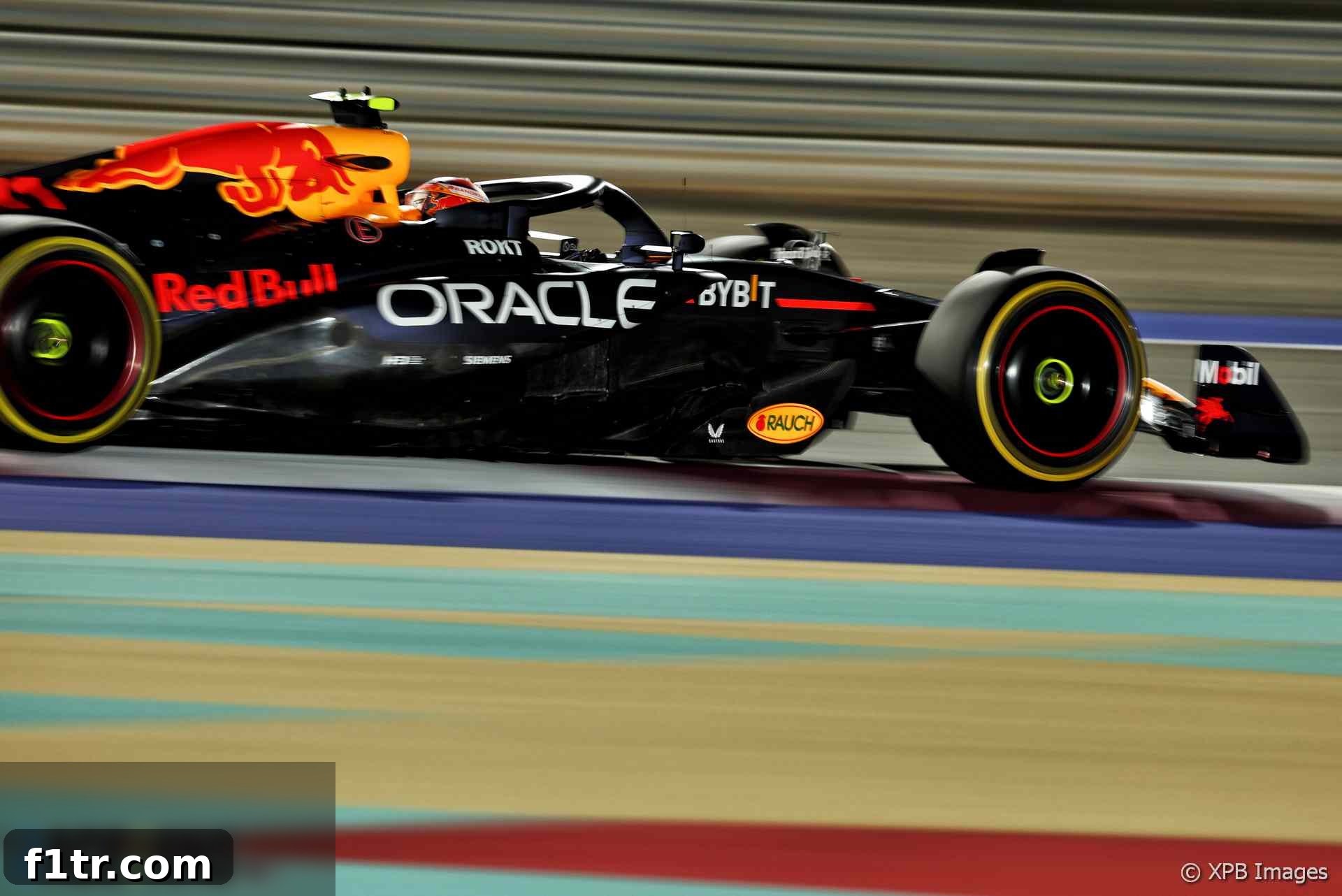
F1 Slow Driving Scrutiny: Sergio Perez and Yuki Tsunoda Under Investigation After Sprint Qualifying
The intensity of Formula 1 sprint race qualifying often pushes drivers to their limits, not just in terms of raw pace, but also in managing track position and strict adherence to sporting regulations. Following a busy session that saw a remarkable 40 potential incidents involving 17 drivers, the spotlight has fallen sharply on two competitors: Sergio Perez of Red Bull Racing and Yuki Tsunoda from the RB F1 Team. Both drivers find themselves under individual investigation by the stewards for allegedly driving too slowly during critical moments of the session, an infraction that carries significant weight in the high-stakes world of Formula 1.
The investigations stem from the F1 rulebook’s often-debated minimum time regulation between Safety Car lines. This particular rule is designed to prevent drivers from deliberately slowing down excessively on out-laps or cool-down laps, which can create dangerous traffic jams and impede the flying laps of other competitors. While a staggering 38 of the initial 40 noted incidents were ultimately cleared without penalty, including one each for Perez and Tsunoda, specific circumstances surrounding separate instances have prompted the stewards to summon both drivers for further questioning. This detailed scrutiny underscores the FIA’s commitment to maintaining safety and fair play, even as teams and drivers navigate the complex dynamics of qualifying sessions.
Advert | Become a Supporter & go ad-free
Understanding the Minimum Time Rule in F1 Qualifying
The regulation governing minimum lap times between designated Safety Car lines has been a crucial addition to Formula 1’s sporting regulations, particularly since its widespread enforcement in the second half of last season. Its primary objective is straightforward: enhance safety and ensure competitive fairness during qualifying sessions, where drivers are constantly jockeying for optimal track position to achieve their fastest lap times. The rule stipulates that drivers must not take more than 100 seconds to traverse the section of the track between the second Safety Car line, typically located at the pit lane exit, and the first Safety Car line, found at the pit lane entrance.
This 100-second threshold is meticulously monitored by race control. Breaching it can indicate a driver is intentionally driving too slowly to create a gap, manage tire temperatures, or simply avoid traffic, potentially putting themselves and others at risk. While managing these variables is a legitimate part of qualifying strategy, doing so at an excessively reduced pace contravenes the spirit and letter of the regulation. The stewards’ consistent monitoring and the sheer volume of incidents noted in this session highlight the ongoing challenge drivers face in adhering to this rule amidst the chaos and pressure of a timed session, especially in the condensed format of sprint qualifying.
The Widespread Scrutiny: 40 Incidents, 17 Drivers
The recent sprint qualifying session presented an unprecedented level of scrutiny regarding slow driving, with race stewards identifying a staggering 40 potential breaches of the minimum time rule. This extensive review encompassed nearly every driver on the grid, with only Fernando Alonso, Esteban Ocon, and Nico Hulkenberg managing to avoid being flagged for exceeding the maximum time between the two Safety Car lines. The sheer scale of these observations underscores a persistent dilemma in modern Formula 1: how drivers can effectively manage traffic and prepare for flying laps without inadvertently falling foul of safety regulations designed to keep the track flowing.
In the vast majority of these cases – 38 out of 40 – the stewards ultimately ruled that no penalty should be applied. Their decisions were often based on a discretionary clause within the regulations, acknowledging that “the drivers took appropriate actions to not impede other drivers, and where required slowed down significantly to allow other drivers to pass while giving those drivers a clear track.” This rationale reflects the complex reality faced by drivers: they must slow down at times to avoid impeding faster cars or to gain clear track for their own flying laps. The challenge lies in doing so without exceeding the 100-second limit and without creating a dangerous situation. It’s a delicate balance that often leads to drivers being noted but then cleared, as was the case for many in this session, including one instance each for both Sergio Perez and Yuki Tsunoda.
The Specific Cases: Perez and Tsunoda Under the Microscope
Despite being cleared for one instance of a minimum time breach, Sergio Perez and Yuki Tsunoda now face further investigation for separate, more problematic incidents. For Perez, the stewards’ focus is on his slow lap immediately preceding his final attempt to set a qualifying time. This particular lap, before his ultimate flying effort, spanned an extended 144 seconds – considerably exceeding the 100-second limit and notably marking it as the slowest such lap recorded by any driver during the entire session. Adding to the complexity of this incident, Perez encountered Charles Leclerc on track during this period, raising questions about potential impeding or misjudgement of track dynamics.
Yuki Tsunoda’s situation, while distinct in its timing, mirrors Perez’s in its seriousness. Both drivers were formally cleared of exceeding the time limit at specific timestamps (20:37:15 for Perez and 20:41:46 for Tsunoda), indicating their actions in those moments were deemed acceptable. However, the current investigations pertain to separate incidents that occurred at 20:41 for Perez and 20:38 for Tsunoda. These specific timings suggest particular moments where the stewards believe the drivers’ actions went beyond the permissible boundaries, potentially constituting an undue breach of the minimum time rule. The distinction between cleared incidents and those under ongoing investigation highlights the nuanced nature of these regulations and the stewards’ detailed approach to enforcement.
The Investigation Process and Potential Consequences
With both Sergio Perez and Yuki Tsunoda officially summoned to meet with the stewards on Saturday, just before the sprint race, the outcome of these investigations hangs heavy over their respective teams. The process typically involves drivers and team representatives presenting their explanations and any relevant telemetry data to the stewards, who then weigh the evidence against the sporting regulations. This face-to-face meeting is crucial, allowing drivers to articulate the challenges they faced on track – whether it was managing traffic, tire temperatures, or simply misjudging the timing.
The potential consequences for breaching the minimum time rule can vary widely, ranging from a reprimand to more significant penalties. Historically, such infractions have led to grid penalties for subsequent sessions, including the main Grand Prix. For instance, a common penalty for impeding or driving too slowly is a three-place grid drop. In more severe cases, or for repeat offenders, larger grid penalties or even financial fines can be imposed. For drivers like Perez, who are often in contention for crucial championship points, any penalty could severely impact their weekend performance and broader season objectives. Similarly, for Tsunoda and the RB F1 Team, a penalty could disrupt their efforts to secure valuable points in the midfield battle. The stewards’ decision will not only impact these two drivers but will also send a clear message regarding the strict enforcement of safety and fairness regulations across the Formula 1 grid.
The Delicate Balance: Driver Challenges in Qualifying
The F1 minimum time rule, while crucial for safety, introduces a complex layer of strategy and risk for drivers during high-pressure qualifying sessions. The inherent challenge lies in balancing the need to create clear track space for a critical flying lap with the imperative to stay above the minimum time threshold on out-laps and cool-down laps. Drivers are constantly managing tire temperatures – needing to keep them warm for optimal grip on a flying lap but cooling them down efficiently on slow laps to prevent overheating.
This delicate dance is further complicated by track layout, traffic density, and team instructions. On some circuits, finding a significant gap without falling below the 100-second limit can be exceptionally difficult, especially with 20 cars on track during condensed qualifying segments. Drivers might slow down momentarily to avoid getting caught in the turbulent air of the car ahead, known as ‘dirty air,’ which can severely compromise their aerodynamic performance. However, pushing this slowing too far risks the wrath of the stewards. The fine line between strategic maneuvering and a clear breach of regulations is what makes these investigations so frequent and often hotly debated, reflecting the immense pressure and split-second decisions F1 drivers must make in every session.
Drivers Noted for Driving Unnecessarily Slowly (Sprint Qualifying)
| Car | Driver | Team | Cleared | Under Investigation |
|---|---|---|---|---|
| 1 | Max Verstappen | Red Bull | 3 | 0 |
| 4 | Lando Norris | McLaren | 1 | 0 |
| 10 | Pierre Gasly | Alpine | 2 | 0 |
| 11 | Sergio Perez | Red Bull | 1 | 1 |
| 16 | Charles Leclerc | Ferrari | 2 | 0 |
| 18 | Lance Stroll | Aston Martin | 3 | 0 |
| 20 | Kevin Magnussen | Haas | 2 | 0 |
| 22 | Yuki Tsunoda | RB | 1 | 1 |
| 23 | Alexander Albon | Williams | 4 | 0 |
| 24 | Zhou Guanyu | Sauber | 1 | 0 |
| 30 | Liam Lawson | RB | 4 | 0 |
| 43 | Franco Colapinto | Williams | 2 | 0 |
| 44 | Lewis Hamilton | Mercedes | 3 | 0 |
| 55 | Carlos Sainz Jnr | Ferrari | 1 | 0 |
| 63 | George Russell | Mercedes | 3 | 0 |
| 77 | Valtteri Bottas | Sauber | 2 | 0 |
| 81 | Oscar Piastri | McLaren | 3 | 0 |
Advert | Become a RaceFans supporter andgo ad-free
Conclusion: Awaiting the Stewards’ Verdict
The investigations into Sergio Perez and Yuki Tsunoda for allegedly driving too slowly underscore the continuous efforts by Formula 1’s governing body to ensure both driver safety and sporting integrity. While the minimum time rule is a necessary measure to prevent dangerous track conditions and unfair advantages during qualifying, its application often involves nuanced interpretations of driver intent and on-track circumstances. The widespread nature of the initial warnings, followed by the specific focus on Perez and Tsunoda, demonstrates the stewards’ thoroughness in dissecting each incident.
As the F1 community eagerly awaits the outcome of Saturday’s hearings, the decisions made will inevitably have immediate consequences for both drivers’ sprint race and potentially their Grand Prix starting positions. Beyond the individual impact, these rulings will also contribute to the ongoing evolution of F1’s sporting regulations, further defining the boundaries within which drivers can strategize during critical qualifying sessions. It serves as a potent reminder that in Formula 1, every second – whether too fast or too slow – can have profound implications.
2024 Qatar Grand Prix: Latest Updates
Stay informed with the latest developments and insights from the 2024 Qatar Grand Prix:
- Horner ‘believes 100%’ Verstappen did not threaten to crash into Russell
- Russell and Verstappen cast new light on clash which triggered explosive row
- Hamilton’s puncture not caused by mirror debris – Mercedes
- Another start-to-finish win shows Qatar GP could be F1’s most processional race
- “Am I dead last now?” Unheard radio from Hamilton’s disastrous Qatar GP
Browse all 2024 Qatar Grand Prix articles