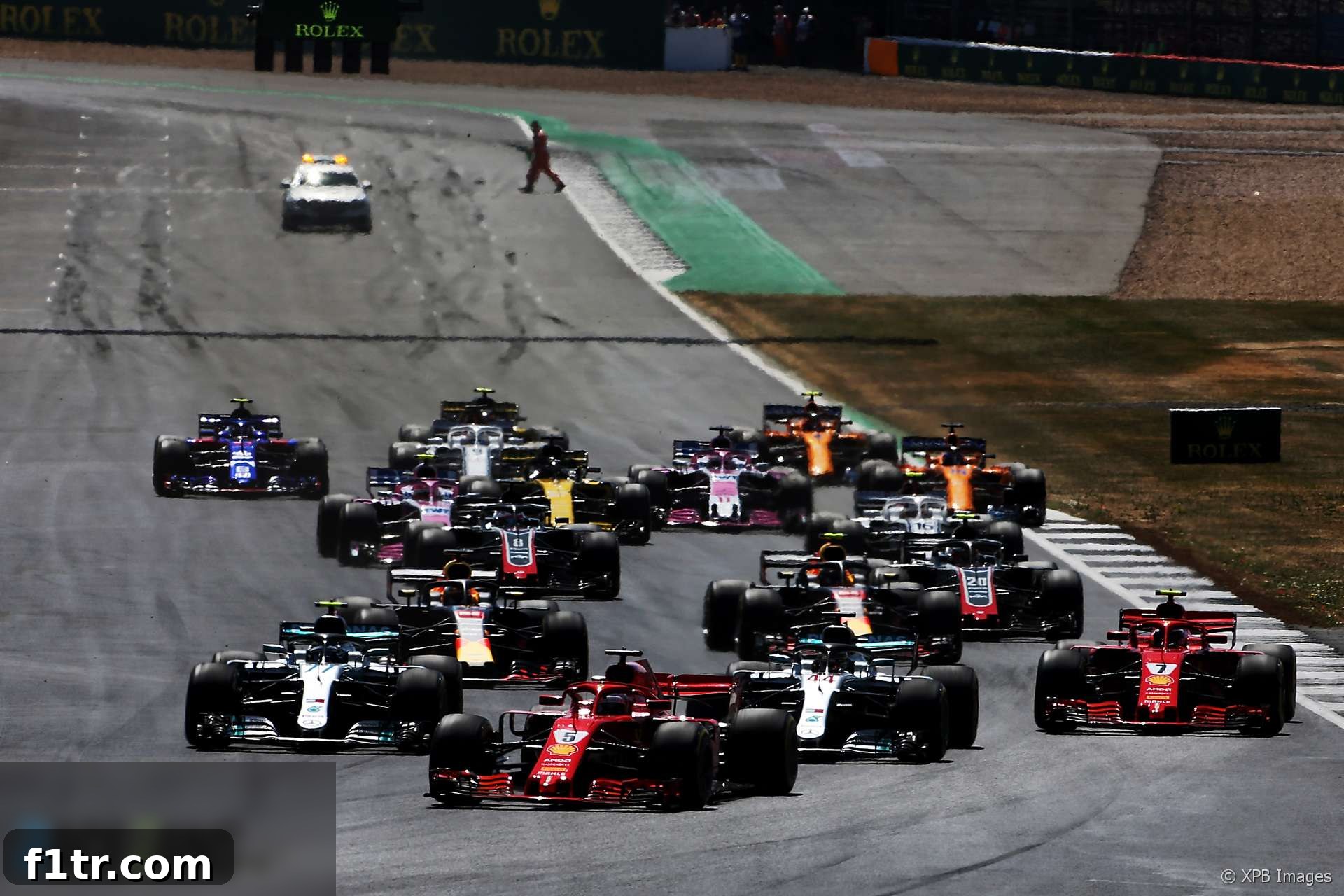
The hallowed grounds of Silverstone, long considered the spiritual home of Formula 1, currently face an uncertain future. Despite optimistic reports just a couple of months ago hinting at an imminent deal, the fate of the British Grand Prix on the F1 calendar remains delicately balanced. This precarious situation casts a shadow over one of the sport’s most iconic races, raising significant questions about F1’s commitment to its heritage.
Advert | Become a Supporter & go ad-free
Silverstone’s Battle for Survival: Negotiations Under the Spotlight
The British Racing Drivers Club (BRDC), the esteemed organization responsible for operating the Silverstone circuit and staging the Grand Prix, has been locked in complex negotiations with Formula 1 Management, now under the stewardship of Liberty Media. John Grant, the chairman of the BRDC, recently communicated with members to provide an update on the ongoing discussions. His message underscored the gravity of the situation, confirming that while talks are “constructive,” no definitive agreement has yet been signed between the race promoters and F1’s commercial rights holders.
The current contract for the British Grand Prix is set to expire after the race on July 14th. The BRDC proactively activated an exit clause within their contract to facilitate the negotiation of new, more sustainable terms following this year’s highly anticipated event. This move was not made lightly, reflecting years of financial strain stemming from the increasingly exorbitant hosting fees demanded by previous F1 regimes. The BRDC has consistently argued that the current terms make hosting the Grand Prix an unsustainable venture, threatening the long-term viability of the circuit and the race itself.
The Global Calendar Crunch: New Races vs. Historic Venues
The complexity of these negotiations is further compounded by the evolving landscape of the 2020 F1 calendar. Liberty Media, with its strategic vision for global expansion, has successfully introduced new races in lucrative markets, notably Vietnam and the Netherlands. While these additions promise fresh revenue streams and broader appeal for the sport, they simultaneously intensify the pressure on the limited number of available slots on the F1 schedule. With a self-imposed cap on the total number of races to maintain quality and logistical feasibility, every new entry places existing venues under heightened scrutiny.
Silverstone is far from alone in this predicament. It is one of five historic circuits on this year’s schedule whose contracts are set to conclude at the end of 2019. The future of races at the Circuit de Catalunya (Spanish Grand Prix), Hockenheimring (German Grand Prix), Monza (Italian Grand Prix), and Autodromo Hermanos Rodriguez (Mexican Grand Prix) also hangs in the balance. This collective uncertainty highlights a broader trend in Formula 1, where the economic realities of hosting a Grand Prix often clash with the nostalgic value and deep-rooted history of traditional European venues.
However, there has been a glimmer of hope for some. Reports indicate that the Italian Grand Prix promoters are understood to have agreed terms to keep their race on the calendar. This potential breakthrough for Monza, another cornerstone of F1’s heritage, offers a precedent and perhaps a template for how Silverstone’s situation might be resolved. It also underscores the notion that even in a commercially driven sport, the historical significance of certain races still holds considerable weight.
The Enduring Legacy of Silverstone in Formula 1
Silverstone’s importance to Formula 1 transcends mere contractual agreements. It was here, in 1950, that the very first Formula 1 World Championship race took place, forever etching its name into the annals of motorsport history. The circuit has been a continuous fixture on the calendar, bearing witness to countless legendary battles, championship deciders, and technological advancements. Its fast, flowing corners – Copse, Maggotts, Becketts, Chapel – are revered by drivers and fans alike, demanding precision, bravery, and absolute commitment.
For British motorsport, Silverstone is more than just a race track; it is a national institution, a hub of engineering excellence, and the heart of the “Motorsport Valley” where many F1 teams are based. The potential loss of the British Grand Prix from its traditional home would not only be a blow to British fans but would also sever a vital link to the sport’s foundational narrative. The economic impact on the local region, from tourism to hospitality and ancillary services, is substantial, making the race a critical contributor to the regional economy.
Liberty Media’s Vision vs. F1’s Roots
Liberty Media’s acquisition of Formula 1 heralded a new era, promising greater fan engagement, digital innovation, and expansion into key global markets. While their efforts to modernize and grow the sport are commendable, the ongoing negotiations with Silverstone highlight a fundamental tension between commercial ambition and the preservation of F1’s rich heritage. The BRDC’s predicament is a microcosm of a larger philosophical debate within F1: should the sport prioritize new, lucrative venues over historic, fan-favourite tracks that may struggle to meet escalating financial demands?
The financial model of Formula 1 heavily relies on substantial hosting fees paid by circuits. For many traditional European tracks, which often lack significant government backing enjoyed by newer venues in the Middle East or Asia, these fees become increasingly difficult to justify. The BRDC has been vocal about the need for a more equitable financial arrangement, one that recognizes the unique value and history that Silverstone brings to the F1 calendar, rather than treating it merely as another interchangeable venue.
Fans worldwide, particularly those deeply invested in F1’s history, are watching these developments with bated breath. The British Grand Prix, along with the Italian Grand Prix at Monza, represents the very soul of Formula 1. Its potential absence from the calendar would undoubtedly be felt across the globe, diminishing the championship’s connection to its past. A resolution that secures Silverstone’s place would not only be a victory for British motorsport but also a powerful statement that F1 values its roots alongside its aspirations for global growth.
As the July 14th deadline approaches, the pressure mounts on both sides to reach a mutually beneficial agreement. The “constructive” nature of the talks offers a glimmer of hope, suggesting that a compromise might still be within reach. For the sake of tradition, fans, and the very identity of Formula 1, all eyes remain on Silverstone, hoping that its engine will continue to roar for many more seasons to come.
Don’t miss anything new from RaceFans
Follow RaceFans on social media:
- Join RaceFans on Facebook
- Follow RaceFans on Twitter
- Get daily email updates from RaceFans
Advert | Become a RaceFans supporter andgo ad-free
2020 F1 season
- Grosjean to make F1 test return tomorrow for first time since Bahrain horror crash
- Pictures: Wrecked chassis from Grosjean’s Bahrain fireball crash to go on display
- Bottas vs Rosberg: Hamilton’s Mercedes team mates compared after 78 races each
- F1 revenues fell by $877 million in Covid-struck 2020 season
- Hamilton and Mercedes finally announce new deal for 2021 season
Browse all 2020 F1 season articles