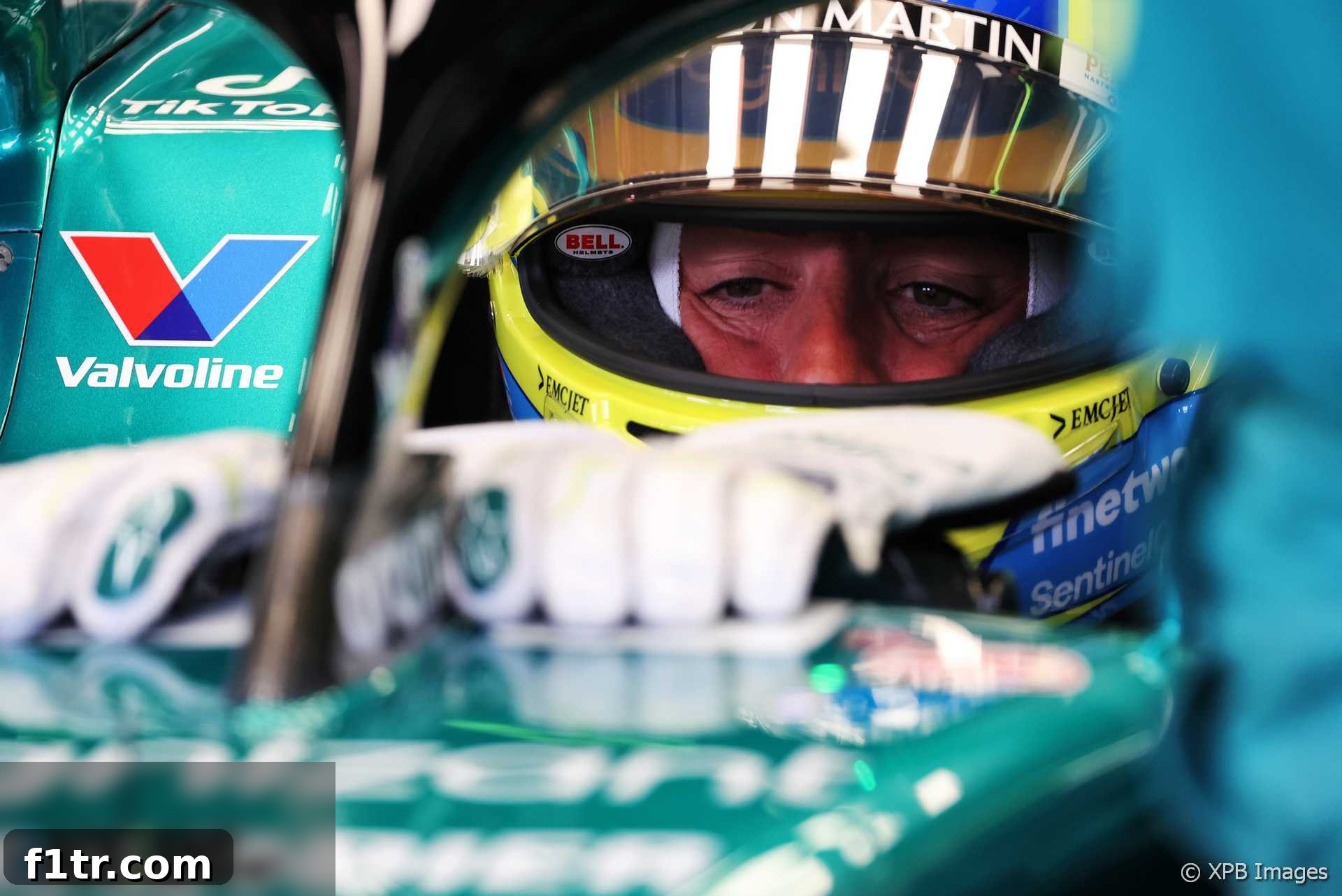
In the high-stakes world of Formula 1, every subtle change can have profound ripple effects across the grid. Veteran driver Fernando Alonso of Aston Martin recently voiced his concerns that the introduction of new tyre compounds might be impacting his team’s performance, alongside that of the dominant Red Bull Racing. This assessment comes as Aston Martin, a standout performer early in the season, grapples with a perceived dip in competitiveness and the relentless pace of development from their rivals.
The New Tyres: A Mid-Season Curveball
The latest specification of tyres, supplied by Pirelli, made its debut at the British Grand Prix and was subsequently used at the Hungarian Grand Prix. This mid-season change wasn’t arbitrary; it was a response to escalating performance levels in Formula 1. Approved by the FIA after the initial five races of the season, the new compounds were introduced primarily for safety reasons. The rapid advancements in car performance during the second year of F1’s current technical regulations had led to significantly increased downforce and cornering speeds, placing unprecedented stress on the tyres. Pirelli, working with the FIA, deemed a more robust tyre construction necessary to mitigate potential risks and ensure driver safety at increasingly high-load circuits.
While the safety aspect is paramount, any alteration to a car’s primary contact patch with the track inevitably influences performance. Tyre characteristics such as grip levels, degradation rates, and thermal management are finely integrated into a car’s aerodynamic and suspension setup. A change, even a seemingly minor one, can disrupt this delicate balance, forcing teams to re-optimise their entire package. Alonso’s hypothesis suggests that some teams, including Aston Martin and Red Bull, may have found it harder to adapt to these new characteristics compared to their competitors.
Aston Martin’s Development Conundrum
Alonso’s observations extend beyond the tyres, acknowledging that Aston Martin’s rivals have demonstrated a quicker rate of development. “We didn’t improve the car much,” he stated after qualifying at the Hungaroring. This candid admission highlights a critical aspect of modern Formula 1: the continuous “development race.” Teams constantly introduce upgrades – from aero elements to floor designs and suspension tweaks – striving to extract every fraction of a second from their machines. The FIA’s requirement for teams to publish their upgrade documents ensures transparency, allowing competitors to gauge each other’s progress. Alonso noted, “You see the upgrades from everyone on Thursday when they have to publish the FIA documents and we see for 12 rounds now what we brought to the circuit and what the main rivals they brought obviously it’s a bit different there.”
The AMR23, Aston Martin’s 2023 challenger, started the season as a pleasant surprise, consistently challenging the front-runners and often securing podium finishes. However, as the season progresses, other teams, particularly Mercedes and McLaren, have made significant strides, bringing substantial upgrade packages that have visibly improved their lap times. McLaren’s dramatic resurgence, for instance, has seen them leapfrog several teams, posing a new threat to Aston Martin’s position. This dynamic underscores the intense competition in F1’s midfield and front-midfield, where a few tenths of a second can separate multiple teams.
For Aston Martin, the challenge now lies in accelerating their development cycle. “So we need to speed up, we know, as a team also in many different areas one would be the rate of development into next year’s project,” Alonso emphasized. This suggests a dual focus: both on improving the current car for the remainder of the season and, critically, on laying stronger foundations for the 2024 challenger. The budget cap, introduced to level the playing field, adds another layer of complexity, requiring teams to be incredibly efficient and strategic in how they allocate their resources for development.
Alonso’s Hungarian Grand Prix Qualification: A Story of Fine Margins
At the Hungaroring, Alonso qualified eighth on the grid, a mere 0.426 seconds off Lewis Hamilton’s pole position time. While P8 might seem a step down from Aston Martin’s earlier season heroics, the margins in modern F1 are incredibly tight. Alonso’s race engineer, Chris Cronin, highlighted this, informing the Spaniard that he was little more than a tenth of a second away from qualifying four places higher, which would have placed him on the coveted second row of the grid. This illustrates the razor-thin differences that define success and struggle in a qualifying session.
Despite the P8 result, Alonso expressed satisfaction with his performance, stating, “I’m quite happy with the performance of the car today, the car felt good in qualifying. It was fun to drive and I think we were four tenths from pole position, which is more or less the average of the season.” His ability to extract the maximum from the car, even when it might not be at its absolute peak, is a testament to his legendary skill and experience. However, the tight field means that “everything is so close. With four tenths instead of being P4 or something like that you are P8. So that was the tricky thing but nothing we can do now. Let’s see if tomorrow we can be close on pace.”
The Hungaroring, with its twisty, high-downforce layout, often exposes a car’s inherent balance and aerodynamic efficiency. It’s a track where a stable rear end and good mechanical grip are crucial. If the new tyres have altered the car’s balance or reduced its optimal operating window, it would be particularly noticeable at a circuit like this, where precise handling is paramount for fast lap times.
Tyre Impact: Aston Martin and Red Bull as “Casualties”?
Alonso’s theory about the new tyres extends to the championship leaders, Red Bull Racing. “Also the tyres, I don’t think that it was a fair thing in Silverstone to introduce a new tyre,” he declared. “I think for Red Bull and Aston Martin it seems that Silverstone and Hungary were not our best circuits. We could be a casualty. We’ll see in the next races.”
Red Bull has been in a league of their own, winning every single race before the Hungarian Grand Prix. While Max Verstappen still secured pole and the race win in Hungary, his margin of victory in qualifying was notably smaller than usual, and the competition seemed to close in slightly. This could lend credence to Alonso’s suggestion that even the dominant Red Bull might not be entirely immune to the subtle shifts brought about by the new tyre construction. Both Aston Martin and Red Bull started the season with cars that generated significant downforce, particularly from their floors. It’s plausible that their highly optimized aerodynamic concepts were finely tuned for the original tyre specification, and the stiffer, more robust construction of the new tyres might alter the interaction between the car’s aerodynamics and the tyre’s deflection, leading to a slight reduction in peak performance or a narrower operating window.
The impact of tyres on car performance is multifaceted. Stronger sidewalls, for instance, can change how the tyre deforms under load, which directly affects the aerodynamic platform of the car. If a team’s aero package relies on a specific tyre deformation characteristic, a change can force them to re-evaluate and potentially redesign parts of their car. This is a complex engineering challenge that can take time and resources to address effectively.
Looking Ahead: Validation in Upcoming Races
Alonso’s concluding remark, “We’ll see in the next races,” places the onus on future events to either validate or disprove his theory. Circuits like Spa-Francorchamps and Monza, known for their high speeds and different aerodynamic demands, will provide fresh testing grounds for teams to understand the full implications of the new tyres. If Aston Martin and Red Bull continue to experience a relative dip in performance compared to their earlier season form, especially against the backdrop of other teams’ continued development, it would strengthen Alonso’s argument.
The ongoing battle in Formula 1 is not just about raw speed but also about adaptability. Teams that can quickly understand and exploit new regulations, design philosophies, or component changes are often the ones that rise to the top. Aston Martin faces a significant test of their engineering prowess and development capabilities in the latter half of the season. Their ability to respond to the twin challenges of rival development and potentially disadvantageous tyre changes will define their ultimate standing in the constructors’ championship.
2023 Hungarian Grand Prix Insights
- Was F1’s Alternative Tyre Allocation test successful? Drivers and teams have their say
- How far can McLaren climb with car rivals now say is the second-fastest in F1?
- Why Ricciardo says McLaren’s car “speaks Lando’s language” – but Norris disagrees
- Mercedes reveal cooling error behind loss of pace in Hungarian GP
- Perez answered critics in Hungary but needs to qualify better – Horner
Browse all 2023 Hungarian Grand Prix articles