FIA Initiates In-Depth Investigation into Romain Grosjean’s Bahrain Grand Prix Crash
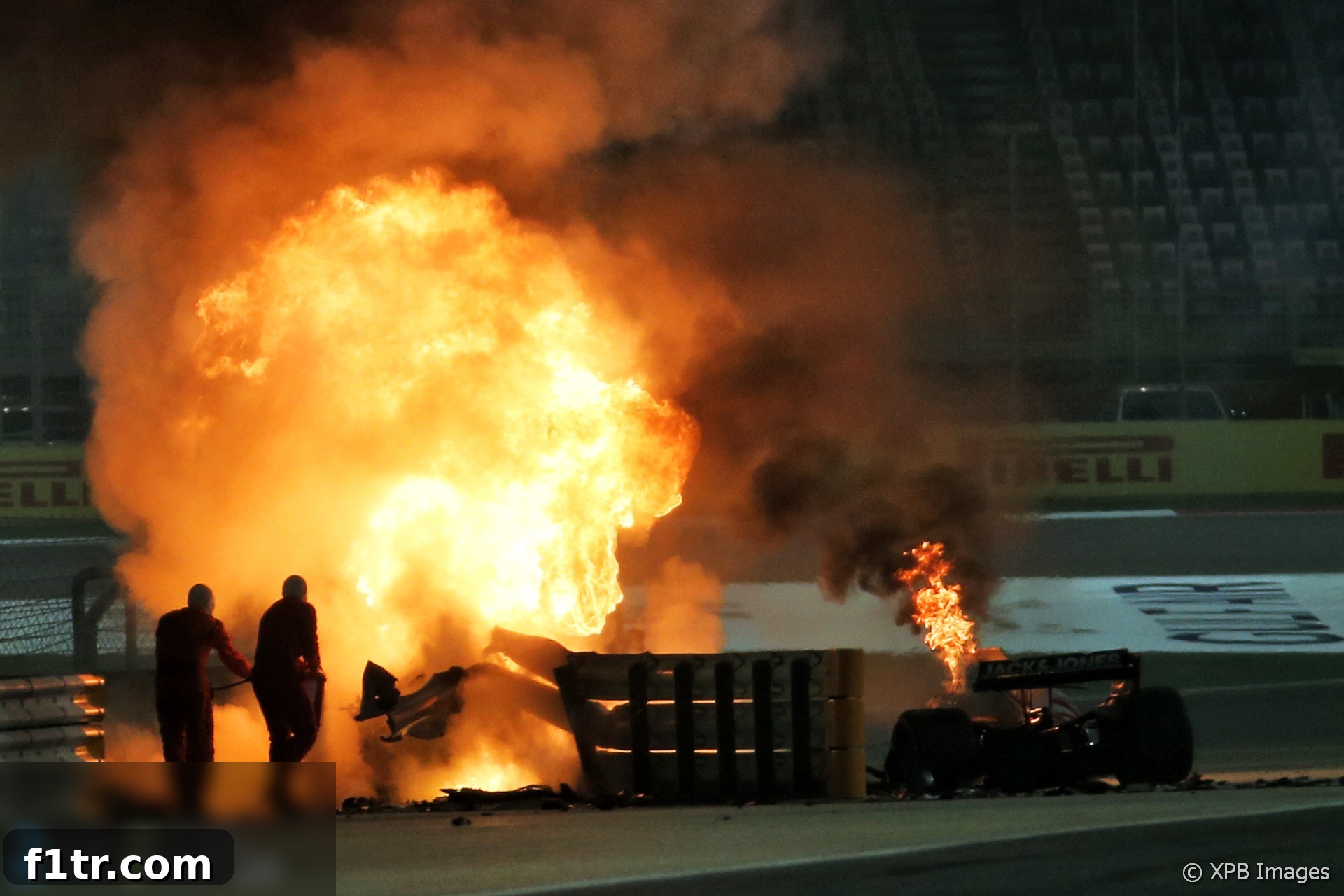
The Fédération Internationale de l’Automobile (FIA) has officially commenced its exhaustive investigation into the horrific, fiery crash involving Romain Grosjean on the opening lap of the Bahrain Grand Prix. This critical probe aims to meticulously understand every facet of the incident, which saw the Haas driver escape a harrowing 53G impact and subsequent inferno, highlighting both the inherent dangers of motorsport and the remarkable advancements in Formula 1 safety.
The sport’s governing body has indicated a commitment to transparency, expecting to release detailed findings of its investigation within a timeframe of “six to eight weeks.” This period underscores the complexity and depth required for such an analysis, involving vast amounts of data and expert consultation across various disciplines.
Unpacking the 53G Impact: The Scope of the FIA’s Safety Scrutiny
Adam Baker, the FIA’s dedicated Safety Director, emphasized the comprehensive nature of the upcoming investigation. He stated that the process would meticulously scrutinize all available data, encompassing everything that occurred both leading up to and immediately following Grosjean’s astonishing 53G impact with the barrier. This level of detail is paramount to identifying precise causes and potential areas for future improvements.
“As is standard procedure with all serious accidents in motorsport, we will conduct a thorough analysis of every aspect of this crash, collaborating closely with all relevant parties involved,” Baker explained. “The sheer volume of data available within Formula 1 today empowers us to accurately pinpoint every single element that contributed to or was affected by the incident. This critical work has already begun.”
Baker further reiterated the gravity with which the FIA approaches such research: “We regard this investigation with utmost seriousness and will adhere to a rigorous, methodical process to uncover exactly what transpired. Only then can we effectively propose and implement potential safety enhancements.” The objective is not merely to understand what happened, but to leverage that understanding to prevent similar incidents and continually elevate safety standards across the sport.
The Role of Safety Devices: Guardians in a Fireball
A central pillar of the investigation will be an intensive examination of every safety device designed to protect the driver. These crucial components collectively played an indispensable role in Grosjean’s miraculous survival from both the initial high-energy impact and the engulfing fire that ensued. Among the items under close scrutiny are:
- His Helmet: A critical piece of personal protective equipment, its integrity and performance during the fire will be rigorously assessed.
- HANS (Head and Neck Support) Device: Designed to limit head and neck movement during a crash, preventing severe injuries.
- Safety Belts: The multi-point harness system that secures the driver within the cockpit.
- Fire-Retardant Clothing: The race suit, underwear, gloves, and boots, which provided vital protection against the flames.
Beyond personal gear, the structural integrity and operational effectiveness of the car’s inherent safety features will also be meticulously studied:
- The Car’s Survival Cell: The robust carbon fibre monocoque designed to protect the driver’s core, which impressively separated from the rear of the car but maintained its integrity around Grosjean.
- Headrest: Integrated within the survival cell, offering crucial support and impact absorption.
- Onboard Fire Extinguisher System: Its activation and effectiveness in controlling the initial blaze.
- The Halo Device: The controversial yet now universally praised cockpit protection system, which many credit with saving Grosjean’s life by deflecting the barrier away from his head.
Indeed, several prominent figures within Formula 1, including Grosjean himself and Formula 1 Motorsport Director Ross Brawn, were quick to highlight the exceptional performance of the Halo device. This once-debated safety innovation, introduced just a few seasons prior, demonstrated its critical value by preventing the barrier from directly impacting the driver’s head, proving to be a true game-changer in motorsport safety.
Barrier Integrity and Track Safety Standards
The investigation will also extensively analyze the role played by the track barrier in the incident. A significant concern raised by several drivers and safety experts is how Grosjean’s car was able to split the steel girders of the Armco barrier, becoming precariously lodged within it. This raises important questions about barrier design, installation, and the materials used at specific sections of race tracks, prompting a review of how such impacts are absorbed and deflected.
The analysis will extend to the broader behavior of Grosjean’s car and its inherent safety structures during the crash sequence. This includes examining how various components failed, absorbed energy, or maintained integrity under extreme stress. Furthermore, the effectiveness and speed of the safety team and marshals’ response will be thoroughly assessed. Their immediate actions, rapid deployment of the medical car, and swift efforts to extinguish the fire were instrumental in the positive outcome.
Data-Driven Insights: Advanced Technologies in Accident Reconstruction
Beyond the extensive publicly available footage of the crash, the FIA’s Serious Accident Study Group will draw upon a wealth of sophisticated data sources to inform its investigation. These advanced technological tools provide granular detail far beyond what casual observation can offer:
- High-Speed Driver-Facing Camera: This specialized camera captures footage at an incredible 400 frames per second, offering an unprecedented, slow-motion view of the driver’s movements, interactions with the cockpit, and the forces experienced during impact.
- In-Car Accident Data Recorder (ADR): Similar to an aircraft’s black box, the ADR logs critical vehicle data such as speed, G-forces in multiple axes, steering angle, throttle and brake inputs, and various system statuses in the moments leading up to and during the crash.
- Grosjean’s In-Ear Accelerometer: This discreet device, worn by the driver, provides direct measurements of the forces his head experienced during the impact, offering invaluable biological data on potential injury mechanisms.
These combined data sets allow investigators to construct a highly accurate and detailed timeline of events, providing scientific evidence to support conclusions and inform recommendations for future safety protocols and equipment design. The fusion of visual evidence with precise telemetry and biomechanical data creates a robust foundation for a truly comprehensive understanding of the crash dynamics.
Continuous Pursuit of Safety: The Legacy of Bahrain 2020
Romain Grosjean’s crash serves as a stark reminder of the ever-present risks in elite motorsport but also as a powerful testament to the relentless pursuit of safety by the FIA and Formula 1. Each serious incident, though tragic or terrifying, becomes a crucible for learning and improvement. The findings from this investigation will undoubtedly influence future regulations concerning car design, track infrastructure, and emergency response protocols.
This commitment to safety is a defining characteristic of modern Formula 1, distinguishing it from earlier, more perilous eras. The sport’s ability to evolve, learn from its past, and embrace new technologies for driver protection ensures that while the spectacle remains thrilling, the risks are continuously mitigated to the highest possible degree. Grosjean’s incredible escape reinforces the idea that safety innovations, often met with initial skepticism, are ultimately essential for the longevity and integrity of the sport.
An in-depth analysis of how Grosjean survived his Bahrain crash will appear in this week’s edition of the RacingLines column, which will be published later today on RaceFans.
Related 2020 F1 Season Articles
- Grosjean to make F1 test return tomorrow for first time since Bahrain horror crash
- Pictures: Wrecked chassis from Grosjean’s Bahrain fireball crash to go on display
- Bottas vs Rosberg: Hamilton’s Mercedes team mates compared after 78 races each
- F1 revenues fell by $877 million in Covid-struck 2020 season
- Hamilton and Mercedes finally announce new deal for 2021 season
Browse all 2020 F1 season articles