As the Formula 1 circus rolls into Hungary for the 11th round of the 2021 season, the air at the Hungaroring is thick with anticipation and lingering tension. The dramatic and highly controversial British Grand Prix at Silverstone has set the stage for what promises to be an electrifying Hungarian Grand Prix, with championship dynamics, driver market movements, and crucial team battles all vying for attention. The recriminations and fallout from the previous race are far from over, ensuring that every on-track skirmish and off-track statement will be scrutinized. Here are the pivotal talking points that will define the narrative heading into this high-stakes weekend.
Silverstone Fallout: A Championship Battle Intensifies
The collision between championship rivals Max Verstappen and Lewis Hamilton at Silverstone was not just a race incident; it was a flashpoint that ignited an intense war of words and strategic maneuvers between their respective teams, Red Bull and Mercedes. The high-speed impact at Copse corner sent Verstappen crashing out of the race, while Hamilton, despite receiving a 10-second penalty, dramatically recovered to claim victory on home soil. This outcome has fuelled an ongoing spat that adds a captivating layer of drama to the championship chase.
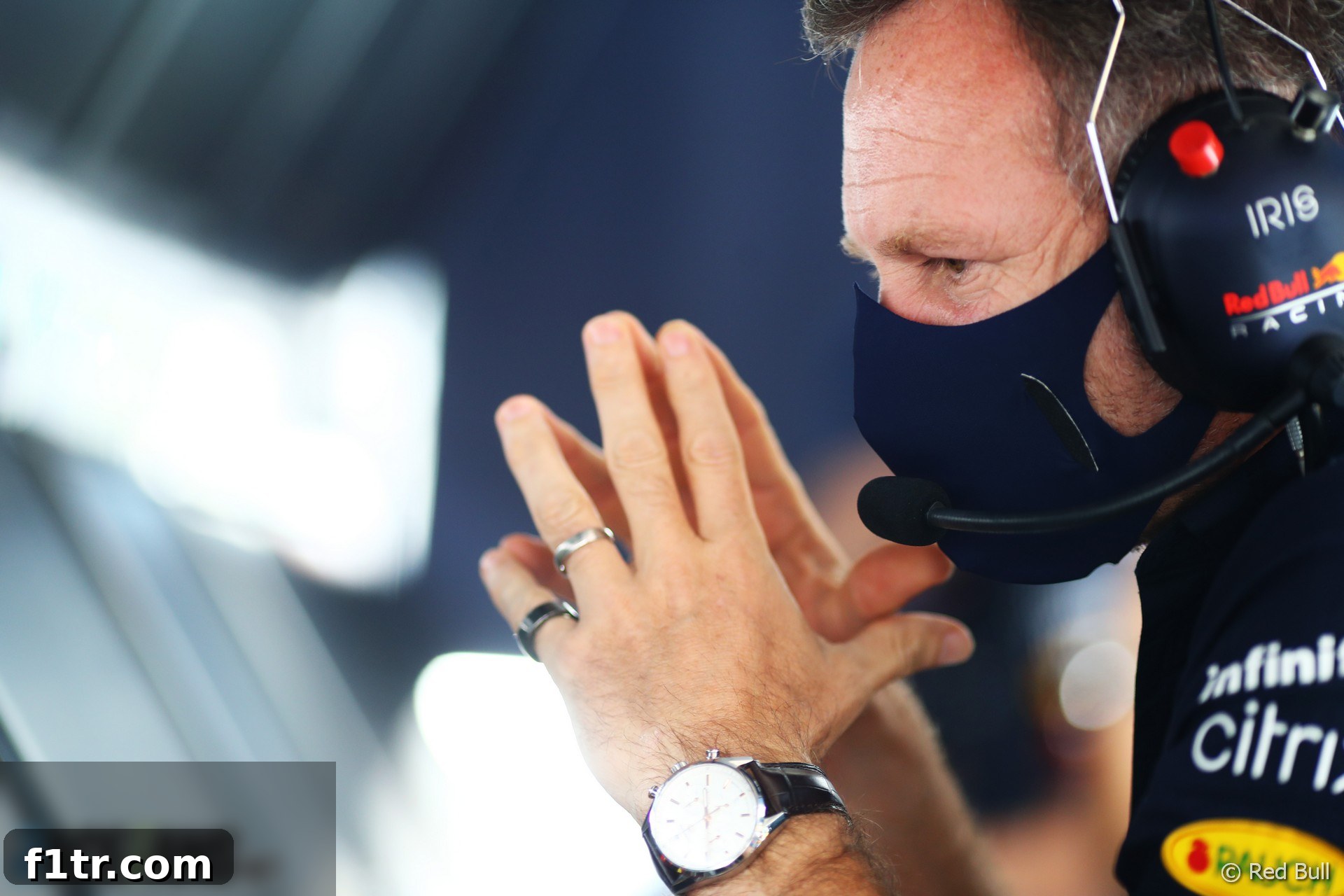
Mercedes’ chief technical director, James Allison, vehemently defended Hamilton’s actions, arguing that the penalty was excessively harsh, especially given that Hamilton’s overtaking attempt was “in line with the FIA’s overtaking guidelines.” Allison’s stance underscores Mercedes’ belief that Hamilton acted within the rules, even if the outcome was unfortunate. However, Red Bull team principal Christian Horner expressed palpable fury, lambasting the penalty as “menial” when weighed against the severe consequences for Verstappen – a hospital visit and a comprehensively damaged car. Horner emphasized the profound impact on Verstappen’s race and the team’s budget.
In a move that could potentially disrupt the championship further, Red Bull has indicated they might formally request the FIA to review Hamilton’s penalty. This strategic delay, holding off on the review request until the Hungarian Grand Prix weekend, could be designed to exert maximum pressure on Mercedes and its star driver. Such a move would undoubtedly reignite the controversy and draw even more attention to an already heated rivalry. The financial repercussions are also significant; Red Bull claims the crash cost them a staggering £1.3 million ($1.8 million) in repairs. This sum is a considerable chunk of their budget under the stringent 2021 cost cap, potentially impacting future development and upgrades. Beyond the financial hit, the cost to Verstappen’s championship lead is undeniably clear: his once commanding advantage has been slashed to a mere eight points, handing Hamilton a golden opportunity to overhaul him and seize control of the drivers’ title at the Hungaroring.
Power Unit Worries: Managing the Engine Mileage
As the 2021 Formula 1 season approaches its midpoint, an increasing number of drivers and teams are grappling with growing anxiety over their power unit allocations. With strict limits on the number of power unit components that can be used per season before incurring grid penalties, strategic management of engine mileage and reliability becomes paramount. Drivers are generally allowed only three of most components (Internal Combustion Engine, MGU-H, MGU-K, Turbocharger, Exhaust System) and two of others (Control Electronics, Energy Store) across the entire season.
Sergio Perez, Max Verstappen’s Red Bull teammate, is a notable example of a driver already feeling the pinch. Following his pit lane start at the British Grand Prix, Perez took on new control electronics and an energy store – both components limited to just two per season. This means he has effectively used up his allowance for these critical elements, placing him at risk of further penalties later in the year if reliability issues force additional changes. This situation also creates a strategic headache for Red Bull, potentially limiting Perez’s aggressive driving style or requiring more conservative engine modes in future races to preserve components.
Most drivers on the grid are now at or nearing their limits for several power unit elements, particularly the control electronics and energy store. Interestingly, only a select few – Max Verstappen, Fernando Alonso, Mick Schumacher, and Nicholas Latifi – have managed to use just one of each of these two components by the time of the Hungarian Grand Prix. For Verstappen, this remaining advantage over Lewis Hamilton (who has already used both of his allowed control electronics and energy stores) is particularly significant. It gives him more flexibility should a component fail, whereas Hamilton would immediately face a grid penalty for any further changes. The situation is further complicated by the fact that Perez now has an additional set of these components, which while providing fresh parts, also means he’s now past his allowance.
Other drivers are also on the precipice of penalties. Sebastian Vettel and Esteban Ocon both took their third (and final penalty-free) MGU-K, MGU-H, and turbochargers at Silverstone. Any further changes to these components will result in grid drops. Similarly, George Russell was already at his limit of three for his internal combustion engine, MGU-H, and turbocharger before the last event. The delicate balance between performance and durability, especially on demanding circuits like the Hungaroring, will be a major strategic consideration for all teams as they navigate the remaining races of the season.
New Contracts and the Looming Driver Market “Silly Season”
While some prominent names like Lewis Hamilton, Lando Norris, and Esteban Ocon have secured their long-term futures with new multi-year contracts this season, the futures of several other drivers remain shrouded in doubt, igniting the annual “silly season” speculation. The Hungarian Grand Prix often serves as a backdrop for significant announcements or further leaks about driver movements, adding another layer of intrigue to the weekend.
Alfa Romeo, for instance, has yet to confirm either of its current drivers for the upcoming 2022 season. Kimi Raikkonen, the veteran of the grid, has often hinted at retirement, and at 41, his future beyond this year is highly uncertain. His teammate, Antonio Giovinazzi, despite showing flashes of pace, hasn’t consistently delivered the results needed to cement his place. Both drivers face intense pressure from a strong contingent of Ferrari Driver Academy juniors ascending through the ranks of Formula 2. Talents like Callum Ilott, last year’s F2 runner-up, are still being given first practice sessions this year, signaling that they remain firmly in contention for an F1 seat.
Over at Haas, Mick Schumacher’s 2022 contract is reportedly still being ironed out with Ferrari, highlighting the complex relationship between the two teams. While Schumacher is likely safe if he’s content to remain in the backmarker team’s seat for another year, the negotiation process itself speaks volumes about the value Ferrari places on its young proteges. The stability of a second year would be invaluable for Schumacher’s development in Formula 1.
Perhaps the biggest name in the driver market rumors is Valtteri Bottas. With his contract at Mercedes expiring at the end of the season, and George Russell consistently impressing at Williams, Bottas has been heavily linked to a “soft landing” at Alfa Romeo should he lose his coveted Mercedes drive. Mercedes team principal Toto Wolff has indicated that an announcement regarding their driver line-up is likely “in the summer,” putting the spotlight firmly on the Hungarian GP as a potential timeline for news. The implication is clear: Russell is making a strong case for the Mercedes seat, potentially forcing Bottas out. Should Russell make the leap to Mercedes, his vacant seat at Williams would then become one of the most attractive on the grid. Mercedes Formula E driver Nyck de Vries has emerged as a frontrunner for that potential opening. When questioned at the London EPrix, de Vries remained coy but did not deny that talks were underway, further fueling speculation. The Hungarian Grand Prix could be a pivotal weekend, with its outcome potentially influencing the final pieces of the 2022 driver market puzzle.
Ferrari’s Varying Form: The Prancing Horse’s Inscrutable Performances
Scuderia Ferrari’s performance throughout the 2021 season has been a perplexing enigma, characterized by wild fluctuations in pace and unpredictable results. The Italian team has demonstrated remarkable flashes of brilliance, securing pole positions in prestigious races like Monaco and Baku, suggesting the underlying potential of their SF21 chassis. Yet, these highs have been sharply contrasted by baffling lows, most notably at Paul Ricard, where both cars finished outside the points. This inconsistency makes assessing their true competitiveness a challenging task for both fans and rivals.
Following the disappointing French Grand Prix, Silverstone, with its high-speed corners, was not widely expected to suit the Ferrari package. However, Charles Leclerc defied expectations, producing a phenomenal performance that saw him lead the majority of the race and come within a mere few laps of clinching a sensational victory. This near-miss further complicated the narrative surrounding Ferrari’s form, showcasing that on the right day, and with the right strategy, the car can compete at the very front.
As Formula 1 heads to the Hungaroring, Ferrari’s inscrutable performances pose a significant question mark. The Hungaroring is a tight, twisty circuit often dubbed “Monaco without the walls,” which typically favors cars with strong downforce and good mechanical grip over outright engine power – characteristics that have sometimes played into Ferrari’s hands on street circuits. However, both Charles Leclerc and Carlos Sainz have been notably cautious, playing down their chances at the Hungaroring despite the car’s potential on such layouts. Their guarded optimism could be a strategic ploy or a genuine reflection of the team’s struggles with consistency.
The stakes are particularly high for Ferrari as they are locked in a fierce battle with McLaren for third place in the Constructors’ Championship. This position is not only a matter of prestige but also carries significant financial implications for prize money and future development. A strong weekend for Ferrari, particularly if McLaren struggles, could inflict a considerable dent in their rivals’ championship aspirations. Carlos Sainz, in particular, will be acutely aware of past trends; his former team, McLaren, experienced a noticeable performance drop at the Hungarian Grand Prix last season, after a robust start to the 2020 campaign at the Austrian and Styrian Grand Prix, only managing to secure two points for a ninth-place finish. Ferrari will be hoping to avoid a similar dip and capitalize on any opportunities presented by the unique characteristics of the Hungaroring.
Williams’ Point Quest Continues: Russell’s Heroics and the Elusive Point
The pursuit of a coveted Mercedes seat for George Russell is an open secret in the paddock, and his chances would undoubtedly receive a significant boost if he could finally translate his extraordinary qualifying performances into a points finish for Williams. Russell has earned the moniker “Mr. Saturday” for his consistent ability to drag the Williams car into Q2, and often Q3, defying the perceived limitations of his machinery. He has impressively made it into Q3 at the last two rounds, even lining up eighth for the sprint qualifying session at Silverstone.
However, the stark reality for Williams is that their race pace has consistently proven inadequate to maintain these impressive starting positions. Russell has found it nearly impossible to hold his ground during the Grand Prix, consequently being forced out of the top ten on both occasions despite his best efforts. The team’s long wait for a championship point now stretches back two full years, to the 2019 German Grand Prix – an agonizing drought for a team with such a rich F1 history.
Despite the recent disappointments, the Hungaroring offers a glimmer of hope for Williams. Historically, this tight and twisty circuit, which demands high downforce and driver skill more than outright engine power, has been one of their relatively stronger tracks. It’s a circuit where a driver can truly make a difference. During the dire 2019 campaign, a season where Williams struggled immensely, Russell famously came within six hundredths of a second of dragging the unloved FW42 into Q2 – the kind of heroic performance that has become synonymous with his talent. This track offers a unique opportunity for Russell to leverage his exceptional skill in a car that might not be as disadvantaged as it is on higher-speed circuits. For both Russell and the entire Williams team, securing that elusive point would not only be a morale-booster but also a powerful statement about their progress and Russell’s capabilities, potentially influencing the ongoing driver market discussions.
Are you going to the Hungarian Grand Prix?
If you’re making the trip to Hungary for this weekend’s race, we want to hear from you and connect with fellow fans:
- Forum: Share your experiences at the Hungarian Grand Prix at Hungaroring
Who do you believe will emerge as the team to beat at the Hungaroring? Share your insights and predictions below in the comments section!
And don’t forget to enter your predictions for this thrilling weekend’s race in our championship. You have the flexibility to edit your predictions right up until the start of qualifying:
- RaceFans Predictions Championship – Make your picks!
Further Reading: 2021 Hungarian Grand Prix Insights
- Ocon Congratulated by Past French F1 Aces After Breakthrough Win
- Alpine Doubt First Win Signals a Performance Breakthrough
- Vettel Disqualification Hearing to Take Place on Monday
- Why No One Received a Grosjean-Style Race Ban for the Hungarian GP Pile-Up
- Ocon’s “Beautiful” Late-Stint Pace Was Other Key to Alpine’s Breakthrough Win
Browse all 2021 Hungarian Grand Prix articles for more in-depth coverage.