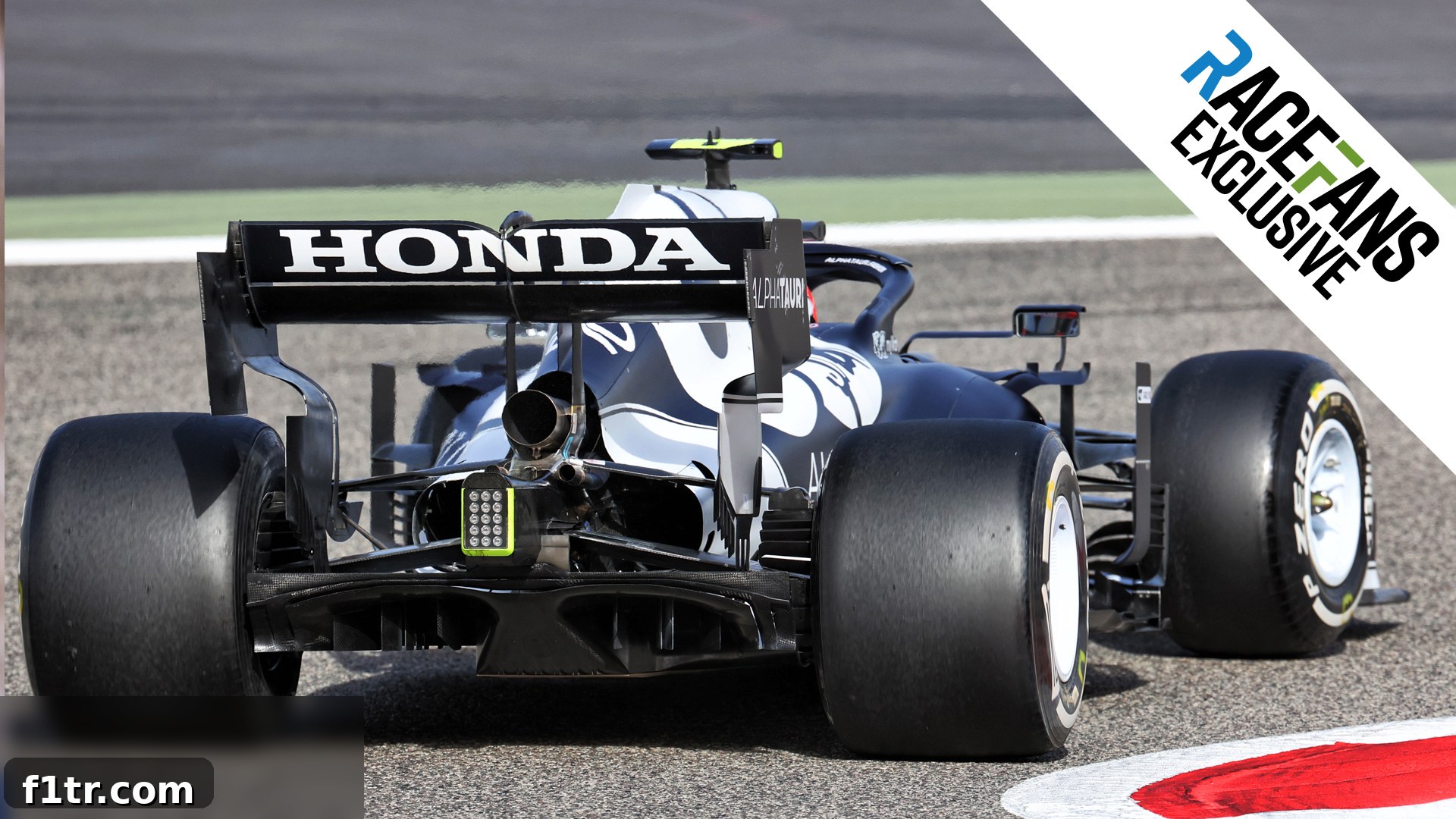
AlphaTauri’s Ambitious Pursuit: Balancing 2021 Success with Future F1 Dominance
AlphaTauri, the Faenza-based Formula 1 team previously known as Toro Rosso, captured global attention last season with a stunning victory by Pierre Gasly at Monza. This unexpected triumph underscored the team’s potential and its ability to punch above its weight. As the 2021 season unfolds, AlphaTauri arrives with renewed optimism, a significantly reworked challenger in the AT02, and a fresh face in the cockpit, all while navigating a complex regulatory landscape and strategic decisions that will shape its future.
Underneath the skin of the AT02, much has evolved. Despite Formula 1’s restrictive regulations, the team has pushed the boundaries of permissible development. A notable upgrade is the transition to a larger, 60% scale wind tunnel for the first time, aligning AlphaTauri with the sophisticated testing capabilities of its competitors across the grid. This technical leap is expected to enhance the accuracy and efficiency of their aerodynamic development significantly.
Alongside the experienced Gasly, who has proven his speed and leadership, Yuki Tsunoda makes his highly anticipated Formula 1 debut. The young Japanese driver arrives with strong backing from engine supplier Honda and, crucially, as a promising Red Bull junior. His exceptional performance in Formula 2 last year, where he finished third in the championship, firmly established his credentials as a talent to watch.
However, the new season brings a bittersweet reality for AlphaTauri: while they benefit from an upgraded Honda power unit, the Japanese manufacturer’s unwavering support is set to conclude after delivering its final engine for the 2022 F1 season. This looming departure adds another layer of complexity to the team’s strategic planning, requiring them to prepare for a future without their current engine partner.
Like every team on the grid, AlphaTauri faces the intricate challenge of balancing its development program for the current year with the monumental task of designing a completely new car under a radically different set of regulations for 2022. This delicate equilibrium demands astute resource allocation and forward-thinking strategy. To delve deeper into these critical issues, Technical Director Jody Egginton shared his insights on the hurdles and opportunities awaiting AlphaTauri in 2021.
Navigating the 2021 Aerodynamic Regulations
The 2021 Formula 1 season introduced significant aerodynamic regulation changes, specifically aimed at reducing car performance and downforce. When asked about the effectiveness of these rules, Egginton confirmed their intended impact. “In terms of regulation change, it did pretty much what was advertised,” he explained. “It did its job to cut around about 30 points of [downforce] load off, which we’ve got to recover.”
This reduction was not a surprise to the teams, as the modifications to various parts of the car were extensively debated and refined. This collaborative approach allowed every team to conduct their due diligence and provide feedback, leading to a well-understood solution. AlphaTauri, like its rivals, has been working tirelessly to regain the lost downforce. “We believe we’ve done a good job of recovering, obviously similar to the majority of teams,” Egginton stated, highlighting the intense competition in this area. The current focus is on correlating wind tunnel and Computational Fluid Dynamics (CFD) results with real-world track performance.
Adding another layer of complexity, AlphaTauri changed its wind tunnel over the winter. This introduces a new variable into their data correlation efforts. “Our launch car was developed in our Bicester wind tunnel and now we’ve moved to the Bedford wind tunnel,” Egginton noted. This transition necessitates extensive baseline testing to accurately understand their current aerodynamic position and ensure seamless development going forward. Initial assessments, however, are positive: “First thoughts are that we’ve recovered most of what we recovered,” he concluded, indicating significant progress in overcoming the regulatory hurdles.
Quantifying Downforce Recovery and Design Evolution
Pinpointing an exact figure for downforce recovery is more complex than a simple percentage. Egginton elaborated on this challenge, stating, “There’s a headline number. We say we recovered most of it but it’s far more complex than that. There’s an awful lot of metrics which define what your aero is and the amount of recovery across the speed range varies a bit. In some areas it probably covers all of it.”
The team relies heavily on CFD and wind tunnel data to guide their recovery efforts. Beyond the immediate task of regaining lost downforce, there’s ongoing work to address specific sensitivities and restore any particular characteristics of the car that might have been compromised by the rule changes. The impact of regulations extends beyond the directly affected components, as “everything else has to develop in reaction to the changes you made on the bits of the car you have to develop.”
AlphaTauri’s AT02 features several key aerodynamic revisions at the front, including a new nose, new front suspension, and a new front wing. These changes are crucial for navigating the updated regulations and are expected to yield predicted benefits. While the team is confident they’ve recovered “most of it,” the exact quantitative assessment requires thorough on-track data analysis and “number crunching” once the season begins in earnest.
The Strategic Imperative: Balancing 2021 and 2022 Development
One of the most significant strategic decisions for every Formula 1 team this year is the allocation of resources between the current 2021 car and the revolutionary 2022 car, which will operate under vastly different regulations. Egginton acknowledged this inherent tension: “We’re always developing towards that but the added variable here as well is that we’ve got a large 2022 project to work on and resources split across two projects.”
The decision of when to shift focus heavily towards the 2022 car will inevitably impact the development trajectory of the 2021 challenger. In a typical season without major rule changes, aggressive in-season development offers a clear path to improvement. However, with the impending overhaul, “if you decide to put more resources into 2022,” the progression of the current car will be affected. AlphaTauri’s current philosophy leans heavily towards the future. “At the moment, the thought process is to put a lot of effort into the new [2022] car,” Egginton revealed, indicating a long-term vision that may temper their in-season development for 2021.
The Impact of the New 60% Scale Wind Tunnel
AlphaTauri’s transition to a new 60% scale wind tunnel is a major technical upgrade that promises significant advantages. Previously, the team was unique on the grid, utilizing a 50% model in a tunnel only capable of running at that scale. Egginton clarified the benefits: “A model of 60% gives you more benefits. The increase in scale is a benefit so it was a logical thing to do.”
While the team was content with their previous facility, the opportunities presented by a larger scale model were too compelling to ignore. This strategic move was purely technical, aimed at maximizing development potential rather than being driven by financial considerations. “The financial side of it doesn’t really come into play. We have our budget and we use it in the best way. But that wasn’t a driver,” he emphasized. The focus was on leveraging the enhanced capabilities of the 60% tunnel to unlock new development avenues for the AT02 and future cars.
AT02’s Pre-Season Performance and Development Trajectory
Pre-season testing is a crucial period for validating design choices and identifying potential issues. For the AT02, the early signs were largely positive. “In all honesty, so far, nothing that was completely ‘wow, we never thought of that’,” Egginton reported. The AT02 is described as a strong evolution of its predecessor, maintaining the same fundamental concept, which provides a solid foundation.
Continuity in key areas, such as the power unit and the rear end of the car, offers a known quantity for the team. While these components undergo development, their core functionality and philosophical approach are well understood. The new Pirelli tires present a slight variation, but AlphaTauri is adept at managing tire performance, always striving to operate them within their optimal window.
The aerodynamic concepts applied to the front of the car appear to be delivering as expected. The immediate priority is to fully comprehend these changes and then strategize the next steps for development. These modifications are designed to offer significant development potential throughout the season. Although the car hasn’t been pushed to its absolute limits yet to understand every minute detail, Egginton is confident that “the basic changes we’ve made to the car seem to be delivering on a macro level what we expected at this early stage.”
The Budget Cap Era: Maximizing Every Euro
The introduction of the budget cap for 2021 marks a new era for Formula 1, particularly for teams like AlphaTauri, which historically operated below the new financial limit. The challenge now is to optimize every expenditure. “I think everyone wants to maximise everything they’ve got,” Egginton remarked. The team’s commercial department is working tirelessly to ensure AlphaTauri operates at the cap, translating financial resources into performance gains.
The essence of the budget cap lies in its intelligent utilization. “You’ve got a number now, you’ve got to use it properly, you’ve got to use it sensibly and get the most out of it,” he explained. AlphaTauri has a clear development plan for the AT02, but flexibility remains key. The team will react to new findings and adapt its spending accordingly. Crucially, the budget must also accommodate the significant investment required for the 2022 car development, making resource allocation a complex balancing act this year. Looking ahead, the 2022-2023 cycle will see a return to a more standard development focus on a single project.
For 2021, the budget cap instills an acute focus on efficiency. “We’re really focussed on making sure that every Euro we spend is spent in the right area and we’re minimising any mistakes or inefficiencies,” Egginton affirmed. This heightened scrutiny on spending is undoubtedly a universal trend across the paddock. AlphaTauri is committed to making the best possible use of every financial resource available to them.
The Shifting Focus to 2022: A Constant Review
The migration of resources towards the 2022 car is an ongoing process for all teams. From January 1st, aerodynamic work on the future car could commence, and AlphaTauri has an outlined plan for this transition. However, this strategy is not rigid. “It might be that we learn something along the way that tells us, okay, let’s push a bit more resource this way or a bit more that way permanently,” Egginton clarified.
The initial races of the season, particularly the Bahrain Grand Prix, will provide vital data for assessment. “We’ll get to Bahrain for the race, see where we are, make an assessment and then review again. It’s a constant review process,” he stated. While some teams might declare an early, full focus on 2022, AlphaTauri maintains a more dynamic approach, continuously evaluating resource allocation based on performance and development insights.
Sustainable Success: Beyond a Single Season
AlphaTauri’s ambitions extend beyond a singular strong performance. “It’s a cliché but there is short, medium and longer-term goals. Our challenge is to be a regular top-five team,” Egginton asserted. While they demonstrated flashes of brilliance in 2020, consistency remains a key objective. “We weren’t regular. There were races where we couldn’t get the best out of our package. So there’s still something to do there.”
However, achieving short-term success at the expense of long-term sustainability is not an option. “But achieving that just for this year at the expense of next year is foolish. So we’ve got to say, OK, we’re on the road to that, we’ve got the objectives, but we want to make it sustainable,” he elaborated. The team aims to avoid the scenario where “a fantastic year this year and then absolutely terrible next year is unacceptable.” This delicate balancing act between immediate performance and future potential will define AlphaTauri’s strategic decisions throughout the season. The true measure of any team’s success will only become clear once the competitive gloves come off in Bahrain.
Honda’s Farewell Gift: A Strong Power Unit Step
Despite their impending withdrawal from Formula 1, Honda has shown no signs of slackening their development efforts. Quite the opposite, as Egginton confirmed, “It’s been a good step. Honda have worked on all fronts. There’s no sign of them doing anything different other than what they’ve always done. They’re pushing the performance envelope and there’s some promising signs.” While exact figures remain confidential, the overall assessment points to a significant improvement in the power unit.
Beyond raw power, Honda has also focused on packaging, allowing for even better integration into the AlphaTauri chassis. This improved packaging provides greater aerodynamic freedom, a crucial factor in the competitive world of F1. However, Egginton cautioned that the overall picture is still emerging, as other power unit manufacturers are also making strides. “What I can’t comment on is what the others have done. You can do a fantastic job but if someone does a more fantastic job, then all of a sudden your development’s not so good.” Despite this uncertainty, the collaboration with Honda remains exceptional, with the Japanese manufacturer working “flat-out to maximise everything” until their departure.
AlphaTauri enters the 2021 season with a blend of proven talent, fresh ambition, and significant technical upgrades. The strategic decisions made this year, particularly regarding resource allocation for 2022 and the meticulous management of the budget cap, will be pivotal in determining whether they can consistently challenge at the sharp end of the midfield and build a sustainable path towards their goal of becoming a regular top-five team in Formula 1.
Related 2021 F1 Season Articles
- Masi ‘basically gifted the championship’ to Verstappen says 2021 FIA steward Sullivan
- Las Vegas race backers looking to extend F1 deal beyond 2025
- Why Mercedes put ‘a reminder of joy and pain’ on display in their factory lobby
- Verdict on error in GT race suggests Mercedes would have lost 2021 Abu Dhabi GP appeal
- Title ‘stolen’ from Mercedes made us ‘underdogs people cheer for’ – Wolff
Browse all 2021 F1 season articles