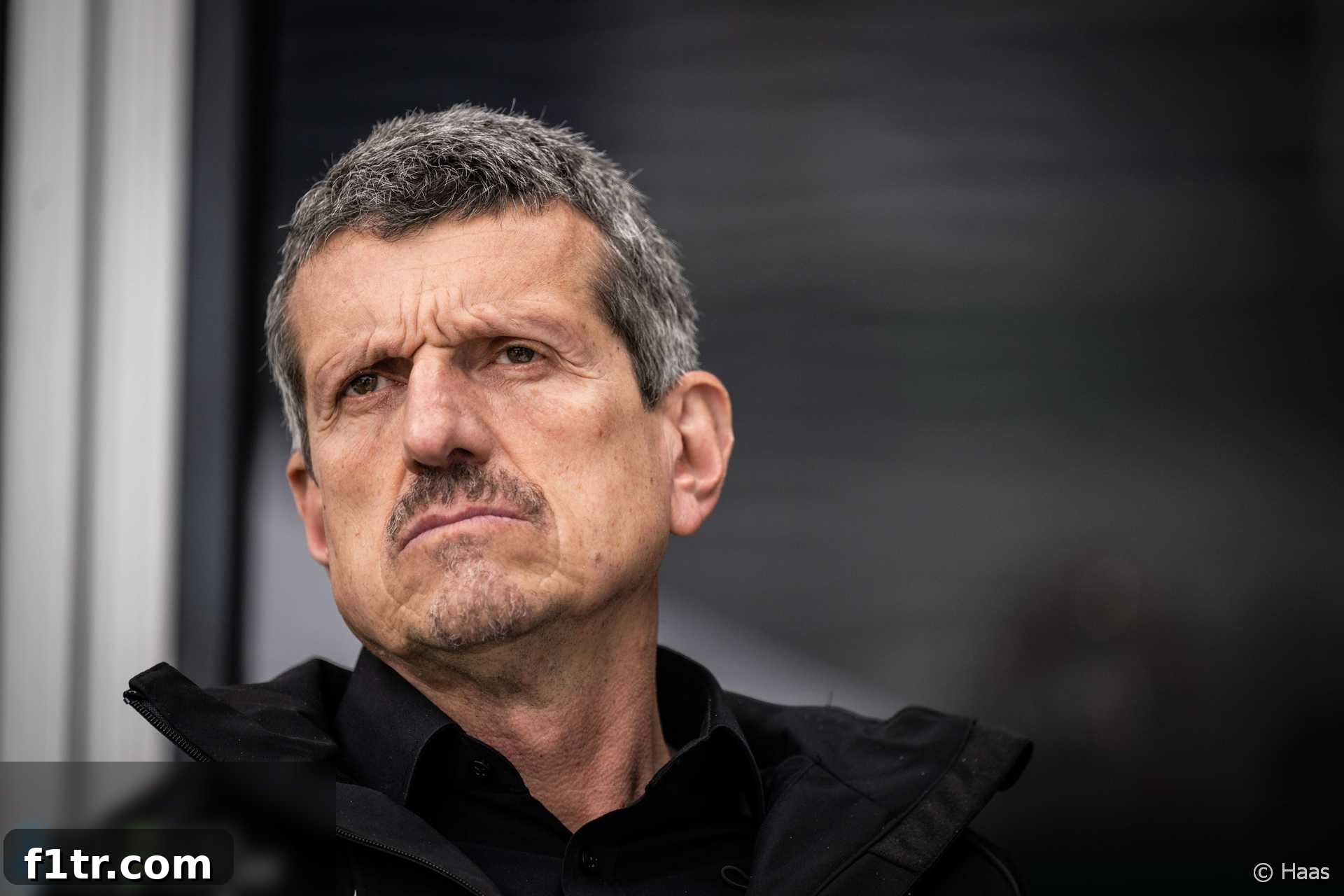
In a significant development echoing ongoing debates about judicial consistency within Formula 1, Haas team principal Guenther Steiner was summoned to appear before the FIA stewards at the Circuit de Catalunya. The summons followed outspoken comments Steiner made to the media on Thursday, prior to the Spanish Grand Prix, reigniting conversations around the impartiality and professionalism of F1 stewarding, a topic that has seen considerable scrutiny in recent years.
Advert | Become a Supporter & go ad-free
The FIA officially confirmed Steiner’s required attendance, scheduling his meeting for 2:30 PM local time at the track. The reason for the summons was cited as an “alleged breach of articles 12.2.1.c, 12.2.1.f and 12.2.1.k of the FIA International Sporting Code during a media conference” held two days prior. While the specific statements that prompted this action were not publicly detailed by the FIA, the articles themselves carry significant weight within motorsport governance. These sections of the Sporting Code broadly refer to actions deemed “prejudicial to the interests” of a competition, or those causing “moral injury or loss” to the FIA, its bodies, or its members. Such allegations underscore the seriousness with which the sport’s governing body views public criticism, particularly from high-profile figures like team principals, and their potential to impact the integrity and public perception of Formula 1.
Steiner’s contentious remarks, made during a candid media session including prominent outlets, directly targeted the stewarding decisions from the preceding Monaco Grand Prix. His driver, Nico Hulkenberg, had been handed a five-second time penalty for an incident during the chaotic opening lap of that race. This penalty, which many felt was debatable and particularly harsh given the race conditions, had a tangible impact on Hulkenberg’s race outcome and, by extension, Haas’s potential points haul. Steiner’s frustration stemmed from what he perceived as a fundamental flaw in the current stewarding system—a perceived lack of consistency and transparency in decision-making that he believes continually undermines fairness in a sport where every decision carries immense financial and competitive implications. The high-stakes nature of Formula 1 means that even minor penalties can drastically alter championship standings and team revenues, making reliable and consistent officiating paramount.
In a further testament to the sensitive nature of the situation, Felix Holter, one of the stewards who had issued the penalty to Hulkenberg in Monaco and was also scheduled to serve at the Spanish Grand Prix, proactively recused himself from the hearing concerning Steiner’s comments. This decision was made due to the clear potential for a conflict of interest, ensuring that the disciplinary process maintained an appearance of impartiality. His position for the hearing was subsequently filled by Matthew Selley, demonstrating the FIA’s efforts to uphold ethical standards even amidst controversy. This measure was crucial to prevent any perception of bias in the stewards’ decision regarding Steiner’s conduct, highlighting the intricate ethical considerations inherent in motorsport governance.
During his candid briefing with the media, Guenther Steiner did not mince words, famously referring to the current panel of stewards as ‘laymen.’ This pointed critique was central to his broader argument for a sweeping reform of Formula 1’s officiating structure. He passionately advocated for the introduction of a permanent, professional staff of referees who would attend all races. His vision for a more professional system aims to cultivate greater consistency and deeper understanding of the nuances of Grand Prix racing among the decision-makers, thereby reducing the instances of controversial or seemingly arbitrary penalties. Steiner believes that a dedicated, full-time panel would develop invaluable expertise and a uniform approach to incidents, moving away from the often-criticized variations seen with rotating stewards.
Elaborating on his concerns, Steiner articulated, “F1 is one of the biggest sports in the world and we still have laymen deciding on the fate of people which invest millions in their careers. And it’s always a discussion because there’s no consistency. Again, I don’t want to blame any particular person on this, but if you’re not all there all the time…” He highlighted the stark contrast between the multi-billion-dollar enterprise that is Formula 1 and what he views as an amateurish approach to critical judicial decisions. Steiner’s core argument is that the current rotating panel of stewards, often volunteering their time on a race-by-race basis, lacks the continuous engagement, professional training, and direct accountability required for such a high-stakes environment. This intermittent involvement, he argues, inherently leads to inconsistencies in interpreting rules and precedents, frustrating teams and drivers alike.
Advert | Become a RaceFans supporter andgo ad-free
He continued, drawing a compelling comparison to professional employment: “This is like a job [but] it’s not even a job, because in a job you could get sacked, because you get paid. And if you do a bad job, you get sacked. You cannot get sacked because you don’t get paid. I think we need to step it up.” This powerful statement underlines the perceived lack of accountability within the current stewarding framework. In Steiner’s view, a paid, professional role inherently brings with it higher expectations, clear performance metrics, and the potential for consequences for substandard decisions—elements he believes are currently absent and desperately needed to elevate the credibility and fairness of F1 officiating. His call for change resonates with many within the paddock who have long lamented the unpredictable nature of stewarding calls, which can often make or break a team’s or driver’s championship aspirations. Professional referees, akin to those in major global sports like football or basketball, could bring a level of dedication and career investment that Steiner argues is currently missing from Formula 1.
Steiner’s recent comments arrive at a particularly sensitive juncture for the FIA. They follow extensive and significant changes to race management implemented in the wake of the highly controversial conclusion to the 2021 Formula 1 World Championship. The furore surrounding that season’s final race, the Abu Dhabi Grand Prix, saw Race Director Michael Masi removed from his position. Masi’s handling of a late-race Safety Car period, specifically his decision to allow only certain cars to un-lap themselves before a last-lap restart, was widely criticised for breaking established rules and, many argued, directly influencing the outcome of the world championship in favour of Max Verstappen over Lewis Hamilton. This incident led to a comprehensive review of the FIA’s operational procedures and governance structures, aiming to restore faith in the sport’s integrity.
In response to the 2021 crisis and the intense scrutiny it brought, the FIA initiated a series of reforms designed to enhance the robustness and impartiality of its race management. Key among these was the creation of the Remote Operations Centre (ROC). Located at the FIA’s headquarters, the ROC serves as a vital support hub for race control and the stewards during Grand Prix weekends, offering additional data, analysis, and a broader perspective to aid real-time decision-making, thereby reducing reliance on singular judgments. Furthermore, the FIA expanded its race management team, introducing a rotating panel of Race Directors and strengthening the support staff, all aimed at easing the immense pressure on individual officials and fostering greater collective oversight and consistency. Steiner’s remarks, therefore, directly challenge the efficacy and perceived success of these post-2021 reforms, suggesting that despite the structural changes, fundamental issues of consistency and professionalism in stewarding remain unresolved in the eyes of some key figures within the sport.
The historical backdrop also features precedents for such disciplinary action. In 2021, Red Bull team principal Christian Horner was issued an official warning by the FIA. His offence involved accusing a “rogue marshal” of incorrectly waving a yellow flag during a qualifying session, an incident that resulted in Max Verstappen being penalised. This serves as a reminder that the FIA has consistently taken a firm stance against public comments that are perceived to undermine the integrity or authority of its officials. While Steiner’s current comments are broader in their critique of the system rather than targeting a specific individual marshal, they fall into a similar category of potentially bringing the sport into disrepute, highlighting the delicate balance team principals must strike between expressing legitimate concerns and respecting the established hierarchy of motorsport governance. The line between constructive criticism and an alleged breach of sporting code is often fine, and the FIA’s interpretation in this case will be keenly observed.
The outcome of Guenther Steiner’s hearing will undoubtedly be closely watched across the Formula 1 paddock and by fans worldwide. A penalty, which could range from a formal reprimand to a significant fine, would send a clear message about the boundaries of acceptable criticism for team principals. Conversely, a lenient outcome, or perhaps even a nuanced discussion that acknowledges some of Steiner’s points while upholding the FIA’s authority, could signal a willingness to engage with team concerns more openly and foster dialogue rather than strict enforcement. Regardless of the specific resolution, this incident underscores the ongoing tension between the teams’ desire for unimpeachable officiating and the FIA’s imperative to maintain its authority and ensure the smooth, fair, and respected running of one of the world’s most technologically advanced and globally followed sports. The debate around F1 stewarding, ignited once again by Steiner’s frank observations, is unlikely to subside until all stakeholders feel confident in a truly consistent, transparent, and professional system.
Become a RaceFans Supporter and Go Ad-Free
RaceFans thrives thanks to the invaluable support of its dedicated readers. By contributing a modest £1 per month or £12 annually (or the equivalent in your local currency), you can directly help cover the operational costs—including creation, hosting, and ongoing development—that keep RaceFans a leading source for motorsport news and analysis.
Join the RaceFans Supporter community today and enhance your reading experience by browsing the entire site completely ad-free. Discover more about the benefits and sign up through the links provided below:
- Become a RaceFans Supporter
- RaceFans Supporter FAQ
Advert | Become a RaceFans supporter andgo ad-free
Exploring the 2023 Spanish Grand Prix: Related Articles
- Ben Sulayem raises safety concerns over “too many people on the grid” at races
- Why Ferrari say their change in design is the result of “discipline”, not “copying”
- Hamilton and Russell were seeking tow from Sainz when they collided – Mercedes
- Red Bull’s Spanish GP diffuser update was ‘inspired by rivals’ including Williams
- Why McLaren always doubted second-row start in Spain would lead to points finish
Browse all 2023 Spanish Grand Prix articles