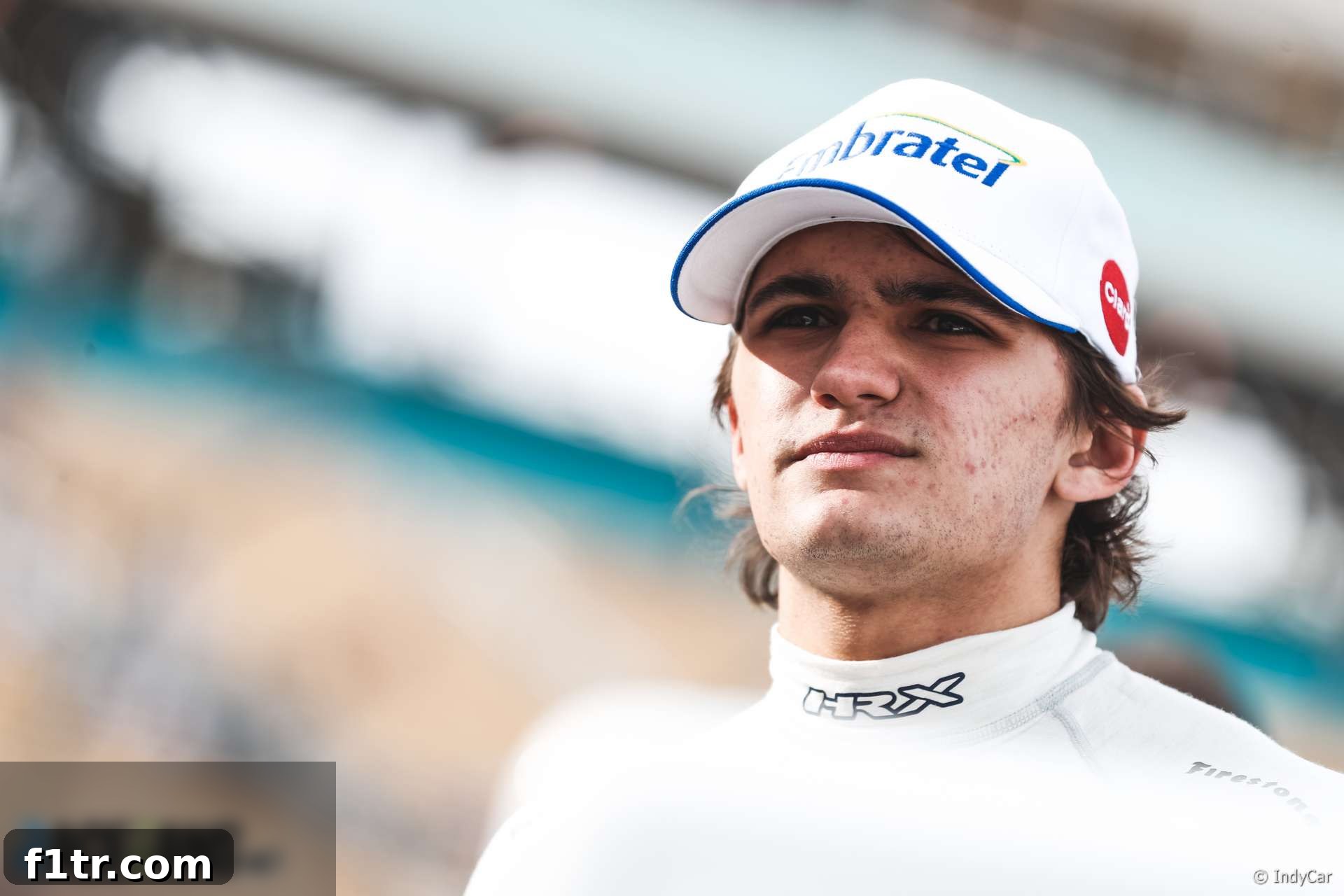
Pietro Fittipaldi’s Horrific Radillon Crash at Spa-Francorchamps: A Race Weekend Shaken
The opening round of the 2018-19 World Endurance Championship (WEC) season, the Six Hours of Spa-Francorchamps, was dramatically overshadowed by a severe high-speed crash involving DragonSpeed driver Pietro Fittipaldi during the qualifying session. The incident, which occurred at the notorious Radillon corner, left the rising star with suspected broken legs, casting a dark cloud over his immediate racing future and sending shockwaves through the paddock.
The severity of the crash, captured in the video below, highlighted the immense risks drivers undertake in their relentless pursuit of speed on the world’s most challenging circuits.
The Terrifying Incident at Radillon
The crash took place at Radillon, a section of the Spa-Francorchamps circuit that is as legendary as it is fearsome. Immediately following the iconic Eau Rouge, Radillon is an incredibly fast, uphill left-hand bend, approached at blistering speeds. Drivers climb significantly while navigating a blind apex, making it one of the most demanding and unforgiving corners in motorsport. Loss of control here often results in catastrophic impacts due due to the high speeds involved and the proximity of barriers. Fittipaldi, pushing the limits of his DragonSpeed LMP1 car, tragically lost control, sending his machine hurtling head-on into the unforgiving safety barriers.
The immediate aftermath was chillingly clear. Emergency services were on the scene almost instantly, a testament to the stringent safety protocols in place at WEC events. The sight of the heavily damaged car and the concern radiating from the pit lane underscored the gravity of the situation. Race control immediately red-flagged the session, allowing medical teams unimpeded access to the stricken driver.
Immediate Medical Response and FIA Update
An official bulletin released by the FIA provided crucial details regarding Fittipaldi’s condition and the medical response. “The driver, who was conscious at all times, was attended immediately by the Circuit de Spa-Francorchamps Medical Services and FIA Medical Delegate Jacques Tropenat,” the statement noted. This detail — that Fittipaldi remained conscious throughout the ordeal — offered a significant measure of relief amidst the concern.
Following initial assessment at the trackside medical centre, Fittipaldi was carefully extracted from the wreckage of his car. Given the suspected severity of his injuries, he was swiftly transported by helicopter to the Centre Hospitalier de la Citadelle de Liege. The bulletin further confirmed, “He is accompanied by the DragonSpeed team manager and his condition is not life-threatening.” This assurance, while relieving, did not diminish the significant impact the suspected fractures to both legs would have on his burgeoning career. The rapid and professional response of the medical teams undoubtedly played a critical role in his immediate care.
Pietro Fittipaldi’s Aspirations and the Impact of Injury
At just 21 years old, Pietro Fittipaldi, grandson of two-time Formula 1 world champion Emerson Fittipaldi, was at a pivotal moment in his career. His natural talent and rapid progression through various racing categories had marked him as one of motorsport’s most promising young talents. Prior to the crash, Fittipaldi had demonstrated exceptional pace in the LMP1 category, remarkably setting the quickest time among the non-hybrid cars in the final practice session earlier that day. This performance underscored his potential and the competitive spirit he brought to the DragonSpeed team.
The timing of this injury was particularly devastating, as it jeopardized two of the most significant races on the international motorsport calendar that Fittipaldi was slated to compete in. His participation in the legendary Le Mans 24 Hours, scheduled for the following month, was immediately thrown into serious doubt. Le Mans is the pinnacle of endurance racing, a dream for many drivers, and an opportunity Fittipaldi was eagerly anticipating. Furthermore, the young Brazilian was also due to make his highly anticipated debut in the iconic Indianapolis 500 later that same month for Dale Coyne Racing. Competing in both Le Mans and the Indy 500 in the same year is a rare and prestigious achievement, one that would have significantly elevated his profile on the global stage. The crash thus not only inflicted physical pain but also delivered a considerable setback to his meticulously planned and promising racing schedule.
The WEC Super Season Opener: Qualifying Highlights
Beyond the drama of Fittipaldi’s crash, the qualifying session for the Six Hours of Spa-Francorchamps offered a glimpse into the competitive landscape of the 2018-19 WEC ‘Super Season’. This unique two-year season structure, which included two editions of the Le Mans 24 Hours, was designed to reinvigorate the championship.
As widely expected, Toyota Gazoo Racing asserted its dominance, sweeping the front row of the grid with their highly advanced hybrid LMP1 machines. The number seven car, driven by the formidable trio of Kamui Kobayashi, Mike Conway, and Jose Maria Lopez, secured pole position with a blistering pace. They edged out their sister car, the number eight entry, piloted by an equally star-studded lineup of two-time Formula 1 world champion Fernando Alonso, Sebastien Buemi, and Kazuki Nakajima. Alonso’s debut in the WEC added significant star power and attention to the series.
The privateer LMP1 entries, while competitive within their own sub-category, found themselves considerably off the pace of the factory Toyotas. The two Rebellion Racing entries, representing the strongest non-hybrid challenge, locked out the second row of the grid. The Gibson-powered car of Neel Jani, Andre Lotterer, and Bruno Senna qualified 1.8 seconds behind the pole-sitting Toyota, highlighting the performance gap that would characterize the early part of the season.
Pietro Fittipaldi’s DragonSpeed car, which he shared with teammates Ben Hanley and Henrik Hedman, had qualified seventh overall. This placed them behind their fellow DragonSpeed entry of Vitaly Petrov and Mikhail Aleshin, and the ByKolles car driven by Oliver Webb, Dominik Kraihamer, and Tom Dillmann. The qualifying session underscored the hierarchical structure of the LMP1 class, with Toyota leading the charge, followed by a tight battle among the privateer teams.
The Legendary Circuit de Spa-Francorchamps
The Circuit de Spa-Francorchamps, nestled in the Ardennes forest of Belgium, stands as one of the most revered and historic tracks in global motorsport. Its 7.004-kilometer (4.352-mile) layout is renowned for its challenging elevation changes, sweeping corners, and formidable high-speed sections. Beyond Eau Rouge and Radillon, other iconic corners like Pouhon, Stavelot, and Blanchimont demand immense bravery and precision from drivers.
Spa’s unpredictable weather, often featuring sudden downpours on one part of the track while another remains dry, adds another layer of complexity to endurance races like the Six Hours of Spa. The sheer length of the circuit and its relentless nature make it a true test of both driver skill and mechanical reliability. Its storied history, stretching back to the 1920s, includes countless memorable moments, cementing its status as a driver’s favorite and a cornerstone of major racing championships. The demanding nature of Spa is precisely why incidents like Fittipaldi’s, though rare in their severity, serve as stark reminders of the inherent dangers of high-performance racing.
Understanding the World Endurance Championship
The World Endurance Championship (WEC) is the premier global endurance sports car racing series, sanctioned by the Fédération Internationale de l’Automobile (FIA). It brings together manufacturers, privateer teams, and elite drivers to compete in multi-class races lasting from six hours up to the iconic 24 Hours of Le Mans. The championship is divided into several categories, primarily Le Mans Prototypes (LMP1, LMP2) and Le Mans Grand Touring Endurance (LMGTE Pro, LMGTE Am), each offering distinct challenges and showcasing different facets of motorsport technology and driver skill.
WEC races are a true test of human and machine endurance. Teams must meticulously manage strategy, tire wear, fuel consumption, and driver fatigue over extended periods. Pit stops are critical, involving rapid tire changes, refueling, and driver swaps, all executed with precision to minimize lost time. The series emphasizes teamwork, strategic thinking, and the relentless pursuit of reliability and performance over many hours, often through varying track conditions and light levels. It represents a unique blend of cutting-edge automotive engineering and the unyielding spirit of competition, drawing a dedicated global fanbase.
Related World Endurance Championship Articles
- WEC cancels its Qatar season-opener due to US-Iran war
- Porsche to end WEC Hypercar programme after just three seasons
- Mercedes won’t return to Le Mans because “we don’t like Balance of Performance” – Wolff
- “Luck” needed to win Le Mans because of Balance of Performance – Verstappen
- McLaren finally confirms it will enter the World Endurance Championship in 2027
Browse all World Endurance Championship articles