Welcome to the latest RaceFans round-up, bringing you a concise yet comprehensive overview of the most significant happenings and discussions from the world of Formula 1 and beyond. From driver frustrations on track to crucial technical investigations and insightful social media commentary, we cover the stories that are shaping the motorsport landscape. Today, we delve into Romain Grosjean’s persistent start issues, explore the intriguing allegations surrounding Ferrari’s power unit, and examine the broader implications of celebrity environmental activism within the sport. Join us as we dissect these key topics, offering an in-depth perspective on the intricate tapestry of Formula 1.
Driver Performance Insights: Romain Grosjean’s Starting Woes
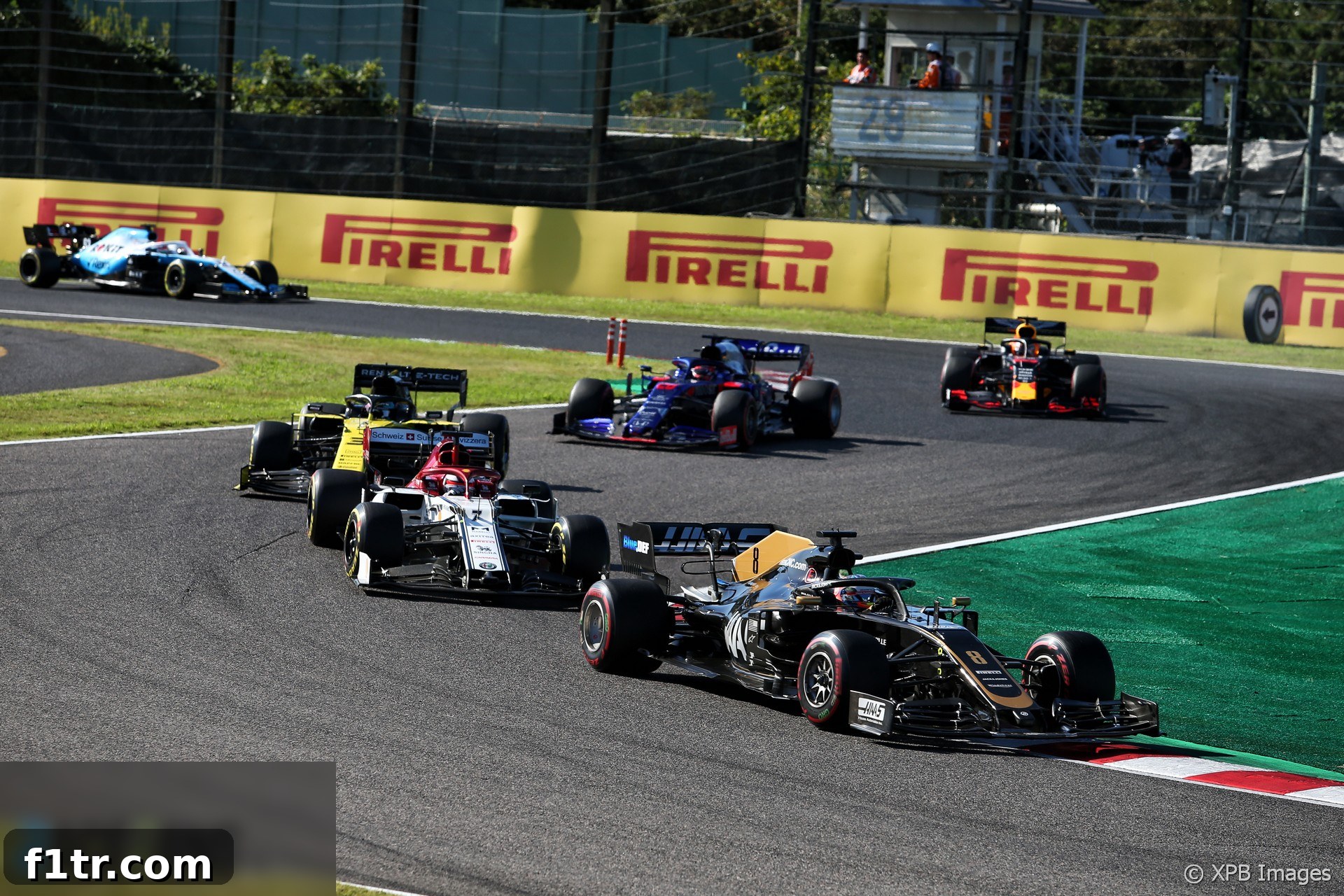
Haas F1 driver Romain Grosjean has openly expressed his frustration with the team’s recurring poor start performance, which he believes has cost him valuable positions in recent races. The French driver, known for his sometimes spectacular, sometimes turbulent career, highlighted the issue following the Japanese Grand Prix at Suzuka, where he plummeted four places to 14th on the very first lap. This incident at Suzuka was not an isolated event but rather a continuation of a problematic trend that has plagued him and his teammate.
“The start, first of all, I was behind Kevin [Magnussen] by turn one, so it’s been two races in a row that we just don’t get any good start performance,” Grosjean explained, visibly concerned about the setback. “We need to understand that because I don’t think there is much more I can do. So that’s something we need to work on.”
His comments underscore a critical area of weakness for the Haas team. A strong start can be the foundation of a successful race, allowing drivers to gain track position, avoid midfield skirmishes, and execute their strategy effectively. Conversely, a poor start forces drivers into defensive maneuvers or requires them to fight their way through the pack, often compromising tyre life and overall race pace. Grosjean’s observation that there isn’t “much more I can do” suggests the issue lies deeper than driver technique, pointing towards potential car setup problems, clutch inconsistencies, or even power unit mapping deficiencies at the critical moment of launch.
Despite the initial disappointment at Suzuka, Grosjean recounted moments of strong performance during the race. “Then initially we had some good pace. We tried a one stop fitting the hard but honestly really two really good overtakes on Giovinazzi and Russell on the outside of turn one-two that was probably the highlight of my race, had a lot of fun,” he noted, finding positives amidst the challenges. These overtakes demonstrate his inherent skill and ability to extract performance when the car is settled, making the pre-race performance all the more frustrating. However, the aggressive push to recover positions eventually took its toll: “and then we pushed hard, tried to go to the end but the tyres just died to the end so a bit of a shame.” This late-race tyre degradation, exacerbated by an early deficit, encapsulates the uphill battle faced by drivers when their starts are compromised. For Haas, resolving these starting issues will be paramount to unlocking their true potential and securing more consistent points finishes in the demanding world of Formula 1.
Quotes: Dieter Rencken
Advert | Become a RaceFans supporter andgo ad-free
Social Media Spotlight: Key Discussions and Milestones
Social media platforms continue to be a vibrant hub for motorsport enthusiasts, offering immediate reactions, breaking news, and fascinating discussions. Here’s a look at some notable posts from Twitter, Instagram, and more, highlighting critical debates and celebratory moments within the F1 community.
https://www.instagram.com/p/B3xJdCSByP_/
For more on allegations that @ferrari has found a way of burning ‘leaked’ intercooler oil, read here, first published on 1 October…https://t.co/Y8dS8lTPWS
— Fritz-Dieter Rencken (@RacingLines) October 18, 2019
One of the most significant and contentious topics circulating on social media, as highlighted by journalist Fritz-Dieter Rencken, revolves around allegations concerning Ferrari’s engine legality. The tweet points to an article discussing claims that Scuderia Ferrari may have found a method of burning “leaked” intercooler oil, raising questions about compliance with technical regulations. These types of allegations are not uncommon in Formula 1, a sport where engineering innovation pushes boundaries, often leading to scrutiny from rivals and the governing body, the FIA. If proven true, such a practice could potentially provide an unfair performance advantage by increasing combustion efficiency or power output beyond what is permitted. The technical directives and regulations in F1 are incredibly intricate, designed to ensure fair competition while still fostering technological advancement. Investigations into engine legality can have profound implications, not just for the team involved but for the championship standings and the integrity of the sport as a whole. Such discussions underline the constant vigilance required in F1 to ensure all competitors operate within the spirit and letter of the rules.
Almost 100 Grand Prix deep – but which was Kevin’s no.1 🤔#KMag100 pic.twitter.com/jkhSQhrmqS
— MoneyGram Haas F1 Team (@HaasF1Team) October 18, 2019
In a more celebratory vein, the Haas F1 Team marked a significant milestone for their driver, Kevin Magnussen, who approached his 100th Grand Prix start. This achievement is a testament to Magnussen’s enduring presence and resilience in Formula 1 since his debut. The tweet, under the hashtag #KMag100, invites fans to reflect on his career and pick his “no.1” moment. Magnussen’s journey in F1 has seen him race for McLaren, Renault, and Haas, often in challenging circumstances. He is known for his aggressive driving style, his uncompromising approach on track, and his ability to extract maximum performance from his machinery. Reaching 100 Grands Prix is a considerable accomplishment in a sport as competitive and demanding as F1, signifying a driver’s dedication, talent, and ability to consistently perform at the highest level. It’s a moment for fans and the team to appreciate the commitment and contributions of a seasoned competitor.
https://t.co/JJxdGmEfIc money-driven on-line obsessed owners of nearly all motor sport media show contempt for the printed word with #Autosport at £10.99. Motoring News, Autosport + other cuttings can be priceless Will writers in 2059 be able to research Lewis Hamilton like this? pic.twitter.com/jSLlW5pmdY
— Maurice Hamilton (@MauriceHamilton) October 18, 2019
Veteran motorsport journalist Maurice Hamilton sparked a thought-provoking debate regarding the perceived decline of traditional print media in the age of digital dominance. His tweet laments the high price of publications like Autosport (£10.99) and questions whether future generations of writers and historians will have the same rich, tangible archives to research figures like Lewis Hamilton. Hamilton’s point resonates with many who value the depth, permanence, and historical record provided by printed magazines and newspapers. In an era where information is often fleeting and digital archives can be ephemeral or behind paywalls, the physical copies of “Motoring News, Autosport + other cuttings” hold a unique value for their historical integrity and accessibility. This discussion touches on broader trends in journalism, the economics of publishing, and the challenges of preserving motorsport history in an increasingly digital world. It highlights a nostalgic sentiment for a bygone era of print while also raising valid concerns about the long-term impact on motorsport documentation and research.
- For further connections and insights, explore a wider range of official F1 accounts and key figures in our dedicated F1 Twitter Directory.
Motor Racing News and Developments
Beyond the immediate F1 grid, the broader world of motor racing is constantly evolving with technological advancements, regulatory changes, and strategic shifts. Here’s a selection of noteworthy links and their implications, offering a glimpse into the future of electric racing, ongoing investigations, and the business side of motorsport.
Advert | Become a Supporter & go ad-free
Gen 2.5 Formula E Car Nears Final Design (e-racing365)
The evolution of Formula E continues with the Gen 2.5 car nearing its final design. This significant upgrade involves substantial changes to the front and rear bodywork of the current Gen 2 car. These aerodynamic and aesthetic revisions are more than just cosmetic; they are expected to influence performance characteristics, potentially affecting downforce, drag, and overall car stability. The article indicates that kits are likely to be manufactured in the first quarter of 2020 for supply to teams by next summer. This incremental development strategy is crucial for Formula E, allowing the series to introduce enhancements without undergoing a complete redesign, thus managing costs and ensuring continuous innovation. The Gen 2.5 aims to keep the championship at the forefront of electric motorsport technology, offering teams new challenges and exciting prospects for future seasons.
Guenther king of testing for BMW, 21 cars separated by a second (Formula E)
Pre-season testing results for Formula E provide an exciting preview of the upcoming season’s competitiveness. Maximilian Guenther emerged as the standout performer for BMW, topping the timesheets. This strong showing echoes BMW’s dominant testing performance a year prior with Antonio Felix da Costa and Alex Sims. However, the report also highlights a crucial point: “Despite the strong start, the marque lost its lead after round two in the 2018/19 season.” This emphasizes that testing pace doesn’t always translate directly into race wins, and consistency over an entire season is key. Furthermore, the fact that “21 cars separated by a second” underscores the incredibly tight competition in Formula E. Such minimal gaps between competitors promise a thrilling season where strategy, driver skill, and meticulous execution will be more critical than ever. It suggests that the series is achieving its goal of creating a level playing field, making every race unpredictable and engaging.
Rivals ask if Ferrari engine is legal as FIA launches Renault investigation (Motorsport magazine)
Beyond the Ferrari allegations mentioned earlier, the FIA has also launched an investigation into Renault’s engine, adding another layer of intrigue to the technical battles in Formula 1. The article from Motorsport Magazine notes that “Although Renault says it is confident it can defend its case ‘vigorously’ this has potentially very serious consequences if found guilty.” This situation highlights the relentless pursuit of performance in F1 and the constant cat-and-mouse game between teams seeking an advantage and the FIA enforcing regulations. Engine legality is a recurring theme in F1 history, with teams always pushing the boundaries of what’s permissible. An investigation by the FIA signals serious concerns, and depending on the findings, it could lead to penalties ranging from financial fines to points deductions or even disqualification. Such investigations are crucial for maintaining the integrity of the sport and ensuring that all teams operate on a fair and level technological playing field.
Vaping backlash threatens to slam brakes on F1 sponsorship (FT)
The commercial landscape of Formula 1 is never static, and new ethical dilemmas often arise. A Financial Times article details how a “vaping backlash threatens to slam brakes on F1 sponsorship.” This issue mirrors the historic controversy surrounding tobacco sponsorship, which was eventually banned from the sport. The article points out that “Formula 1 also provides a venue at which the companies can entertain policymakers and corporate guests, as well as invite social media influencers to be seen with e-cigarette products.” This multi-faceted approach to marketing, combining corporate lobbying with influencer outreach, reveals the sophisticated strategies employed by these brands. However, as public health concerns surrounding vaping grow, F1 faces increasing pressure to distance itself from such associations to protect its image and align with global health initiatives. The debate surrounding vaping sponsorship forces F1 to balance lucrative commercial deals with its social responsibility and public perception, a challenge it has navigated many times throughout its history.
Powering Miracles – Renault & Formula One (Autocar India)
Renault’s commitment to Formula 1 as a works team provides a unique strategic advantage, as detailed in this feature from Autocar India. The article quotes a representative emphasizing, “We are a works team so we have an opportunity to focus on the whole package, not just half of it. The objective is always the fastest car.” This highlights the comprehensive approach a works team can take, integrating engine and chassis development under one roof, unlike customer teams that purchase engines from external suppliers. This holistic integration allows for optimized cooling, aerodynamics, and power unit calibration, all working in synergy to achieve maximum performance. The quote further elaborates on specialized focus areas: “Some groups focus on performance, some will focus on reliability, some will focus on specific aspects of design like cooling or exhaust, which touch both sides and are probably more involved in the performance aspects, and then mechanical integration.” This breakdown showcases the intricate organizational structure and highly specialized expertise required to compete at the pinnacle of motorsport, where every component and every system must be perfected to chase the elusive “fastest car” objective.
We always endeavour to credit original sources. If you have a tip for a link to feature in the next RaceFans round-up please send it in via the contact form.
Advert | Become a RaceFans supporter andgo ad-free
Comment of the Day: Lewis Hamilton and Climate Activism
A thought-provoking discussion emerged surrounding the role of F1 drivers, particularly Lewis Hamilton, in advocating for environmental causes. The core question posed was: Would it achieve anything meaningful for Lewis Hamilton to stop racing in the name of reducing his carbon footprint? This question delves into the complex interplay between celebrity influence, personal actions, and systemic environmental issues.
The comment of the day, submitted by Neil (@Neilosjames), eloquently dissects this dilemma: “He’s in a very similar position to high-profile musicians who join climate campaigns. Their lifestyle (in their case, touring) makes them painfully easy targets for dismissal and accusations of hypocrisy. Those opposed to whatever protest is taking place pull these kinds of people aside and (figuratively) beat them with a stick, over and over, in the hope that doing so will ruin the credibility of the entire movement. In the minds of some people, it does just that.”
Neil’s analysis highlights the double-edged sword of celebrity activism. On one hand, famous individuals like Hamilton possess an unparalleled platform to raise awareness, mobilize support, and influence millions of fans globally. Their involvement can significantly elevate the profile of environmental causes, bringing them into mainstream conversation and potentially inspiring collective action. This “raising the profile” aspect is invaluable for movements that often struggle for widespread attention.
However, as Neil points out, their high-carbon lifestyles — whether it’s Hamilton flying around the world for races or musicians on global tours — make them easy targets for critics. Accusations of hypocrisy can quickly undermine their message and be used by detractors to discredit the entire movement. This creates an “open goal for anyone who fancies taking a cheap, effective shot,” allowing opponents to deploy the potent “do as I say, not as I do” attack, which is notoriously difficult to defend against directly. The perception of hypocrisy, regardless of the individual’s genuine intent or the broader context, can unfortunately overshadow the substance of their message.
Despite these challenges, Neil argues against Hamilton stopping racing, emphasizing the limited impact of individual high-profile renunciations on a global scale. “But Bono stopping touring, or Hamilton stopping driving, or Sherlock stopping advertising cars, or Prince Harry catching a hot air balloon, would be tiny drops in an ocean of whatever height it happens to have risen to when those things happen. They’re cogs in a machine with multiple redundancies and what they do as individuals doesn’t really matter.” This perspective suggests that while symbolic gestures are powerful, true systemic change requires much more than individual sacrifices from celebrities. The broader industrial, political, and economic systems are far too large for individual actions, even those of the most famous, to significantly alter the trajectory of climate change.
Ultimately, Neil concludes with a balanced viewpoint: “I dislike misinformed, virtue-signalling preaching by ‘celebrities’ as much as the next person, but I welcome genuine voicing of concerns from famous people who have a platform and something they truly believe in.” He hopes Hamilton continues both his racing career and his advocacy: “So I hope he doesn’t stop racing, because as an F1 fan I want to see the best drivers racing for as long as possible. And I also hope he doesn’t stop saying what he thinks about stuff, especially stuff he’s researched and developed a proper interest in.” This encapsulates the desire for public figures to use their influence responsibly and authentically, focusing on informed advocacy rather than performative gestures, while continuing to excel in their primary vocations that bring joy and inspiration to millions.
From the Forum: Planning for the Vietnam Grand Prix
- Are you already making plans to attend the inaugural Vietnam Grand Prix in Hanoi next year? The prospect of a new street circuit in a vibrant city offers an exciting addition to the F1 calendar, and fans are eagerly discussing travel arrangements, accommodation, and expectations for this historic event.
Happy Birthday!
We extend our warmest birthday wishes to Daykind and Estesark! We hope you both have a fantastic day celebrating. If you wish to receive a birthday shout-out in a future round-up, simply inform us of your special day via our contact form or by adding your details to our dedicated list here.
On This Day in F1 History
- Exactly 50 years ago today, motorsport legend Denny Hulme secured a memorable victory at the Mexican Grand Prix, with the formidable Jacky Ickx close behind. This significant moment in F1 history reminds us of the sport’s rich heritage and the champions who have graced its tracks.