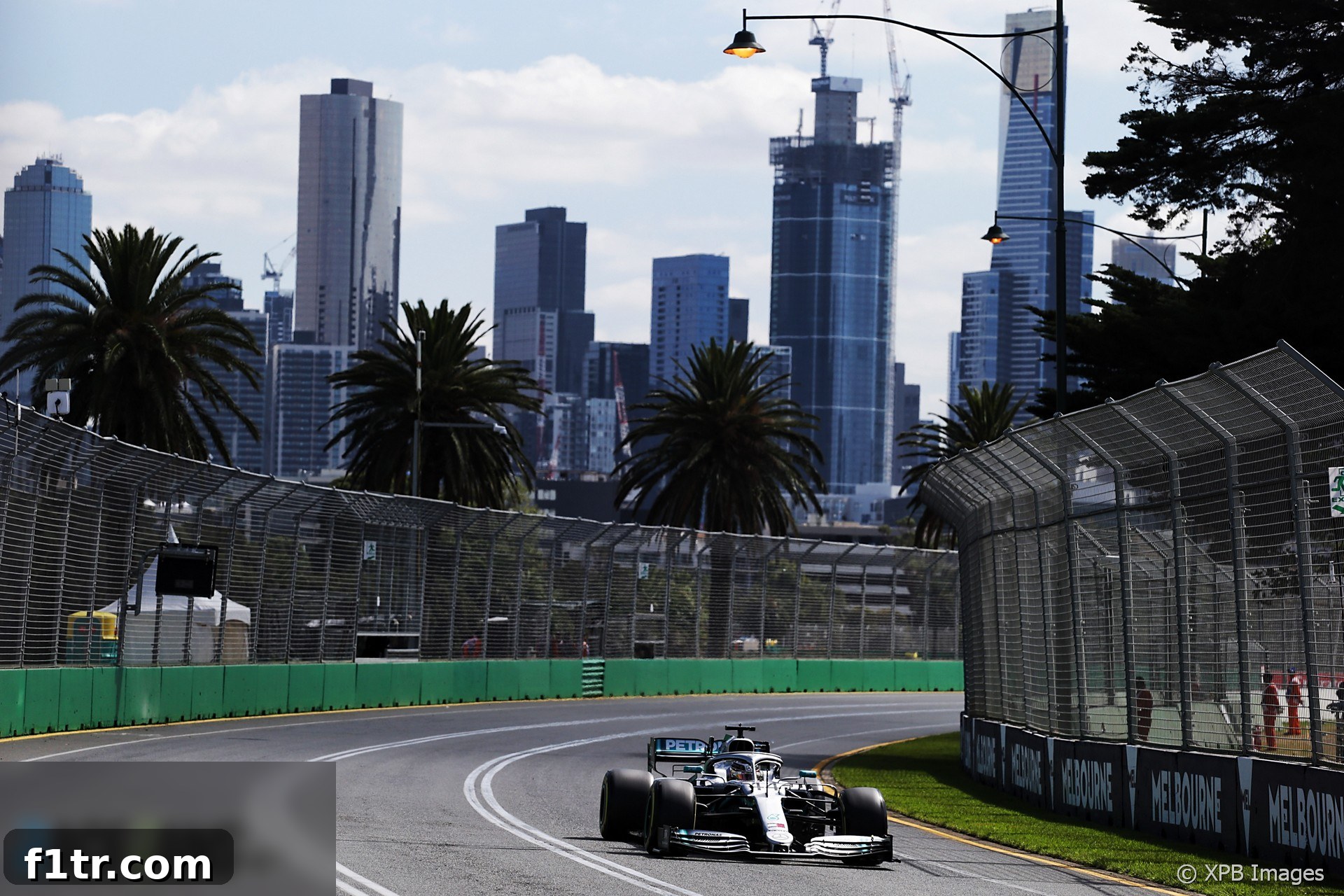
The highly anticipated 2019 Formula 1 season roared to life under brilliant sunshine at Albert Park, Melbourne, as teams and drivers took to the track for the first practice session of the Australian Grand Prix. This opening session was eagerly watched by fans and pundits alike, keen to see how the new aerodynamic regulations and engine developments would impact the pecking order after the uncertainties of pre-season testing. The session immediately set a compelling tone for the weekend, suggesting a much closer fight at the front than many had predicted.
Hamilton Leads Tight Australian Grand Prix FP1 as Ferrari and Red Bull Show Pace
As the green light illuminated, signaling the start of the 2019 F1 season’s first official session, Lewis Hamilton, the reigning world champion, swiftly demonstrated Mercedes’ early strength. He consistently topped the timing sheets in his Mercedes W10, laying down a formidable benchmark. However, the true intrigue lay in the minimal gaps separating the top contenders. Both Ferrari drivers, Sebastian Vettel and his new teammate Charles Leclerc, impressively lapped within a mere tenth of a second of Hamilton’s leading time. This suggested that Ferrari had indeed brought a strong package to Melbourne, living up to the promise hinted at during winter testing.
The session also highlighted the significant steps made by Red Bull Racing with their new Honda power units. Max Verstappen, known for his aggressive yet precise driving style, propelled his Honda-powered Red Bull RB15 to within two-tenths of a second of the Mercedes pace. This performance immediately signaled Red Bull-Honda as a genuine contender, potentially disrupting the long-standing Mercedes-Ferrari duopoly at the front. The close margins among the top three teams promised an exhilarating battle for pole position and race victory throughout the weekend.
Mercedes and Ferrari: An Early Tussle for Supremacy
The initial stages of the first free practice saw the Mercedes drivers comfortably heading the times. Their consistent pace and smooth running suggested strong confidence in their car’s setup. Ferrari, however, bided their time, opting to unleash their full potential in the latter half of the session. It was the young and ambitious Charles Leclerc who first broke into the top three, getting within a whisker of Hamilton’s best lap. Not to be outdone, his four-time world champion teammate Sebastian Vettel then went even quicker, fractionally improving on Leclerc’s impressive mark. This immediate competitiveness from Ferrari indicated that their pre-season form was no fluke and that they were ready to challenge Mercedes from the very first race.
While Hamilton showcased his characteristic precision, his teammate Valtteri Bottas experienced a momentary lapse. Towards the end of the session, the Mercedes driver spun at Turn 15, a challenging right-hander. He dropped his wheels into the grass on entry, losing control and narrowly avoiding a significant impact with the wall as he rejoined the track. This incident relegated Bottas to fifth-quickest, a position largely influenced by Verstappen’s rapid lap. Despite the spin, Bottas was able to recover and continue, but it served as a reminder of the fine margins and unforgiving nature of the Albert Park circuit.
Red Bull-Honda’s Promising Start and Midfield Surprises
The 2019 season marked a new chapter for Red Bull Racing as they partnered with Honda for their power units. Max Verstappen’s strong performance, securing fourth place, was a huge boost for the team, demonstrating the potential of the new engine collaboration. His quick lap underscored a promising beginning for the Red Bull-Honda alliance. However, his new teammate Pierre Gasly had a more challenging start to his Red Bull career, finishing over a second down on Verstappen’s pace. This significant gap allowed two of the midfield contenders to slot in between the two Red Bull cars, highlighting the competitive nature of the field.
Leading the charge in the midfield was Kimi Raikkonen, making an impressive debut for Alfa Romeo Racing. The veteran Finn was the first driver to venture out onto the track and quickly showed formidable pace, placing his Alfa Romeo-Ferrari in sixth position. Close behind him was Daniil Kvyat, making his return to Formula 1 with Toro Rosso. His strong showing in seventh place meant that an impressive three Honda-powered cars featured in the top eight times, underscoring the Japanese manufacturer’s progress. This early midfield form for Alfa Romeo and Toro Rosso suggested that the battle for points would be tighter than ever in 2019.
The fourth Honda-powered car, driven by rookie Alexander Albon for Toro Rosso, unfortunately caused the session’s only red flag. Albon, making his Formula 1 debut, went into the wall backwards at Turn Two, spinning to a halt with his front wing completely detached. While he was able to gingerly drive his damaged car back to the pits, his session was prematurely ended, providing a harsh welcome to the unforgiving world of F1 for the young Thai driver. This incident served as a stark reminder of the demands and challenges faced by rookies in Formula 1, especially on a street circuit like Albert Park.
Further down the order, Kevin Magnussen continued Haas’s strong pre-season form, placing his Haas-Ferrari in ninth position. Rounding out the top 10 was Nico Hulkenberg for Renault. Hulkenberg’s participation in the session was delayed until the final 15 minutes due to an electronic problem plaguing his car, limiting his running significantly. His teammate, local hero Daniel Ricciardo, had a challenging start to his Renault career, with his quickest lap briefly hampered by slower traffic, specifically Romain Grosjean’s Haas. These early issues for Renault highlighted that they still had work to do to solidify their position at the front of the midfield.
Williams’ Struggles and the Rookie Challenge
The Williams Racing team endured an exceptionally difficult opening practice session, confirming fears raised during pre-season testing. Robert Kubica, making an emotional return to Formula 1 after eight years, struggled immensely, finishing almost two seconds off the pace of the next slowest car. His rookie teammate George Russell ended the session last, further compounding Williams’ woes. Russell encountered difficulties even leaving his garage on his first run due to the notoriously cramped Albert Park pit lane, a minor incident that nonetheless symbolized the larger struggles the team faced in preparing their car for the season opener. Their performance underscored the significant challenge ahead for the historic British outfit to close the performance gap to their rivals.
Understanding the First Practice Times
While the first free practice session provides an initial glimpse into the teams’ performance, it’s crucial to remember that these times are not always fully representative of the true pecking order. Teams often run different fuel loads, tire compounds, and testing programs, making direct comparisons difficult. Nevertheless, the exceptionally close times among Mercedes, Ferrari, and Red Bull at the top are undeniably encouraging for the competitive landscape of the 2019 season. The strong showing from the midfield teams also suggests that the battle for points will be fierce, with multiple teams vying for the crucial top 10 positions. As the weekend progresses, particularly into Free Practice 2 and qualifying, a clearer picture of each team’s genuine pace will emerge. For now, the 2019 Australian Grand Prix weekend has begun with a tantalizing promise of tight competition.
| Pos. | No. | Driver | Car | Best lap | Gap | Laps |
|---|---|---|---|---|---|---|
| 1 | 44 | Lewis Hamilton | Mercedes | 1’23.599 | 26 | |
| 2 | 5 | Sebastian Vettel | Ferrari | 1’23.637 | 0.038 | 18 |
| 3 | 16 | Charles Leclerc | Ferrari | 1’23.673 | 0.074 | 18 |
| 4 | 33 | Max Verstappen | Red Bull-Honda | 1’23.792 | 0.193 | 22 |
| 5 | 77 | Valtteri Bottas | Mercedes | 1’23.866 | 0.267 | 30 |
| 6 | 7 | Kimi Raikkonen | Alfa Romeo-Ferrari | 1’24.816 | 1.217 | 18 |
| 7 | 26 | Daniil Kvyat | Toro Rosso-Honda | 1’24.832 | 1.233 | 30 |
| 8 | 10 | Pierre Gasly | Red Bull-Honda | 1’24.932 | 1.333 | 23 |
| 9 | 20 | Kevin Magnussen | Haas-Ferrari | 1’24.934 | 1.335 | 24 |
| 10 | 27 | Nico Hulkenberg | Renault | 1’25.015 | 1.416 | 11 |
| 11 | 99 | Antonio Giovinazzi | Alfa Romeo-Ferrari | 1’25.166 | 1.567 | 23 |
| 12 | 8 | Romain Grosjean | Haas-Ferrari | 1’25.224 | 1.625 | 18 |
| 13 | 23 | Alexander Albon | Toro Rosso-Honda | 1’25.230 | 1.631 | 21 |
| 14 | 55 | Carlos Sainz Jnr | McLaren-Renault | 1’25.285 | 1.686 | 19 |
| 15 | 18 | Lance Stroll | Racing Point-Mercedes | 1’25.288 | 1.689 | 26 |
| 16 | 11 | Sergio Perez | Racing Point-Mercedes | 1’25.498 | 1.899 | 21 |
| 17 | 3 | Daniel Ricciardo | Renault | 1’25.634 | 2.035 | 16 |
| 18 | 4 | Lando Norris | McLaren-Renault | 1’25.966 | 2.367 | 31 |
| 19 | 88 | Robert Kubica | Williams-Mercedes | 1’27.914 | 4.315 | 25 |
| 20 | 63 | George Russell | Williams-Mercedes | 1’28.740 | 5.141 | 25 |
First Practice Visual Gaps: A Closer Look at the Performance Spread
Lewis Hamilton – 1’23.599
+0.038 Sebastian Vettel – 1’23.637
+0.074 Charles Leclerc – 1’23.673
+0.193 Max Verstappen – 1’23.792
+0.267 Valtteri Bottas – 1’23.866
+1.217 Kimi Raikkonen – 1’24.816
+1.233 Daniil Kvyat – 1’24.832
+1.333 Pierre Gasly – 1’24.932
+1.335 Kevin Magnussen – 1’24.934
+1.416 Nico Hulkenberg – 1’25.015
+1.567 Antonio Giovinazzi – 1’25.166
+1.625 Romain Grosjean – 1’25.224
+1.631 Alexander Albon – 1’25.230
+1.686 Carlos Sainz Jnr – 1’25.285
+1.689 Lance Stroll – 1’25.288
+1.899 Sergio Perez – 1’25.498
+2.035 Daniel Ricciardo – 1’25.634
+2.367 Lando Norris – 1’25.966
+4.315 Robert Kubica – 1’27.914
+5.141 George Russell – 1’28.740
Note: Drivers more than ten seconds off the pace are omitted for clarity in this visual representation.
Further Analysis and Outlook for the 2019 Australian Grand Prix
The first free practice session has provided a compelling start to the 2019 Formula 1 season. The competitive advantage demonstrated by Mercedes, matched closely by a resurgent Ferrari and a promising Red Bull-Honda package, indicates a thrilling season ahead. The midfield battle is equally fascinating, with veteran drivers like Kimi Raikkonen immediately making an impact in their new surroundings and several teams showing the potential to challenge for points. While practice sessions are only an indicator, the Albert Park circuit has already delivered excitement and unexpected moments. Fans can now eagerly anticipate Free Practice 2, where teams typically focus on longer runs and race simulations, offering another layer of insight into their true performance before the crucial qualifying session on Saturday.
Browse all 2019 Australian Grand Prix articles