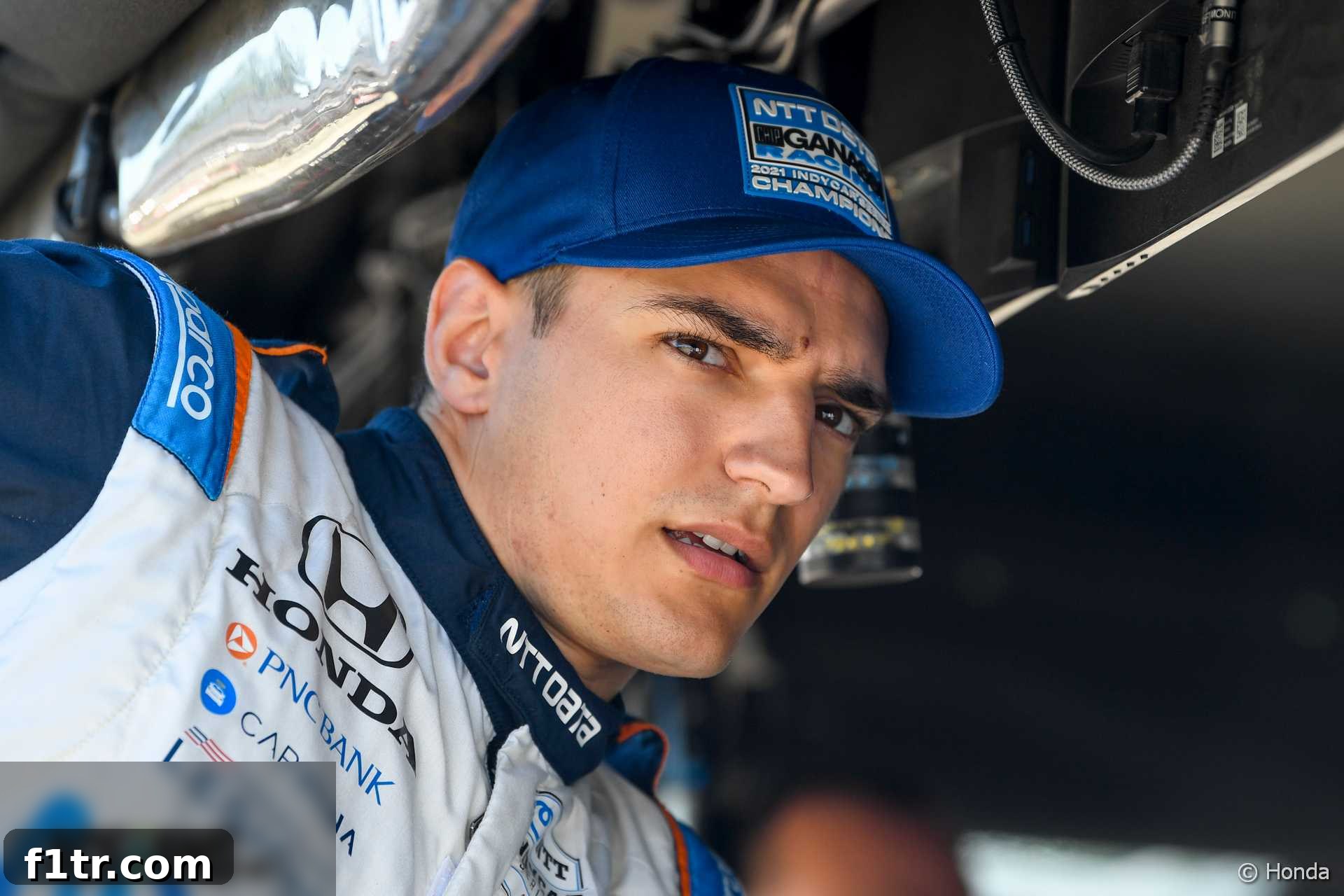
The world of motorsports is often characterized by high-stakes competition, not just on the track but also in the intricate dance of driver contracts and team loyalties. A recent unfolding saga involving reigning IndyCar champion Alex Palou and the iconic McLaren racing organization has thrown this into sharp relief. Zak Brown, CEO of McLaren, has publicly expressed his profound disappointment regarding Palou’s decision to renege on an agreement to join the team next year. Brown, however, firmly believes that Palou’s eleventh-hour U-turn is no indictment of the McLaren team’s vision, capabilities, or culture.
The news broke when McLaren confirmed they had initiated legal proceedings against Palou, following his notification that he would not be honoring his commitment for the upcoming season. This development reignites a contractual dispute that has simmered for over a year between McLaren and Chip Ganassi Racing, Palou’s current IndyCar outfit. The 2021 IndyCar series champion’s future has been a contentious topic, leading to an initial resolution that allowed Palou to continue racing for Ganassi this season, while also making select appearances for McLaren in Formula 1. These F1 engagements included a notable participation in a free practice session at last year’s United States Grand Prix, showcasing a clear pathway McLaren envisioned for his integration into their broader racing portfolio.
The expectation was clear: Alex Palou would transition to McLaren’s IndyCar team for the 2024 season, a move that promised stability and continuity for both driver and team. Consequently, Brown’s reaction to Palou’s change of heart was one of deep disappointment. “We had a very good relationship,” Brown stated, highlighting the personal connection that had apparently been forged. A particularly stinging aspect for Brown was the lack of direct communication from Palou himself. “He hasn’t personally communicated with me about it, which is rather disappointing given all that we have done for him and the opportunities that we provided,” Brown conveyed, underscoring the perceived breach of trust and professional courtesy.
Palou himself has remained tight-lipped regarding the precise motivations behind his decision, offering no public explanation. His performance on the track this year, however, has been nothing short of stellar. With four race victories already under his belt, Palou is firmly on course to clinch his second IndyCar championship, a testament to his undeniable talent and focus amidst the off-track turbulence. This remarkable consistency and success on the asphalt further complicate the narrative, leaving many to speculate on the underlying reasons for his dramatic pivot away from McLaren.
“I don’t think his decision has anything to do with McLaren per se,” Brown reiterated, determined to separate the driver’s personal choice from any perceived failings of the team. “Our relationship was very strong.” This assertion suggests that Brown views the matter as a personal decision on Palou’s part, rather than a rejection of McLaren’s competitive standing or the opportunities they offered. Brown continued, expressing profound personal disappointment: “So, I’m very disappointed in how it’s been handled on a personal level. I think our relationships with our drivers is something that McLaren takes very seriously, and I think we do a good job of creating a family environment for our drivers. So, to be let down, especially in that manner, is pretty, pretty disappointing.” This statement reflects McLaren’s organizational philosophy, which places a high value on nurturing strong, supportive relationships with its talent pool.
Unraveling the Mystery: Why Palou’s Sudden Shift?
One prominent theory circulating in motorsport circles posits that the remarkable debut season of Oscar Piastri in Formula 1 for McLaren this year may have influenced Palou’s decision. The speculation suggests that Piastri’s immediate success and secure position in McLaren’s F1 lineup might have led Palou to conclude that a direct path to an F1 seat with the team would be significantly diminished or even non-existent in the foreseeable future. However, Brown dismissed this as pure conjecture, stating, “I have no idea what’s going through his mind because I’ve not spoken with him.”
Brown quickly countered this theory by emphasizing the inherently fluid and unpredictable nature of Formula 1. “But things move fast in Formula 1,” he added. “Drivers can break their wrists in an instant. So I think if you want to do Formula 1, you need to kind of hang around the hoop and see what opportunities provide.” To illustrate this point, Brown cited the compelling example of Nyck de Vries, a driver who was largely off the F1 radar until a last-minute substitute appearance propelled him into a full-time F1 seat. “Nyck de Vries wasn’t on anyone’s radar, goes and does one race, next thing you know, he has a Formula 1 seat. So I don’t know what’s in his mind, but hanging around the hoop and being in a Formula 1 environment to me seems to give you the best opportunity to become a Formula 1 driver in whatever team that may be.” Brown’s perspective highlights the value of proximity and readiness within the F1 ecosystem, suggesting that Palou might have foregone a crucial stepping stone.
Brown also pondered the potential long-term implications for Palou’s Formula 1 aspirations. While acknowledging Palou’s immense talent, he expressed doubt about whether the Spaniard would ever get the chance to truly showcase his capabilities on the ultimate global stage of F1. “Alex is obviously a very talented driver. We’ve had him in our car a handful [of times],” Brown noted, referring to Palou’s F1 testing opportunities with McLaren. “I think whether it’s Alex, or any other driver, to be a Formula 1 driver, you need to clearly have the pace, but you also have to have the mental ability, if you like. I think in Formula 1 there’s so much you have to do as a driver to be a complete racing driver.” Brown concluded with a melancholic observation: “So, he certainly has demonstrated in IndyCar and his time with us that he is a complete racing driver, but I’m not sure we’ll ever find out.” This sentiment underscores the formidable challenges and unique demands that define a successful Formula 1 career, extending beyond raw speed to encompass mental fortitude, adaptability, and political acumen.
McLaren’s Reserve Driver Dilemma and the Superlicence Hurdle
Palou’s abrupt departure creates a significant void for McLaren, particularly in the critical role of a Formula 1 reserve driver. While McLaren has invested in testing opportunities for other promising IndyCar talents, notably Pato O’Ward—who also competes for McLaren’s IndyCar team—and Colton Herta, their eligibility for an F1 superlicence under the FIA’s stringent points system remains a substantial obstacle. Brown articulated the stark reality of this challenge. “Colton and Pato, neither have their superlicence at the moment, and with the way the current system works, their chances of getting a super licence are unfortunately going backwards because of the way the system works and where they are right now currently in IndyCar,” Brown explained.
The FIA’s superlicence points system is designed to ensure that only the most qualified and experienced drivers reach Formula 1. However, it controversially awards fewer points for success in IndyCar compared to junior single-seater categories like Formula 2 or even Formula 3. This disparity significantly hinders the progression of highly talented IndyCar drivers into F1, creating a frustrating bottleneck for those like O’Ward and Herta who demonstrate clear potential but struggle to accumulate the necessary points. Despite these challenges, McLaren remains committed to exploring all avenues. “Pato is someone that will be in the car later in the year in our TPC [testing of previous cars] and has done a great job for us, so Pato is certainly someone that’s a focus,” Brown confirmed, indicating that O’Ward continues to be a key part of McLaren’s driver development considerations.
Ultimately, Brown re-emphasized McLaren’s immediate priorities amidst these contractual turbulences. “That being said, we are talking about reserve drivers and testing because what’s most important for us is our current driver line-up, of which both drivers are doing an excellent job,” he stated, referring to Lando Norris and Oscar Piastri in their Formula 1 team. This statement serves to reassure fans and stakeholders that despite the Palou situation, McLaren’s core F1 ambitions and present performance remain unaffected and firmly on track.
The Broader Implications of Driver Loyalty and Contractual Integrity
The Alex Palou saga is more than just a contractual dispute; it’s a modern parable for the complexities and pressures inherent in elite motorsports. Driver loyalty, once considered paramount, is increasingly tested by fluctuating opportunities, the allure of different racing series, and the ever-present financial incentives. Such high-profile disagreements can have significant financial and reputational impacts on both the driver and the teams involved. For McLaren, a team with a storied history and a clear ambition to return to championship contention in both IndyCar and Formula 1, managing such disputes efficiently and professionally is crucial for maintaining its standing and attracting future talent. Meanwhile, Palou’s decision, irrespective of its unstated motivations, will undoubtedly define a chapter in his career, shaping perceptions of his professional conduct within the fiercely competitive racing world. As the legal proceedings unfold and the dust settles, the motorsport community will keenly watch the resolutions, understanding that each such event reshapes the landscape of driver-team relationships for years to come.
Related Motorsport News
- Verstappen Attributes Record-Equalling Win Streak to Azerbaijan GP Defeat
- Alonso Cautious on Aston Martin’s Form After Latest Podium Finish
- Max Verstappen Achieves Historic Unbeaten Hat-Trick in Home Races
- Horner Reaffirms Perez’s Position as Red Bull Driver for 2024
- Sainz Suggests Ferrari Was Sixth or Seventh Fastest at Zandvoort
Explore More 2023 Dutch Grand Prix Articles