2021 Hungarian Grand Prix: Victory, Protest, and Post-Race Investigations Shake Formula 1
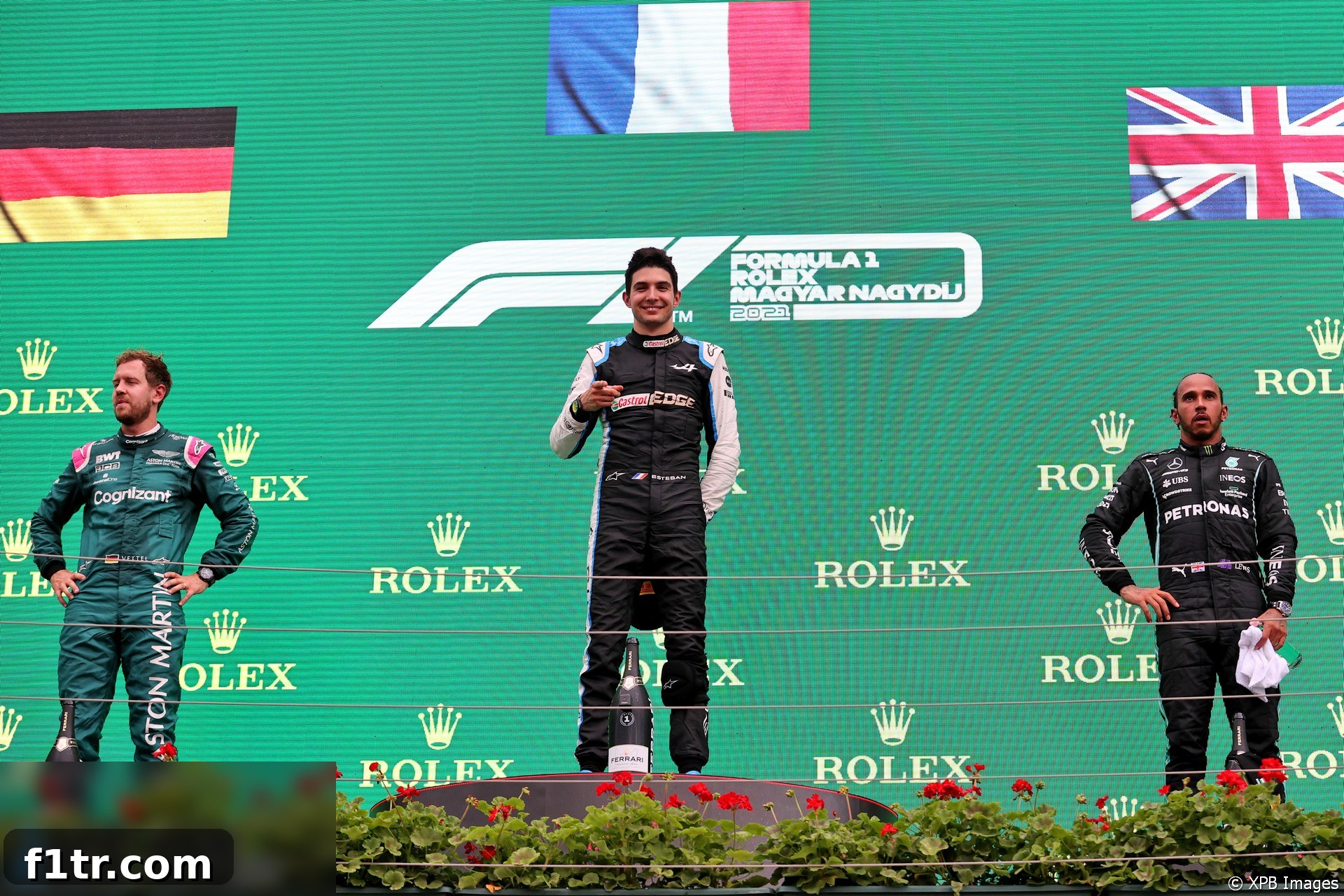
The 2021 Hungarian Grand Prix delivered an unforgettable spectacle, culminating in an historic maiden Formula 1 victory for Esteban Ocon. However, the celebrations were quickly overshadowed as post-race announcements confirmed that the French victor, along with runner-up Sebastian Vettel, Carlos Sainz Jnr, and retirees Valtteri Bottas and Lance Stroll, were summoned to the stewards for various procedural breaches. This series of investigations cast a significant spotlight not only on the strict adherence to F1 regulations but also on the intersection of sport and social commentary, particularly concerning Vettel’s poignant protest.
Esteban Ocon’s Historic Win and a Minor Infraction
Esteban Ocon’s triumph at the Hungaroring marked a monumental milestone in his career and for the Alpine F1 team. Capitalizing on a chaotic opening lap that eliminated several front-runners, Ocon drove a flawless race under immense pressure, fending off the vastly experienced Sebastian Vettel to secure his first-ever Formula 1 win. This victory was a testament to his skill, composure, and the strategic prowess of his team, immediately etching his name into the annals of French motorsport history.
However, the elation was momentarily tempered by news of a post-race investigation concerning the Alpine driver. Ocon was alleged to have failed to follow the race director’s instructions regarding post-race procedures. Specifically, the young Frenchman reportedly stopped his car after the pit exit upon taking the chequered flag, a deviation from the prescribed protocol for parc fermé and media commitments. While seemingly a minor oversight in the heat of an emotional victory, Formula 1 regulations are meticulously detailed, requiring strict adherence to ensure safety and maintain the orderliness of post-race proceedings. Such procedures are critical for facilitating parc fermé inspections, ensuring safe track clearance, and guiding drivers to designated areas for podium ceremonies and media obligations.
Sebastian Vettel’s Powerful Stand for LGBTQ+ Rights
While Ocon’s investigation focused on a technical procedural matter, the inquiries involving Sebastian Vettel, Carlos Sainz Jnr, Valtteri Bottas, and Lance Stroll delved into a more profound area: pre-race observance protocols, particularly during the national anthem. These regulations explicitly state that drivers must “remove their t-shirts” and attend the national anthem performance “wearing their race suits.” Footage from the pre-race ceremony at the Hungaroring clearly indicated that Vettel did not comply with this specific instruction. Instead, the four-time world champion wore a T-shirt adorned with a rainbow flag, a powerful symbol of support for LGBTQ+ rights, underneath his race suit during the Hungarian national anthem.
Vettel’s actions were not merely coincidental but a deliberate and highly visible protest. Ahead of the race weekend, Hungary had enacted controversial new legislation that banned the display of content depicting homosexuality or gender change to minors in television programmes or educational materials. This law, widely condemned internationally as discriminatory and a violation of fundamental human rights, sparked significant outrage. Vettel, a vocal advocate for social justice and equality, along with several other drivers, had publicly expressed strong opposition to the Hungarian legislation prior to the Grand Prix. His decision to wear the rainbow T-shirt during such a prominent and protocol-driven moment was a direct response, transforming the pre-race ceremony into a platform for his convictions.
Following the race, when questioned about the summons, Vettel unequivocally suggested that his T-shirt was the reason for the stewards’ interest. His defiant response resonated deeply within the motorsport community: “They can disqualify me. They can do what they want. I’d do it again.” This statement underscored his unwavering commitment to his principles, indicating that the potential sporting consequences were secondary to the importance of making a stand against what he perceived as injustice. His words ignited a significant debate about athletes’ right to protest and F1’s role in addressing broader societal issues, especially in light of its “We Race As One” diversity and inclusion campaign.
Other Drivers Involved: Sainz, Bottas, and Stroll
The investigations also encompassed Carlos Sainz Jnr, who finished fourth for Ferrari, and the two Mercedes and Aston Martin drivers, Valtteri Bottas and Lance Stroll, both of whom were involved in the opening lap multi-car collision that forced their retirements. While the specifics of their breaches were not as widely publicized as Vettel’s, they were also cited for violations of pre-race procedures, including aspects related to the ‘WeRaceAsOne’ observance and the national anthem ceremony. It’s understood that their infractions might have pertained to similar failures to adhere strictly to the dress code or ceremonial protocols, though without the overt protest element seen in Vettel’s case. The regulations surrounding the ‘WeRaceAsOne’ campaign encourage unity and respect, and any deviation during official ceremonies can lead to scrutiny, regardless of intent.
The Stewards’ Verdicts: Reprimands Issued
In the aftermath of the investigations, the stewards delivered their decisions, opting for a relatively lenient course of action given the circumstances. Both Esteban Ocon and Sebastian Vettel, along with Carlos Sainz Jnr, Valtteri Bottas, and Lance Stroll, received reprimands for their respective violations. A reprimand is the mildest form of penalty in Formula 1, effectively a formal warning without any immediate sporting consequences such as grid penalties or time sanctions. Accumulating multiple reprimands throughout a season can lead to more severe penalties, but individually, they serve as a cautionary note to drivers and teams.
For Ocon, the reprimand for his post-race parking error was a minor footnote to his career-defining victory. It highlighted the meticulous nature of F1 regulations, where even moments of pure elation must still comply with operational guidelines. The decision to issue reprimands to Vettel, Sainz, Bottas, and Stroll for their pre-race violations, particularly in Vettel’s case, reflected a complex balancing act by the FIA (Fédération Internationale de l’Automobile). While upholding the integrity of sporting regulations and official protocols, the stewards also acknowledged the context of the protest without imposing a draconian punishment that might have escalated the situation or been perceived as stifling freedom of expression. This measured response allowed the sporting regulations to be technically enforced while avoiding a heavy-handed approach to an issue with significant social and political undertones.
F1’s Evolving Stance on Driver Activism and Regulations
The incident at the Hungarian Grand Prix sparked a broader conversation within Formula 1 about driver activism and the rigid framework of its sporting regulations. F1 has, in recent years, actively promoted diversity, inclusion, and social responsibility through initiatives like “We Race As One.” This campaign aims to highlight F1’s commitment to tackling global issues and creating a more inclusive sport. However, the precise boundaries of how drivers can express their personal beliefs, especially during official ceremonies, remain a subject of ongoing debate.
Sebastian Vettel’s actions undeniably brought significant attention to Hungary’s controversial legislation, leveraging his global platform in a way that aligns with the spirit of advocating for a better, more equitable world. The reprimand, while a formal penalty, also implicitly allowed his message to stand without completely undermining the sporting authority. This event raises important questions for Formula 1 moving forward: how will it balance the need for strict adherence to rules that ensure fair competition and safety, with the increasing desire of its stars to use their voices on critical social issues? The sport faces the challenge of evolving its policies to reflect a more socially conscious era while maintaining its traditional values and the integrity of its events.
The 2021 Hungarian Grand Prix will forever be remembered for Esteban Ocon’s stunning victory, a triumph that capped a dramatic race. Yet, it will also be indelibly marked by Sebastian Vettel’s powerful, silent protest and the subsequent investigations. This confluence of sporting achievement and social commentary underscored the multifaceted nature of modern Formula 1, where the spectacle on track is often intertwined with significant narratives off it, challenging the sport to continually define its role in a rapidly changing world.
More from the 2021 Hungarian Grand Prix:
- Ocon congratulated by past French F1 aces after breakthrough win
- Alpine doubt first win signals a performance breakthrough
- Vettel disqualification hearing to take place on Monday
- Why no one received a Grosjean-style race ban for the Hungarian GP pile-up
- Ocon’s “beautiful” late-stint pace was other key to Alpine’s breakthrough win
Browse all 2021 Hungarian Grand Prix articles