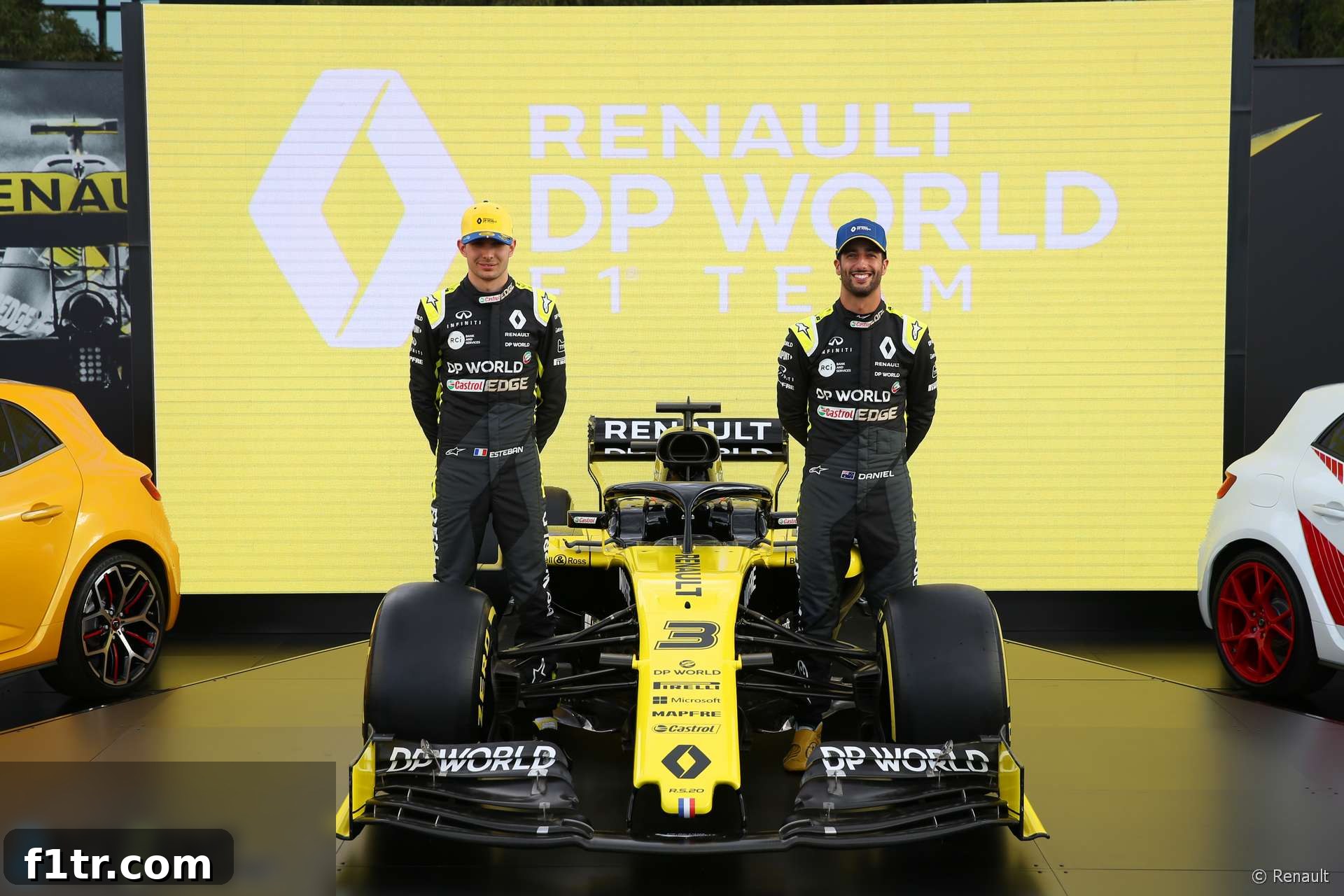
Renault Unveils Striking 2020 F1 Livery and Strategic Partnership with DP World
Anticipation always runs high as a new Formula 1 season approaches, and the unveiling of a team’s race livery and its commercial partners is a pivotal moment in setting the tone for the championship ahead. For the 2020 F1 season, Renault Sport Racing made a significant statement, revealing not only the definitive race livery for its RS20 challenger but also announcing a transformative new title sponsor that underscored the team’s ambitions both on and off the track.
A Fresh Look for a Challenging Season: The RS20 Livery
The 2020 season saw Renault present a refreshed and refined aesthetic for its car, the RS20. The livery maintained the iconic yellow and black scheme that has long been synonymous with the French manufacturer’s racing heritage, but with subtle yet impactful updates designed to give the car a more aggressive and modern presence on the grid. The definitive race livery showcased a sleek integration of colours, with a predominant matte black finish offering a sharp contrast to the vibrant, energetic yellow. This choice not only gave the car a contemporary edge but also hinted at a more serious, performance-oriented approach for the season.
Visually, the black sections were more prominent than in previous years, extending further down the sidepods and around the engine cover, while the bright yellow flowed dynamically across the front wing, nose cone, and part of the halo. The design was carefully crafted to enhance the visual speed of the car, with lines and colour breaks strategically placed to draw the eye along its aerodynamic contours. This livery was more than just paint; it was a visual representation of the team’s identity and its commitment to pushing boundaries in the highly competitive world of Formula 1. The RS20, adorned in this striking new look, was ready to face the rigours of the championship, promising both speed and style.
DP World Joins as Title Sponsor: A Strategic Alliance
Beyond the visual appeal, the most impactful news from Renault’s announcement was the introduction of its new title sponsor: DP World. Under this landmark deal, the team would officially compete as “Renault DP World F1 Team.” DP World, a United Arab Emirates-based entity, is a world leader in smart logistics solutions, operating a global network of ports, terminals, logistics parks, and economic zones. Their mission, as they describe it, is to be “the leading provider of smart logistics solutions,” connecting global trade and facilitating efficient movement of goods across continents.
This partnership represented more than just a financial injection; it was a deep, strategic alliance. The synergy between a global motorsport team like Renault F1, with its complex logistical demands, and a world-renowned logistics giant like DP World, was immediately apparent. DP World’s extensive expertise in supply chain management, cargo handling, and advanced logistics technologies offered Renault F1 an invaluable advantage, both on and off the race track. This collaboration was set to transform how the team managed its global operations, from transporting intricate car components to moving entire hospitality units across the globe for each Grand Prix event.
Driving Efficiency and Sustainability in Formula 1
Renault Sport Racing chairman Jerome Stoll articulated the profound implications of this tie-up, stating that the partnership would enable them to “explore ways of improving our efficiency and mitigating our environmental impact.” This statement perfectly encapsulated the forward-thinking nature of the alliance, linking high-performance motorsport with critical global issues.
Formula 1 itself had already expressed ambitious goals to become fully carbon neutral by 2030, a target that required significant innovation and strategic partnerships across all facets of the sport. Stoll further explained, “We are constantly evaluating ways to reduce our carbon footprint and our turnaround time.” The logistical footprint of an F1 team is immense; moving equipment, personnel, and highly sensitive components across 20+ countries each year generates substantial emissions and presents complex challenges in terms of speed and efficiency. Every race weekend requires a monumental logistical effort, often under tight schedules and strict regulations.
This is where DP World’s expertise becomes crucial. Their “smart logistics solutions” involve leveraging advanced data analytics, interconnected supply chains, and multimodal transportation networks to optimize routes, reduce waste, and improve overall operational flow. Working with DP World, Renault F1 anticipated discovering “opportunities for tangible solutions to some of the logistical challenges faced by our F1 team’s supply chain and by extension, the automotive industry at a larger scale.” For instance, optimizing shipping routes to reduce fuel consumption, implementing more efficient packing and unpacking processes to cut down on time, or exploring sustainable transport options like sea freight where feasible, could all contribute to a smaller carbon footprint.
The collaboration with DP World was designed to be a practical testbed. F1’s rapid prototyping environment and intense competitive pressure make it an ideal setting to develop and refine sustainable logistics practices. Solutions proven effective in the demanding world of Formula 1 could then be scaled up and applied to Renault’s broader automotive operations, driving industry-wide progress towards greater efficiency and environmental responsibility. This partnership underscored a growing trend in F1: moving beyond traditional branding exercises to form collaborations that provide genuine operational and strategic benefits, aligning commercial objectives with broader industry and environmental goals.
The Business of F1: Sponsorships Beyond the Sticker
The landscape of Formula 1 sponsorship has evolved dramatically over the years. What once began as simple branding placements has transformed into complex, multi-faceted partnerships aimed at extracting mutual value far beyond mere logo visibility. The Renault DP World F1 Team alliance is a prime example of this evolution. DP World gains immense global visibility through one of the world’s most watched sports, reaching diverse markets and enhancing its brand image as a leader in innovation and sustainability.
For Renault, the benefits are equally significant. Beyond the financial support that is vital for competitive F1 operations, they gain access to world-class logistical expertise. In a sport where fractions of a second count, efficiency in every aspect, including supply chain management, can directly impact performance. Reduced transport times for parts, optimized movement of personnel, and environmentally conscious logistics solutions contribute to a leaner, more agile, and more responsible racing operation. Such long-term, strategic partnerships are increasingly becoming the backbone of successful F1 teams, allowing them to focus on what they do best: developing cutting-edge technology and competing at the pinnacle of motorsport.
The 2020 F1 Season: High Hopes Amidst Unprecedented Challenges
The unveiling of the Renault DP World F1 Team and its RS20 livery occurred just before the start of what promised to be an exciting 2020 F1 season. With a strong driver lineup and optimism surrounding the car’s development, Renault had set clear targets for improved performance and a climb up the constructors’ championship standings. The team was eager to demonstrate its progress and capitalize on the significant investment into its engine and chassis programmes.
However, the 2020 season would prove to be unlike any other in Formula 1 history. What began with the usual pre-season anticipation quickly turned into an unprecedented challenge with the onset of a global pandemic. The traditional season opener in Australia was cancelled at the last minute, and the entire calendar was thrown into disarray. The sport had to adapt rapidly, creating a revised schedule with back-to-back races in Europe and implementing stringent health and safety protocols. In this environment, the importance of efficient and flexible logistics, precisely the kind of solutions DP World offered, became even more critical. Teams needed to move quickly, often with reduced staff, and adhere to new travel restrictions, making every logistical decision count towards simply being able to race. The partnership’s focus on “turnaround time” and “efficiency” took on an unforeseen but paramount significance amidst these global disruptions.
Looking Ahead: Renault’s Vision and the Future of F1
The 2020 season, marked by both the excitement of new partnerships and the challenges of a global crisis, reinforced Renault’s commitment to Formula 1 as a platform for innovation and brand exposure. The alliance with DP World was a clear indicator of the team’s forward-looking strategy, embracing not only performance improvements but also sustainable practices vital for the future of motorsport and the wider automotive industry. While the Renault F1 Team would later evolve into the Alpine F1 Team, the 2020 season, with its distinctive livery and groundbreaking sponsorship, remains a significant chapter in its history, showcasing a crucial step towards operational excellence and environmental stewardship.
Formula 1 continues to be a testbed for advanced technologies and an arena where partnerships drive progress. The collaboration between Renault and DP World in 2020 exemplified how the sport can act as a catalyst for innovation, not just in aerodynamics and engine performance, but also in critical areas like global logistics and environmental sustainability. It demonstrated that success in modern F1 requires a holistic approach, integrating every aspect of the operation, from the design of the car to the efficiency of its global movement, all while striving for a more sustainable future.