Formula 1 Regulations: Enhancing Fairness and Spectacle in 2024 Season
Formula 1, a sport synonymous with innovation and high-octane drama, consistently evolves its sporting regulations to ensure fair competition, driver safety, and an unparalleled spectacle for its global fanbase. The Fédération Internationale de l’Automobile (FIA) recently published crucial updates to the sporting regulations, directly addressing critical issues that emerged during the opening races of the 2024 season. These revisions underscore the FIA’s proactive approach to refining the rulebook, tackling challenges ranging from controversial race starts to optimizing track action in adverse weather conditions. The twin pillars of these new rules are to eliminate ambiguity in critical moments and to guarantee that fans receive the maximum possible on-track excitement, even when nature intervenes.
Upholding Start Line Integrity: A Stricter False Start Rule
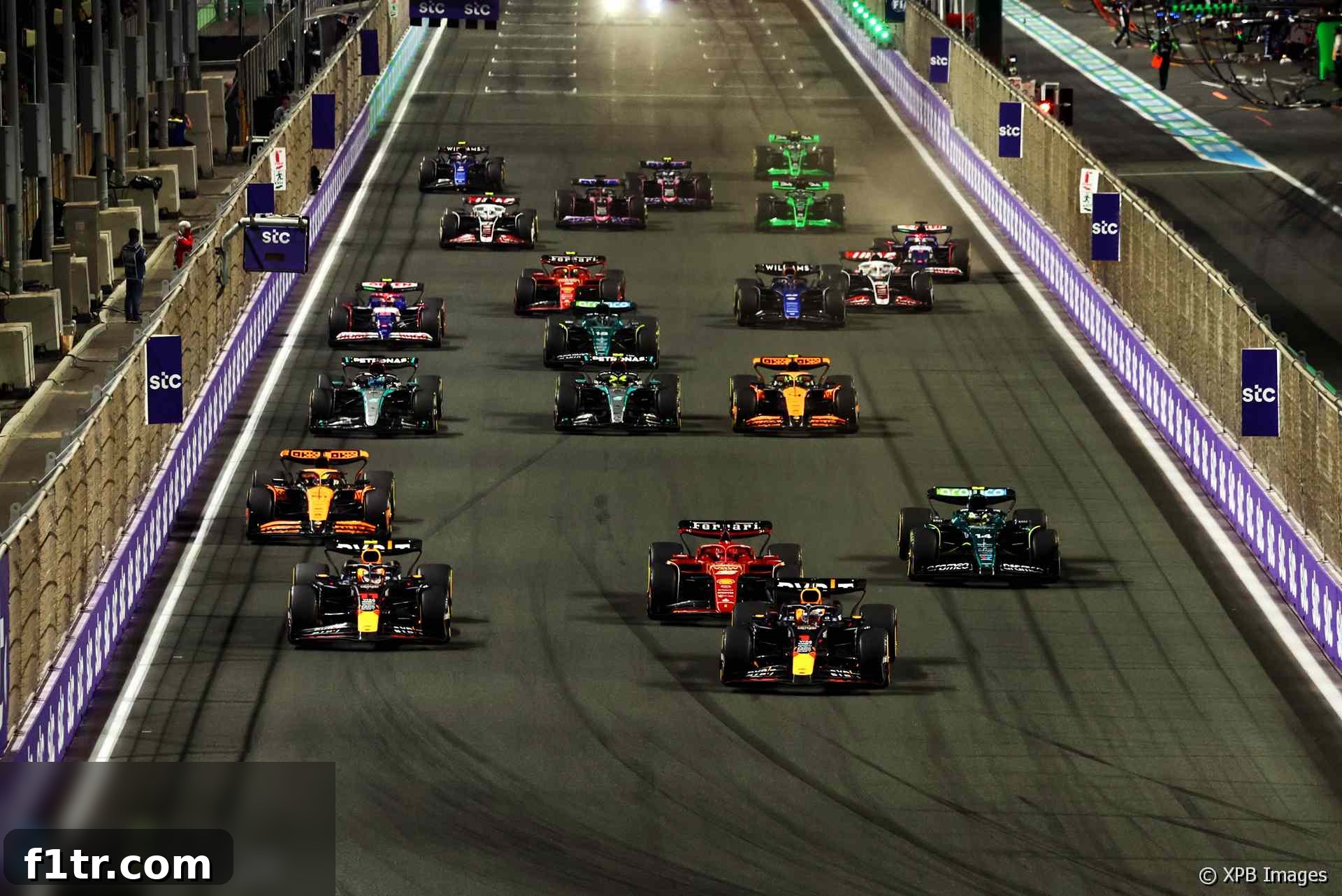
The intensity of a Formula 1 race start is unparalleled, with twenty cars vying for position as the red lights extinguish. A millisecond’s advantage can dictate the outcome of a race, making the integrity of the start procedure paramount. Historically, the FIA has employed sophisticated technology, including transponders fitted to each car, to precisely detect any premature movement before the official start signal. However, recent events highlighted a potential loophole in the existing regulatory framework, prompting a swift and decisive response from the governing body.
The Lando Norris Incident: A Catalyst for Change
The Saudi Arabian Grand Prix earlier this season brought the false start rule under intense scrutiny. McLaren driver Lando Norris was at the center of a controversy, with some rivals suggesting he had jumped the start, gaining an unfair advantage. Despite visual evidence from onboard cameras and external viewpoints appearing to show a slight movement, an official investigation by the FIA ultimately cleared Norris. The crucial factor in this decision was the data from the FIA-approved transponder fitted to his car, which did not indicate any movement prior to the lights going out. This outcome, while technically compliant with the rules at the time, sparked debate about the sole reliance on a single piece of technology for such a critical judgment.
Empowering Stewards: The New False Start Regulation
Recognizing the limitations and potential for misinterpretation inherent in a rule solely dependent on transponder data, the FIA moved to introduce a significant update to the F1 sporting regulations. The revised rule now grants the stewards greater authority and discretion to determine a false start, even if the electronic transponder fails to register a premature movement. This pivotal change removes the previous restrictive clause that stated judgment “must be made by an FIA approved and supplied transponder.” The shift in wording empowers the stewards to consider all available evidence, including visual cues and other data sources, ensuring a more comprehensive and robust decision-making process.
The updated regulation also clarifies the precise window within which a false start infraction occurs. It states that a driver will be penalized if their car moves “after the four-second light is illuminated and before the start signal is given by extinguishing all red lights.” This “four-second light” refers to the illumination of the second pair of red lights in the starting sequence, acting as an advance warning before the entire grid awaits the final signal. This explicit definition leaves no room for ambiguity regarding the critical period for a potential infringement, providing clarity for both drivers and race officials.
Implications for Drivers and Fair Competition
This revised false start rule carries significant implications for drivers. They can no longer rely solely on the theoretical margin of error or potential technical blind spots of a transponder. The onus is now squarely on the driver to ensure their car remains absolutely stationary until the final lights go out. This will likely lead to even greater caution and precision at the start, reinforcing the principle of fair play and ensuring that no driver can gain an undue advantage through premature movement, regardless of technological detection. The goal is to eliminate any perception of unfairness and maintain the integrity of one of motorsport’s most thrilling moments.
Maximizing Track Action: Tackling Wet Practice Tyre Conservation
Beyond the start line, another critical area of focus for the FIA has been the issue of limited track running during rain-affected practice sessions. Formula 1, first and foremost, is a spectacle, and nothing frustrates fans more than seeing cars remain in their garages, especially when conditions present a unique challenge. The problem stemmed from teams often choosing to preserve their limited allocation of wet-weather tyres during free practice sessions, fearing that using them might compromise their strategic options for later in the weekend, particularly qualifying or the race itself if wet conditions persisted.
Fan Displeasure and Domenicali’s Stance
This issue came to a head during the 2024 Japanese Grand Prix at Suzuka, where a rain-hit second practice session saw minimal running from most teams. The sight of empty tracks, despite suitable conditions for intermediate tyres, drew widespread criticism from fans and stakeholders alike. Formula 1 CEO Stefano Domenicali was among those who publicly voiced his strong displeasure, emphasizing the detrimental impact on the fan experience. His comments highlighted the tension between teams’ strategic imperatives and the sport’s obligation to provide entertainment and track action for spectators who pay to see the fastest cars in the world pushed to their limits, irrespective of the weather.
The Intermediate Tyre Allocation and New Regulation
To address this, the FIA has introduced a new clause, Article 30.5 (g), into the sporting regulations, specifically targeting the conservation of intermediate tyres. Under the existing rules, each driver is allocated five sets of intermediate tyres for a Grand Prix weekend, as specified in Article 30.2 (a) ii. The new rule directly impacts this allocation: “From the five sets of intermediate tyres allocated to each driver under Article 30.2 (a) ii, if [first, second or third practice] is declared wet, one set of intermediate tyres must be electronically returned no later than two hours after the end of [third practice].”
This innovative regulation effectively forces teams to utilize their intermediate tyre allocation more freely in wet practice sessions. If any of the three practice sessions (FP1, FP2, or FP3) are officially declared “wet” by race control, teams are now obligated to electronically return one set of intermediate tyres. This return must occur within two hours after the conclusion of FP3. The crucial aspect here is that whether the tyre is physically used or not, if a wet session occurs, one intermediate set is effectively removed from their overall allowance. This incentivizes teams to use that set during the wet practice rather than hoarding it, as they will lose it regardless. The electronic return mechanism ensures compliance and allows the FIA to accurately track tyre usage and allocation.
Strategic Shifts for Teams and Benefits for Spectators
The strategic implications for teams are significant. The option of deliberately sitting out a wet practice session to save intermediates for later in the weekend has now been diminished. Teams will be compelled to send their cars out and gather valuable data in wet conditions, knowing that one set will be forfeited if a practice session is declared wet. This not only enhances the amount of running but also provides crucial opportunities for drivers to acclimatize to challenging track conditions and for engineers to optimize car setups for potential wet qualifying or race scenarios. This proactive approach to tyre management will add another layer of strategic complexity to race weekends.
For fans, the benefits are immediate and tangible. More cars on track during wet practice sessions mean more entertainment, more drama, and a greater showcase of driver skill and engineering prowess in challenging environments. It ensures that the millions of viewers worldwide, and those attending trackside, will see the cars in action, making every session potentially more meaningful and exciting, thereby elevating the overall Formula 1 experience.
Conclusion: The FIA’s Commitment to Evolution
The introduction of these new Formula 1 sporting regulations for the 2024 season exemplifies the FIA’s continuous commitment to refining the sport. By addressing the nuances of false starts and strategically encouraging track action in wet conditions, the governing body aims to enhance both the fairness of the competition and the entertainment value for fans. These updates demonstrate a responsive and adaptive approach to challenges as they arise, ensuring that Formula 1 remains at the pinnacle of motorsport – a dynamic blend of technological innovation, elite driving talent, and exhilarating on-track spectacle. As the season progresses, these meticulously crafted rules will play a vital role in shaping the narrative and outcomes of future Grand Prix events, reaffirming F1’s position as a global sporting phenomenon.