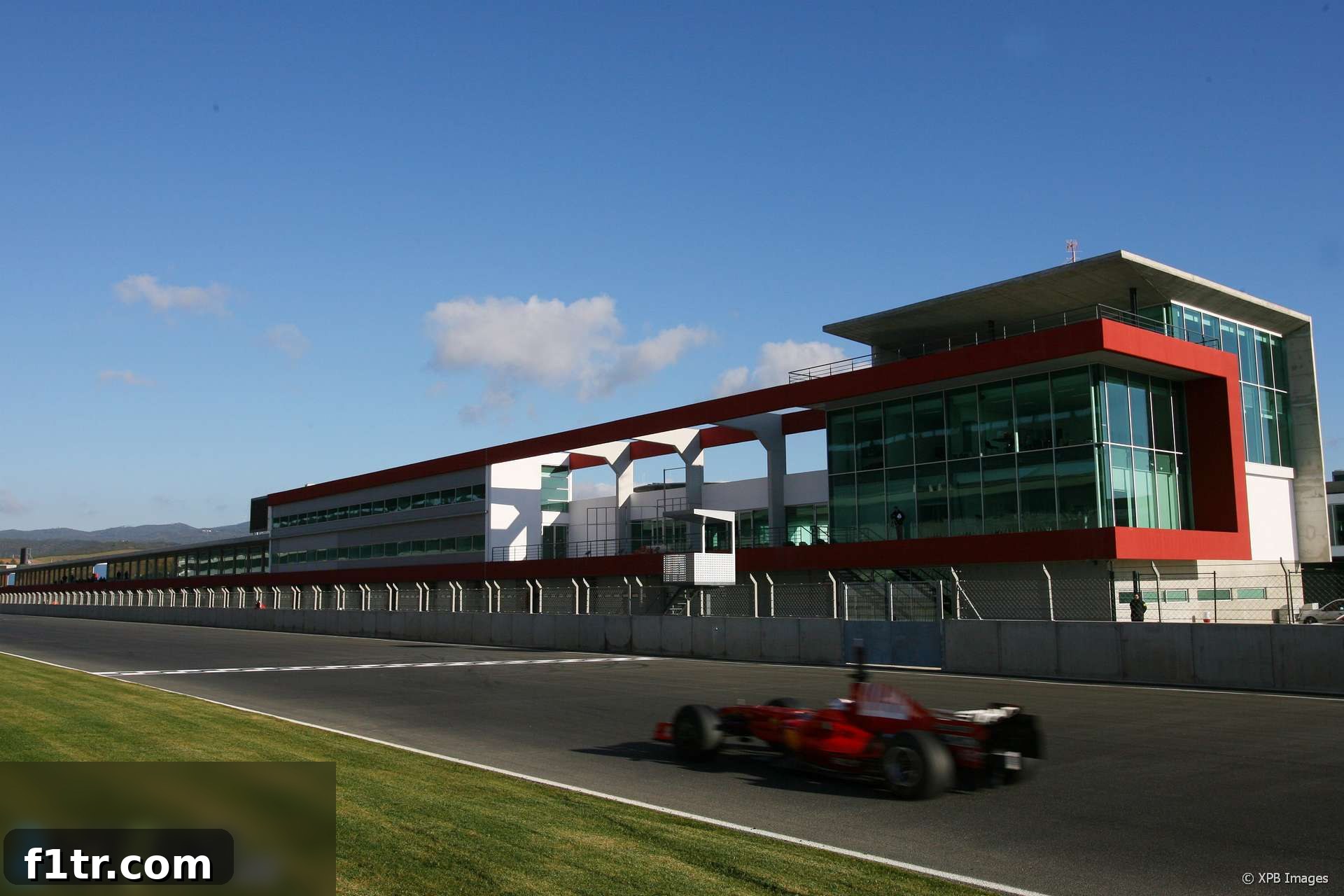
F1’s Portimao Debut: Navigating the Rollercoaster of the Autodromo do Algarve
The highly anticipated Formula 1 season of 2020 introduced fans and teams alike to an array of novel challenges and circuits, and among the most exhilarating additions was the Autodromo do Algarve in Portimao, Portugal. Hosting its inaugural Formula 1 race, this circuit promised a spectacle of high-speed drama and unpredictable outcomes. Nestled amidst the rolling hills of the Algarve region, the track is renowned for its undulating layout and demanding characteristics, earning it the nickname “The Rollercoaster.” This weekend’s event marked a significant return for F1 to Portuguese soil, bringing a fresh set of unknowns for even the most seasoned drivers.
As Formula 1 arrived in Portimao, the buzz was palpable. For many on the grid, it was their first competitive outing on the challenging 4.6-kilometre circuit. The unique features of the Autodromo do Algarve, with its dramatic elevation changes and a mix of high-speed and technical corners, ensured that adaptation would be key. Teams faced the formidable task of mastering a track with limited prior F1 data, relying heavily on simulator work and swift on-track learning. The stage was set for a weekend where driver skill and engineering ingenuity would be tested to their absolute limits, promising a memorable debut for the Portuguese Grand Prix.
The Autodromo do Algarve: A Thrilling New Chapter for F1
The Autodromo Internacional do Algarve, or Portimao Circuit, is a modern racing facility located near the city of Portimão in the Algarve region of southern Portugal. Opened in 2008, it was designed by the renowned circuit architect Ricardo Pina and has since hosted various international motorsport events, including MotoGP and World Superbike. However, its inclusion in the revised 2020 Formula 1 calendar marked a significant milestone, bringing the pinnacle of motorsport to its challenging layout for the very first time. Spanning 4.653 kilometers, the track features 15 turns and is celebrated for its dynamic and undulating nature.
What truly sets the Autodromo do Algarve apart are its dramatic elevation changes. Drivers experience significant climbs and descents throughout each lap, with gradients reaching up to 10% in certain sections. This constant undulation creates a unique sensation, making the track feel like a natural rollercoaster rather than a flat, engineered surface. These topographical shifts not only add to the visual spectacle but also profoundly impact car setup, aerodynamics, and driver visibility. Corners often appear over blind crests, demanding immense bravery and precision, as drivers must commit to their lines without a clear view of the apex or exit.
Beyond the elevation, Portimao boasts a wide track surface, offering multiple racing lines and encouraging daring overtakes. The combination of fast, flowing sections and tighter, technical complexes requires a versatile car setup and exceptional driver adaptability. High-speed corners such as Turn 15, leading onto the main straight, put significant lateral G-forces on the drivers, while the more technical infield sections demand pinpoint accuracy and throttle control. The circuit’s blend of challenging characteristics ensures that every aspect of an F1 car, from its suspension to its downforce capabilities, is thoroughly tested, promising an enthralling and physically demanding race for all competitors.
Strategic Significance: Portimao’s Single DRS Zone
For its inaugural Formula 1 race, the Autodromo do Algarve featured a single Drag Reduction System (DRS) zone, strategically placed to maximise overtaking opportunities on the circuit’s longest flat-out section. This lone DRS zone was located along the pit straight, a high-speed blast that offers the best chance for drivers to gain a crucial advantage over their rivals. The decision to implement a single zone rather than multiple, as seen at other F1 venues, underscores the unique characteristics of Portimao and the desire to encourage natural, yet assisted, overtaking without making it overly straightforward.
The detection point for the DRS zone was positioned at the exit of the penultimate corner, Turn 14. This critical placement means that a driver must be within one second of the car ahead at this point to be eligible for DRS activation. Once detected, drivers were able to activate their DRS 125 metres after the high-speed final corner, Turn 15, which feeds directly onto the main straight. This particular setup creates a fascinating strategic dynamic. The long run from Turn 15 to Turn 1, a sharp right-hander, allows for a substantial speed differential to build up, providing a prime opportunity for slipstreaming and overtakes into the first braking zone.
The importance of this single DRS zone cannot be overstated, both in qualifying and during the race. In qualifying, drivers would seek to use the tow from a preceding car to gain precious tenths, especially on such a long straight. In the race, it became the primary tool for drivers to launch an attack or defend their position. The effectiveness of the DRS on the pit straight was crucial, given the challenging nature of the rest of the circuit where clear overtaking opportunities are scarcer. Teams spent considerable time optimizing their car setups to extract maximum performance from this zone, balancing downforce for the technical sections with straight-line speed for overtakes, thereby adding another layer of strategic complexity to Portimao’s F1 debut.
Driver Perspectives: Alexander Albon on Portimao’s Unique Demands
Many Formula 1 drivers found themselves navigating the Autodromo do Algarve for the very first time in a competitive setting. However, Red Bull Racing’s Alexander Albon was one of the few who possessed prior experience, having raced there in Formula 3. His insights offered a valuable glimpse into the circuit’s character and the challenges it presented. “I have good memories from Portimao with pole position and a podium there in Formula 3,” Albon recounted, highlighting his past success. “It’s a really cool track with a lot of character and a good flow to it.”
Albon’s description vividly captured the essence of the Portuguese circuit. “The first thing that hits you when you arrive are the mega-impressive elevation changes throughout the circuit,” he explained. These significant undulations are not just visually striking; they profoundly impact driver visibility, braking points, and car balance. Navigating uphill braking zones or cresting blind corners demands exceptional courage and precision. Furthermore, Albon pointed out the physical toll: “It’s going to be physical with the heat and it’s quite a bumpy track with some blind corners on entry which just adds to the fun.” The combination of high temperatures, lateral G-forces from fast corners, and the constant input required to manage a bumpy, undulating surface pushes drivers’ physical endurance to the limit, particularly their neck muscles.
He offered a particularly detailed account of one of the circuit’s most thrilling sections, painting a picture of its rollercoaster-like nature: “At one section of track you go up a hill almost blind where you feel like the car is going to take off and then it suddenly drops down a hill before rising again into a completely blind corner. You brake, turn in, and you don’t know where you’re going and then the corner just appears on your right, before dropping down massively again.” This graphic description perfectly encapsulates the mental and physical demands on an F1 driver at Portimao. The uncertainty of blind corners, combined with the sensation of the car becoming light over crests before being slammed back down, requires an incredible degree of trust in the car and an exceptional ability to memorize the track layout and commit to precise lines. Such sections not only test a driver’s raw speed but also their courage, spatial awareness, and ability to adapt rapidly to changing visual cues.
“It’s really impressive and it’ll be good because I think, as we saw in Mugello, new tracks are fun and make it interesting. They throw the dice a bit in terms of how teams are able to adapt to the circuit,” Albon concluded. His words underscored the excitement that new venues bring to Formula 1, creating a level playing field where established hierarchies can be challenged and unexpected outcomes can emerge. This sentiment was widely shared, as Portimao promised to be a truly unique and defining race of the 2020 season.
New Tracks, New Challenges: Shaking Up the 2020 F1 Season
The 2020 Formula 1 season, heavily impacted by global events, became an unexpected showcase for new and returning circuits. Alongside Portimao, venues like Mugello, the Nürburgring, and Imola were added to the calendar, creating a unique challenge for teams and drivers. As Alexander Albon aptly put it, these “new tracks are fun and make it interesting. They throw the dice a bit in terms of how teams are able to adapt to the circuit.” This adaptability became a defining characteristic of the season, often shaking up the usual pecking order and delivering thrilling, unpredictable races.
For teams, the introduction of unfamiliar tracks meant limited or no prior data to rely upon. This forced them to accelerate their learning processes, heavily leveraging simulator work and maximizing every minute of practice sessions. Engineers had to swiftly correlate simulation data with real-world performance, making quick setup adjustments to optimize the cars for the unique demands of each circuit, whether it was the high-speed curves of Mugello or the undulating nature of Portimao. This environment favored teams with strong analytical capabilities and a robust understanding of their car’s characteristics, allowing them to extract performance faster than their rivals.
The impact on the championship battle and the mid-field was significant. With less historical data and predefined strategies, new tracks often provided opportunities for teams to shine where they might not on more traditional venues. Drivers who were quick to adapt and had exceptional car control could exploit the uncertainties, potentially leading to surprise pole positions or podium finishes. This element of unpredictability injected fresh excitement into a season already marked by unusual circumstances, ensuring that every race held the potential for a memorable upset or a standout performance, reinforcing the thrill of Formula 1’s journey into the unknown.
Conclusion: Portimao’s Legacy in Formula 1
The Autodromo do Algarve’s debut on the Formula 1 calendar was more than just another race; it was a testament to the sport’s enduring spirit of innovation and adaptation. With its “rollercoaster” layout, dramatic elevation changes, and strategic DRS zone, Portimao delivered on its promise of a demanding and exhilarating experience for drivers and fans alike. The insights from drivers like Alexander Albon underscored the unique physical and mental challenges posed by this fantastic circuit, celebrating its character and flow.
As Formula 1 continues to evolve, the inclusion of tracks like Portimao adds vital variety and unpredictability to the championship. It reminds us that while technology advances, the core essence of racing – human skill, courage, and adaptability – remains paramount. The Autodromo do Algarve has firmly cemented its place as a circuit capable of producing thrilling racing, leaving a lasting impression and ensuring that its debut will be remembered as a highlight of a truly unforgettable 2020 F1 season.
2020 F1 season
- Grosjean to make F1 test return tomorrow for first time since Bahrain horror crash
- Pictures: Wrecked chassis from Grosjean’s Bahrain fireball crash to go on display
- Bottas vs Rosberg: Hamilton’s Mercedes team mates compared after 78 races each
- F1 revenues fell by $877 million in Covid-struck 2020 season
- Hamilton and Mercedes finally announce new deal for 2021 season
Browse all 2020 F1 season articles