A fresh wave of tension gripped the Formula 1 paddock as Red Bull Racing, along with its reigning world champion Max Verstappen, staged a high-profile boycott of interviews with Sky F1 during the Mexican Grand Prix weekend. This calculated refusal to cooperate with one of Formula 1’s primary broadcasters underscores Red Bull’s growing dissatisfaction with the narrative surrounding their unprecedented successes, particularly how their hard-won victories are being portrayed in the media.
The team explicitly stated that this was not an isolated incident but rather the culmination of recurring grievances throughout the season regarding Sky’s coverage. Their concerns extended beyond Sky’s primary English-language service, which reaches audiences in the UK, USA, and globally, to include some of its other international channels as well. This widespread dissatisfaction points to a deeper, more systemic issue in their relationship with the broadcaster.
The Catalyst: “Accusations of Championships Being ‘Robbed'”
Red Bull pinpointed the exact moment that triggered their drastic decision: “accusations of championships being ‘robbed’” during Sky’s reporting of the United States Grand Prix just one week prior. This pointed reference strongly implies a reaction to comments made by veteran F1 journalist Ted Kravitz during his popular “Notebook” feature from that race weekend.
During his characteristic post-race segment, a unique monologue interspersed with impromptu interviews, Kravitz touched upon actor Brad Pitt’s presence in the paddock and his plans to produce an F1 film with Lewis Hamilton. This discussion followed a dramatic race where Hamilton narrowly missed victory, being overtaken by Verstappen – the very driver who beat him to the 2021 world championship under highly contentious circumstances.
Kravitz, ever the storyteller, mused that the actual race at the Circuit of the Americas offered a more compelling narrative than the one Pitt was reportedly pursuing. “We know, pretty much, the script,” he began, highlighting a perceived cliché in F1 stories. “Because it seems to be the same script everyone’s doing in F1, which is old driver in retirement, ‘oh, I can’t drive any more’, comes out of retirement to help troubled young driver deliver in F1. That old trope.”
He continued, painting a vivid picture of an alternative, more dramatic plot: “But I liked today’s script that eight, seven-time world champion – I almost said eight-time world champion – seven-time world champion goes into a final race trying to be the greatest of all time and win the championship, gets robbed, comes back, his next year’s car is rubbish – rubbish in a movie sense – his next year’s car is rubbish, doesn’t win a race all year and then finally comes back at a track where he could win the first race all year is battling with the same guy who won the race that he was robbed in the previous year, and manages to finish ahead of him. What a script and a story that would have been.” It was this direct reference to Hamilton being “robbed” of the 2021 title that clearly resonated negatively within the Red Bull camp.
Verstappen’s Frustration: “Constant Digging, Being Disrespectful”
While Verstappen refrained from specifying the exact comments that prompted Red Bull’s boycott, he openly articulated his escalating frustration with Sky’s coverage throughout the year. His exasperation centered on what he perceived as a persistent pattern of negativity.
“It’s been a constant kind of like digging, being disrespectful,” he stated, emphasizing the personal nature of his complaint. “Especially one particular person.” This pointed remark, widely understood to refer to Kravitz, highlighted a breakdown in the professional relationship between the driver and the broadcaster’s punditry. Verstappen’s resolve was clear: “At one point it’s enough, I don’t accept it. You can’t live in the past. You just have to move on.” His words underscored a deep-seated weariness with what he felt was a continued re-litigation of past controversies, overshadowing present achievements.
Christian Horner’s Stance: Protecting the Team’s Integrity
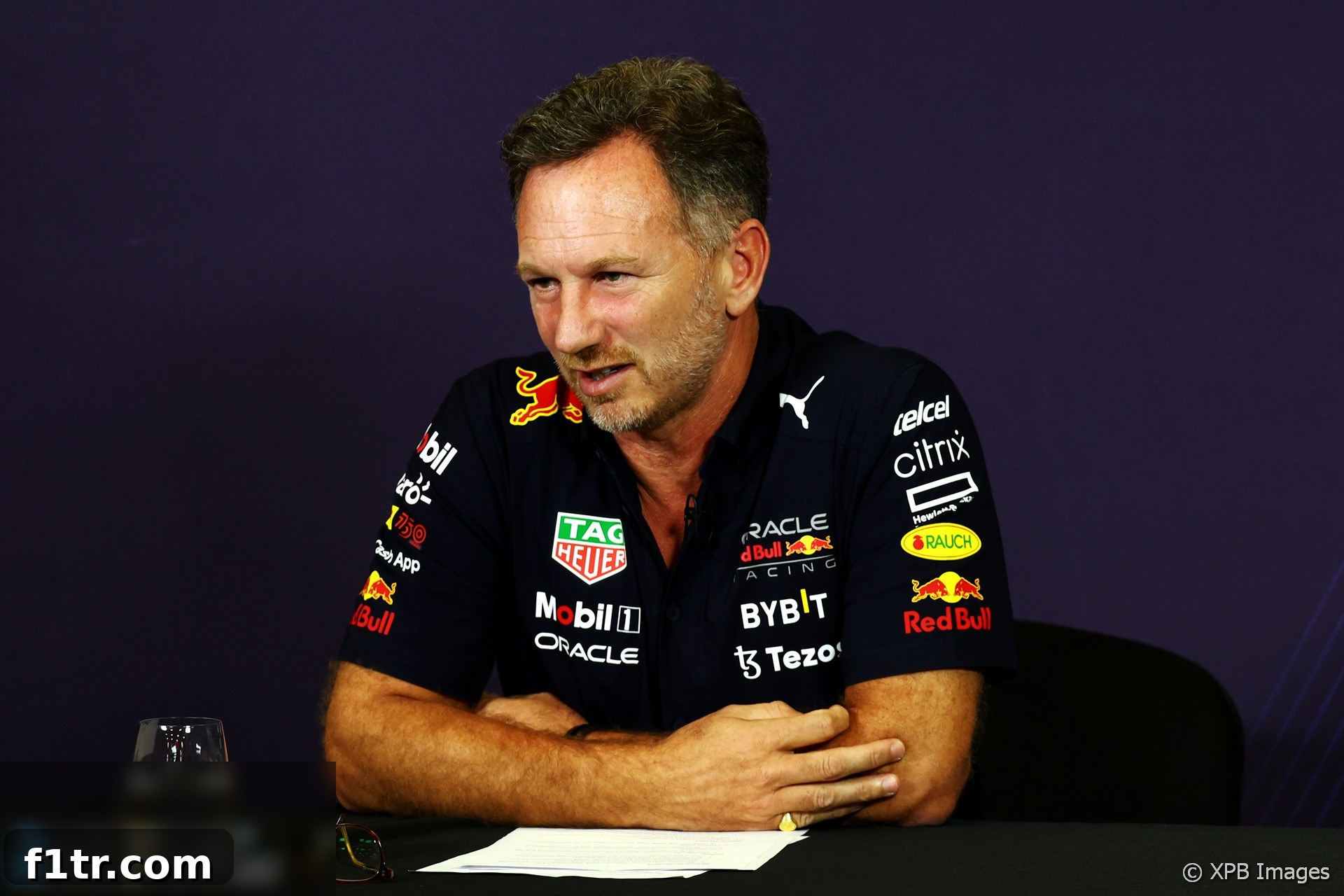
Red Bull team principal Christian Horner corroborated Verstappen’s sentiments, explicitly indicating that the description of Hamilton being “robbed” was the primary source of offense. “Accusations of championships being ‘robbed’ is something that we don’t feel is an impartial commentary,” Horner asserted in response to questions from the media. “So obviously that, we don’t feel, [is] in any way fair or balanced.”
Horner emphasized the collective nature of the team’s decision: “Max was very upset about it. As a team we support him fully and we were equally upset about it. So as a team, we took the decision this weekend – I took the decision – that we’ll have a weekend off.” This unified front demonstrated Red Bull’s commitment to defending their driver and their achievements against what they perceived as biased reporting. Both Verstappen and Horner used strong language to describe Sky’s coverage, with Verstappen calling it “disrespectful” and Horner labeling it “derogatory.”
Interpreting “Robbed”: Nuance and Allegations
The interpretation of the word ‘robbed’ in this context is crucial. Does it insinuate that Red Bull somehow ‘robbed’ Hamilton of the title through illicit means? Or is the team taking offense at the suggestion that Hamilton was ‘robbed’ by an external party, specifically the race director, from which Red Bull indirectly benefited? The popular expression ‘we was robbed’ typically implies a competitor losing due to poor or unfair officiating. Indeed, Mercedes team principal Toto Wolff famously used the very same word in the immediate aftermath of the controversial 2021 Abu Dhabi Grand Prix, pointing his finger directly at the man they believed “robbed” Hamilton: former FIA F1 race director Michael Masi.
“The decisions that have been taken in the last four minutes of this race have robbed Lewis Hamilton of a deserved world championship,” Wolff declared at the time, adding with conviction, “Robbing him in the last lap of the race is unacceptable.” Masi subsequently lost his position as race director after breaking F1’s procedural rules by arranging a last-lap restart that allowed Verstappen to pass Hamilton and secure the world championship. The fact of Masi’s error is widely acknowledged, with even Horner himself admitting that Masi made a “mistake”.
However, for Red Bull, the suggestion that Hamilton somehow deserved to win a subsequent race simply because he lost a previous championship due to someone else’s error, felt like a bridge too far. This narrative, they argue, detracts from Verstappen’s legitimate sporting achievements. As recent events have consistently demonstrated, both the team and its star driver are not afraid to take a firm stand on how broadcasters characterize them, especially when they feel their integrity or achievements are being unfairly questioned.
A History of Media Tensions: Red Bull’s Unapologetic Stance
This latest clash with Sky F1 is by no means Red Bull’s first skirmish in the complex landscape of Formula 1 media relations. The team and its drivers have a well-documented history of pushing back against narratives they deem unfair or sensationalized.
The Netflix “Drive to Survive” Boycott
Max Verstappen notably refused to cooperate with the producers of Netflix’s highly popular docu-series “Drive to Survive” for three consecutive seasons, famously accusing them of “faking rivalries” and misrepresenting events for dramatic effect. His boycott highlighted his discomfort with the show’s editorial approach. However, in a significant shift, Verstappen revealed in June that he had engaged in discussions with the producers and would appear more prominently in upcoming editions of the documentary, signaling a potential thaw in that relationship.
The Silverstone Crash Ident Dispute
Red Bull also clashed with Sky in 2021 over an F1 channel ident that featured footage of Verstappen’s high-speed crash at Silverstone. Red Bull deemed the inclusion of the crash footage in an ident to be in “very poor taste indeed,” prompting Sky to replace it. This incident demonstrated the team’s sensitivity to how potentially dangerous moments involving their drivers are utilized by broadcasters, especially in a promotional context.
The Budget Cap Controversy and “Defamatory” Claims
Christian Horner has also been vocal about his displeasure with how certain segments of the press treat Red Bull, particularly when news of the team’s cost cap infringement first emerged during the Singapore Grand Prix weekend. As rival teams, notably Ferrari and Mercedes, urged the FIA to take strong action against any team found to have overspent, Horner vehemently accused them of peddling “fictitious” and “hugely defamatory” claims about his team.
In a memorable exchange, when a journalist suggested that neither Ferrari nor Mercedes had specifically named Red Bull in their comments, Horner disagreed and sharply questioned the writer’s impartiality, asserting that journalists should “remain absolutely neutral.” (While Horner’s exact words were: “I know you have impartiality for certain teams, but it should remain absolutely neutral,” context suggests he likely meant “partiality” rather than “impartiality,” implying favoritism towards other teams). This episode further illustrates Red Bull’s willingness to challenge journalistic integrity when they feel targeted.
Why Red Bull Feels Like a “Cheap Target”
Horner frequently articulates a belief that Red Bull is perceived as a “cheap target” within the F1 ecosystem. In Singapore, he suggested that the allegations of their budget cap breach were being deliberately amplified to divert attention from Verstappen’s impending coronation as world champion. This eventual championship win, in Japan just one week later, was ironically followed by the FIA confirming Red Bull’s breach of the cost cap.
Red Bull’s journey back to the pinnacle of Formula 1 has been arduous and prolonged since Mercedes dominated the V6 hybrid turbo era, ending Red Bull’s own run of consecutive championships in the V8 era. Having finally scaled that summit, securing both the drivers’ and constructors’ championships, there is a clear sense of protective pride within the team. They believe their hard-earned successes are consistently being overshadowed by external controversies.
Whether it was the contentious resolution of the 2021 Abu Dhabi Grand Prix with Michael Masi’s actions, or the more recent budget cap infringement allegations, these controversies have undeniably diverted attention away from Red Bull’s remarkable achievements. This consistent overshadowing is clearly a source of deep frustration for the team. It is this pervasive sense of being unfairly targeted that likely explains why a seemingly casual Sky segment, referencing the events of last year – however jokingly intended – struck such a raw nerve and provoked such a strong, decisive reaction from Red Bull. They are no longer willing to tolerate what they perceive as biased or undermining commentary.
Broader Implications for F1 Media Relations and Beyond
The Red Bull-Sky F1 dispute raises significant questions about the evolving dynamics between Formula 1 teams, broadcasters, and the media at large. In an era where teams actively manage their public image and drivers wield considerable influence through personal platforms, the traditional role of independent journalism is continually tested. The expectation of “impartial” commentary, as voiced by Horner, challenges broadcasters to balance critical analysis with maintaining good relations with the sport’s key players.
It remains to be seen how Sky’s vast viewership will react to Red Bull’s boycott. Will fans empathize with Red Bull’s stance on journalistic integrity, or will they conclude that the entire episode was a calculated maneuver designed to deflect attention from the lingering budget cap debate? Moreover, the swiftness with which Christian Horner, a familiar and often jovial figure in Sky’s F1 coverage, will transition back into his regular broadcast appearances will be a telling indicator of the long-term impact of this contentious weekend.
The incident serves as a stark reminder that in the high-stakes world of Formula 1, success is not just about winning on track, but also about controlling the narrative surrounding those victories.
Further Reading: 2022 Mexican Grand Prix Articles
- How many victory chances did Hamilton have in his first winless F1 season?
- Delay in producing new parts held up Alfa Romeo upgrade
- Doohan’s practice run earns praise, but Alpine undecided over reserve role
- ‘I was in the fight, which hasn’t been often this year’: Ricciardo’s Mexican GP transcript
- Verstappen “will continue to break records for the rest of his career” – rivals
Browse all 2022 Mexican Grand Prix articles