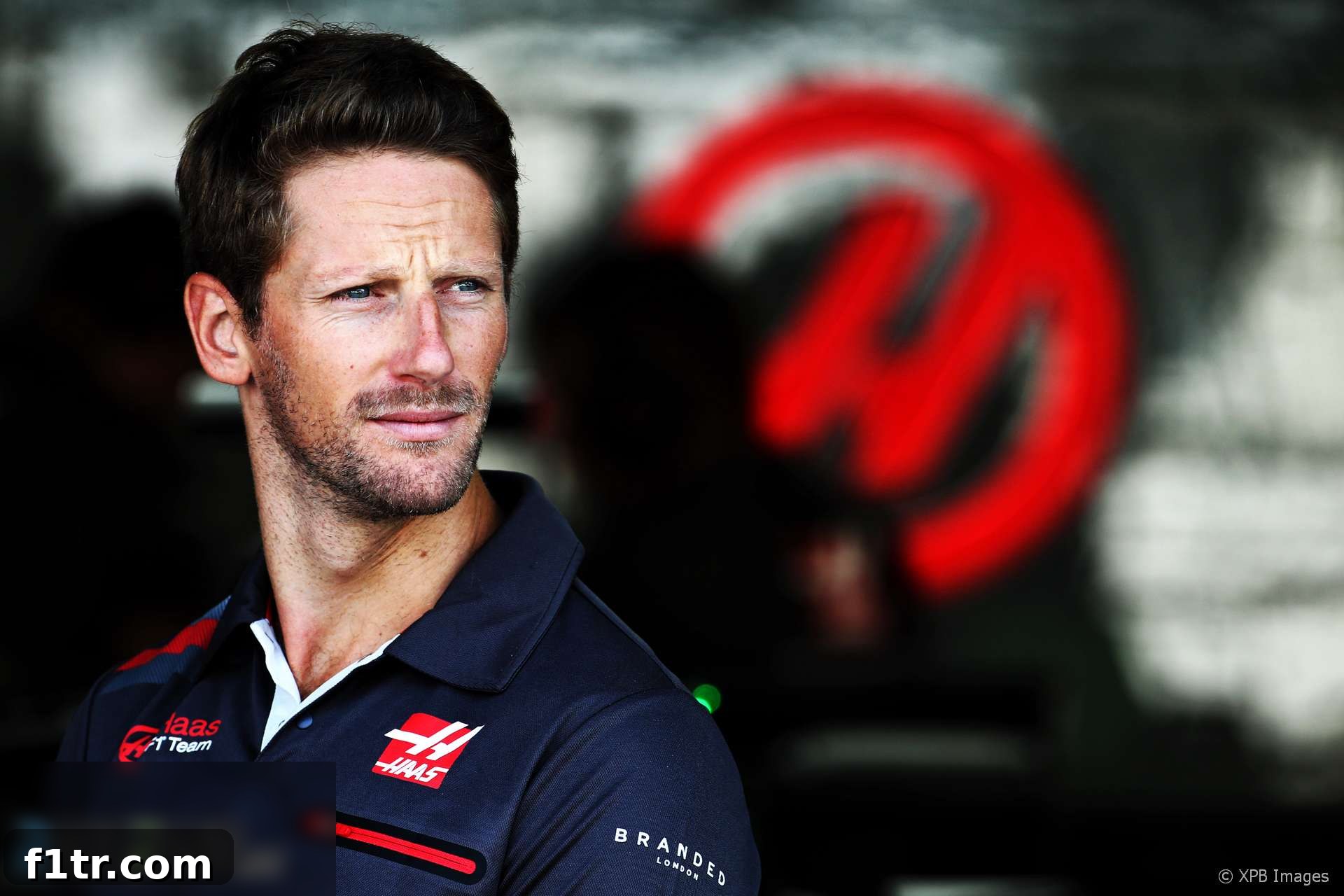
In the high-octane world of Formula 1, where every fraction of a second and every incident can define a driver’s career, maintaining composure and self-belief is paramount. Romain Grosjean, the seasoned Haas F1 Team driver, found himself at the center of scrutiny during the tumultuous early stages of the 2018 F1 season. Despite a series of high-profile incidents that led to widespread speculation about his future, Grosjean revealed a remarkable inner calm, stating he was never truly concerned about losing his seat for the subsequent 2019 F1 season. This unwavering conviction, he explained, stemmed from an inherent belief in his ability to overcome challenges and turn his performance around, a critical factor that ultimately led to his contract extension.
Romain Grosjean’s Tumultuous Start to the 2018 Formula 1 Season
The 2018 Formula 1 season presented Romain Grosjean with some of the most challenging moments of his racing career. His campaign began with a series of unfortunate events that put immense pressure on both him and the Haas F1 Team. The initial races saw him involved in significant incidents, notably a crash during the Azerbaijan Grand Prix and another in Spain. These back-to-back incidents not only cost the team valuable points but also fueled a narrative of a driver prone to errors, placing his position under intense media and fan scrutiny.
Perhaps the most talked-about incident occurred at the British Grand Prix, where Grosjean tangled with his own teammate, Kevin Magnussen, on the very first lap. Such an occurrence between teammates is particularly damaging, as it directly impacts the team’s standing and internal dynamics. These successive setbacks piled pressure on Grosjean, leading many to question whether his time in Formula 1 was drawing to a close. For any F1 driver, a string of incidents can quickly lead to their career spiraling downwards, making Grosjean’s eventual contract renewal for 2019 a testament to his resilience and the team’s faith in his underlying potential.
Unwavering Self-Belief Amidst Mounting Adversity
Despite the external storm brewing around his performance, Romain Grosjean maintained a surprisingly composed demeanor. Reflecting on that challenging period, he asserted, “I don’t want this to sound wrong but I was never worried that I wouldn’t be here next year, because at one point after Silverstone I knew it couldn’t keep going that way.” This statement offers a profound insight into the mindset of an elite athlete operating at the pinnacle of motorsport. It wasn’t a denial of the problems, but rather a deep-seated conviction that the streak of misfortune and errors was an anomaly, not a true reflection of his capabilities.
Grosjean elaborated on this internal resolve, explaining, “I knew I had the solution somewhere and I knew I could bounce back, and if I was bouncing back I would stay.” This self-assurance is a hallmark of top-tier drivers, who often possess an unwavering belief in their talent and their capacity to adapt and improve. This conviction is crucial in a sport where mental fortitude is as vital as physical skill. While the media and fans speculated on potential replacements, Grosjean was already engaged in a process of internal analysis and problem-solving, confident that he would find a way to reignite his performance. He believed that once he demonstrated this turnaround, his team would recognize and value his efforts, securing his place.
The Critical Turning Point: Silverstone and Profound Introspection
The British Grand Prix incident with Kevin Magnussen proved to be a pivotal moment for Grosjean. It wasn’t just another crash; it was a collision with a teammate, magnifying the impact and forcing a deeper level of introspection. Grosjean sought to understand the ‘why’ behind the contact, recognizing that it wasn’t intentional but rather a product of flawed decision-making in high-pressure situations. This self-analysis marked the beginning of his resurgence.
He drew a striking parallel between the Silverstone clash and a notorious incident from his past: his collision with Mark Webber at the 2012 Japanese Grand Prix. That incident led Webber to famously brand Grosjean a “first-lap nutcase,” a label that haunted him for a time. Grosjean’s recollection of both events highlighted a common theme: the split-second decisions that go awry. “It’s like the start at Japan in 2012 if you want a correlation. Thinking ‘you’re OK, you’re OK’, and then you’re not OK. And why something that sounds like the right thing to do is the wrong thing to do,” he explained. This candid reflection on the mental process during critical racing moments underscores the immense pressure F1 drivers face.
The essence of his struggle, he concluded, lay in a minuscule window of decision-making: “There’s two-tenths of a second to take the decision and decide things. You need to be on the right side of that two tenths of a second. After Silverstone I knew I was on the wrong side and then I needed to know why I was on the wrong side and then work on that.” This level of detailed self-assessment, focusing on the specific mental and procedural errors rather than simply lamenting bad luck, was the cornerstone of his recovery. It transformed the incident from a mere mistake into a valuable learning experience, guiding his efforts to regain his competitive edge.
From Reflection to Resurgence: The Road to Recovery
Having identified the root causes of his decision-making errors, Romain Grosjean embarked on a journey of correction and improvement. This wasn’t just about driving faster; it was about refining his mental approach, his spatial awareness, and his judgment under extreme pressure. The process likely involved extensive work with his engineers, reviewing telemetry, and engaging in mental preparation techniques to ensure he was consistently “on the right side” of those crucial two-tenths of a second.
The turning point in his on-track performance, as Grosjean noted, came around the German Grand Prix. It was there that his renewed focus and refined approach began to yield tangible results, bringing an end to the string of incidents and allowing his natural speed and experience to shine through. This period of consistent performance demonstrated to both himself and the Haas F1 Team that he had indeed found the “solution” he spoke of. A driver’s ability to not only recognize but actively rectify their weaknesses is a testament to their professionalism and commitment, and Grosjean’s mid-season turnaround perfectly exemplifies this.
Haas F1 Team’s Faith and the 2019 Contract Extension
The decision by the Haas F1 Team to extend Romain Grosjean’s contract for the 2019 season, despite his difficult start to 2018, speaks volumes about the team’s belief in his capabilities and their understanding of the pressures inherent in Formula 1. While the immediate results were concerning, Haas clearly valued Grosjean’s experience, his raw speed when things clicked, and his contribution to the team’s development since their entry into the sport.
Team principals often look beyond individual incidents, assessing a driver’s overall potential, their working relationship with the team, and their ability to extract performance from the car over a full season. Grosjean, despite his flaws, had proven flashes of brilliance and a deep understanding of the car’s mechanics and setup. His ability to articulate feedback and work with engineers is invaluable. The contract extension was a clear signal that Haas saw a resilient, capable driver beneath the surface of the early-season struggles, a driver who, when confident and focused, could deliver strong results. It also underscored the often-complex nature of driver contracts, where loyalty, experience, and potential outweigh a temporary dip in form, especially when that dip is followed by a clear resurgence.
The Enduring Pressures of Formula 1
Romain Grosjean’s journey through the 2018 season serves as a compelling case study of the immense mental and physical pressures faced by Formula 1 drivers. Each race is not just a competition against rivals but also a battle against one’s own limitations, demanding perfection under circumstances that offer zero margin for error. The public and media scrutiny can be relentless, turning every mistake into a headline and every rumor into a potential career-ender.
His experience highlights the critical role of mental fortitude and self-belief in sustaining a career at the pinnacle of motorsport. Drivers who can navigate these periods of adversity, learn from their mistakes, and emerge stronger are the ones who often carve out long and impactful careers. Grosjean’s narrative is a powerful reminder that resilience, self-reflection, and an unwavering belief in one’s capacity for improvement are indispensable qualities for anyone competing at the elite level of Formula 1.
Looking Ahead: Romain Grosjean’s Legacy and Continued Pursuit of Excellence
Romain Grosjean’s career has been a fascinating tapestry of incredible speed, unfortunate incidents, and profound resilience. The 2018 season, in particular, added another significant chapter to his story, showcasing his ability to not only confront his demons but also to overcome them, securing his place in the sport. This turnaround reinforced his reputation as a driver with immense underlying talent, even if consistency remained a persistent challenge throughout his career.
His story continues to resonate, embodying the constant pursuit of excellence and the mental toughness required to thrive in Formula 1. His ability to publicly acknowledge his struggles, analyze them with precision, and implement solutions serves as an inspiration, proving that even at the highest level, growth and redemption are always within reach. As F1 continues to evolve, the lessons learned from drivers like Grosjean about mental resilience and the importance of self-belief will remain timeless.
Key Incidents from the 2018 F1 Season
- F1 feared “death knell” for Drive to Survive after Ferrari and Mercedes snub
- McLaren staff told us we were “totally crazy” to take Honda engines in 2018 – Tost
- ‘It doesn’t matter if we start last’: How Red Bull’s junior team aided Honda’s leap forward
- Honda’s jet division helped F1 engineers solve power unit problem
- McLaren Racing losses rise after Honda split
Browse all 2018 F1 season articles