The introduction of a bonus point for the fastest lap in a Formula 1 Grand Prix stirred considerable debate long before its official implementation. When the FIA’s World Motor Sport Council first proposed the idea, it immediately prompted a strong reaction from the F1 community, with fans expressing significant reservations about its potential impact on the sport’s dynamics and integrity. Initial polls conducted among dedicated enthusiasts revealed that a substantial two-thirds of respondents either slightly or strongly disagreed with the concept, indicating a widespread skepticism towards adding this particular incentive to the championship chase. Only a quarter of the surveyed audience expressed any degree of agreement, highlighting a clear divergence between official intentions and fan sentiment.
Despite this palpable public disagreement, the FIA proceeded with the proposal, promptly approving the bonus point system for the fastest lap, effective from the start of the 2019 Formula 1 season. This decision underlined a determination to introduce a new element of excitement and strategic complexity into Grand Prix weekends. As the season progressed, and after 12 rounds had offered a reasonable sample size, further analysis was conducted to assess the rule’s impact. The follow-up revealed a slightly more divided but still largely unenthusiastic perspective: just under half of the fans believed the bonus point had failed to enhance the racing excitement, while approximately 36% conceded that it had, to some extent, positively influenced the on-track action. This indicated that while some found merit in the new regulation, a significant portion remained unconvinced of its benefits.
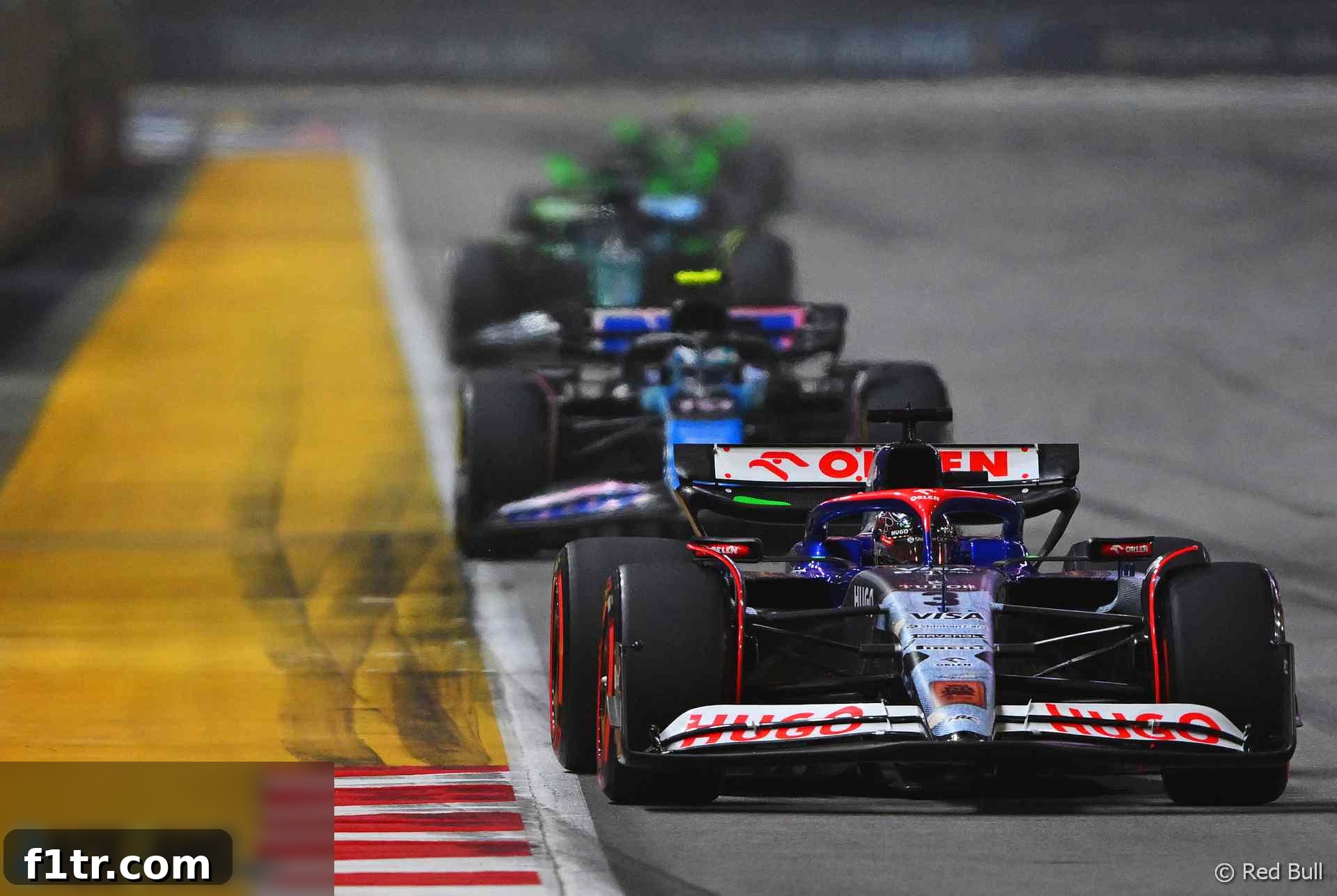
Now, after five-and-a-half seasons under this rule, the fastest lap bonus point has once again ignited passionate discussion within the Formula 1 community. The recent Singapore Grand Prix served as a potent catalyst for this renewed scrutiny. In the closing stages of the race, Daniel Ricciardo was strategically called into the pits by his RB team to fit a set of fresh, soft tyres. His mission: to snatch the fastest lap from race leader Lando Norris. While RB team principal Laurent Mekies later downplayed the maneuver, suggesting it was merely a goodwill gesture to their departing driver – a claim met with widespread incredulity given the lack of acknowledgement for Ricciardo’s potential final Grand Prix throughout the weekend – the outcome proved highly controversial. Ricciardo successfully claimed the bonus point, thereby denying Norris a crucial additional point in his tight battle against Red Bull’s Max Verstappen in the championship standings. This incident, perceived by many as an artificial intervention that disproportionately influenced a championship battle, fueled significant backlash and brought the fastest lap rule firmly back into the spotlight.
Understanding Formula 1’s Fastest Lap Regulations
Formula 1’s current approach to awarding a bonus point for the fastest lap has remained unchanged since its introduction before the 2019 season. The regulations governing this specific incentive are clearly laid out in Article 6.2 of F1’s sporting regulations, defining the precise conditions under which a driver and their constructor can benefit from setting the quickest time during a Grand Prix. According to this rule, “one point will be awarded to the driver who achieved the fastest valid lap time of the race and to the constructor whose car he was driving, provided he was in the top ten positions of the final race classification.” This crucial caveat ensures that the bonus point primarily rewards drivers who are already performing at a competitive level, actively participating in the points-scoring positions of a race.
The regulations further elaborate on scenarios where no point will be awarded, ensuring the integrity and relevance of the system. Specifically, the rule clarifies that “no point will be awarded if the fastest valid lap time is achieved by a driver who was classified outside the top ten positions, or if the leader has completed less than 50% of the scheduled race distance.” This means that a driver who sets a blistering lap but finishes eleventh or lower will not receive the bonus point, nor will a point be awarded in heavily curtailed races where a significant portion of the distance was not completed. This provision prevents situations where backmarker teams might prioritize a fastest lap attempt over a race finish, or where early-race incidents might skew the statistical significance of a fastest lap.
Throughout the 2024 season, the application of this rule has been observed in various Grand Prix events. Out of the 18 rounds contested so far, a fastest lap bonus point has been successfully awarded in 14 instances. However, in several races – notably China, Miami, Austria, and the contentious Singapore Grand Prix – the bonus point was not distributed. In each of these cases, the driver who registered the fastest lap time ultimately finished outside of the top ten positions. For example, Fernando Alonso has set two fastest laps in 2024, but received no bonus points because he finished outside the top 10 on both occasions. This highlights how the regulation, while designed to add an extra layer of strategy, can also lead to situations where a remarkable feat of speed goes unrewarded in terms of championship points, further complicating the debate around its fairness and effectiveness.
Exploring Alternatives for the Fastest Lap Rule
The persistent controversies surrounding the fastest lap bonus point have naturally led to discussions about potential modifications or alternative approaches that could address the perceived shortcomings, particularly those highlighted by incidents like the one in Singapore. Two main avenues for reform are frequently discussed, each presenting its own set of advantages and disadvantages for the sport.
The first alternative proposes a simpler, more inclusive system: extending the bonus point eligibility to all classified finishers, regardless of their final race position. Proponents of this modification argue that it would democratize the opportunity for points, offering teams further down the order – such as Sauber or Haas, who often struggle to contend for top-ten finishes, especially in seasons marked by exceptionally high car reliability – an additional chance to score a valuable championship point. This could theoretically add excitement throughout the field, providing a mini-battle for the fastest lap among all competitors.
However, this seemingly straightforward solution carries an obvious and potentially significant drawback. Towards the closing stages of races, particularly if a driver from a front-running team has already secured the overall fastest lap, there could be a chaotic rush of cars from outside the top ten diving into the pits for fresh, soft tyres. This would transform the end of a Grand Prix into an impromptu qualifying session, primarily for a single bonus point. Such a scenario could not only disrupt genuine late-race battles at the front by introducing unexpected traffic and strategic gambles, but it could also lead to fairly farcical scenes at the finish line, with drivers prioritizing a single fast lap over competitive racing. Furthermore, it might encourage teams, especially those with limited raw pace, to strategically preserve their cars and tyres throughout the race, not for a better finishing position, but specifically for a late, all-out assault on the fastest lap, detracting from the true essence of Grand Prix racing.
The second alternative offers a more nuanced modification: instead of simply not awarding the bonus point when the overall fastest lap is set by a driver outside the top ten, the point could instead be allocated to the driver who achieves the fastest lap *amongst* the top ten finishers. Under this revised rule, the driver who sets the absolute fastest lap of the race would still receive recognition, perhaps through the traditional Pirelli award and social media accolades showcasing their incredible speed. However, the actual championship point would go to the top-ten contender who recorded the quickest lap within that elite group. This approach aims to keep the bonus point within the competitive sphere of the race, rewarding performance directly tied to the main points-scoring positions.
This modification appears to be a more deserving method of distributing the bonus point, as it would likely reward a driver who was battling fiercely throughout the race for their top-ten position, aligning the incentive more closely with core race performance. Crucially, it would also serve to prevent the kind of controversies seen in Singapore, where a driver from a junior team effectively ‘stole’ a vital championship point from a senior team’s championship rival. By ensuring the bonus point remains among those actively contending for significant points, this alternative could mitigate strategic gaming and uphold a greater sense of sporting fairness, preventing unintended impacts on the championship battle while still acknowledging raw speed.
The Case Against the Fastest Lap Bonus Point
To be blunt, the bonus point for the fastest lap in Formula 1 was never a particularly well-conceived idea. From its initial proposal, it seemed ill-suited to the fundamental nature of Grand Prix racing and has consistently failed to deliver on its promise of enhancing the spectacle or adding significant value to either individual races or the overall championship standings over its five-and-a-half seasons in operation. The recent events in Singapore merely served to underscore its inherent flaws, bringing nothing positive to an otherwise thrilling race weekend.
The core issue lies in the fundamental disconnect between the objective of a Grand Prix and the incentive of a fastest lap. Granting a bonus point for the quickest lap only truly makes sense in racing series where the format demands competitors push at maximum attack from start to finish – essentially, sprint races. In categories like F1 Academy, Formula 3, or even Formula 2’s sprint events, where races are short, intense bursts of speed with minimal tyre or fuel management, rewarding the fastest lap is entirely logical. In these formats, going as fast as possible is the primary goal; whoever achieves the best lap under identical conditions, tyres, and car specifications demonstrably deserves credit, and indeed, a point, for their pure pace.
However, this rule appears to have been formulated by individuals who may not fully grasp the intricate nuances of a Formula 1 Grand Prix. It profoundly fails to account for the sophisticated array of strategies in play, the critical importance of tyre management, fuel conservation, and the sheer amount of careful balancing a driver must perform to bring their car home in the shortest possible time. Very few, if any, drivers in a typical Grand Prix are ever “flat out” for the entire duration. Pushing constantly to the absolute limit would invariably lead to excessive tyre degradation, higher fuel consumption, and likely necessitate an additional pit stop, ultimately resulting in a significantly lower finishing position than otherwise achievable. The very essence of F1 strategy revolves around careful management and controlled aggression, not unrestrained speed at all costs.
Furthermore, the inherent inequality in car performance within Formula 1 exacerbates the problem. Realistically, the drivers with the best opportunity to achieve the fastest lap are, perhaps unsurprisingly, those piloting the quickest cars on the grid. In most standard race circumstances, the only viable chance a team from the midfield or back of the grid has of snatching the fastest lap is through a highly artificial, late-race switch to fresh soft tyres – a strategy that often involves sacrificing track position or any hope of improving their actual race result for a single bonus point. This distorts the competitive landscape and rewards a specific, often opportunistic, strategic gamble rather than consistent, pure racing performance.
Consider the implications: Is it truly satisfying for fans to witness drivers consciously abandon genuine racing objectives just to pursue a fastest lap, almost as if they are trying to unlock a trophy in a video game? Does it generate genuine thrill to see a driver with a commanding lead, perhaps Max Verstappen or Lewis Hamilton, pit with two laps remaining and a 30-second buffer, purely for a last-lap glory run? Does the fastest lap bonus point genuinely enhance the spectacle or improve the sport of Formula 1 in any meaningful way?
The answer to all these questions, for many within the F1 community, remains a resounding no. The rule, rather than adding excitement, often introduces an artificial element that can undermine the strategic depth and organic drama of Grand Prix racing, creating more controversy than genuine sporting value.
The Fan Perspective on the Fastest Lap Point
The ongoing debate surrounding Formula 1’s fastest lap bonus point continues to generate considerable engagement among fans, who hold diverse opinions on its future. Should the rule be maintained in its current form, undergo modifications, or be abolished entirely? Recent polls underscore the strong feelings within the community.
A significant majority, 61% of voters, expressed a clear preference for removing the fastest lap point entirely, indicating widespread dissatisfaction with its current impact. A smaller but notable segment, 16%, suggested amending the rule to make all finishing positions eligible to score the point, hoping to provide more opportunities across the grid. Another 11% proposed a different amendment, advocating that only the fastest driver within the top 10 finishers should score the point, aiming to keep the reward more aligned with competitive race performance. Finally, 12% of respondents believed the fastest lap bonus point rule should be kept exactly as it is, suggesting a segment of fans who find its current implementation acceptable or even beneficial.
Related Debates and Polls
- What must Formula 1 fix with its new rules – and what should it leave unchanged?
- ADUO: Do F1 teams who fall behind deserve to get help to catch up?
- F1 is considering doubling its sprint races. Do you want more or fewer?
- Will this be a fight or a rout? 20 questions for the 2026 Formula 1 season
- Which Formula 1 team has the best-looking car – and the worst – for the 2026 season?
Browse all debates and polls