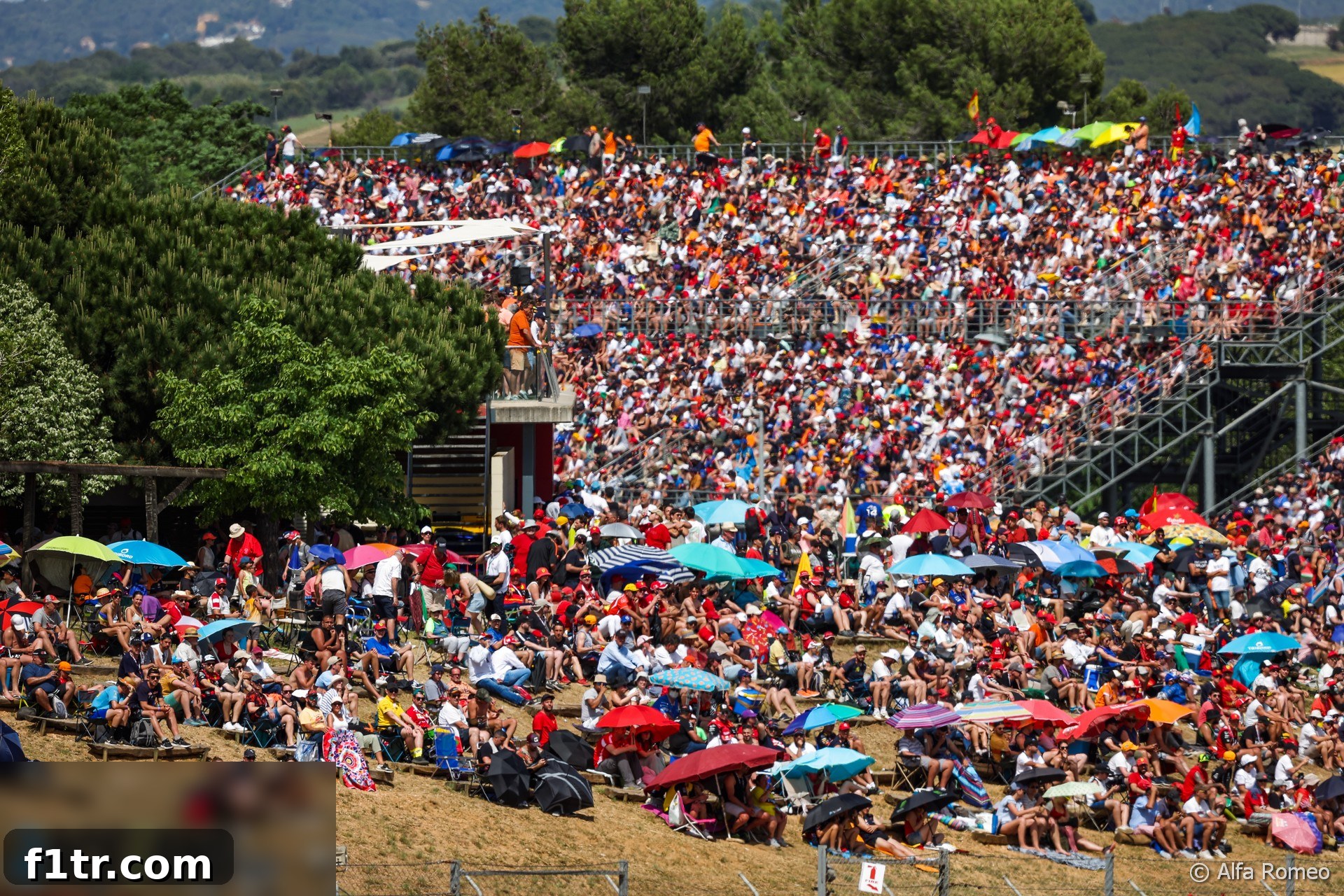
The Circuit de Barcelona-Catalunya buzzed with an electrifying atmosphere on a recent Sunday, as hundreds of thousands of fervent Formula 1 fans converged for the Spanish Grand Prix. This monumental event marked the return of a full house of spectators to the track for the first time since 2019, eagerly anticipating a thrilling battle between championship contenders Charles Leclerc and Max Verstappen. The sheer scale of attendance underscored the sport’s booming global popularity, amplified by recent initiatives and media exposure, drawing in both seasoned enthusiasts and a new generation of fans. Yet, what promised to be a spectacular showcase of motorsport, regrettably descended into a weekend marred by organizational shortcomings and significant discomfort for many attendees.
A Grand Return, But Not Without Growing Pains
The journey back to full capacity for the Spanish Grand Prix was a gradual one. Following the challenges of the global pandemic, the 2020 event proceeded behind closed doors, a stark contrast to the usual vibrant crowds. In 2021, a cautious easing of restrictions allowed only a limited number of around 1,000 spectators. Thus, the 2022 race was a highly anticipated milestone, signaling a triumphant return to normalcy and offering a much-needed boost in revenue for the circuit and its promoters. However, the celebratory mood quickly soured for many, as reports began to circulate detailing widespread issues with traffic congestion both approaching and departing the circuit, severe problems with public transport infrastructure, and excessively long queues at essential food and drink stalls. Alarmingly, some vendors were even reported to have completely run out of water, a critical oversight given the soaring temperatures.
Sweltering Heat and Scarcity: The Dehydration Dilemma
The weekend’s conditions were relentlessly challenging, with air temperatures at the track hitting a scorching 37 degrees Celsius on race day. Such extreme heat demands meticulous planning for fan welfare, particularly concerning hydration. However, many attendees found the provisions woefully inadequate. Lena Ferle, an F1 fan who attended the race, recounted her experience to RaceFans, highlighting a particularly perplexing policy. While metallic and glass bottles were prohibited for entry, spectators were encouraged to bring their own plastic bottles, albeit with an unexpected maximum size limit of 1.5 liters. This restriction caught many off guard, especially those who had arrived with larger containers, commonly used for hydration in Spain, only to be forced to abandon them at the entrance. “I didn’t understand the 1.5 litres rule because some people brought big canisters,” she explained. “They had to leave them at the entrance.”
The consequences of this combined with insufficient supplies were severe. Lena observed how rapidly thirsty fans depleted the circuit’s meager provisions. “We brought water and snacks, but not a lot because we had to carry the bags around the whole circuit,” she said, detailing the arduous journey to their viewing spot. Buses dropped off fans at the main gate, but the designated entry point for her group was a challenging 30-minute uphill walk under the intense sun, a significant physical exertion before even reaching the stands. Once inside, the struggle continued. “As soon as we settled in the general admission, one of us would go and get some stuff to eat and drink because we knew the queues would be bad by midday. We were okay with that, but we could watch the queues getting longer and longer, either for the bathrooms or the stalls for water and food.” By 2 PM on both Saturday and Sunday, the concession stands in the general admission area between turn six and seven had completely run out of water. The situation escalated to critical levels on Sunday, when “30 minutes before the race started, the water stopped working in the bathrooms. I had luck to be one of the last people to use it because they wouldn’t let anyone in after that.” This highlighted a profound failure in basic event management and public health provisions.
Traffic Chaos and Public Transport Breakdown
Beyond the struggle for hydration, simply reaching and leaving the Circuit de Barcelona-Catalunya proved to be an insurmountable hurdle for many. “The transport was like hell,” Lena Ferle candidly stated. While her group was “lucky to only wait one hour on Friday and two hours on Saturday,” others faced far more harrowing experiences. Reports indicated some fans were stranded, waiting for trains until as late as 11 PM on both Saturday and Sunday. The absence of effective crowd management and clear systems at transport hubs resulted in “massive crowds” and a sense of palpable danger. “It was dangerous,” Lena added, emphasizing that “the waiting would’ve been fine if there was a system.” This chaotic situation transformed what should have been an exciting journey into a stressful ordeal, casting a dark shadow over the entire weekend for countless individuals.
Another frustrated fan, David O’Brien, echoed these sentiments, expressing his belief that providing sufficient water is the most “basic thing” an event organizer should guarantee. He personally witnessed “five people who had collapsed,” underscoring the severity of the heat and the lack of hydration facilities. O’Brien concluded that the event was “so badly organised it was dangerous,” a chilling assessment of a major international sporting spectacle. While a third fan, Matt Tusan, reported relatively few issues, he acknowledged he felt “one of the lucky ones” given the multitude of negative accounts he had encountered. The widespread nature of these complaints suggests a systemic failure rather than isolated incidents, fundamentally impacting the overall F1 fan experience at the Spanish Grand Prix.
A Disturbing Trend: F1’s Fan Experience Under Scrutiny
Historically, the Circuit de Barcelona-Catalunya has successfully hosted larger crowds; for instance, in 2006, an impressive 130,000 fans gathered to witness Fernando Alonso clinch his home race victory. This comparison highlights that the recent logistical failures were not due to inherent capacity limitations, but rather a lapse in adequate preparation and execution. The Spanish Grand Prix incident, unfortunately, is not an isolated case of fan dissatisfaction in Formula 1’s recent history. In the past 12 months, spectators have had other compelling reasons to feel let down by their treatment at a Grand Prix. The most notable example being the 2021 Belgian Grand Prix, where fans endured hours of torrential rain, only to witness a farcical three-lap “race” behind the Safety Car, with no actual racing taking place, and crucially, no refunds were given. Such recurring instances of poor fan experience, especially as F1’s popularity soars, threaten to erode the goodwill and enthusiasm generated by its exciting on-track action and popular media like ‘Drive to Survive.’ New fans, particularly, might be quickly disillusioned if their first in-person experience is riddled with preventable discomfort and safety concerns.
Climate Change and Calendar Challenges: A Looming Problem
The contrasting weather extremes between the Spanish and Belgian Grands Prix – scorching heat versus torrential rain – underscore a significant and growing challenge for Formula 1: the impact of climate change on race scheduling and fan comfort. As dramatic weather variations become more pronounced globally, the task of planning a 20-plus race calendar in conditions that are both safe and enjoyable for spectators will only grow more complex. F1 bosses have acknowledged this, indicating plans to group more races by region in future seasons. This initiative aims to reduce transportation costs and carbon emissions, aligning with broader sustainability goals. However, this strategy also raises questions: will it necessitate more races being held at “unseasonable” times, potentially exposing fans to further extreme weather? Current solutions, such as the night races in Bahrain, Saudi Arabia, Qatar, and Abu Dhabi, successfully mitigate the unbearable daytime heat, but these are specific adaptations that cannot be universally applied. A truly sustainable and fan-centric calendar will require innovative thinking, robust contingency planning, and significant investment in infrastructure that can adapt to increasingly unpredictable environmental conditions.
Official Reactions and Promises: Too Little, Too Late?
In the wake of widespread complaints, both Formula 1 management and the Circuit de Barcelona-Catalunya were quick to issue statements. F1, acknowledging the severity of the situation, stated: “The huge number of fans at this event both inside and outside the circuit created the traffic issues for the fans. We have made the promoter aware that this is not acceptable and must be fixed for next season.” This firm stance places the onus squarely on the circuit organizers. For their part, the race promoters, through José Luís Santamaría, the general manager of the Circuit de Catalunya, admitted they were caught off guard. “We had special mobility measures for the grand prix but we received more fans than expected on Friday and Saturday,” he explained, suggesting an underestimation of demand despite the event being publicly declared sold out on Thursday with an expected attendance of 110,000 across three days. While additional measures were reportedly implemented on Saturday and Sunday, Santamaría conceded they were insufficient during peak hours. “We understand the discomfort of the spectators who suffered traffic jams and we are sorry to hear some experiences happened in our facilities.”
Looking ahead, Santamaría promised significant improvements for next year’s race, which marks the second event in its current five-year deal. “We are already working with traffic and mobility departments to provide a better service to everyone coming to the circuit and, for sure, we will improve the fan experience for next year during the F1 grand prix,” he affirmed. Furthermore, he defended the circuit’s response to the heatwave, claiming swift action: “Last week we had an unusual heatwave and we quickly reacted from Friday to increase the water provisions and to reduce the queues at some points during the weekend. We organised a dedicated queue for water in every bar around the circuit, we put additional water-only stalls around the facilities and we had additional water bottles delivered last minute.” While these efforts are commendable, the widespread reports of shortages suggest that these measures, even if implemented, were largely inadequate to meet the demands of hundreds of thousands of parched fans.
The Imperative for a Superior Fan Experience
The organizational issues witnessed at the Spanish Grand Prix serve as a critical reminder for Formula 1 and its host venues. While the sport is undeniably excelling at attracting new fans, this growth is a double-edged sword. A single negative experience can swiftly undo the excitement and loyalty cultivated over years. To capitalize on its surging popularity and ensure long-term engagement, F1 must prioritize a consistently excellent fan experience at every event. This entails robust infrastructure, comprehensive contingency planning for extreme weather, efficient transportation, and readily available essential services. Without these foundational elements, the risk of alienating its burgeoning fanbase remains high, turning potential lifelong enthusiasts into disillusioned former attendees. The future success of Formula 1 hinges not just on thrilling races, but on delivering an unparalleled, safe, and comfortable experience for every single person who steps through the turnstiles.
News Focus
- No happy ending for Ricciardo’s made-for-Netflix redemption arc
- No ‘two alphas’ for Red Bull as team forms its longest-running driver line-up
- Will Mercedes come to the rescue of Ocon’s career a third time?
- How the midfield’s hottest team mate rivalry boiled over
- Petty officialdom or deserved decisions? Five drivers stripped of wins in 2024
Browse all News Focus articles