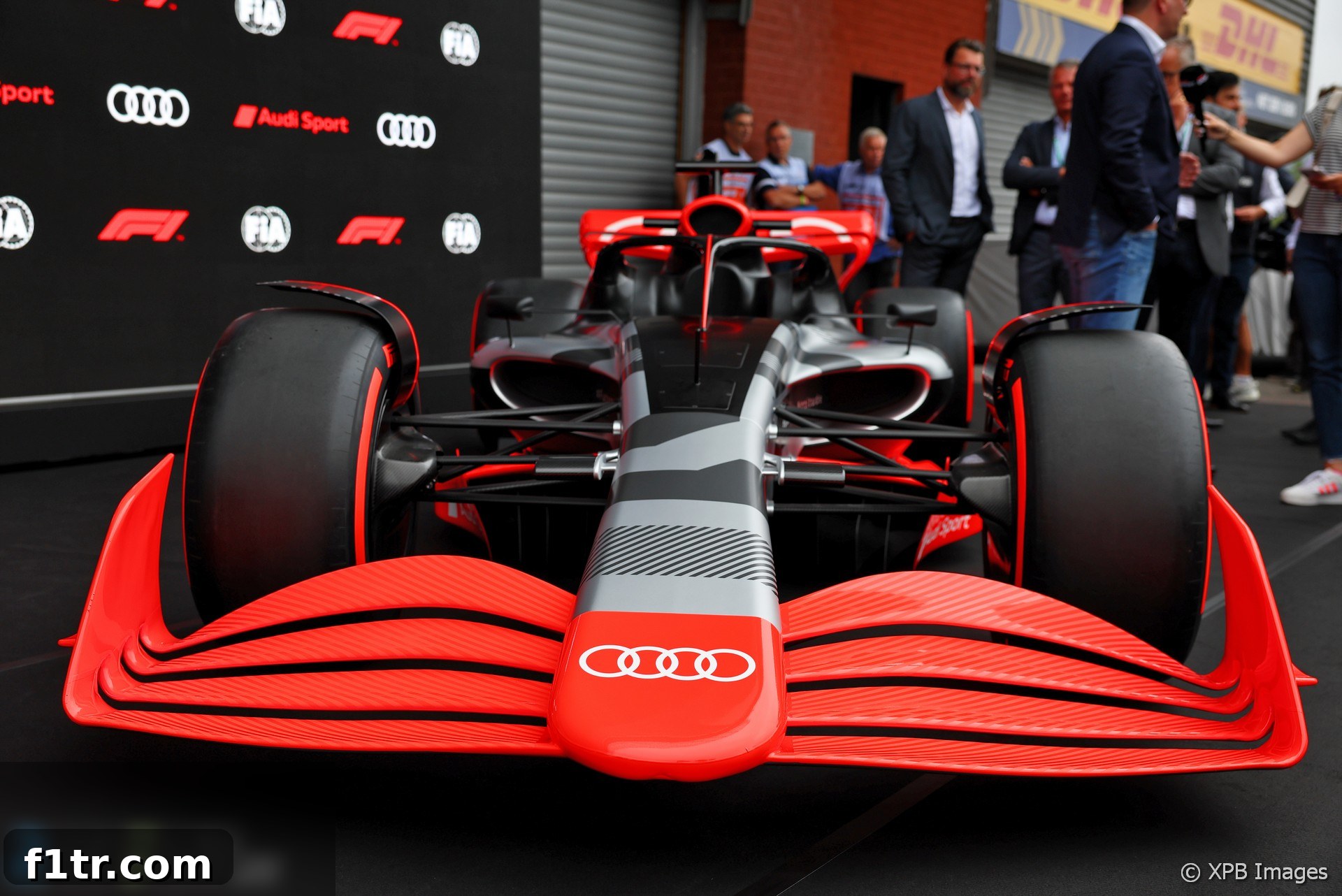
Audi’s Unwavering Commitment to Formula 1: Clearing the Air on 2026 Entry
In the high-stakes world of Formula 1, speculation can often swirl as fast as the cars on track. Recently, whispers began to circulate regarding the long-term commitment of German automotive giant Audi to its ambitious Formula 1 entry in 2026, set to transform the Sauber team. However, these doubts have been firmly dismissed by those at the heart of the project, reiterating a robust and unwavering dedication to their grand motorsport vision.
The journey towards Audi’s full-fledged F1 participation as a works team, succeeding Sauber, officially began in August of last year. This landmark announcement confirmed Audi’s intention to enter the pinnacle of motorsport as an engine supplier and eventually take over the Sauber operation. Since then, the brand has provided periodic updates on the significant progress being made at its dedicated engine development facilities in Neuburg an der Donau, Germany, a clear testament to their serious intent.
Addressing the Speculation: Duesmann’s Departure and a Group Decision
The primary catalyst for recent rumors was the departure of Audi CEO Markus Duesmann in June. Duesmann had been a vocal proponent and instrumental figure in driving Audi’s Formula 1 ambitions forward. His exit inevitably prompted some observers to question the stability and future of the F1 program.
However, Alessandro Alunni Bravi, the team representative for Sauber’s F1 team, currently branded as Alfa Romeo F1 Team Stake, has unequivocally quashed these concerns. Alunni Bravi stressed that Audi’s entry into Formula 1 is proceeding precisely as planned, emphasizing that the decision to commit to F1 was not merely the whim of a single executive but a deeply rooted strategic choice.
“Audi has a strong commitment to Formula 1 and of course together with Sauber,” Alunni Bravi stated. “This commitment comes from a decision not only of the board of Audi but also the advisory board of Audi and the supervisory board of Audi Volkswagen. So it is a group decision and the commitment is there.” This crucial clarification highlights the extensive corporate backing from the highest echelons of the Volkswagen Group, underscoring the long-term, institutional nature of Audi’s F1 project, rather than one solely dependent on an individual.
Strategic Foundations: Why F1 for Audi?
Audi’s decision to enter Formula 1 for the 2026 season aligns perfectly with the sport’s impending regulatory changes. The new power unit regulations, focusing on increased electrical power, sustainable fuels, and cost caps, present a compelling platform for manufacturers like Audi to showcase their technological prowess and sustainability commitments.
For Audi, Formula 1 represents an unparalleled global marketing and technological proving ground. The sport’s expanding global audience, particularly in key markets, offers an immense opportunity to enhance brand image, attract new customers, and demonstrate Audi’s “Vorsprung durch Technik” (Progress through Technology) motto on the world stage. The transfer of knowledge and innovation from the demanding environment of F1 directly into road car development, especially in areas like hybrid technology and advanced materials, is also a significant draw.
The investment required for an F1 entry is substantial, but the return on investment in terms of brand exposure, technological development, and global recognition is considered invaluable. This strategic calculus remains unchanged, despite leadership transitions, due to the comprehensive approval process involving multiple boards within the Audi and Volkswagen structures.
Building the Future: Key Hires and Ongoing Development
While public communication regarding the future of the team is deliberately restrained out of respect for the current partnership with Alfa Romeo, the internal machinery of preparation for 2026 is moving at full throttle. “We are Alfa Romeo F1 Team Stake so until the end of the year we have certain limitations in communicating about the team, about the future, about the involvement of Audi,” Alunni Bravi explained. “We fully respect Alfa Romeo for this and we don’t want to make any kind of announcement or more than what is strictly related to the race and the championship.”
Despite these communication constraints, Sauber has already made significant and highly strategic personnel appointments, indicative of the serious groundwork being laid. One of the most prominent hires is that of Andreas Seidl, who previously served as McLaren’s highly respected team principal. Seidl joined Sauber as Group CEO, bringing with him a wealth of experience in managing high-performance motorsport organizations, including a successful stint with Porsche in endurance racing.
Another crucial addition is James Key, appointed as Technical Director. Key is a widely recognized figure in Formula 1 engineering, having held similar senior technical roles at multiple teams, including McLaren. His expertise in chassis design and aerodynamic development will be vital in shaping the technical direction of the future Audi F1 team.
These top-tier appointments are not isolated incidents but part of an extensive and aggressive recruitment drive. Alunni Bravi confirmed, “The commitment, as I said, is there. We are working hard to develop the structure of the team. We have a strong recruitment plan in place. James Key is one but we have on a weekly basis new appointments.” This ongoing influx of talent across various departments—from engineering and aerodynamics to operations and management—is crucial for building a competitive F1 team from the ground up, capable of challenging the established order.
Financial Stability and Governance
The financial backing and structural integration for Audi’s entry are also well underway. Alunni Bravi clarified the investment landscape, stating, “It’s is not a matter of the involvement of Audi in financing the team or sustaining this development process. We have two owners, two shareholders, there is a governance in place according to the different stage of the transaction that will be completed ahead of the 2026 season. So we are proceeding with the investment plan with everything in accordance with the governance that has been agreed.”
This statement underscores that the financial framework is robust and structured. The current ownership of Sauber, alongside Audi’s phased investment, ensures that the team’s development and operational needs are met. The agreed-upon governance structure meticulously outlines the responsibilities and integration process, ensuring a smooth transition towards Audi’s complete ownership and operation by 2026. This meticulous planning provides a stable foundation for long-term success, insulating the project from short-term market fluctuations or leadership changes.
The Road Ahead: Challenges and Opportunities
While the commitment is clear, the path to F1 success is fraught with challenges. Audi will be entering a highly competitive environment, taking on established powerhouses like Mercedes, Ferrari, and Red Bull, who have decades of experience and deeply ingrained team cultures. Building a cohesive team, integrating new personnel, and developing a competitive power unit and chassis simultaneously within a tight timeframe will be monumental tasks.
However, these challenges are matched by significant opportunities. Audi’s fresh perspective, coupled with substantial financial and technological resources, could enable them to innovate rapidly. The ability to attract top talent, invest in state-of-the-art facilities, and leverage Audi’s vast automotive R&D capabilities provides a strong foundation. The 2026 rule changes also offer a relative reset, potentially leveling the playing field to some extent for new entrants.
Looking Towards a Bright Future in 2026
The message from Sauber and Audi is unambiguous: the 2026 Formula 1 project is not only on track but accelerating with strong momentum. The dismissal of rumors serves to reinforce the deep-seated commitment from all levels of the Audi and Volkswagen Group. With strategic leadership in place, a dedicated recruitment drive underway, and substantial investment secured, the vision of Audi competing at the pinnacle of motorsport is firmly becoming a reality.
Formula 1 fans can look forward to witnessing a new force emerge on the grid in 2026, bringing fresh competition and excitement to the championship. Audi’s entry promises to be a thrilling chapter in the sport’s history, driven by innovation, determination, and an unwavering commitment to success.
Explore More F1 News
- Perez’s missed “open goal” in Miami was turning point in title fight – Horner
- F1 drivers insist new rules to prevent impeding in qualifying don’t work
- McLaren surprised by margin over rivals at track Norris thought would be “tough”
- “Follow Fernando’s line” – How Red Bull tried everything to get Perez past Alonso
- Mercedes’ Brazilian GP set-up was “conservative” after US GP disqualification
Browse all 2023 Brazilian Grand Prix articles