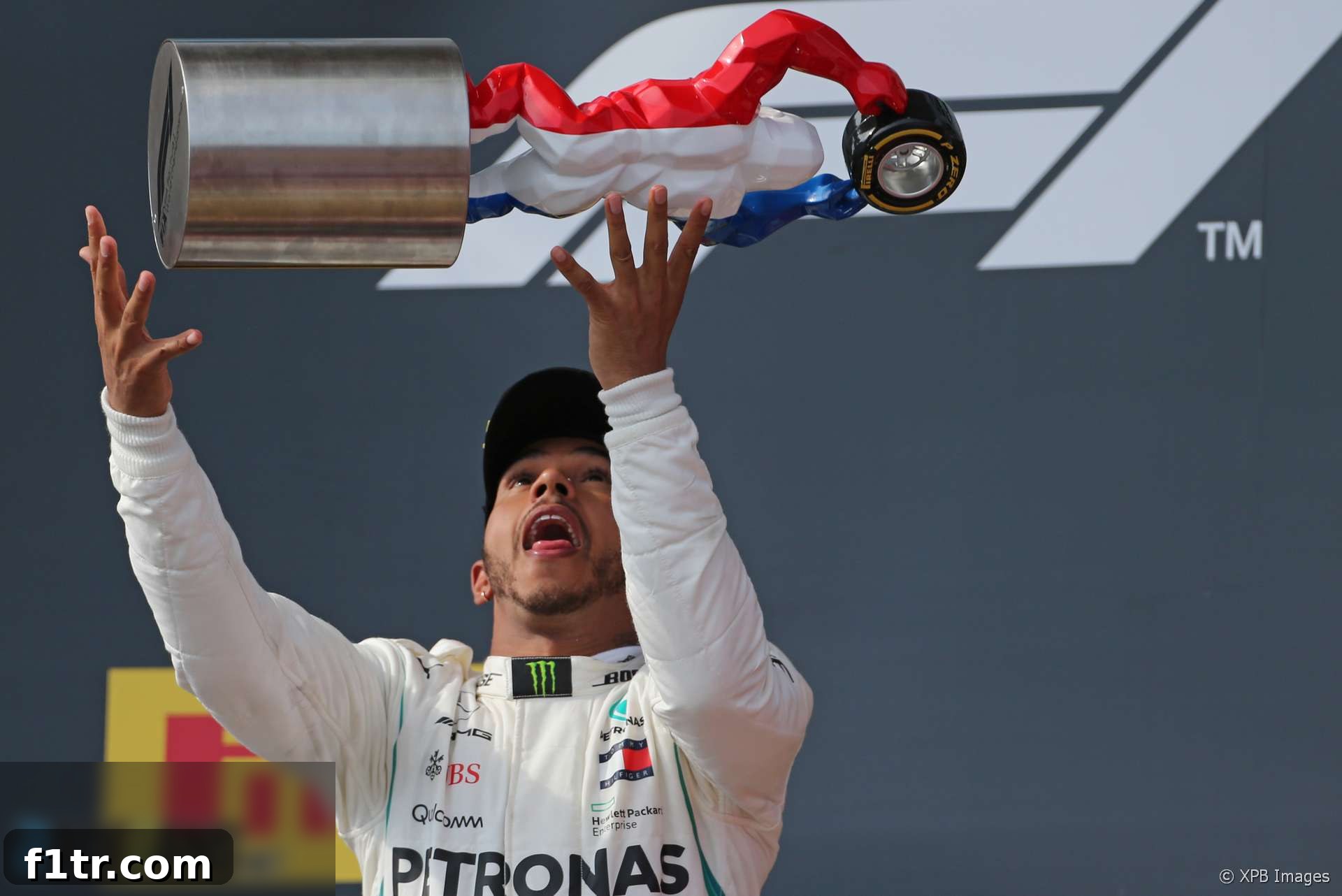
Lewis Hamilton Unpacks the French Grand Prix: “On the Edge” F1 Incidents, Record Wins, and Racing Childhood Idols
In the high-octane world of Formula 1, where milliseconds define victory and defeat, the line between aggressive racing and a costly mistake is often razor-thin. Following a commanding performance at the French Grand Prix, Mercedes driver Lewis Hamilton offered a compelling perspective on the incidents that characterize the sport, suggesting they stem from drivers operating at the absolute limit rather than grave errors. His reflections came after a dominant race where he led every lap, benefiting from an early race incident involving his Mercedes teammate Valtteri Bottas and Ferrari’s Sebastian Vettel, which effectively removed both contenders from the battle for the top spot and paved the way for Hamilton’s unchallenged run to victory.
Hamilton’s Philosophy: The Art of “On the Edge” Racing
The race at Paul Ricard saw a dramatic start, with Sebastian Vettel making contact with Valtteri Bottas at the first corner. This collision, a significant moment in the 2018 season, sent both drivers wide and allowed Hamilton to consolidate his lead. When questioned by the media if such an incident indicated a mistake from Vettel, Hamilton eloquently articulated his view on the inherent nature of F1 racing, emphasizing the extreme pressures and competitive environment that drivers navigate. “We’re all going into that first corner at great speeds,” Hamilton explained, “it’s not always easy to… I mean I went deep and wide because I saw them really close to me so I thought I was going to get rear-ended, to be honest, so I went quite deep.” This candid admission highlights the split-second decisions and self-preservation instincts at play in the opening moments of any Grand Prix.
Hamilton elaborated on the philosophy that underpins every driver’s approach, especially when battling for the sport’s ultimate prize. “We’re all on the edge, we’re fighting for the World Championships, we’re not pootling around, we’re out there putting our lives on the line, we’re out there putting the cars as far beyond the edge as we can in the safest manner. It’s not like a train track, you don’t just stay on the rails.” This powerful statement perfectly encapsulates the relentless pursuit of perfection and the willingness to push boundaries that defines elite Formula 1 drivers. For Hamilton, these moments are not simply “mistakes” in the traditional sense, but rather the inevitable consequence of drivers operating at the very pinnacle of performance, constantly seeking to extract every last fraction of a second from their machinery and themselves, all while maintaining a delicate balance of safety and aggression.
Surpassing Legends: Hamilton’s Record-Breaking Achievement
Beyond his dominant victory and insightful commentary, the French Grand Prix also marked a significant milestone in Lewis Hamilton’s illustrious career. His win at Paul Ricard represented a victory at his 23rd different circuit, a remarkable achievement that saw him surpass the legendary Michael Schumacher for the most diverse tracks at which a driver has taken a win. This record underscores Hamilton’s adaptability and consistent performance across a variety of demanding circuits globally, solidifying his status as one of the sport’s all-time greats.
Upon learning of this new record, Hamilton’s reaction was one of profound humility and awe, particularly regarding Schumacher’s unparalleled legacy. “I didn’t know that. It’s news to me. Every time I’m told of these records I’m blown away by Michael, even more and more. He had obviously a long career and incredible statistics, and did a… it just brings me back to watching him as a kid.” His words reveal a deep respect for the sport’s history and the figures who shaped it. To surpass a record set by a hero of his youth only adds another layer of surrealism to his ongoing journey in Formula 1, reminding him of the incredible path he has forged from a young fan to a record-breaking champion.
Racing Childhood Heroes: From PlayStation to the Podium
The theme of heroism and inspiration continued as Hamilton reflected on his contemporaries, especially those he admired in his formative years. Sitting in the post-race press conference, he shared a particularly touching anecdote involving Kimi Raikkonen, who finished third in the French Grand Prix. “I was actually just sitting here thinking, and I don’t know if Kimi knows, I remember growing up wanting to be in Formula 1 and obviously I was at McLaren since I was 13 and I used to play F1 on the Playstation all the time and I was always Kimi, which is kind of crazy.”
This nostalgic revelation offers a rare glimpse into the personal motivations and dreams that fuel these elite athletes. It wasn’t just about reaching F1; for Hamilton, it was about racing against the very drivers he emulated in virtual worlds. “I wasn’t Montoya, I was always Kimi in his car and I always wanted to race against him. It’s just crazy how life works and how you get the opportunity to work with some of these legends. I don’t know if they realise the respect that the younger generation will have for them. Maybe you do, maybe you don’t but… yeah.” This heartfelt sentiment underscores the profound impact that these “legends” have on aspiring drivers, shaping their ambitions and eventually becoming their fiercest, yet most respected, competitors. The full circle moment of a young fan battling his video game idol on the real track is a testament to the enduring power of inspiration in sport.
Adding another layer to this intergenerational admiration, Max Verstappen, who secured second place at the French Grand Prix and was also present at the press conference, has previously spoken about his own childhood connection to F1 legends. He reportedly used to play Formula One games as Lewis Hamilton before making his own meteoric rise to the top echelon of motorsport. These shared experiences highlight a common thread among the sport’s most successful drivers: a deep passion for racing fostered by admiration for those who came before them.
The Enduring Thrill and Peril of Formula 1
Hamilton’s reflections extend beyond individual races or records; they paint a broader picture of what it means to compete at the pinnacle of motorsport. His comments about being “on the edge” resonate with the very essence of Formula 1 – a sport defined by the delicate balance of human skill, engineering prowess, and sheer bravery. Drivers are constantly pushing the limits of physics and their own capabilities, where every corner, every overtake, and every lap demands absolute precision and commitment. The high speeds, the relentless pressure of a championship battle, and the global scrutiny combine to create an environment where minor misjudgments can have significant consequences, yet these are often a byproduct of the incredible speeds and competitive intensity.
The 2018 Formula 1 season was a prime example of such fierce competition, with Hamilton ultimately clinching his fifth World Championship. His victory at the French Grand Prix, characterized by both strategic dominance and insightful commentary, offered a clear window into the mindset of a champion. It demonstrated not only his exceptional driving talent but also his philosophical understanding of the sport’s inherent risks and rewards. His ability to articulate the nuances of high-stakes racing, while simultaneously achieving historic milestones, further cements his legacy as one of Formula 1’s most profound and influential figures.
Related Articles from the 2018 F1 Season
For more insights into the 2018 Formula 1 season and its enduring impact, explore the following articles:
- F1 feared “death knell” for Drive to Survive after Ferrari and Mercedes snub
- McLaren staff told us we were “totally crazy” to take Honda engines in 2018 – Tost
- ‘It doesn’t matter if we start last’: How Red Bull’s junior team aided Honda’s leap forward
- Honda’s jet division helped F1 engineers solve power unit problem
- McLaren Racing losses rise after Honda split
Browse all 2018 F1 season articles