Lando Norris Challenges Drive to Survive Accuracy: Unpacking F1’s Reality vs. Entertainment Debate
McLaren’s charismatic star, Lando Norris, has ignited a fresh and vital discussion regarding the authenticity of Netflix’s immensely popular Formula 1 series, “Drive to Survive.” The young British driver publicly voiced significant concerns over specific segments within the recently released fourth season, asserting that they fail to accurately represent events as they truly unfolded. According to Norris, the show employs editing techniques that combine video footage and team radio communications from entirely different races, effectively fabricating a narrative that deviates from what actually transpired on the track.
Advert | Become a Supporter & go ad-free
Since its debut, “Drive to Survive” has been widely credited with catapulting Formula 1 into a global, mainstream spotlight, captivating millions of new fans with its behind-the-scenes access and dramatic storytelling. However, Norris’s detailed critique adds a crucial layer to the ongoing debate about the show’s journalistic integrity versus its entertainment value. His observations highlight a fundamental tension inherent in many sports documentaries: how much creative license is permissible before a portrayal crosses the line into misrepresentation, potentially distorting the reality of a fiercely competitive sport?
Norris Pinpoints Specific Instances of Misrepresentation
While acknowledging that “Drive to Survive” generally portrays him in a favourable light – particularly given his strong performance relative to his teammate Daniel Ricciardo throughout much of the previous year – Norris nonetheless questioned the program’s overall commitment to factual accuracy. He specifically pointed to moments where editorial choices create misleading impressions, especially concerning driver interactions and the delicate rivalries inherent in the paddock.
Norris delved into the specifics of his discomfort, stating, “Episode two is the first proper introduction to Daniel, myself and us and McLaren.” He elaborated on the perceived benefits and drawbacks of the show’s narrative style: “I think it’s good, it gives you good insight. I think for my side it looks good, maybe not so much from the other side.” This statement subtly hints at how selective editing and narrative construction can significantly shape public perceptions, potentially disadvantaging certain individuals or creating manufactured tension where little existed.
His primary reservation, however, lies in the potential for comments and actions to be taken entirely out of context. “There are obviously some comments and things here and there which are maybe out of place which, when you’re the person that it’s about, you maybe don’t agree with it so much, because it can make you look like you said something in a time and place which is definitely not correct,” Norris explained. This concern touches upon a core ethical responsibility of documentary filmmakers to uphold factual truth, particularly when dealing with the reputations of public figures and the inherent integrity of a sport.
The Fabricated Bahrain Grand Prix Rivalry: A Case Study in Editing
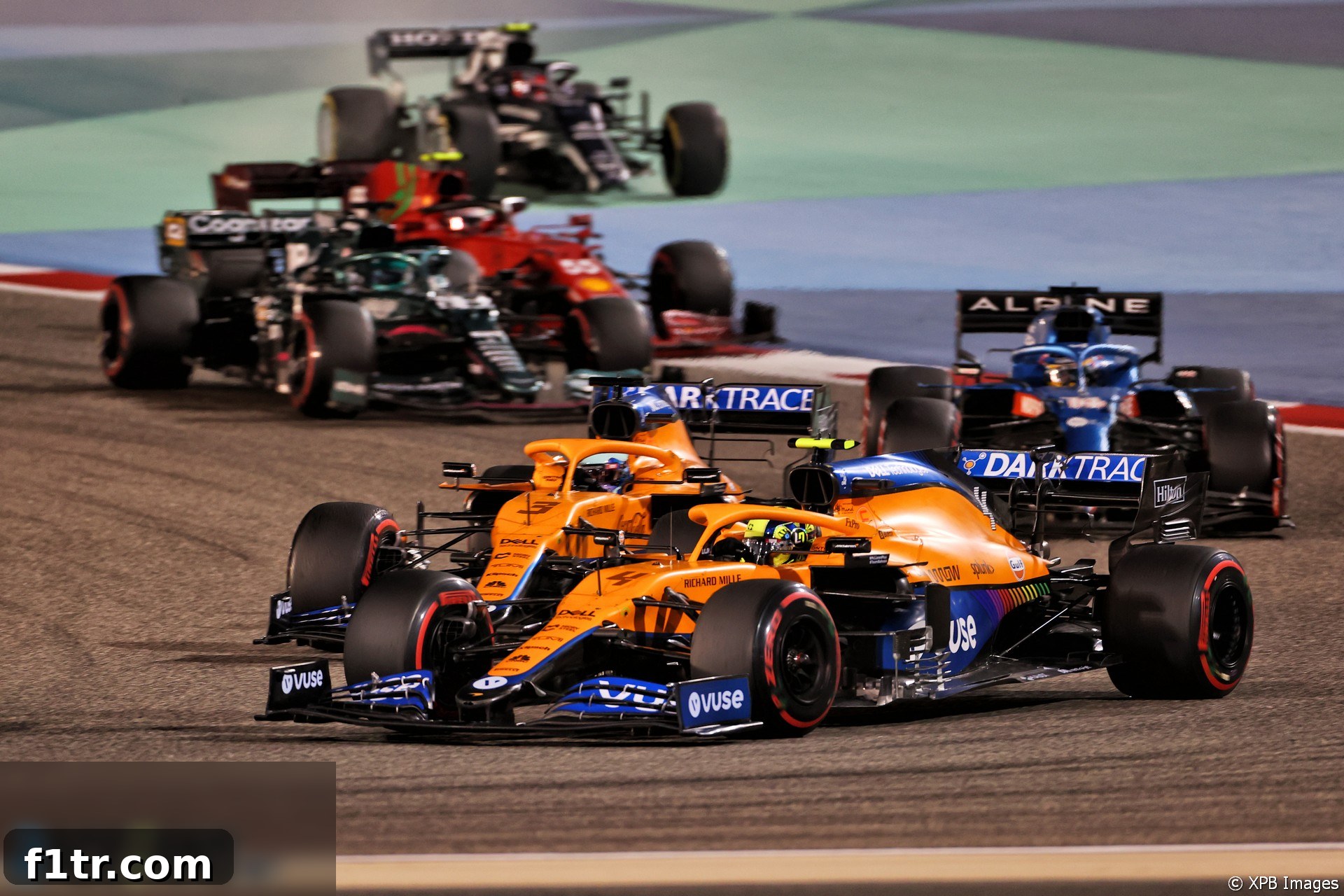
A particularly jarring and illustrative example cited by Norris involved footage from the Bahrain Grand Prix. He revealed that audio from an entirely different race was superimposed onto the Bahrain visuals to artificially exaggerate a supposed rivalry between him and his McLaren teammate, Daniel Ricciardo. “There’s a bit of me and Daniel going side-by-side in turn one when we’re not even close,” said Norris, emphasizing the visual deception. Even more concerning was the accompanying team radio audio: “And [on the team radio] I claim he pushes me off which is from a completely different race.”
This admission is profoundly significant because it moves beyond mere selective editing and delves into the realm of active manipulation. It strongly suggests that producers might be willing to create fictionalized scenarios and amplify non-existent drama to heighten entertainment, rather than simply documenting existing tensions or authentic rivalries. For a sport like Formula 1, where every millisecond, every strategic decision, and every on-track battle is scrutinized by dedicated fans and competitors alike, such fabrication can fundamentally undermine the authenticity and credibility that form the bedrock of its appeal. “So there are things which maybe are a bit too much like that, and I maybe don’t agree too much with it,” Norris concluded, clearly expressing his discomfort with the production methods employed.
A Widespread Concern: Max Verstappen’s Stance and Broader Paddock Perspectives
Lando Norris is certainly not an isolated voice in his criticisms. Several other prominent Formula 1 drivers have previously raised similar objections, accusing the series’ producers of prioritizing manufactured drama and sensationalism over accurate factual reporting. Reigning world champion Max Verstappen has been perhaps the most outspoken critic, taking the decisive step of refusing further participation in the programme. Verstappen last week unequivocally reiterated his stance, affirming his refusal to be interviewed for the series, having previously stated that “Drive to Survive” had openly “faked” storylines and misrepresented key events.
Verstappen’s resolute position underscores a deeper, underlying dissatisfaction within the F1 paddock regarding the show’s creative approach. For drivers who dedicate their lives to the sport, meticulously honing their skills and pushing the boundaries of human and machine performance, the idea of their efforts, personalities, and rivalries being misrepresented or distorted for entertainment purposes can be profoundly frustrating and even insulting. It naturally raises critical questions about trust between the sport’s participants and the media responsible for portraying them. The collective concerns from multiple high-profile drivers strongly suggest that Norris’s observations are not isolated incidents but rather indicative of a broader pattern within the production of “Drive to Survive.”
The core of this intricate issue often revolves around the precise definition of “storytelling” versus “journalism” within a documentary format. While a compelling narrative is undoubtedly essential for audience engagement, particularly for a show aimed at a broader, less initiated demographic, blurring these lines with fabricated events can severely erode credibility. For Formula 1, a sport intrinsically built on genuine competition, raw emotion, unparalleled engineering, and supreme athletic prowess, the perceived erosion of authenticity can be a deeply sensitive and damaging matter, risking the long-term trust of its dedicated fanbase.
The Indisputable Impact of Drive to Survive on Formula 1’s Global Reach
Despite these controversies and the valid criticisms from within the sport, the undeniable and overwhelmingly positive impact of “Drive to Survive” on Formula 1’s global popularity cannot be overstated. The Netflix series has proven to be a transformative game-changer, especially in markets where F1 previously struggled to gain significant traction, most notably in the United States. It has successfully introduced an entirely new generation of fans to the captivating personalities, intense rivalries, and high-stakes drama that define this pinnacle of motorsport. This “Netflix Effect” has demonstrably led to unprecedented increases in viewership, surging attendance at races worldwide, and significantly greater commercial interest across the entire spectrum of Formula 1.
The show’s profound success lies in its unique ability to humanize the drivers, team principals, and key figures, showcasing their personal struggles, their moments of triumph, and the immense pressure they operate under in a high-octane, unforgiving environment. It effectively peels back the often-intimidating veneer of technical complexity, making the sport far more accessible and emotionally engaging for newcomers. For countless individuals, “Drive to Survive” has served as the ultimate gateway drug to F1 fandom, successfully transforming casual viewers into passionate, lifelong supporters. The vibrant characters and inherently compelling narratives, even if occasionally embellished, have undeniably created an unprecedented global buzz around the sport.
This immense success, however, comes with an implicit and significant challenge: how to maintain the show’s widespread appeal without fundamentally compromising the sport’s deeply held integrity. The producers of “Drive to Survive” face a delicate and constant balancing act between creating captivating, binge-worthy television and remaining faithfully committed to the factual reality of Formula 1. The drivers, as the sport’s central and most visible figures, are naturally protective of their public image, their professional reputations, and the authenticity of their hard-earned achievements. Their continued willingness to participate, to offer genuine insights, and to provide unparalleled access hinges critically on the show’s unwavering commitment to portraying events with accuracy and respect.
Norris’s Vision: Authenticity as the Foundation for Long-Term Success
Despite his candid criticisms, Lando Norris maintains a constructive and optimistic outlook on the program’s overall potential. He firmly believes that “Drive to Survive” can continue to be a significant positive force for Formula 1’s enduring popularity, provided its creators exercise judicious restraint and actively resist the temptation to overtly over-exaggerate or fabricate events. His sentiment reflects a sincere desire for a mutually beneficial relationship where engaging entertainment and fundamental truth can not only coexist but mutually reinforce each other.
“On the whole I think things are still just exciting and good for everyone,” Norris affirmed. His primary condition for this continued benefit and success is remarkably clear and straightforward: “As long as they don’t over-do it and literally make someone look like they’ve done something which they definitely haven’t done, I think that’s too far. As long as I don’t do that it’s good.” This statement precisely outlines a critical boundary – the specific point at which creative storytelling crosses into outright fabrication, inevitably damaging trust, eroding authenticity, and ultimately undermining the very sport it aims to celebrate.
Norris’s perspective eloquently advocates for a form of documentary filmmaking that enhances the natural drama that inherently exists within Formula 1, rather than fabricating it from whole cloth. The raw emotions, intense rivalries, incredible feats of engineering prowess, and supreme athleticism are, by their very nature, profoundly compelling. A dedicated focus on capturing these genuine elements, perhaps with clever and thoughtful editing that builds suspense without falsifying facts, would undoubtedly ensure the show’s long-term credibility and its sustained, positive impact on the sport. Ultimately, the ongoing debate around “Drive to Survive” underscores a broader, vital discussion within sports media: how to best present athletic competition to a diverse and expanding global audience. For Netflix and Formula 1, finding the optimal sweet spot between engaging entertainment and unwavering authenticity will be absolutely crucial for the continued success of both the series and the captivating sport it so brilliantly showcases. The influential voices of drivers like Lando Norris and Max Verstappen serve as essential reminders that at the very heart of the thrilling spectacle lies a real, unscripted competition, deserving of an honest, respectful, and accurate portrayal.
Related Drive to Survive Discussions
- Drive to Survive season four review: Still as fun, flawed and unmissable as ever
- New insights but notable omissions in Drive to Survive’s account of F1’s 2021 finale
- Steiner “not ashamed” of panning “slow” Schumacher in Drive to Survive
Advert | Become a RaceFans supporter andgo ad-free
Further Formula 1 Insights
- Mercedes told me “you’re wrong” about 2022 car’s problems – Hamilton
- FIA confirms all 10 F1 teams complied with 2022 cost cap
- Albon believes year out of F1 improved him as a driver
- Hamilton sees diversity gains in F1 years on from his ‘traumatising’ experience of racism
Browse all 2022 F1 season articles